There is a specific kind of culinary magic that happens when high-quality, raw ingredients meet a perfectly balanced acid. This Greek cucumber salad isn’t just a side dish; it’s a masterclass in texture and vibrant Mediterranean flavor profiles.
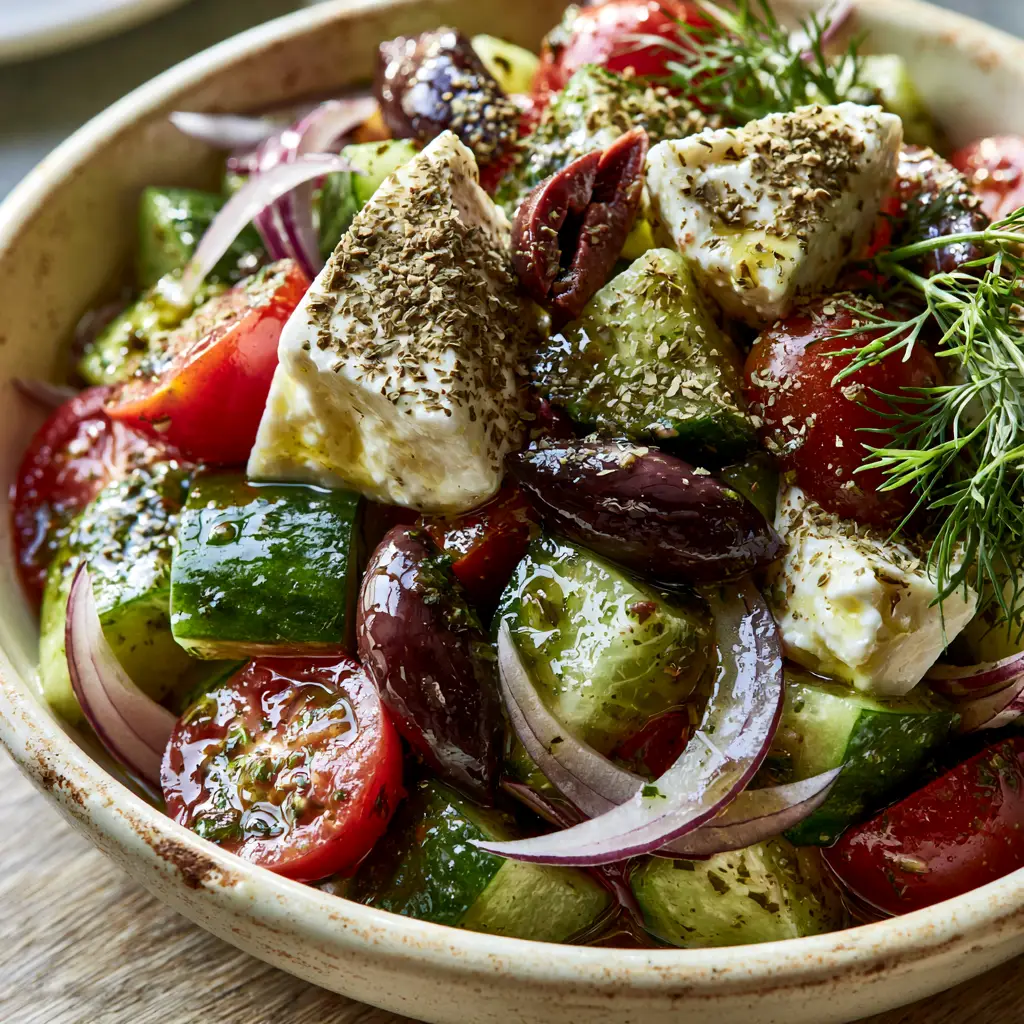
Imagine the snap of a thick-cut Persian cucumber, the burst of a juicy cherry tomato, and the creamy, salty finish of hand-crumbled feta. All of this is tied together by a glossy lemon-herb vinaigrette that catches the light like liquid gold on a rustic ceramic plate.
Whether you are looking for a light lunch or the ultimate companion to a heavy dinner, this recipe delivers a refreshing crunch that feels like a summer breeze in the middle of a bustling kitchen.
Why This Vibrant Mediterranean Masterpiece Works
- Structural Integrity: By using thick-cut Persian cucumbers, we ensure every bite maintains a satisfying “snap” that doesn’t get lost in the dressing.
- Visual Contrast: The deep purple of whole Kalamata olives against the bright green dill and stark white feta creates a stunning, high-contrast palette.
- The “Glossy” Factor: Our specific oil-to-lemon ratio creates a thick, emulsified vinaigrette that clings to the vegetables rather than pooling at the bottom of the bowl.
- Textural Harmony: The paper-thin red onion crescents provide a sharp bite that perfectly balances the creamy, irregular blocks of feta cheese.
The Anatomy of a Perfect Greek Cucumber Salad
To achieve the result seen in professional food photography, every ingredient must serve a purpose. We aren’t just tossing vegetables in a bowl; we are building a flavor profile that is scientifically balanced.
Persian Cucumbers: These are the gold standard for this salad because of their thin skin and low seed count. Unlike English cucumbers, they have a concentrated “green” flavor and a much denser cellular structure, which provides that essential crunch.
Cherry Tomatoes: We halve these to expose the “gel” inside, which mixes slightly with the vinaigrette to create a more complex dressing. Choose deep red, ripe tomatoes for the best natural sweetness.
Red Onion: To achieve those “paper-thin crescent slivers,” a sharp knife or mandoline is required. These provide the sulfurous bite needed to cut through the richness of the feta.
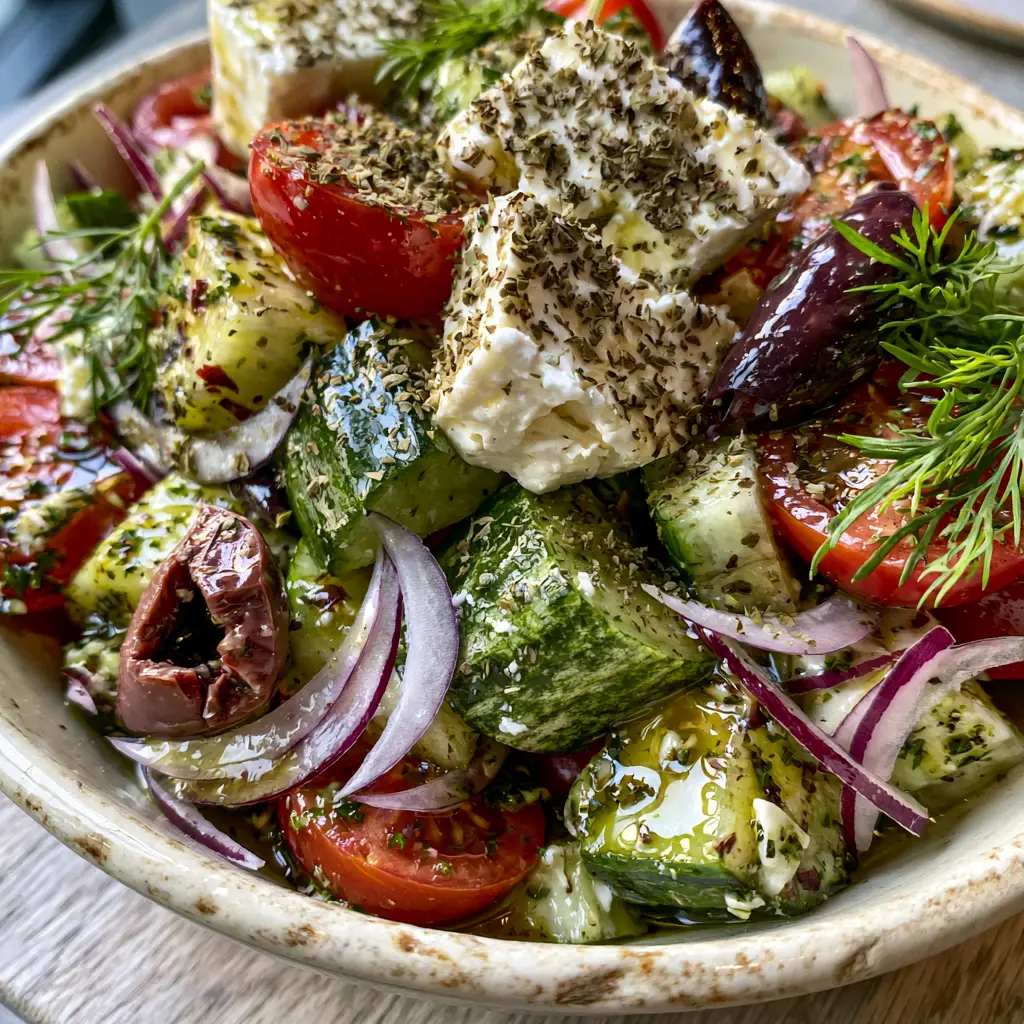
Hand-Crumbled Feta: Avoid the pre-crumbled variety at all costs. Buying a block of feta in brine allows you to create large, irregular chunks that maintain their creamy interior while the exterior catches the dried oregano flakes.
Kalamata Olives: We use whole, pitted olives to keep the salad hearty. Their fermented, salty profile is the “umami” backbone of the entire dish.
Fresh Dill & Dried Oregano: This dual-herb approach is non-negotiable. The dill provides fresh, grassy top notes, while the dried oregano offers an earthy, aromatic baseline that defines authentic Greek cuisine.
The Vinaigrette Base: High-quality Extra Virgin Olive Oil (EVOO) and fresh lemon juice provide the “gloss.” A touch of honey or Dijon (the invisible stabilizers) ensures the dressing stays emulsified and thick.
Essential Kitchen Tools for Precision Slicing
To recreate the extreme close-up POV found in high-end culinary magazines, your cuts must be intentional. A dull knife will bruise the herbs and squash the tomatoes.
You will need a sharp Chef’s knife for the cucumbers and a serrated knife for the tomatoes. A small glass jar is the secret weapon for shaking the vinaigrette into a perfectly “glossy” state.
Finally, a shallow, rustic ceramic bowl is preferred over a deep mixing bowl. This allows the ingredients to spread out, ensuring the feta and olives don’t all sink to the bottom where they can’t be seen or appreciated.
Mastering the Art of the Greek Salad
The “Salt and Drain” Preparation
The biggest mistake in any Greek cucumber salad is excess water. Persian cucumbers are 95% water, and once they hit salt, they begin to leak.
Slice your Persian cucumbers into 1/2-inch (1.25cm) thick rounds or chunks. Place them in a colander and sprinkle with a pinch of sea salt for 10 minutes. Pat them dry with a paper towel before assembly to ensure the dressing sticks to the skin.
Achieving the Paper-Thin Onion Sliver
Cut the red onion in half from pole to pole, then slice against the grain into the thinnest possible crescents. If you find raw onion too pungent, soak these slivers in ice water for 5 minutes to remove the “sting” while keeping the crunch.
The Glossy Vinaigrette Emulsification
In a small jar, combine your lemon juice, EVOO, a pinch of salt, and a teaspoon of honey. Shake vigorously until the liquid turns opaque and slightly thickened. This is the “gloss” that catches the light in our visual blueprint.
The Assembly Sequence
Toss the cucumbers, halved tomatoes, and onion slivers in the bowl first with half of the dressing. Once coated, nestle the whole Kalamata olives and large feta blocks on top. Finally, dust heavily with dried oregano and finish with the remaining vinaigrette and fresh dill sprigs.
Pro Tips for Maximum Crunch and Flavor
- Temperature Matters: Serve this salad slightly chilled, but not ice-cold. If it’s too cold, the flavors of the olive oil and feta become muted.
- The Feta Dusting: Sprinkle the dried oregano specifically over the feta chunks. The moisture in the cheese helps the herb bloom and release its oils.
- Dill Placement: Do not chop the dill into tiny bits. Use whole, small sprigs tucked throughout the salad for a more “organic” and rustic aesthetic.
- Acid Balance: If your lemons are particularly tart, add an extra tablespoon of oil. The goal is a dressing that is bright but doesn’t make you wince.
Make-Ahead Advice and Freshness Guidelines
This salad is best enjoyed within 2 hours of assembly. However, you can prep the components ahead of time to save minutes during a busy dinner service.
Store the sliced vegetables in an airtight container with a dry paper towel to absorb moisture. Keep the dressing in its jar at room temperature. Combine everything just before serving to maintain the structural integrity of the cucumber and the creaminess of the feta.
Do not freeze this salad. The cellular structure of the cucumbers will collapse upon thawing, resulting in a mushy texture that loses the “vibrant” appeal we are striving for.
What to Serve Alongside Your Greek Creation
This salad is incredibly versatile. It acts as a cooling counterpoint to spiced meats or a bright addition to a vegetable-forward spread. If you are building a full Mediterranean menu, consider pairing this with a classic roasted Greek potatoes recipe for a satisfying textural contrast.
For a light, protein-packed lunch, you might explore various savory chicken salad recipes that can be served on the side. The acidity of the cucumber salad cuts through the richness of mayo-based salads beautifully.
If you’re looking for more ways to use your garden bounty, this dish is a natural cousin to a classic cucumber onion and tomato salad, but with the added salty depth of the Aegean influence. For a heartier dinner, serve it as a starter for a traditional Greek moussaka.
Common Culinary Questions
You can prep the vegetables and dressing separately up to 24 hours in advance. For the best texture, toss them together no more than 1-2 hours before serving.
Yes, but Persian cucumbers are preferred for their higher density and thinner skin. If using English cucumbers, consider peeling half the skin and removing the seeds to prevent sogginess.
The secret is to salt the sliced cucumbers for 10 minutes in a colander and pat them dry before assembly. This draws out excess moisture so the dressing clings to the vegetables.
The gloss comes from a high-quality extra virgin olive oil and proper emulsification. Shaking the dressing in a jar with a tiny bit of honey or Dijon mustard helps it stay thick and shiny.
Whole olives retain their briny juices better and provide a more substantial texture that stands up to the thick-cut cucumbers and large feta blocks.
The Ultimate Greek Cucumber Salad Recipe
Greek cucumber salad with Feta and Lemon-Herb Vinaigrette
Ingredients
Equipment
Method
- Slice the Persian cucumbers into thick 1/2-inch rounds to ensure they maintain structural integrity and a crisp snap.
- Slice the red onion into paper-thin crescent slivers. Soak in ice water for 5 minutes if a milder flavor is desired.
- Combine olive oil, lemon juice, and salt in a jar. Shake vigorously until the dressing is glossy and thick.
- In a shallow bowl, toss cucumbers, tomatoes, and onions with half the dressing.
- Nestle the whole olives and large blocks of hand-crumbled feta on top. Dust the feta heavily with dried oregano.
- Drizzle the remaining glossy vinaigrette over the top and garnish with fresh dill sprigs.
Notes
Pat the cucumbers dry after salting to prevent a watery salad.
Share Your Culinary Success!
There is nothing more rewarding than a dish that looks as good as it tastes. This Greek cucumber salad is designed to be a centerpiece, catching the natural light and inviting everyone to the table with its vibrant colors.
Did you master the “glossy” vinaigrette? We want to hear about it! Leave a comment below with your favorite pairings or any substitutions you tried. If you loved the visual inspiration, be sure to save this recipe to your boards on Pinterest.
Stay tuned for more deep dives into Mediterranean flavors, and don’t forget to sign up for our newsletter to get the latest kitchen forensics delivered straight to your inbox.