There is a specific kind of magic that happens when aromatic steam rises from a fresh pot of Jollof. Among the most cherished Ghana recipes, this version stands out for its vibrant, deep orange-red hue and individual glistening grains of long-grain parboiled rice.
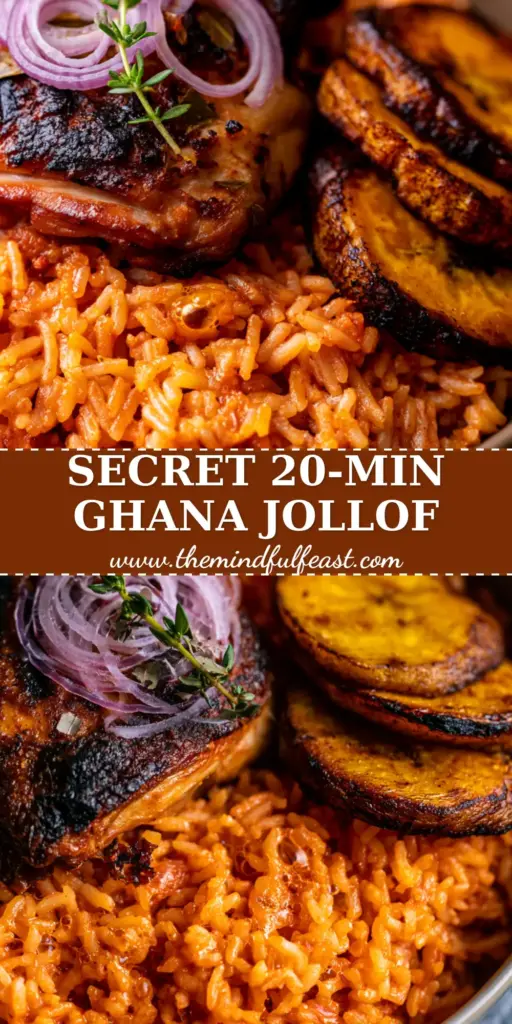
The secret to this iconic dish lies in the concentrated tomato and red pepper stew base, which creates a rich, savory foundation. When paired with the smoky notes of charred skin-on chicken and the honey-like sweetness of fried plantains, you have a meal that defines West African comfort food.
Every element of this recipe is designed to hit a specific sensory note, from the crunch of ultra-thin translucent red onion rings to the earthy fragrance of a fresh green thyme sprig. Whether you are a regular explorer of African food recipes or a newcomer to the region’s cuisine, this bowl is a masterclass in balance.
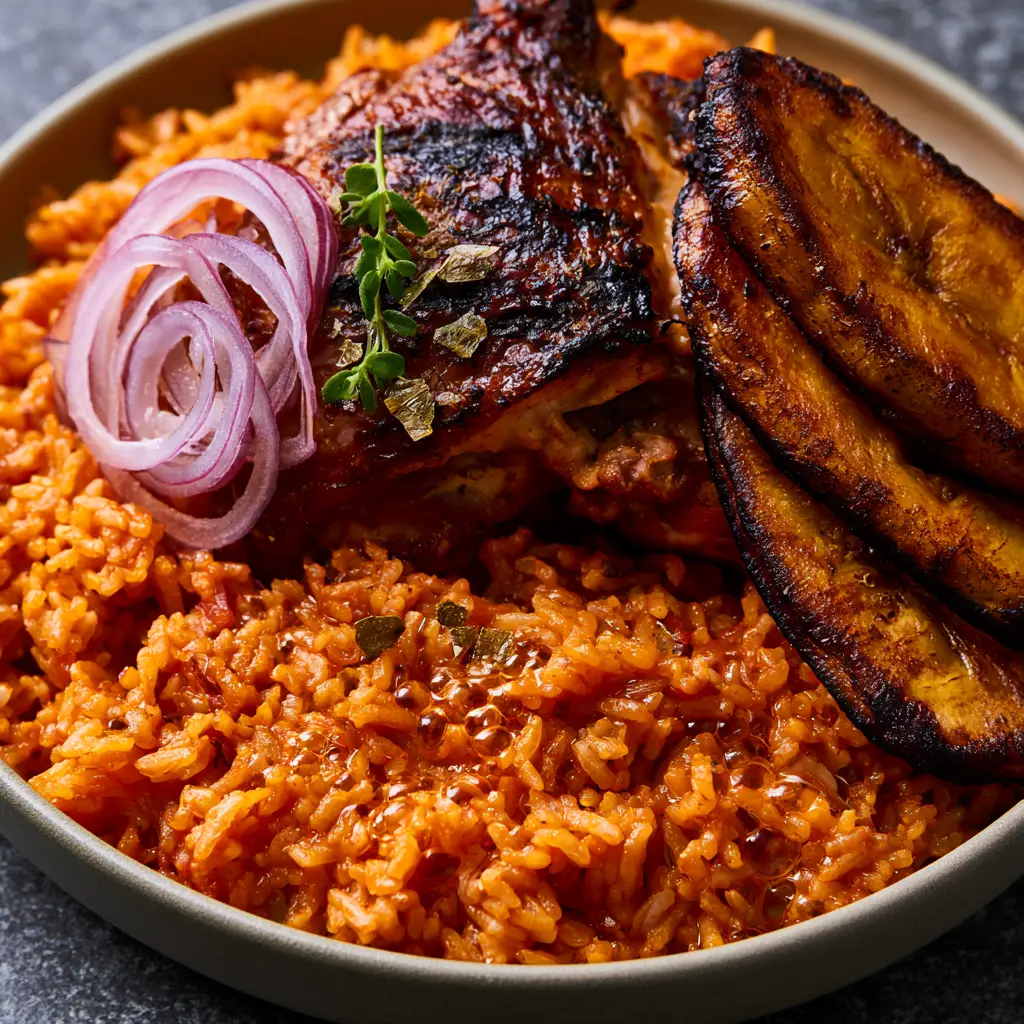
The Signature Textures of a Perfect Jollof Bowl
- Glistening Individual Grains: Using parboiled rice ensures that each grain stays separate and firm, never mushy, and coated in flavorful oil.
- Deeply Charred Protein: The chicken thighs feature crispy, skin-on texture with visible grill marks for a professional, smoky finish.
- Caramelized Sweetness: Thick slices of golden-brown fried plantains with slightly blackened edges provide the perfect sugary contrast to the spicy rice.
- Vibrant Stew Base: A high-concentration blend of tomatoes and scotch bonnets creates that coveted “party rice” color.
Essential Components for This Iconic West African Feast
Long-Grain Parboiled Rice: 3 cups (600g). This specific rice type is non-negotiable for Ghana Jollof as it withstands long steaming without breaking, resulting in perfectly distinct grains.
Red Bell Peppers and Plum Tomatoes: 3 large peppers and 1 can (400g) of tomatoes. These are blended and reduced to create the concentrated “stew” that gives the rice its deep orange-red pigment.
Scotch Bonnet Peppers: 2 to 3 peppers. These provide the essential heat and fruity floral notes that define authentic Ghana Jollof rice profiles.
Skin-On Chicken Thighs: 4 to 6 pieces. The fat from the skin renders into the pot, while the skin itself develops a beautiful char and crispy texture under high heat.
Ripe Sweet Plantains: 2 large plantains. Look for yellow skin with black spots; these yield the best caramelized, golden-brown edges when fried.
Foundational Aromatics: 2 large red onions, 4 cloves of garlic, and 1 inch (2.5cm) of fresh ginger. These create the “holy trinity” of flavor that builds the sauce’s complexity.
Invisible Essentials: 1/2 cup (120ml) vegetable oil for frying, 1 tbsp (15g) tomato paste for color, and 2 tsp (10g) kosher salt to season every layer.
Tools Required for Professional Results
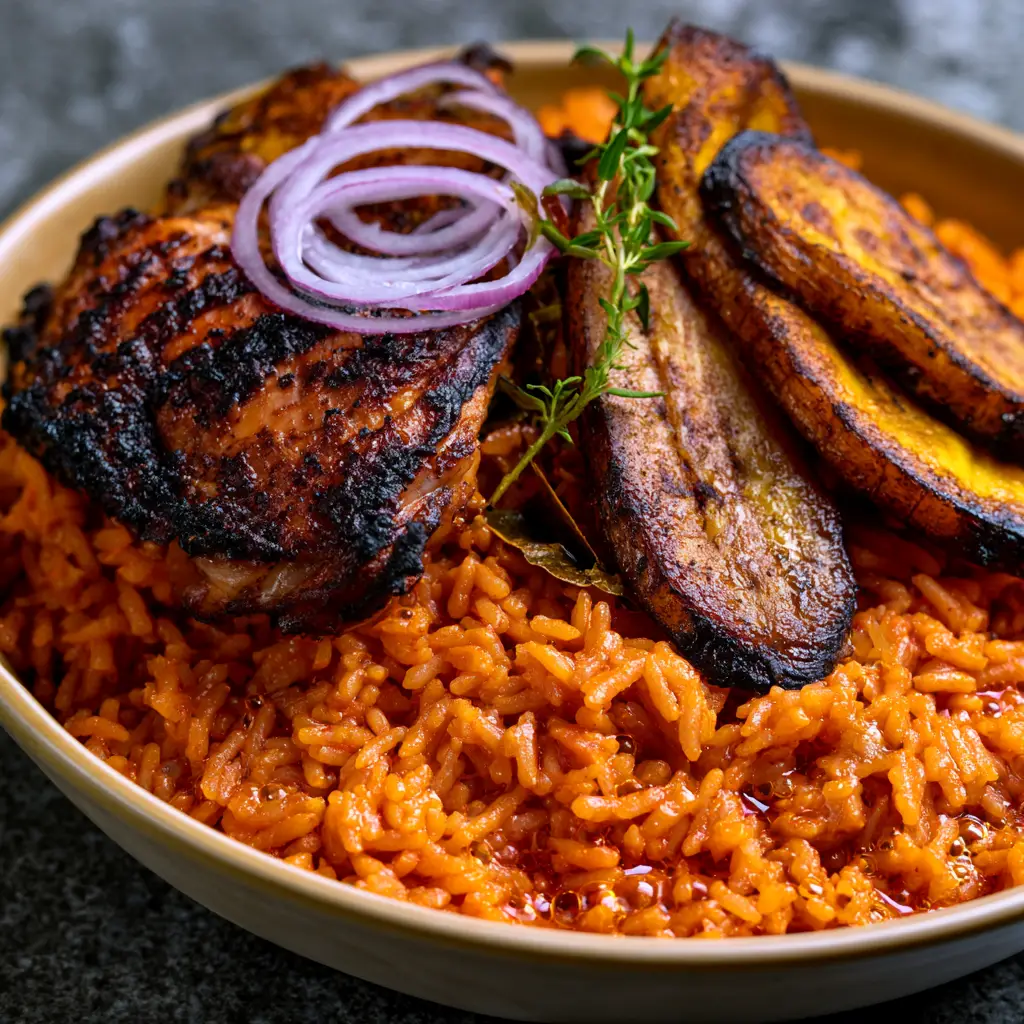
To achieve the “steaming bowl” aesthetic, you will need a heavy-bottomed pot or Dutch oven, which distributes heat evenly and prevents the bottom from burning too quickly. A high-powered blender is essential for creating a smooth, grit-free pepper base. For the chicken, a cast-iron grill pan or an outdoor grill will provide those distinct, succulent grill marks visible in the visual blueprint.
Developing the Concentrated Tomato and Pepper Base
Step 1: Blending the Aromatics
Combine the red bell peppers, tomatoes, scotch bonnets, ginger, and garlic in a blender. Process until completely smooth, then pour into a saucepan and simmer over medium heat for 15 minutes to reduce the water content.
Step 2: Searing the Chicken for Maximum Char
Pat the chicken thighs dry and season with salt and pepper. In your heavy pot, heat 2 tbsp (30ml) of oil and sear the chicken skin-side down until deeply charred and crispy. Remove the chicken and set aside; the flavorful rendered fat will stay in the pot.
Step 3: Frying the Stew Base
In the same pot, sauté one sliced red onion until translucent. Stir in the tomato paste and fry for 5 minutes until it turns a dark maroon color. Pour in the reduced pepper blend and cook until tiny bubbles of oil rise to the surface, indicating the sauce is concentrated and savory.
Step 4: Steaming the Glistening Rice
Wash your parboiled rice until the water runs clear, then add it to the stew base. Stir well to ensure every grain is coated in the vibrant red sauce. Add just enough chicken stock to cover the rice, cover with a tight-fitting lid or foil, and steam on low heat for 30-35 minutes until fluffy and glistening.
Step 5: Caramelizing the Sweet Plantains
While the rice steams, peel and slice the plantains into thick diagonals. Fry in hot oil (350°F / 175°C) until golden-brown with blackened, caramelized edges. Drain on paper towels and sprinkle with a pinch of salt.
Expert Tips for Success
- The “Wash” is Critical: Always wash parboiled rice 3-4 times to remove excess starch, which prevents the grains from sticking together.
- The Foil Trick: Place a sheet of aluminum foil under the pot lid to create a perfect seal; this traps the steam and ensures even cooking without adding excess water.
- Don’t Peek: Resist the urge to open the lid for the first 20 minutes; losing steam is the fastest way to get unevenly cooked rice.
- Seek the “Kanzo”: The slightly burnt rice at the bottom of the pot (Kanzo) is considered a delicacy and adds a smoky depth to the entire batch.
Shelf Life and Reheating
This dish tastes even better the next day as the spices continue to meld. Store leftovers in an airtight container for up to 4 days in the refrigerator. To reheat, add a tablespoon of water and microwave or steam on the stovetop to restore that “glistening” texture.
What to Serve with This Vibrant Feast
While this is a complete meal on its own, it pairs beautifully with a fresh cucumber salad to cut through the richness. If you are looking for more easy African dinner recipes, consider serving this alongside a side of spicy grilled fish or steamed vegetables.
Regular white rice contains more surface starch and may become mushy. If you must use it, wash it thoroughly and reduce the liquid significantly to keep the grains separate.
Authentic versions use scotch bonnet peppers, which carry significant heat. You can adjust the spice level by using fewer peppers or removing the seeds before blending.
Ghanaian Jollof typically uses long-grain parboiled or basmati rice, resulting in separate, firm grains, while Nigerian Jollof traditionally uses long-grain parboiled rice but often aims for a slightly softer texture with a different spice profile.
Frying the tomato paste removes its raw, metallic tang and develops a deep umami flavor and rich maroon color that is essential for the rice’s final appearance.
The Ultimate Authentic Ghana Jollof Recipe
Ghana recipes for Authentic Jollof Rice with Charred Chicken and Caramelized Plantains
Ingredients
Equipment
Method
- Blend peppers, tomatoes, ginger, and garlic. Simmer in a saucepan for 15 minutes until the liquid reduces and thickens.
- Season chicken with salt and sear in a heavy pot until the skin is crispy and shows deep grill marks. Remove and set aside.
- Sauté onions and tomato paste in the chicken fat. Add the pepper blend and fry until bubbles of oil rise to the surface.
- Stir in the washed rice and stock. Cover tightly with foil and a lid; steam on low for 30-35 minutes until grains are glistening.
Notes
The charred 'kanzo' at the bottom is intentional and highly flavorful.
Closing & Call to Action
Mastering Ghana recipes like this one brings the soul of West African cooking into your home. The combination of heat, smoke, and sweetness is truly unmatched. If you enjoyed this recipe, please leave a comment below and share your results! Don’t forget to follow us on Pinterest for more culinary inspiration.