When you think of Authentic Mexican Recipes, your mind likely drifts to the vibrant streets of Mexico City, where the air is thick with the scent of toasted corn and simmering chilies. There is a specific visual magic to a perfect street taco: the way the crimson oil from the consomé clings to succulent beef and the bright pop of emerald salsa verde against a charred tortilla.
This recipe isn’t just about feeding a family; it is about recreating a sensory masterpiece. We are capturing that exact moment when soft afternoon sunlight hits a rustic clay plate, highlighting the moisture of slow-cooked beef and the delicate droplets of fresh lime juice.
By following this guide, you will master the art of the guajillo braise and the precision of the perfect taco garnish. Every element, from the finely minced white onions to the forest-green cilantro, is designed to provide a balance of heat, acid, and crunch.
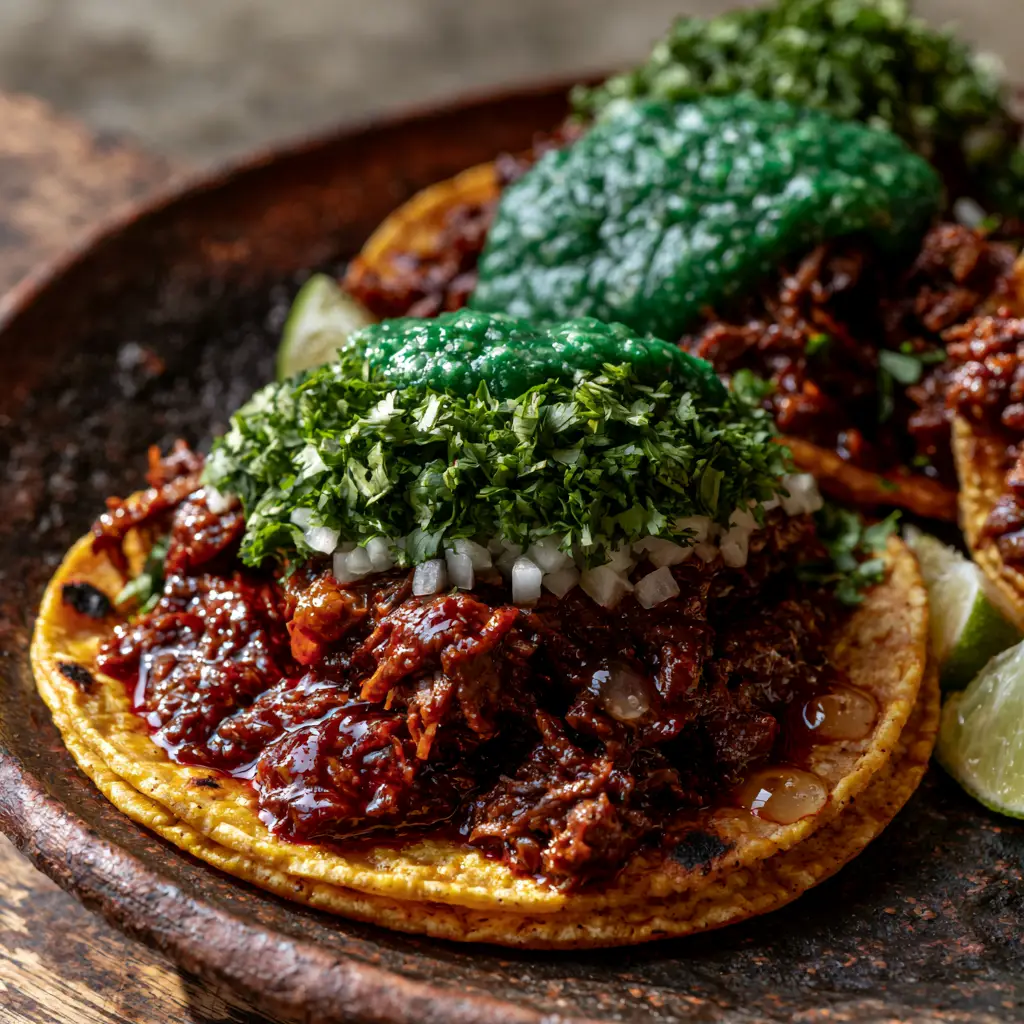
The Anatomy of a Perfect Street Taco: Why This Recipe Works
- The Glistening Crimson Consomé: We use a blend of toasted guajillo and ancho chilies to create a rich, smoky braising liquid that doubles as a dipping sauce.
- Hand-Pressed Texture: Learning to achieve those signature charred spots on yellow corn tortillas ensures a structural base that stands up to heavy fillings.
- The Emerald Contrast: A thick, vibrant salsa verde provides the necessary acidity to cut through the richness of the slow-cooked beef.
- Forensic Freshness: The combination of raw white onion and crisp cilantro offers a temperature and texture contrast that defines true street-style tacos.
The Pantry Essentials for Vibrant Street Tacos
For the beef, you will need 3 lbs (1.36kg) of beef chuck or brisket. This cut is high in collagen, which transforms into a succulent, shreddable texture after hours of gentle simmering.
The “Crimson Base” requires 6 (30g) dried guajillo chilies and 2 (15g) dried ancho chilies. Guajillos provide a sweet, tea-like earthiness, while anchos add a deep, raisin-like smokiness and rich color.
Foundational aromatics include 1 large (300g) white onion and 6 cloves (18g) of garlic. These provide the savory backbone that prevents the chilies from becoming overly bitter during the long cook time.
For the thick emerald-green salsa verde, gather 1 lb (450g) of fresh tomatillos and 2 (10g) serrano peppers. Tomatillos are naturally high in pectin, which gives the salsa that signature thick, velvety consistency seen in professional taquerias.
Never forget the fat: 2 tbsp (30ml) of neutral oil or lard is essential for searing the meat. This Maillard reaction creates the initial flavor profile that carries through the entire dish.
Finally, the finishing touches include 1 bunch (50g) of fresh cilantro, 12-16 small yellow corn tortillas, and 4 fresh limes. If you are looking for more diverse meal ideas, you might also enjoy exploring vibrant Asian dinner recipes or even easy crockpot meals for busy weeknights.
Essential Tools for the Home Taquero
A heavy-bottomed Dutch oven or a reliable slow cooker is non-negotiable for achieving that “succulent” texture. Consistent, low heat allows the muscle fibers to relax without drying out the protein.
A high-powered blender is required to process the rehydrated chilies into a silky-smooth consomé. If your blender isn’t professional-grade, you may need a fine-mesh sieve to strain out any remaining chili skins.
A cast-iron skillet or comal is the secret to those “slight charred spots on the edges” of your tortillas. Cast iron retains heat beautifully, providing an even sear that warms the tortilla through while adding a smoky flavor.
Mastering the Slow-Cooked Glistening Beef
Step 1: The Maillard Foundation
Pat your beef dry with paper towels and season aggressively with salt. Heat your oil in a large pot over medium-high heat until it begins to shimmer.
Sear the beef on all sides until a deep, dark crust forms—this should take about 4-5 minutes per side. Remove the meat and set it aside, leaving the rendered fat in the pan.
Step 2: Crafting the Crimson Guajillo Consomé
Remove the stems and seeds from your dried chilies. In the same pot used for the meat, flash-fry the chili skins for 30 seconds until they become fragrant but not burnt.
Add 4 cups (950ml) of beef stock, the garlic, and half of the onion to the pot. Simmer for 10 minutes until the chilies are soft, then blend until completely smooth and vibrant red.
Step 3: The Long, Succulent Braise
Return the beef to the pot, ensuring it is at least halfway submerged in the crimson liquid. Cover tightly and cook at 300°F (150°C) for 3-4 hours, or use a slow cooker on low for 8 hours.
The beef is ready when it yields to the slightest pressure from a fork. Once cooked, shred the meat directly into the juices so it can soak up that glistening, smoky oil.
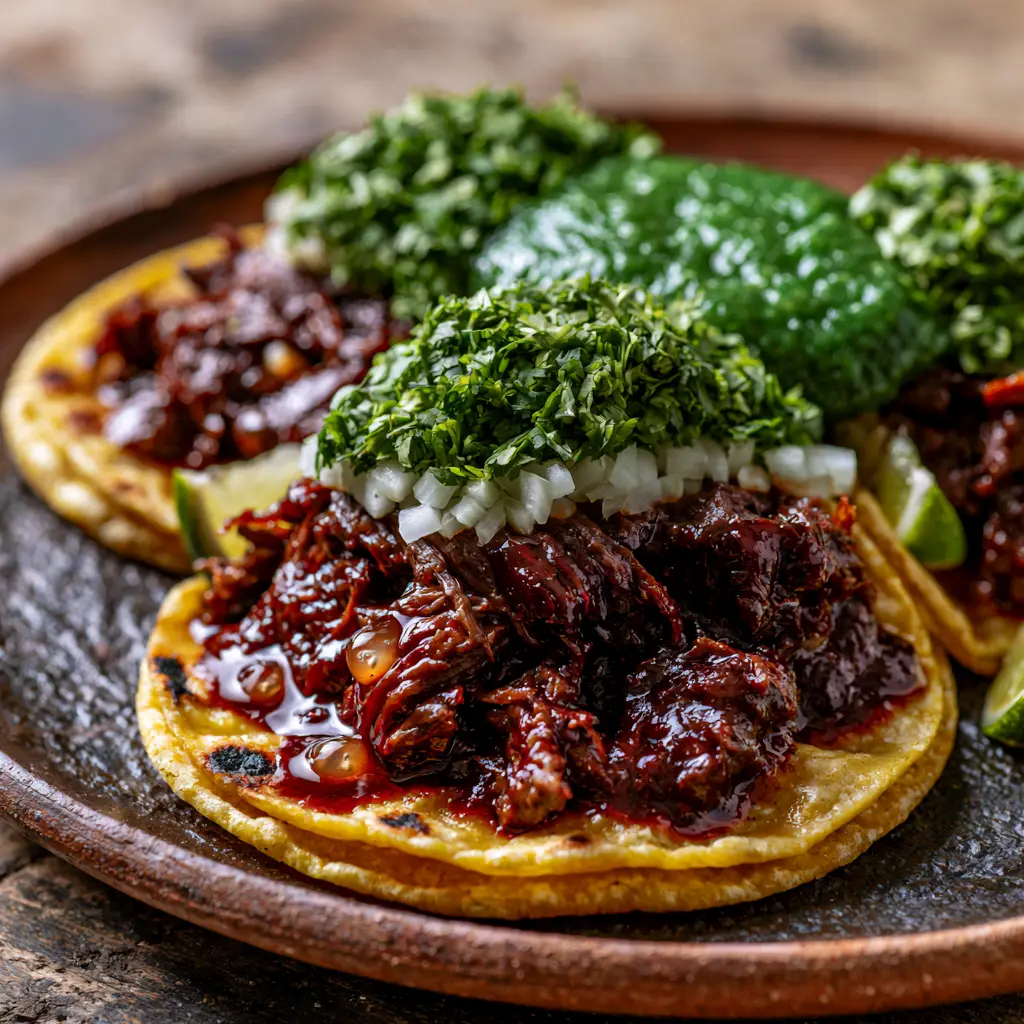
Developing the Emerald-Green Salsa Verde
Husking and rinsing your tomatillos is the first step; they have a naturally sticky residue that must be removed. Boil the tomatillos and serrano peppers in 2 cups (475ml) of water until they turn from bright green to an olive hue.
Drain the water and blend the boiled vegetables with a handful of cilantro and a pinch of salt. The result should be a thick, vibrant emerald-green salsa that holds its shape when drizzled over the meat.
If you prefer a lighter side to balance the heat, consider serving this alongside a refreshing chilled cucumber salad or a crisp hearts of palm salad.
Tortilla Engineering: Achieving the Perfect Char
Dry-heating your corn tortillas is a vital step in Authentic Mexican Recipes. Place a tortilla on a hot, dry cast-iron skillet for about 30 seconds per side.
Look for the “visual cue”: small, dark brown charred spots and a slight puffing of the tortilla. This indicates the starches have gelatinized, making the tortilla pliable and flavorful.
Keep the charred tortillas stacked in a clean kitchen towel to steam. This ensures they stay warm and soft while you prepare the final assembly.
The Art of the Garnish: Precision and Balance
Finely mince the remaining half of your white onion into tiny, uniform cubes. This “minced raw” texture provides a sharp, clean bite that contrasts with the rich, fatty beef.
Chop the cilantro leaves and tender stems finely to create a “dense sprinkle of bright, forest-green.” This adds a floral, citrusy note that elevates the heavier flavors of the consomé.
Slice your limes into wedges, ensuring each piece is easy to squeeze. When you are ready to serve, press the lime firmly so the “visible droplets of juice” settle onto the glistening beef.
Expert Tips for Taqueria-Quality Results
- The Fat Cap: Don’t trim all the fat off your beef; that fat renders into the consomé, creating the “glistening” appearance seen in the visual blueprint.
- Toast the Spices: If adding cumin or Mexican oregano, toast them in a dry pan for 60 seconds before adding to the braise to unlock their essential oils.
- Tortilla Hydration: If your corn tortillas are breaking, lightly dip them in the top layer of the warm consomé (the oily part) before charring them on the skillet.
- The Resting Phase: Let the shredded beef sit in the consomé for at least 15 minutes after shredding; this allows the meat to reabsorb the flavorful juices.
Storing and Reheating Your Authentic Mexican Recipes
The shredded beef and consomé actually improve in flavor the next day. Store them together in an airtight container in the refrigerator for up to 4 days.
To reheat, simmer the meat and sauce gently on the stovetop over low heat. Avoid microwaving, as this can toughen the beef fibers and dull the vibrant color of the guajillo oil.
The salsa verde will stay fresh for 5 days, though it may thicken in the fridge. Simply stir in a teaspoon of water to return it to its original “thick emerald” consistency.
What to Serve with Shredded Beef Tacos
While these tacos are a meal on their own, they pair beautifully with traditional sides. A side of Mexican red rice or refried beans provides a neutral base for the spicy consomé.
If you are hosting a larger gathering, you can mix cuisines by offering savory Jollof rice or exploring traditional West African flavors to provide a global feast.
For dessert, stay within the theme of handheld treats like crispy blueberry chimichangas or a simple rich chocolate milkshake (coming soon) to cool down the palate.
Frequently Asked Questions
Yes. The heat in the emerald-green salsa comes from the seeds and ribs of the serrano peppers. For a milder version, remove the seeds before blending, or substitute serranos with jalapeños.
The deep red color comes from properly toasting and rehydrating dried guajillo and ancho chilies. Ensure you blend them thoroughly and strain the liquid if necessary to achieve that smooth, glistening appearance.
Searing is essential for flavor depth. The Maillard reaction creates a savory crust that infuses the entire consomé with a rich, beefy profile that cannot be achieved by boiling alone.
Beef chuck roast or brisket are the best choices. These cuts contain high amounts of connective tissue that break down into gelatin during the slow-cooking process, creating the succulent, glistening texture required for street tacos.
Tortillas break when they are dry. To prevent this, heat them on a hot skillet until they char slightly, then immediately place them in a covered container or clean towel to steam and soften before serving.
Authentic Glistening Beef Tacos Recipe
Authentic Mexican Recipes: Glistening Guajillo Shredded Beef Tacos
Ingredients
Equipment
Method
- Season beef with salt and sear in hot oil until a dark crust forms on all sides.
- Simmer dried chilies in beef stock with aromatics, then blend until a vibrant crimson liquid forms.
- Submerge beef in the liquid and cook at 300°F (150°C) for 3-4 hours until succulent and shreddable.
- Heat tortillas on a dry cast-iron skillet until slight charred spots appear on the edges.
- Fill tortillas with beef, drizzle with thick emerald salsa verde, and top with minced onions and cilantro.
Notes
Ensure the skillet is screaming hot before adding tortillas to get the visual char without drying them out.
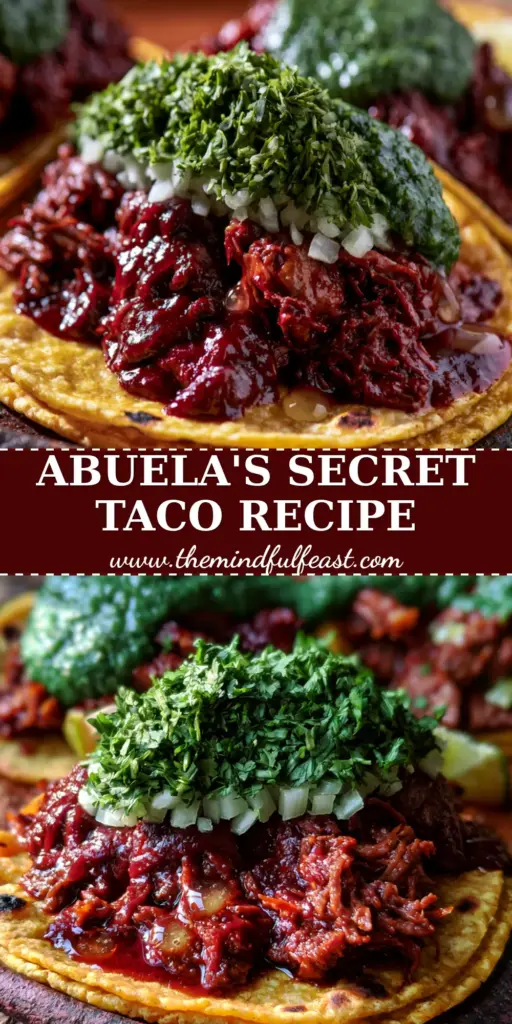
Closing & Call to Action
Mastering Authentic Mexican Recipes is a journey of understanding how simple ingredients—corn, chilies, and beef—can be transformed into something transcendent. The visual of that crimson-drenched beef resting on a charred tortilla is more than just a meal; it’s a celebration of culinary heritage.
We would love to see how your tacos turned out! Did you get those perfect charred spots on your tortillas? Leave a comment below and share your results. Don’t forget to save this recipe to your favorite boards on Pinterest so you can find it for your next taco night!