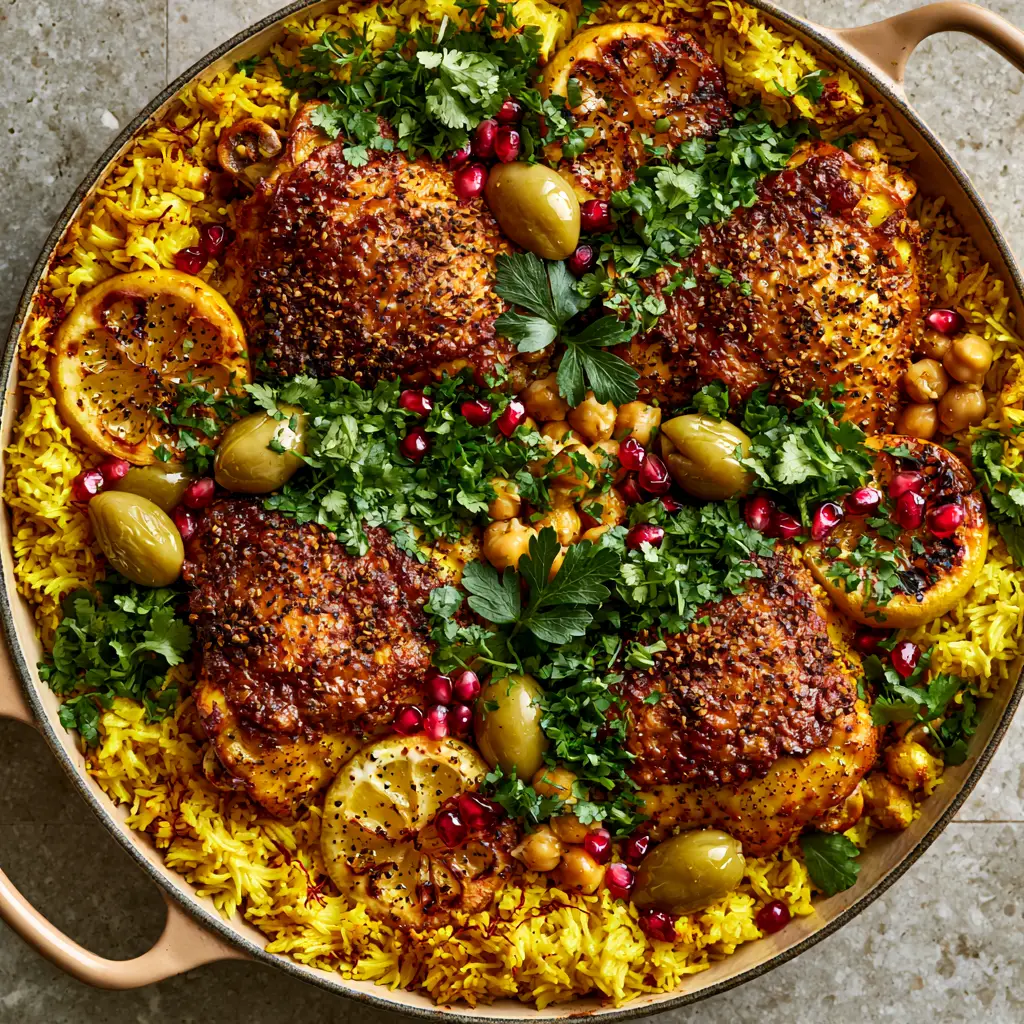
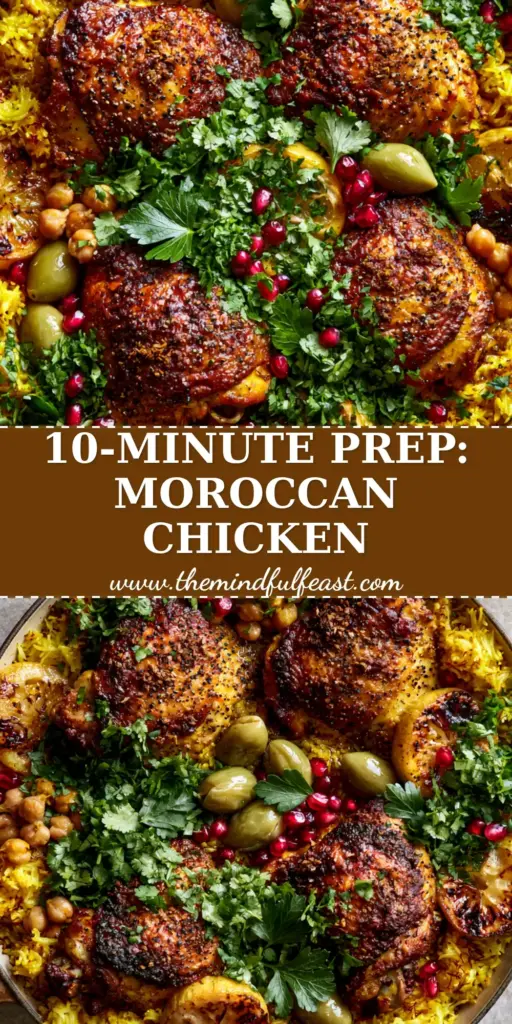
Moroccan chicken is more than just a meal; it is a sensory journey through the vibrant spice markets of Marrakesh. This recipe captures the essence of North African cuisine, featuring deeply seared chicken thighs nestled in a bed of aromatic, golden-yellow basmati rice.
Imagine the scent of cumin, turmeric, and saffron wafting through your kitchen as the chicken skin renders into a crispy, bronze crust. This dish is designed to be a “hero shot” on your dining table, balancing the savory depth of bone-in poultry with the bright acidity of charred lemons and the sweet pop of pomegranate seeds.
Whether you are hosting a dinner party or looking for an elevated weeknight meal, this one-pan masterpiece delivers on every front. From the buttery Castelvetrano olives to the crunch of toasted slivered almonds, every bite offers a complex layer of texture and flavor that keeps you coming back for more.
Why This One-Pan Moroccan Chicken Will Become Your New Obsession
- Visual Masterpiece: The contrast between the vibrant yellow turmeric rice, the bronze chicken, and the ruby-red pomegranate seeds creates a professional-level presentation.
- Textural Harmony: Experience the satisfying crunch of toasted almonds paired with the “melt-in-your-mouth” softness of chickpeas and fluffy long-grain rice.
- Symphony of Flavors: We balance earthy spices like cumin and black pepper with the briny bite of Castelvetrano olives and the citrusy brightness of charred lemon slices.
- Minimal Cleanup: This entire meal is prepared in a single enameled cast iron skillet, making it as practical as it is delicious.
Pantry Staples and Fresh Finds for Authentic Flavor
Bone-In, Skin-On Chicken Thighs: We use 4 large thighs (approx. 2 lbs (900g)) to ensure the meat remains juicy during the rice-steaming process. The skin provides the essential fats needed to toast the spices and rice later in the recipe.
Long-Grain Basmati Rice: 1.5 cups (300g) of basmati are essential for their distinct floral aroma and ability to stay separate and fluffy. Unlike short-grain varieties, basmati won’t turn mushy when braised with the chicken.
The Golden Duo (Turmeric and Saffron): 1 tsp (5g) of turmeric provides the primary golden hue, while a pinch of crushed saffron threads adds that unmistakable royal aroma and deep yellow stain. These are the “jewels” of the Moroccan chicken spice palette.
Castelvetrano Olives: Unlike bitter black olives, these green Sicilian gems (about 1/2 cup (75g)) are buttery and mild. They provide a sophisticated brine that cuts through the richness of the chicken fat.
Canned Chickpeas: 1 can (15 oz (425g)), rinsed and drained, adds a foundational plant-based protein. These “softened chickpeas” absorb the chicken juices and spices, becoming tiny flavor bombs throughout the rice.
Aromatic Spices: You will need 1 tsp (5g) of ground cumin and 1 tsp (5g) of freshly cracked black pepper. These are applied directly to the chicken skin to create that visible, seasoned “bronze” look described in our visual blueprint.
Charred Lemon Rounds: 1 large lemon, sliced into thin rounds. Searing these in the chicken fat caramelizes their natural sugars, removing the harshness and leaving behind a concentrated citrus essence.
The Fresh Garnish Trio: 1/4 cup (15g) each of fresh chopped cilantro and flat-leaf parsley, plus a handful of pomegranate seeds. The herbs provide a “heavy scattering” of green, while the pomegranate adds a “pop of color” and sweet-tart contrast.
Toasted Slivered Almonds: 1/4 cup (35g) of almonds provides the necessary “crunch.” We toast them separately to ensure they don’t lose their crispness in the steam of the rice.
Foundational Liquid: 2.5 cups (600ml) of high-quality chicken bone broth. This is the “invisible ingredient” that hydrates the rice and transfers flavor from the skillet bottom into every grain.
Essential Kitchen Tools for Skillet Perfection
To achieve the “hero shot” look of this Moroccan chicken, a 12-inch (30cm) enameled cast iron skillet is highly recommended. The heavy bottom ensures even heat distribution, which is critical for achieving that “deeply seared, crispy, bronze-colored skin.”
You will also need a fine-mesh strainer to rinse your basmati rice. Rinsing removes excess surface starch, which is the secret to preventing the rice from sticking together. A pair of stainless steel tongs is essential for flipping the chicken and lemons without tearing the delicate skin.
Mastering the Sear: Step-by-Step Instructions
Phase 1: Seasoning and The Perfect Sear
Pat the 4 chicken thighs (900g) extremely dry with paper towels. Moisture is the enemy of a crispy sear. Generously season the skin side with 1 tsp (5g) cumin, 1 tsp (5g) black pepper, and 1 tsp (5g) sea salt.
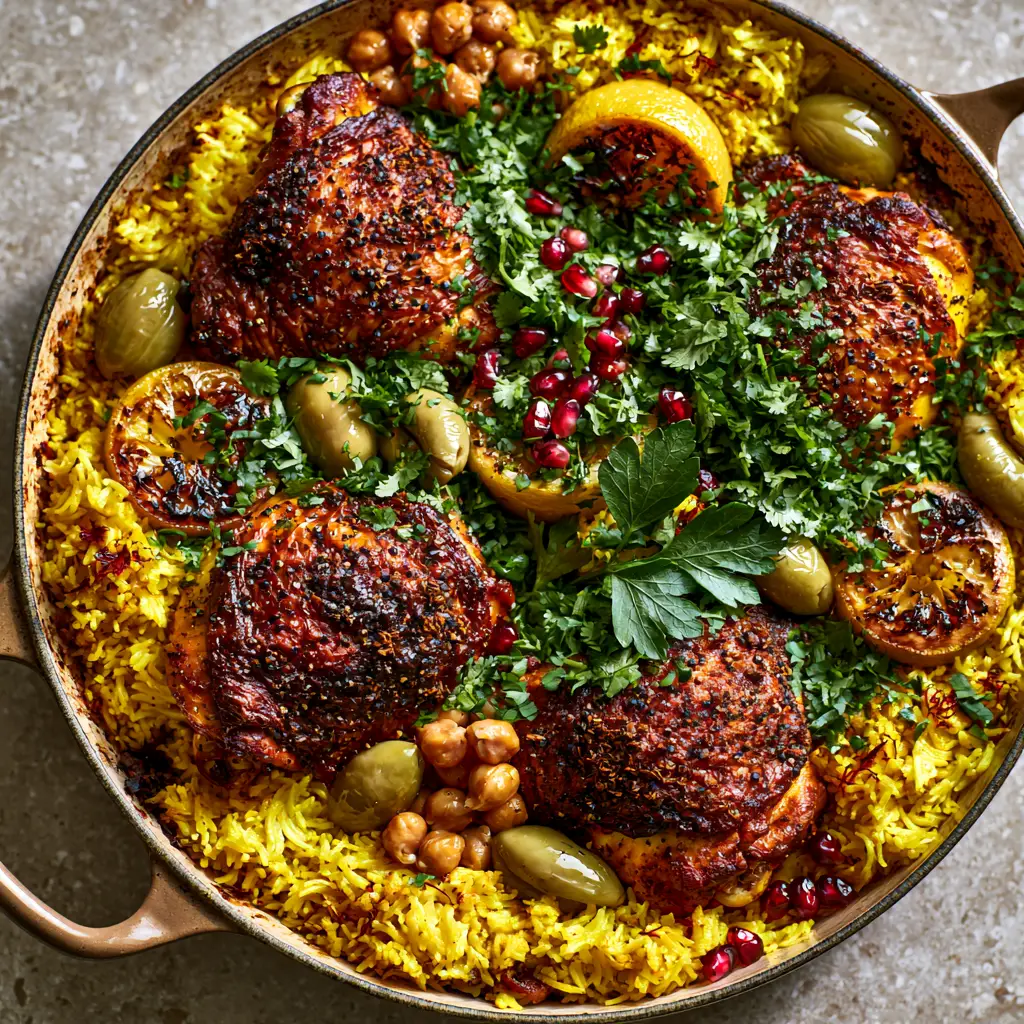
Heat 2 tbsp (30ml) of neutral oil in your skillet over medium-high heat. Place chicken skin-side down. Do not move them for 6-8 minutes. Look for the “bronze-colored” visual cue; the skin should be rigid and release easily from the pan when ready.
Flip the chicken and cook for 2 minutes on the flesh side, then remove to a plate. In the same fat, add your lemon slices. Sear for 1-2 minutes per side until they show dark, charred edges. Remove and set aside with the chicken.
Phase 2: Building the Aromatic Rice Base
If there is excess fat, drain all but 2 tbsp (30ml). Add 1 finely diced yellow onion and sauté until translucent. Stir in 1.5 cups (300g) of rinsed basmati rice, 1 tsp (5g) turmeric, and your pinch of saffron. Toast the rice for 2 minutes until the edges look translucent and smell nutty.
Pour in 2.5 cups (600ml) of chicken broth. Use a wooden spoon to scrape the bottom of the pan—this is where the “fond” (browned bits) lives, which contains massive amounts of flavor. Stir in the 1/2 cup (75g) olives and the drained chickpeas.
Phase 3: The Low and Slow Braise
Nestle the seared chicken thighs back into the rice, skin-side UP. Ensure the skin remains above the liquid line to stay crispy. Place the charred lemon rounds around the chicken. Bring to a simmer, then reduce heat to low and cover tightly with a lid.
Cook for 18-20 minutes. You will know it is done when the liquid is fully absorbed and the rice is tender. Remove from heat and let the skillet sit, covered, for 5 minutes. This “resting phase” allows the steam to finish fluffing the grains.
Phase 4: The Visual Finish
Remove the lid and fluff the golden rice gently with a fork. Now, apply your “heavy scattering” of 1/4 cup (15g) cilantro and 1/4 cup (15g) parsley. Top with 1/4 cup (35g) toasted slivered almonds and a handful of ruby-red pomegranate seeds.
Expert Tips for the Fluffiest Moroccan Chicken Rice
- Rinse Your Rice: Always rinse the basmati under cold water until the water runs clear. This prevents a gummy texture and ensures those long grains stay distinct.
- Don’t Peek: Resist the urge to lift the lid during the 20-minute simmer. Keeping the steam trapped is what cooks the rice evenly and keeps the chicken moist.
- High Heat Searing: If your chicken isn’t reaching that “deep bronze” color, your heat is too low. You want to hear a vigorous sizzle the moment the skin hits the oil.
- Salt Management: Since olives and broth can be salty, taste your broth before covering the pan. If you’ve enjoyed recipes like our zesty chili lime chicken, you know that balancing salt and acid is key.
Creative Pairings and Serving Suggestions
This Moroccan chicken is a complete meal on its own, but it pairs beautifully with a side of cool yogurt or a crisp salad. If you enjoy poultry-based meals with a fresh twist, you might also like our jalapeño chicken salad for a lighter lunch option the next day.
For those who love international flavors, consider serving this alongside a cucumber edamame salad to add a refreshing, crunchy contrast to the warm spices of the turmeric rice. If you have leftover chicken, it works perfectly shredded into a chicken tortilla dump dinner for a quick fusion meal.
How to Store and Reheat Leftovers
In the Fridge: Store leftovers in an airtight container for up to 3 days. The flavors actually deepen overnight, making it a fantastic meal-prep option.
Reheating: To keep the chicken skin from getting soggy, reheat the chicken in an air fryer at 350°F (175°C) for 5 minutes. Reheat the rice in the microwave with a splash of water to restore its moisture.
Freezing: While you can freeze the chicken, the rice and olives may change texture upon thawing. It is best enjoyed fresh or within a few days of cooking.
Frequently Asked Questions
They are highly recommended for their buttery, mild flavor. If you must substitute, use another mild green olive like Manzanilla, but avoid jarred black olives which are too salty and metallic for this dish.
You can, but breasts dry out faster. If using breasts, reduce the simmering time to 12-15 minutes and ensure they are bone-in and skin-on for the best flavor profile.
The key is to sear it thoroughly first and then ensure the skin stays above the liquid level when you add the chicken back into the rice for simmering.
While saffron adds a unique floral aroma, you can omit it and slightly increase the turmeric to 1.5 tsp to maintain the vibrant golden color.
This usually happens if the heat is too high during the simmering phase or if the rice wasn’t rinsed well enough to remove excess starch. Always use the lowest heat setting once the lid is on.
The Ultimate Moroccan Chicken and Rice Recipe Card
Moroccan Chicken with Golden Turmeric Rice and Saffron
Ingredients
Equipment
Method
- Season chicken with cumin, pepper, and salt. Sear skin-side down in the skillet over medium-high heat until deep bronze and crispy (8 mins). Flip and cook 2 mins, then remove.
- In the same skillet, sear lemon slices for 1 minute per side until charred. Remove and set aside.
- Sauté onions, then add rice, turmeric, and saffron. Toast for 2 minutes until fragrant.
- Add broth, olives, and chickpeas. Return chicken and lemons to the pan. Cover and simmer on low for 18-20 minutes.
- Let rest for 5 minutes. Garnish with fresh herbs, pomegranate seeds, and toasted almonds.
Notes
Do not lift the lid while the rice is simmering to keep the steam trapped.
Bring the Flavors of Morocco to Your Kitchen
This Moroccan chicken recipe is a testament to how simple ingredients—rice, chicken, and spices—can be transformed into something extraordinary with the right technique. The “deeply seared” skin and “golden-yellow” rice aren’t just for show; they represent the deep, caramelized flavors that define North African cooking.
We hope this dish brings as much color and joy to your table as it does to ours. If you enjoyed this recipe, please leave a comment below and let us know how your “bronze” sear turned out! Don’t forget to share your creations with us on Pinterest.