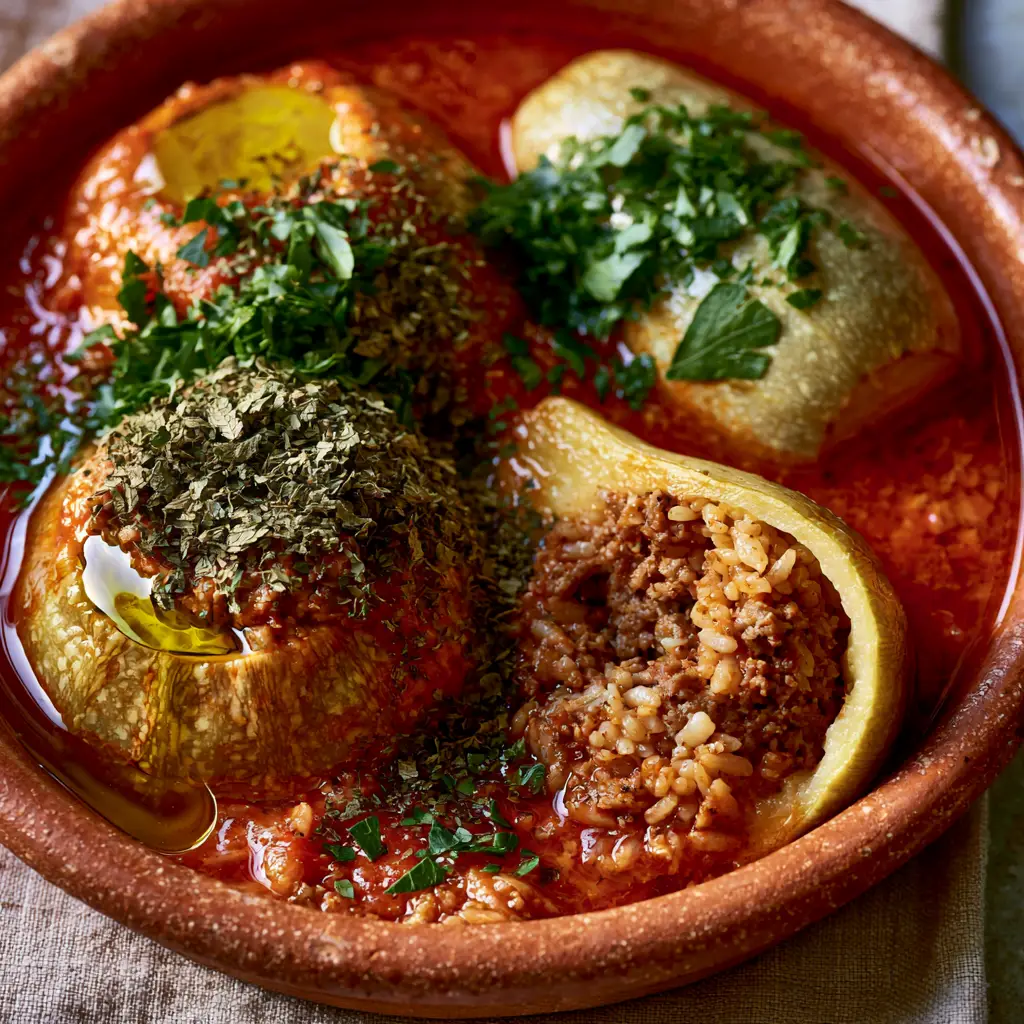
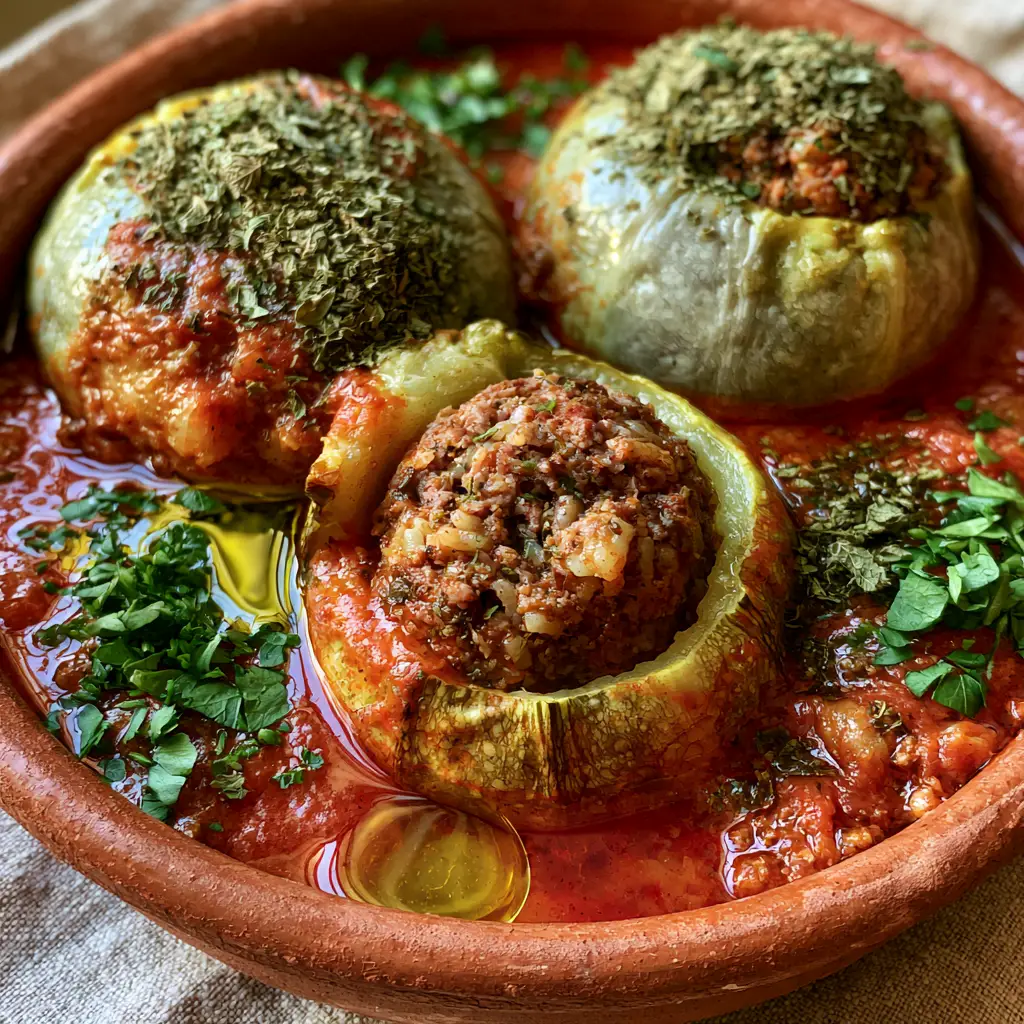
Kousa, or Lebanese stuffed squash, is more than just a meal; it is a culinary masterpiece that defines Levantine comfort food. Imagine a rustic terracotta bowl filled with tender, pale-green grey squashes, simmered until they reach a buttery softness. When you slice into one, a steaming, tightly packed filling of aromatic short-grain rice and savory ground beef is revealed, perfectly seasoned with traditional spices.
The squashes are submerged in a rich, vibrant red tomato and garlic broth that is glossy, thick, and deeply flavorful. Every spoonful offers a balance of earthy squash, hearty meat, and a zesty finish from a generous sprinkling of dried mint and fresh flat-leaf parsley. A final drizzle of golden extra virgin olive oil catches the light, making this dish as visually stunning as it is delicious.
Why This Kousa Recipe Will Become a Family Favorite
- Perfectly Balanced Textures: The contrast between the melt-in-your-mouth grey squash and the structured, spiced rice and meat filling is pure culinary harmony.
- Rich Garlic-Tomato Broth: Unlike watery versions, this broth is simmered into a thick, glossy nectar that coats every piece of Kousa.
- Aromatic Depth: The combination of dried mint flakes and fresh parsley provides a bright, cooling counterpoint to the warm spices of the beef.
- Visually Stunning Presentation: The pale green squash against the vibrant red broth creates a high-contrast dish perfect for Sunday dinners or hosting guests.
Essential Ingredients for Authentic Lebanese Kousa
The Fresh Produce and Proteins
Grey Squash (Magda): You will need 2 lbs (900g) of small-to-medium grey squash. These are sturdier and sweeter than standard zucchini, allowing them to hold the filling without breaking during the long simmer.
Lean Ground Beef: 1/2 lb (225g) of ground beef provides the savory foundation for the filling. It should be finely ground to integrate seamlessly with the rice grains.
Fresh Garlic: 6 cloves of garlic are essential. Half are minced for the filling, while the other half are smashed to infuse the thick tomato broth with a pungent, savory aroma.
The Grains and Pantry Staples
Short-Grain Rice: 1 cup (200g) of short-grain rice, like Egyptian or Arborio, is necessary. The high starch content ensures the filling is “tightly packed” and steaming when sliced open, similar to how one might prepare other traditional rice pilaf styles.
Tomato Paste: 6 oz (170g) of high-quality tomato paste. This is the secret to achieving that “vibrant red” and “thick” consistency described in the visual blueprint.
Extra Virgin Olive Oil: Used both for sautéing and as a finishing drizzle. It adds a silky mouthfeel and a beautiful golden sheen to the final bowl.
The Signature Spices and Garnishes
Dried Mint Flakes: 1 tbsp (2g) of dried mint. This is non-negotiable for Kousa, providing the iconic Lebanese aroma that cuts through the richness of the beef.
Fresh Flat-Leaf Parsley: 1/4 cup (15g) finely chopped. This adds a pop of color and a fresh, herbaceous note just before serving.
Lebanese Seven Spice (Baharat): 1 tsp (3g). A blend of allspice, cinnamon, and black pepper that gives the meat its characteristic Middle Eastern depth.
Must-Have Tools for Coring and Simmering
To achieve the perfect Kousa, you will need a Man’ara or a long vegetable corer. This tool allows you to hollow out the squash while keeping the walls thin and intact. A heavy-bottomed Dutch oven or a large pot is also required to ensure even heat distribution so the squashes steam perfectly in their broth. If you enjoy this type of preparation, you might also like exploring other classic stuffed peppers techniques.
Step-by-Step Instructions to Master Kousa Mahshi
Preparing the Grey Squash
Wash the grey squash thoroughly and trim the woody stems. Using your vegetable corer, carefully hollow out each squash. You want to remove the seeds and enough flesh to leave a wall thickness of about 1/8 inch (3mm). Be patient; the goal is a hollow vessel that won’t crack during the steaming process.
Mixing the Aromatic Rice Filling
In a large mixing bowl, combine the rinsed short-grain rice, raw ground beef, minced garlic, Seven Spice, and 1 tsp (6g) of salt. Add 1 tbsp (15ml) of extra virgin olive oil to the mix. Use your hands to knead the mixture until the meat and rice are perfectly homogenized. This ensures the filling stays “tightly packed” as it cooks.
The Stuffing Technique
Stuff each Kousa with the rice and meat mixture. Important: Only fill the squash about 3/4 of the way full. The short-grain rice needs room to expand as it absorbs the tomato broth. If you overstuff, the squash will burst, ruining the visual of the “tender steamed” exterior.
Creating the Glossy Tomato Garlic Broth
In your large pot, whisk together the tomato paste, 4 cups (950ml) of water, smashed garlic cloves, and a pinch of salt. Bring the mixture to a simmer over medium heat. Carefully nestle the stuffed Kousa into the pot, ensuring they are mostly submerged in the vibrant red liquid.
The Slow Simmer and Sensory Cues
Reduce the heat to low and cover the pot. Let the Kousa simmer for 50-60 minutes. Look for the squash to turn a pale, translucent green. The broth should reduce until it is glossy and thick enough to coat the back of a spoon. You will know it’s ready when the aroma of garlic and spiced meat fills your kitchen.
Expert Tips for the Perfect Kousa
- Soak the Rice: Soak your short-grain rice for 15 minutes before mixing. This ensures the rice is perfectly tender at the same moment the squash finishes steaming.
- Salt the Broth Layered: Season both the filling and the broth. This deepens the flavor profile and ensures the squash itself isn’t bland.
- The Squeeze Test: Gently press a squash with a spoon; if it gives easily without resistance, it is perfectly tender.
- Don’t Discard the Innards: The leftover squash flesh can be sautéed with garlic and oil, similar to how you might prep zucchini fritters, to avoid food waste.
Storing, Reheating, and Make-Ahead Advice
Kousa actually tastes better the next day as the flavors continue to meld. Store leftovers in an airtight container in the refrigerator for up to 4 days. To reheat, place the squash and broth in a small saucepan over medium-low heat until steaming. Avoid microwaving on high power, as this can cause the squash walls to become rubbery.
While you can freeze Kousa, the texture of the squash will become significantly softer upon thawing. If you do freeze, consume within 2 months for the best quality.
What to Serve with Lebanese Stuffed Squash
This dish is a complete meal on its own, but it pairs beautifully with a side of plain yogurt or a crisp cucumber salad to provide a cool contrast to the warm tomato broth. If you are looking for more vegetable-forward sides, consider a baked zucchini dish to utilize any extra squash you might have bought.
Frequently Asked Questions
It is not recommended. Short-grain rice contains more starch, which helps the filling stay ‘tightly packed’ and moist. Long-grain rice can result in a loose, dry filling that falls out of the squash.
Two things are vital: first, do not overstuff the squash (fill only 3/4 full) to allow the rice to expand. Second, keep the heat at a low simmer rather than a rolling boil to prevent the squashes from knocking against each other.
Grey squash, also known as Magda or Mexican squash, is the traditional choice. It has a slightly thicker skin and sweeter flesh than standard zucchini, allowing it to withstand long simmering times without falling apart.
Dried mint has a more concentrated, earthy flavor that stands up well to the long cooking process. It provides the signature ‘Lebanese’ aroma that defines the tomato broth in this dish.
The Ultimate Kousa Mahshi Recipe
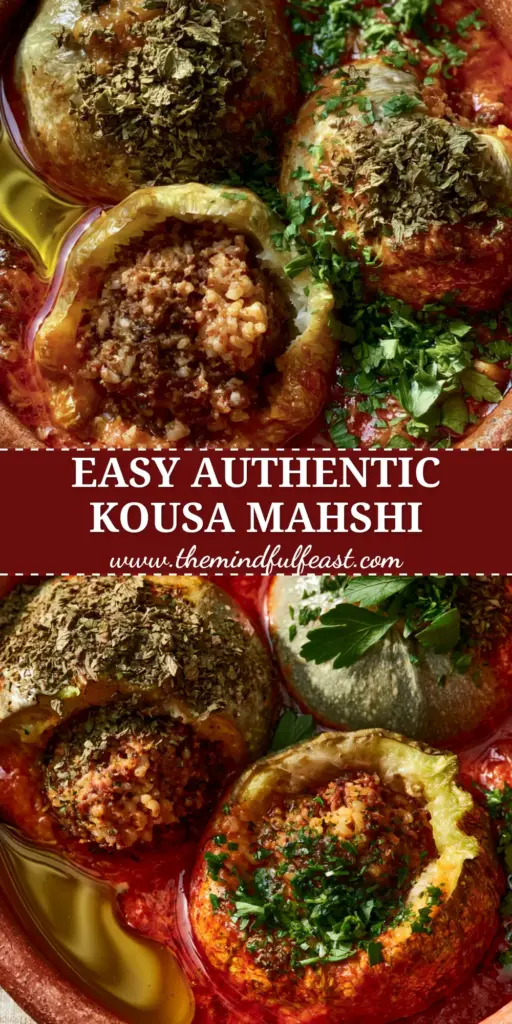
Kousa Mahshi: Authentic Lebanese Stuffed Grey Squash in Tomato Broth
Ingredients
Equipment
Method
- Wash the grey squash and core them carefully using a Man'ara, leaving 1/8 inch walls.
- Mix rice, beef, minced garlic, spices, and 1 tbsp oil. Stuff squashes 3/4 full.
- Combine tomato paste, water, and smashed garlic in a pot. Add squash and simmer for 60 minutes until tender and broth is glossy.
- Sprinkle with dried mint, parsley, and a drizzle of olive oil before serving.
Notes
Use grey squash specifically for the most authentic texture and flavor.
Closing & Call to Action
Authentic Kousa is a labor of love that rewards you with incredible depth of flavor and a beautiful presentation. Whether you are slicing into that first steaming squash or dipping a piece of crusty bread into the thick garlic tomato broth, this recipe is sure to impress. If you enjoyed this journey into Lebanese cuisine, please leave a comment below and share your results! Don’t forget to pin this recipe to your favorite boards on Pinterest.