Mango ice cream is the ultimate expression of summer, capturing the essence of sun-ripened fruit in a dense, velvety frozen treat. If you have ever struggled with icy, thin, or bland homemade desserts, this recipe is your scientific solution for professional-grade results without an expensive churner.
By leveraging the specific fat content of heavy cream and the stabilizing properties of sweetened condensed milk, we create a texture so smooth it leaves distinct scoop-drag marks. This is not just a quick dessert; it is a vibrant, golden-orange experience that rivals the finest gelaterias.
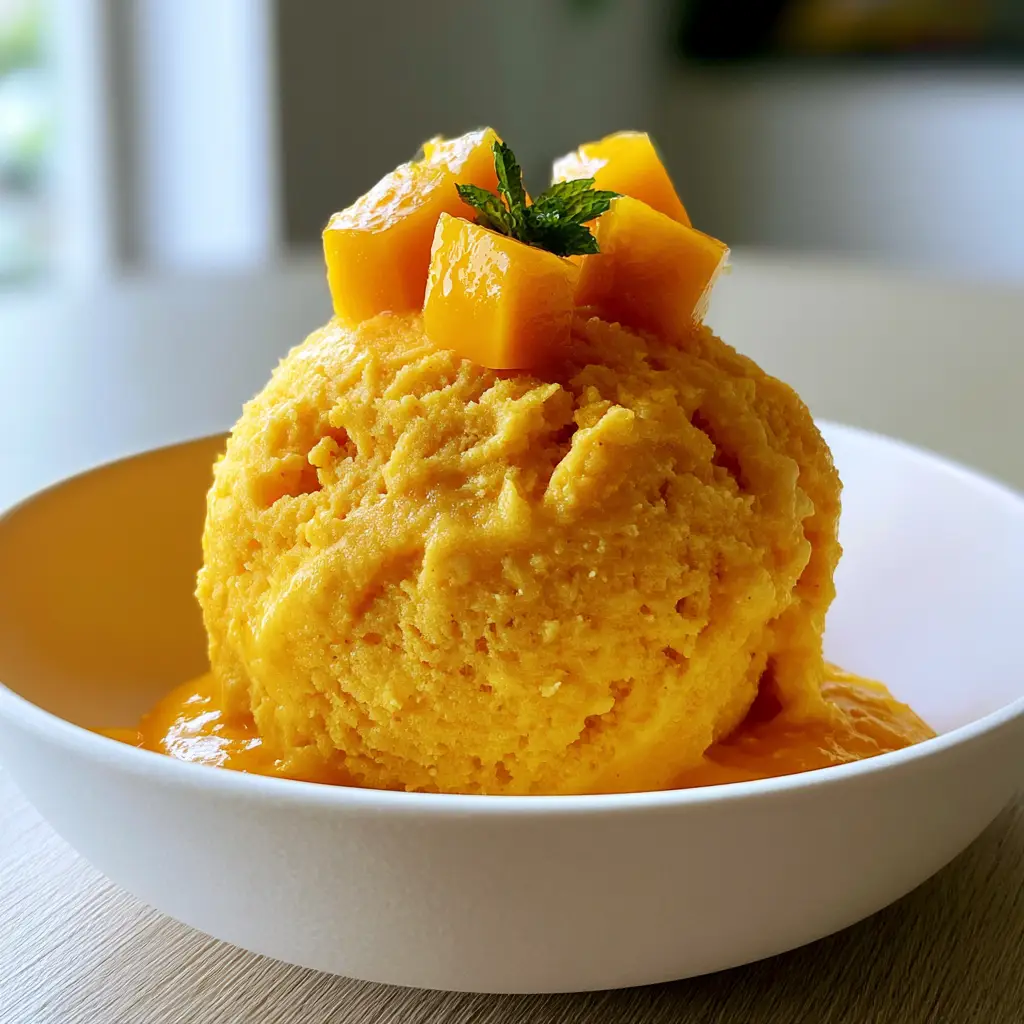
Every element of this recipe is designed to achieve a specific visual and textural goal, from the glistening fresh mango cubes to the tiny sprig of fresh mint. We are bridging the gap between high-end culinary photography and your home kitchen, ensuring your final bowl looks exactly like a macro professional shot.
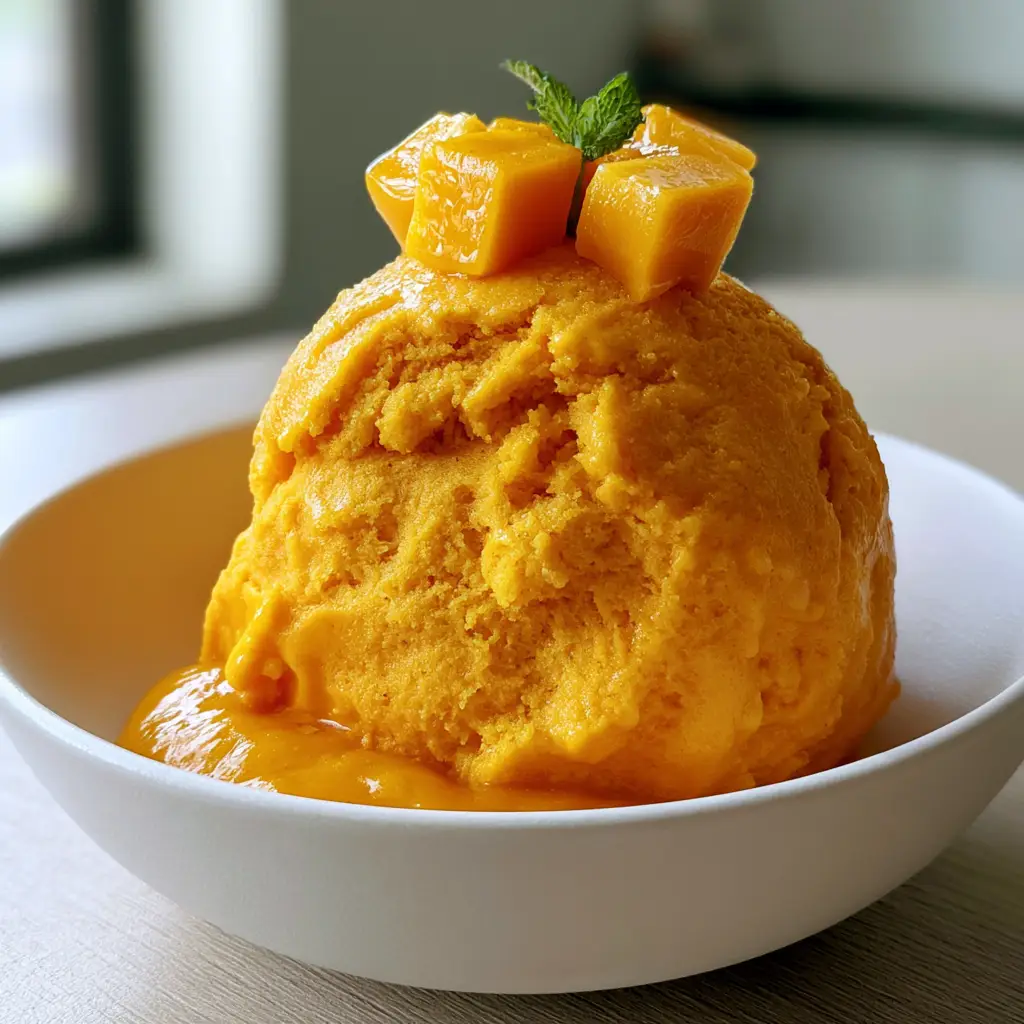
The Anatomy of a Perfect Golden Scoop
- Dense and Velvety Texture: We eliminate ice crystals by managing the water content in the mango puree and using high-fat dairy.
- Vibrant Natural Color: The intense golden-orange hue comes entirely from high-quality frozen mangoes, requiring no artificial dyes.
- Visual Sophistication: Learn the “drag-and-roll” technique to get those iconic professional scoop marks seen in food magazines.
- Contrast in Temperatures: The pairing of frozen ice cream with room-temperature glistening mango cubes provides a complex sensory experience.
The Science Behind Our Selected Ingredients
Frozen Mango Puree: 2 cups (450g). Using frozen mangoes that are processed into a puree ensures a lower water activity than fresh fruit, which is the key to preventing ice crystals in mango ice cream.
Chilled Heavy Cream: 2 cups (480ml). This must be at least 36% milk fat to provide the structural integrity needed for a dense, velvety mouthfeel that holds its shape under soft lighting.
Sweetened Condensed Milk: 1 can (14oz / 397g). The high sugar and protein content in condensed milk acts as an anti-freeze, keeping the ice cream scoopable directly from the freezer.
Fresh Mango Cubes: 1 cup (165g). These provide a glistening, fresh textural contrast; look for ripe Kent or Ataulfo varieties for the best color and flavor.
Foundational Salt: 1/4 tsp (1.5g). A tiny pinch of fine sea salt enhances the tropical sweetness and cuts through the richness of the heavy cream.
Fresh Mint Leaves: Small sprigs for garnish. The aromatic oils in the mint provide a cooling finish that balances the intense sugar of the mango.
Essential Tools for Professional Results
To achieve the “macro handheld” look, you will need a high-speed blender or food processor to ensure the frozen mango puree is completely smooth. A chilled metal loaf pan or a deep ceramic dish is preferred for freezing, as it conducts cold more evenly than plastic.
A heavy-duty spring-loaded ice cream scoop is vital for creating that perfectly rounded shape. Finally, a minimalist matte white ceramic bowl will make the golden-orange colors pop, just like a professional food stylist would choose.
Transforming Puree into Velvet: Step-by-Step
Creating the Intensive Mango Base
Begin by processing your 2 cups (450g) of frozen mango chunks in a high-speed blender. You want to pulse until the mixture transforms into a thick, uniform frozen mango puree with no visible fiber or lumps.
Reserve about 1/4 cup (60ml) of this puree in a small squeeze bottle or bowl. This will become the thick, bright mango puree drizzle used for the final presentation at the base of the scoop.
Achieving the Aerated Dairy Structure
In a large, chilled mixing bowl, pour in your 2 cups (480ml) of heavy cream. Using a hand mixer or stand mixer, whip the cream on medium-high speed until stiff peaks form.
Watch for the sensory cue: the cream should transition from a bubbly liquid to a dense, cloud-like foam that holds its shape when the whisk is lifted. This air trapped in the fat is what prevents your mango ice cream from becoming a solid block of ice.
The Folding and Freezing Process
Gently pour the sweetened condensed milk and the main batch of mango puree into the whipped cream. Use a rubber spatula to fold the ingredients together using a “cut and turn” motion.
Continue folding until the mixture is a uniform, vibrant golden-orange with no white streaks. Transfer the mixture into your chilled container, smoothing the top, and freeze for at least 6 hours, or until firm.
Expert Tips for the Ultimate Mango Texture
- The Temperature Factor: Always chill your bowl and beaters before whipping the cream; cold fat molecules trap air much more efficiently.
- Avoid Over-Mixing: Once you add the mango puree, fold gently. Over-mixing will deflate the air you worked so hard to incorporate, leading to a hard, icy texture.
- The Perfect Scoop: Dip your scoop in warm water and wipe it dry between every single serving to ensure a clean, professional drag-mark surface.
- Drizzle Placement: For the best visual impact, place the mango puree drizzle in the bowl *before* placing the scoop on top, creating a professional “pool” effect.
Storing and Serving Your Tropical Creation
Homemade mango ice cream is best enjoyed within two weeks for maximum flavor freshness. Store it in the back of the freezer—never in the door—to avoid temperature fluctuations that cause crystallization.
When ready to serve, let the container sit on the counter for 3-5 minutes. This slight softening allows you to achieve that “slight sheen” and dense texture described in the visual blueprint.
What to Serve With This Vibrant Dessert
This rich dessert pairs beautifully with other homemade treats. If you are hosting a summer brunch, serve a scoop alongside a fluffy pancake recipe topped with extra mango syrup.
For a full tropical dinner, start with a honey garlic beef rice bowl and finish with this ice cream to cleanse the palate. If you love frozen treats but are short on time, you might also enjoy our instant ice cream alternatives for a quicker fix.
Frequently Asked Questions
Yes, you can substitute the heavy cream with chilled full-fat coconut cream and the condensed milk with sweetened condensed coconut milk, though the flavor profile will change.
No, this is a no-churn recipe. The combination of whipped heavy cream and sweetened condensed milk creates a naturally soft, scoopable structure without churning.
It typically takes 6 to 8 hours to reach a firm, scoopable consistency. For best results, freeze it in a metal pan which conducts the cold faster.
Ataulfo (honey) mangoes or Alphonso mangoes are preferred for their lack of fibers and intense golden color, which results in the most vibrant and smooth ice cream.
Ice crystals usually form when there is too much water in the fruit. Using frozen mangoes processed into a thick puree, rather than fresh juice, helps maintain a velvety texture.
The Ultimate Golden Mango Ice Cream Recipe
Mango Ice Cream: The Secret to a Velvety No-Churn Tropical Masterpiece
Ingredients
Equipment
Method
- Place frozen mango chunks in a blender and process until completely smooth. Set aside 1/4 cup for the drizzle garnish.
- In a chilled bowl, beat the heavy cream until stiff peaks form and it holds its shape.
- Gently fold in the condensed milk, sea salt, and mango puree into the whipped cream until no streaks remain.
- Pour into a metal pan and freeze for at least 6 hours.
- Drizzle reserved puree in a white bowl. Add a large scoop of ice cream, top with 4 mango cubes and a sprig of mint.
Notes
Use a warm, dry scoop to get the professional scoop-drag marks.
Join the Purely Home Cooked Community
Creating this mango ice cream is just the beginning of your tropical culinary journey. We would love to see your “scoop-drag” photos and your beautiful garnishing skills!
Leave a comment below to let us know how your texture turned out, and don’t forget to follow us on Pinterest for more visual recipe blueprints. Sharing this recipe helps us keep the kitchen lights on and the mangoes ripening!