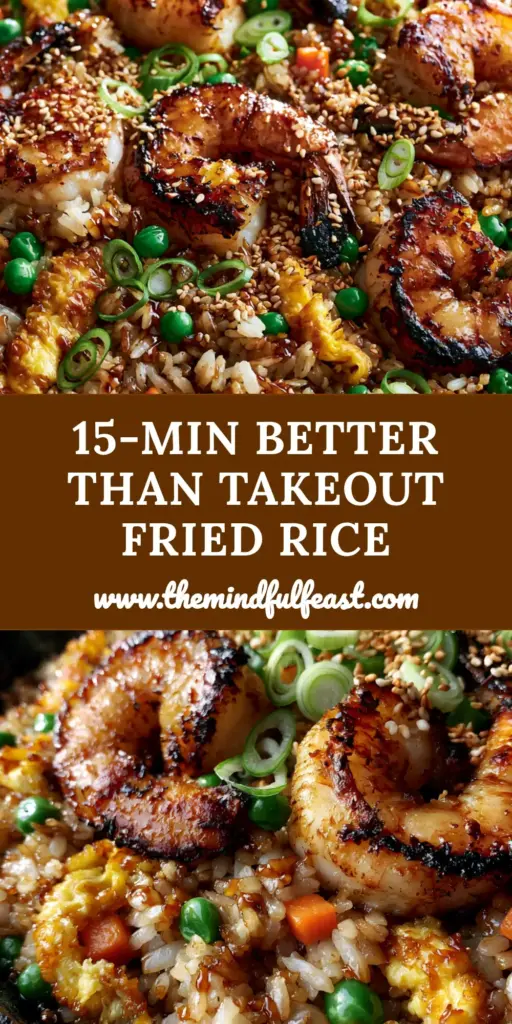
There is a specific, intoxicating magic that happens when high heat meets a seasoned cast iron skillet. When you make Shrimp Fried Rice at home, you aren’t just tossing ingredients in a pan; you are performing a culinary dance of texture and temperature. Imagine succulent, jumbo shrimp with deeply charred edges nestled against perfectly separated jasmine rice grains, each one glistening with a savory amber soy glaze. This isn’t just a meal; it’s a sensory experience that rivals the best teppanyaki grills.
Achieving that restaurant-quality “breath of the wok” (wok hei) in a home kitchen requires a focus on visual and tactile cues. We are looking for those vibrant emerald green peas and tiny uniform cubes of bright orange carrots to pop against the golden scrambled egg ribbons. Every bite should offer a contrast between the snap of the shrimp and the tender-firm bite of the rice, all tied together with the nutty aroma of toasted white sesame seeds.
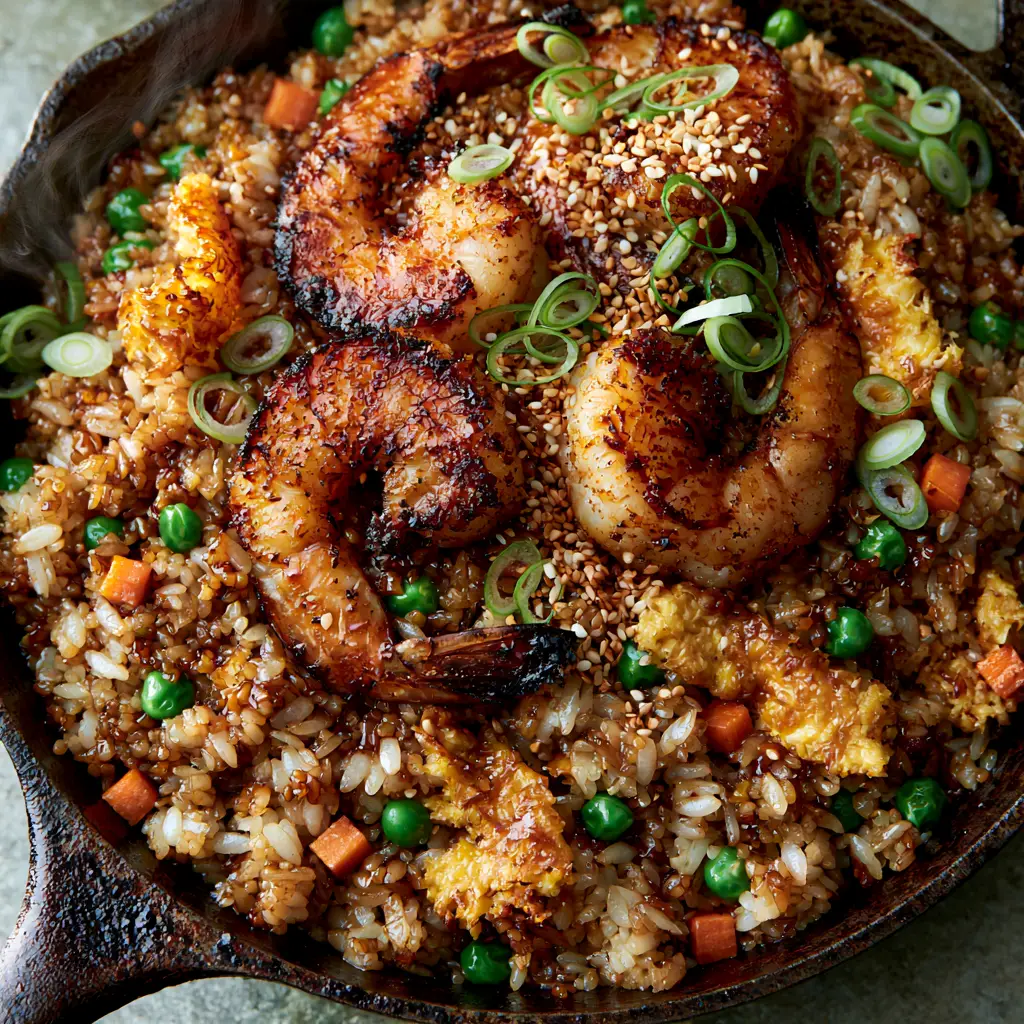
The Secrets Behind the Perfect Hibachi-Style Texture
- Individual Grain Integrity: By using chilled, day-old jasmine rice, we ensure each grain stays firm and separated rather than clumping into a mushy mass.
- The Maillard Reaction: Searing the jumbo shrimp in a screaming hot cast iron skillet creates those signature golden-brown charred edges that provide deep, smoky flavor.
- Fluffy Egg Architecture: Instead of scrambling the eggs into the rice, we create distinct golden ribbons that add a soft, pillowy contrast to the crisp rice.
- The Amber Glaze: A precise balance of light soy sauce and toasted sesame oil creates a thin, savory coating that makes the rice glisten under soft light.
Essential Components for This Shrimp Fried Rice Masterpiece
Jumbo Shrimp (450g / 1 lb): Look for 16/20 count shrimp to ensure they stay succulent and juicy while you achieve that hard exterior sear. Patting them dry is the secret to getting those charred edges rather than steaming them.
Day-Old Jasmine Rice (720ml / 3 cups cooked): Jasmine rice offers a floral aroma and the perfect starch content. Chilling it overnight dehydrates the surface of the grain, which is vital for the Shrimp Fried Rice to “fry” rather than steam.
Toasted Sesame Oil (15ml / 1 tbsp): This isn’t just a fat; it’s a flavor powerhouse. It provides the base for our amber glaze and gives the dish its characteristic hibachi aroma.
Large Eggs (3 units): These are whisked with a pinch of salt to create those vibrant golden ribbons. The fat in the yolks adds richness that balances the saltiness of the soy glaze.
Fresh Scallions (3-4 stalks): We use the white parts for sautéing to build a flavor base and the green parts, bias-cut, as a fresh, crunchy garnish.
Frozen Peas and Carrots (150g / 1 cup): These provide the classic visual “confetti” look. The carrots must be finely diced into uniform cubes to ensure they cook at the same rate as the peas.
Light Soy Sauce (45ml / 3 tbsp): This provides the salt and the color. It creates the glistening amber coating that characterizes high-end fried rice recipes.
Toasted White Sesame Seeds (5g / 1 tsp): A final sprinkle adds a subtle crunch and reinforces the nutty notes of the toasted sesame oil.
Tools Required for Culinary Success
To achieve the visual result seen in professional kitchens, a 12-inch (30cm) seasoned dark cast iron skillet is your best friend. The heavy metal retains heat far better than stainless steel, allowing for that rapid searing of the shrimp and the “toasting” of the rice grains. You will also need a wide metal spatula to aggressively toss the rice without breaking the grains.
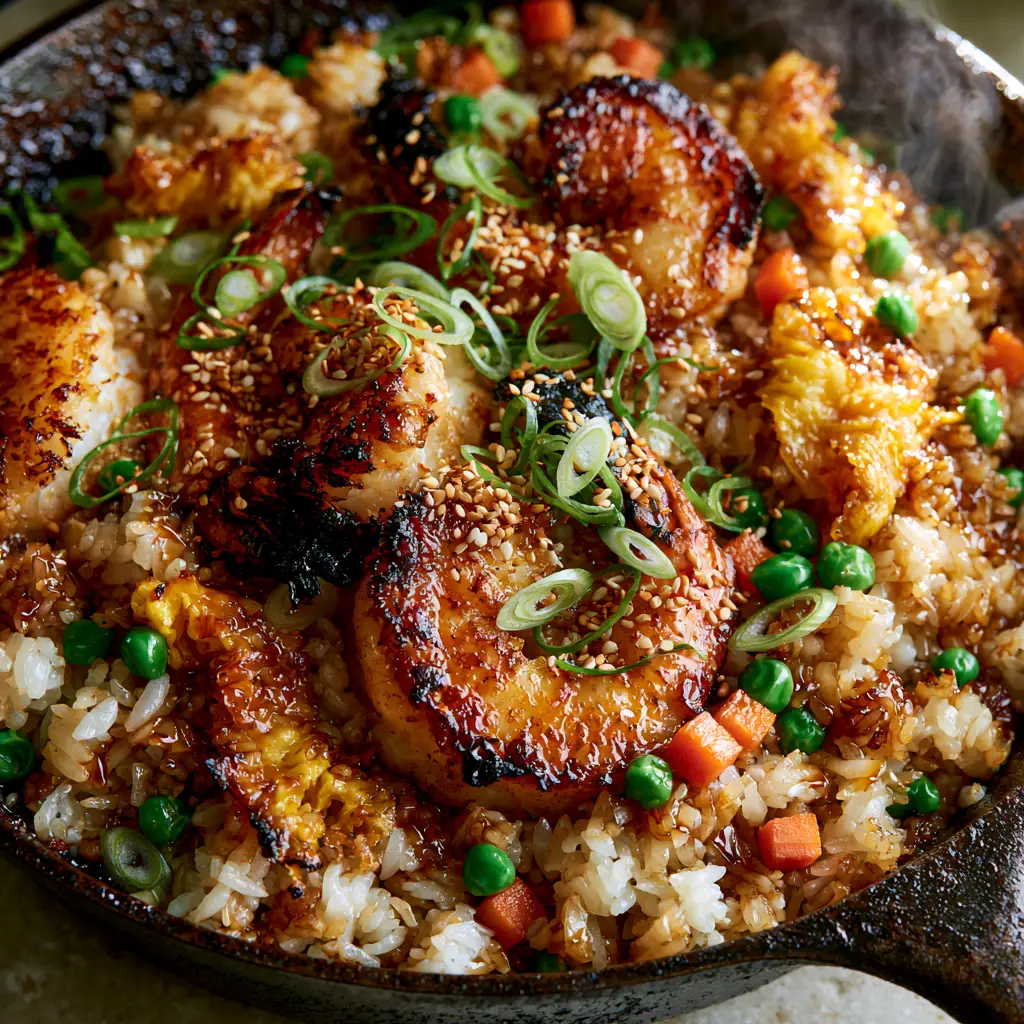
A Step-by-Step Guide to Searing and Stir-Frying
Searing the Jumbo Shrimp to Perfection
Heat your cast iron skillet over medium-high heat until a drop of water flicked onto the surface dances and evaporates instantly. Add a tablespoon (15ml) of high-smoke point oil. Place your patted-dry jumbo shrimp in a single layer. Do not crowd the pan. Let them sit undisturbed for 2 minutes until a deep golden-brown crust forms on the bottom. Flip and cook for 1 more minute until they show those beautiful charred edges, then remove them from the pan immediately to prevent overcooking.
Crafting the Golden Egg Ribbons
In the same skillet, add another teaspoon (5ml) of oil. Pour in your whisked eggs. Let them set for 30 seconds, then gently push them across the pan with your spatula to create large, fluffy folds. Once just barely set, remove them and set them aside with the shrimp. We want these to remain as distinct “ribbons” rather than tiny bits.
Building the Flavor Base and Sautéing Aromatics
Add the finely diced orange carrots to the pan. Sauté for 3-4 minutes until they begin to soften. Toss in the white parts of the scallions and the frozen green peas. The peas will thaw almost instantly in the residual heat, turning a vibrant emerald green. This creates the colorful vegetable mosaic essential for a professional Shrimp Fried Rice presentation.
The Final Fry and Amber Glaze Integration
Turn the heat to high. Add the chilled jasmine rice to the skillet, breaking up any large clumps with your spatula. Drizzle the light soy sauce and toasted sesame oil over the rice. Toss vigorously for 3-5 minutes. You should hear the rice “crackle” and “pop” as it toasts. The rice should change from white to a beautiful glistening amber color. Fold the shrimp and egg ribbons back into the rice gently.
Expert Tips for Hibachi Excellence
- Temperature Control: If your skillet starts to smoke excessively, slightly reduce the heat, but never go below medium-high. High heat is what prevents the rice from becoming greasy.
- Rice Preparation: If you don’t have day-old rice, spread freshly cooked rice on a baking sheet and place it in front of a fan for 30 minutes to dry out the surface.
- Shrimp Management: Always peel and devein your shrimp, but leave the tails on if you prefer the traditional hibachi look. The tails add extra flavor to the oil during the sear.
- Visual Garnishing: Always cut your scallions on a sharp bias (diagonal). This creates longer, more elegant green rounds that elevate the dish’s aesthetic.
Smart Storage and Reheating Methods
This Shrimp Fried Rice is best enjoyed immediately, but it can be stored in an airtight container in the refrigerator for up to 3 days. To reheat, avoid the microwave if possible. Instead, add a splash of water to a skillet, add the rice, and cover it with a lid for 2 minutes over medium heat. This steams the rice back to its original fluffiness without drying out the shrimp.
Perfect Pairings for a Complete Meal
This dish is a star on its own, but it pairs beautifully with other Asian-inspired textures. For a lighter side, try these cucumbers and onions in vinegar to cut through the richness of the sesame oil. If you are looking for a surf-and-turf experience, consider serving it alongside a honey garlic beef bowl. For those who love a variety of grains, you might even find inspiration in the bold spices of a Nigerian fried rice to see how different cultures approach the fried rice technique.
Frequently Asked Questions
It is not recommended as fresh rice contains too much moisture, leading to a mushy texture. If you must, spread it on a tray and dry it under a fan for at least 30 minutes before frying.
While a wok is traditional, a seasoned cast iron skillet is the best home alternative because it retains the high heat necessary for the ‘sear’ and ‘pop’ of the rice grains.
The amber color comes from the combination of light soy sauce and toasted sesame oil being tossed over high heat, which lightly caramelizes the surface of the rice.
Frozen peas and carrots are actually preferred by many chefs for fried rice because they are flash-blanched, retaining their vibrant colors and perfect texture during a quick stir-fry.
Jumbo shrimp (16/20 count) are best because they can withstand high heat and develop a charred exterior without overcooking the center.
The Ultimate Shrimp Fried Rice Recipe
Shrimp Fried Rice: The Ultimate Hibachi-Style Cast Iron Recipe
Ingredients
Equipment
Method
- Heat oil in a cast iron skillet over medium-high heat. Sear patted-dry shrimp for 2 minutes per side until charred edges appear. Remove from pan.
- Pour whisked eggs into the pan, let set briefly, then push into fluffy ribbons. Remove and set aside.
- Add carrots and scallion whites to the pan; sauté until carrots soften. Add peas and cook until vibrant green.
- Increase heat to high, add chilled rice, soy sauce, and sesame oil. Toss vigorously until rice is glistening amber and hot.
- Fold in the shrimp and egg ribbons. Garnish with scallion greens and toasted sesame seeds.
Notes
Ensure the skillet is smoking hot before adding the shrimp for the best char.
Final Thoughts on Mastering the Skillet
Mastering the Shrimp Fried Rice is a milestone for any home cook. It teaches you the importance of preparation (mise en place) and the power of high-heat cooking. The result—a skillet full of charred jumbo shrimp, glistening jasmine rice, and vibrant vegetables—is as rewarding to look at as it is to eat. Don’t forget to snap a photo of your creation and share it with us!
If you enjoyed this recipe, please consider following us on Pinterest for more culinary inspiration and home-cooked favorites. Leave a comment below and tell us: did you get those perfect charred edges on your shrimp?