The Middle Eastern salad is a vibrant tapestry of textures, colors, and bracingly fresh flavors that defines Levantine cuisine. Among the diverse array of salads from this region, none captures the essence of a sun-drenched Mediterranean afternoon quite like a perfectly executed Fattoush.
This Middle Eastern salad is not merely a side dish; it is a masterclass in contrast, pairing the cooling crunch of Persian cucumbers with the explosive, citrusy zing of ground sumac. Every bite offers a symphonic blend of crisp romaine hearts, juicy heirloom tomatoes, and the unmistakable “shatter” of deep-fried golden pita chips.
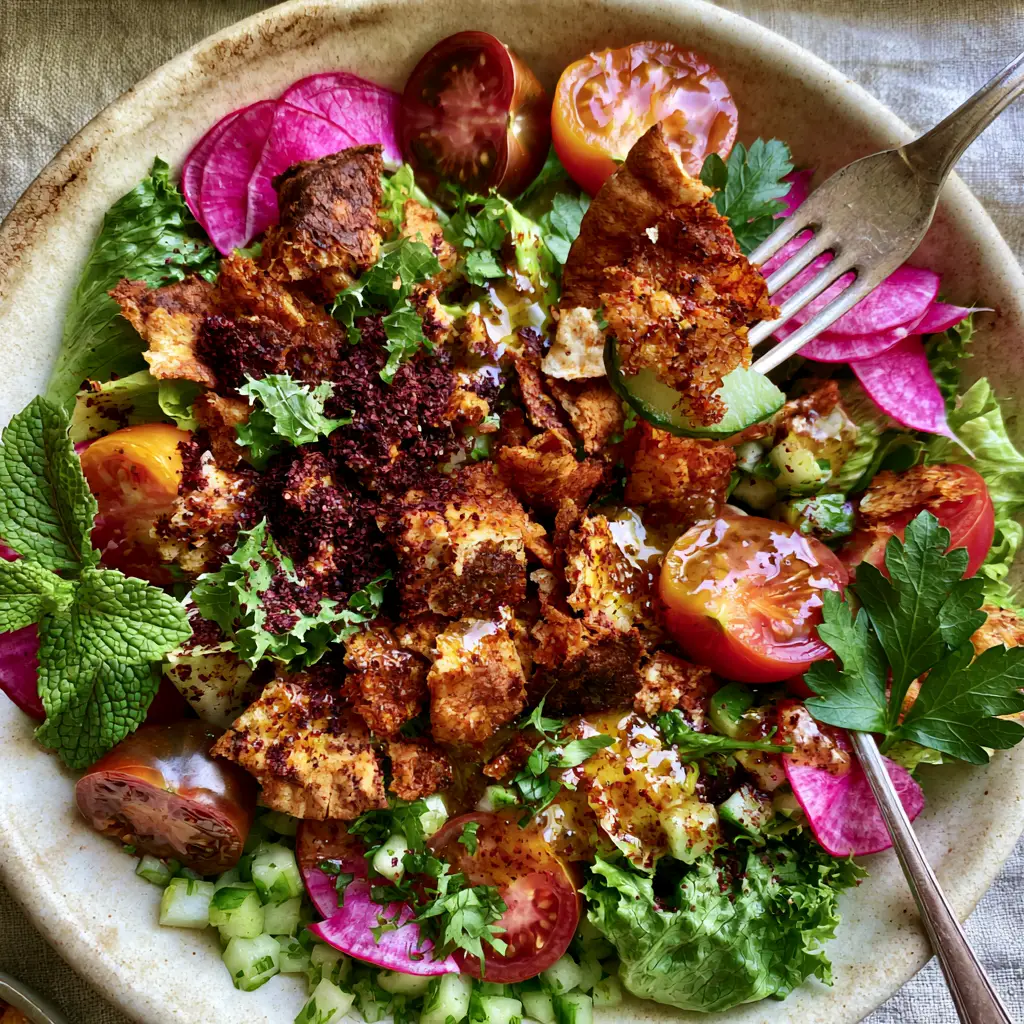
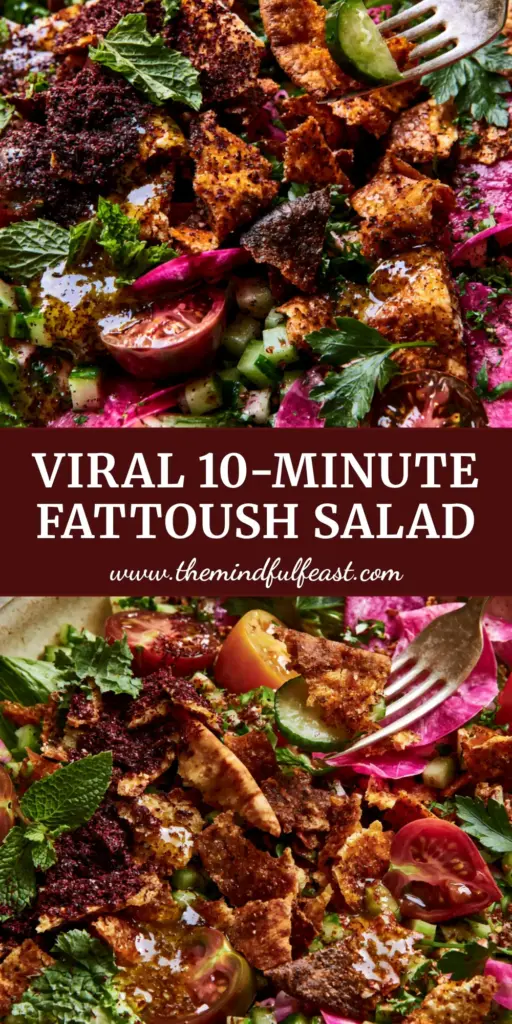
Whether you are seeking a refreshing lunch or a sophisticated starter, this Middle Eastern salad provides a nutrient-dense profile that never compromises on satisfaction. The secret lies in the visual and textural harmony of the ingredients, precisely as they appear in the rustic ceramic bowls of the Levant.
The Anatomy of a Perfect Middle Eastern Salad Experience
- Unrivaled Texture: A combination of paper-thin radishes, crisp romaine, and thick, deep-fried pita chips that stay crunchy until the last bite.
- Vibrant Visual Palette: A stunning array of red and orange heirloom tomatoes against the emerald green of fresh mint and flat-leaf parsley.
- Aromatic Depth: A heavy dusting of dark burgundy sumac provides a floral, tart complexity that common vinegar simply cannot replicate.
- Emulsified Excellence: A thick, glistening lemon-olive oil dressing that clings to every leaf, ensuring no bite is left unseasoned.
The Essential Components for a Vibrant Middle Eastern Salad
To achieve the forensic accuracy of a true Fattoush, each ingredient must be selected for its specific contribution to the dish’s structural integrity. Substituting these will alter the fundamental character of this Middle Eastern salad.
Romaine Hearts: Use 2 large heads of romaine hearts, focusing on the pale green interior leaves for maximum rigidity and water content. The sturdy ribs provide the essential structural foundation that prevents the salad from becoming soggy once the dressing is applied.
Persian Cucumbers: You will need 4-5 small Persian cucumbers (approx. 300g), which offer a thin, edible skin and a concentrated sweetness. Unlike larger varieties, these have minimal seeds, ensuring your Middle Eastern salad remains crisp rather than watery.
Heirloom Cherry Tomatoes: Select 1 cup (150g) of red and orange heirloom cherry tomatoes for their balanced acidity and visual pop. Halving them allows their juices to mingle with the vinaigrette, creating a secondary layer of natural dressing.
Vibrant Pink Radishes: Use 4-5 medium radishes, sliced into paper-thin rounds using a mandoline. Their peppery bite provides a necessary sharp contrast to the cooling cucumbers and sweet tomatoes.
Fresh Herbs: You will need 1 cup (30g) of torn fresh mint leaves and 1 cup (30g) of chopped flat-leaf parsley. These are not mere garnishes; they are foundational greens that provide the “herbaceous soul” of the Middle Eastern salad.
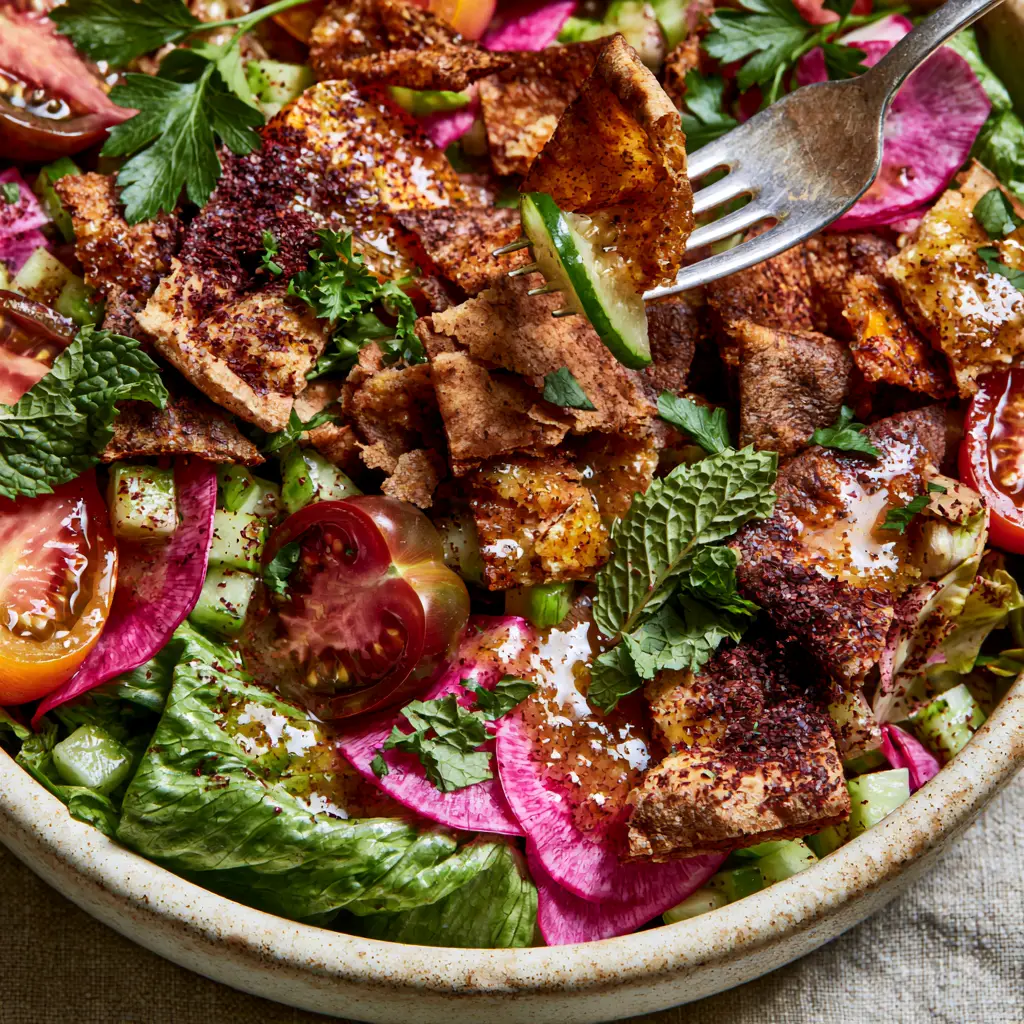
Deep-Fried Pita Chips: Two large pieces of Lebanese-style pita bread, torn into bite-sized pieces and fried until deep golden-brown. The frying process creates a moisture barrier, allowing the chips to retain their “shattered” texture even when drizzled with dressing.
Ground Sumac: A generous 1.5 tbsp (9g) of high-quality, dark burgundy sumac powder. This spice provides the signature tartness and deep color that defines the aesthetic of an authentic Middle Eastern salad.
Invisible Foundations: You will also require 1/2 cup (120ml) of high-quality extra virgin olive oil, 1/4 cup (60ml) of fresh lemon juice, 2 cloves of minced garlic (approx. 6g), and 1/2 cup (120ml) of neutral oil (like grapeseed) for frying the pita.
Precision Tools for Culinary Success
Achieving the professional, high-angle macro look of this Middle Eastern salad requires specific culinary tools. A sharp chef’s knife is essential for dicing the cucumbers into uniform cubes, while a mandoline ensures the radishes achieve that “paper-thin” transparency.
For the dressing, a small glass jar or a high-speed whisk is necessary to create a stable emulsion between the lemon juice and olive oil. Finally, a heavy-bottomed skillet or Dutch oven is required for deep-frying the pita chips to that perfect deep golden-brown hue without burning.
Step-by-Step Construction of the Authentic Fattoush
Creating the Golden “Shatter” Pita Chips
Heat 1/2 cup (120ml) of neutral oil in a medium skillet over medium-high heat until it reaches approximately 350°F (175°C). Carefully add the torn pita pieces in batches to avoid overcrowding the pan.
Fry the pita for 2-3 minutes, stirring constantly, until they transition from a pale tan to a deep, resonant golden-brown. Remove immediately with a slotted spoon and drain on paper towels; sprinkle with a pinch of salt and a dusting of sumac while still hot to lock in the flavor.
Mastering the Emulsified Sumac Vinaigrette
In a small bowl or jar, combine 1/4 cup (60ml) of fresh lemon juice, 2 cloves of finely minced garlic, 1/2 tbsp (3g) of sumac, and 1/2 tsp (3g) of sea salt. Slowly drizzle in 1/2 cup (120ml) of extra virgin olive oil while whisking vigorously.
The goal is a thick, glistening vinaigrette that appears opaque and slightly creamy. This emulsion is critical for ensuring the Middle Eastern salad is evenly coated, catching the light as seen in professional food photography.
Prepping the Garden Elements
Chop the romaine hearts into 1-inch (2.5cm) squares, ensuring you include the crunchy ribs. Dice the Persian cucumbers into 1/2-inch (1.25cm) cubes and halve the heirloom cherry tomatoes longitudinally to showcase their interior structure.
Tear the mint leaves by hand rather than chopping them with a knife to prevent bruising and oxidation, which keeps the greens vibrant emerald rather than dark brown. Finely chop the parsley, removing any thick, woody stems.
The Final Assembly and Garnish
In a large rustic ceramic bowl, layer the romaine hearts and cucumbers first, followed by the tomatoes and radishes. Drizzle the thick vinaigrette over the vegetables and toss gently to ensure every surface is glistening.
Top the salad with the generous scattering of fried pita chips, the torn mint, and the chopped parsley. Finish with the final “heavy dusting” of dark burgundy sumac across the top to provide that iconic visual contrast and citrusy punch.
Expert Tips for the Ultimate Middle Eastern Salad
- Temperature Control: Ensure your vegetables are chilled before assembly; the contrast between cold vegetables and warm, freshly fried pita chips is a hallmark of elite Middle Eastern salad preparation.
- Salt Timing: Only salt the dressing, not the vegetables directly, until the moment of serving. Salting the cucumbers and tomatoes too early will draw out their moisture, leading to a watery bowl.
- Pita Selection: Use thin, pocket-style Lebanese pita rather than thick Greek-style flatbread for the chips. The thinner bread fries into a crispier, more delicate “shattered” texture.
- The Sumac Test: If your sumac is bright red, it may be dyed or low quality. Look for a dark, deep burgundy color for the most authentic flavor and visual impact.
Storage and Make-Ahead Instructions
This Middle Eastern salad is best enjoyed immediately to preserve the crunch of the pita chips. However, you can prep the components in advance to save time during dinner service.
Store the chopped vegetables and herbs in an airtight container with a damp paper towel for up to 24 hours. Keep the fried pita chips in a dry, sealed container at room temperature. The dressing can be made up to 3 days in advance and stored in the refrigerator; just be sure to re-emulsify it with a quick shake before using.
What to Serve With Your Middle Eastern Salad
This salad serves as a magnificent accompaniment to grilled meats or as a light, standalone lunch. For a complete Levantine feast, consider pairing it with a Mediterranean grilled chicken salad to add a protein boost.
If you enjoy the cooling nature of this dish, you might also like a classic cucumber onion salad or a creamy dill cucumber salad. For a more heartier grain-based option, this Fattoush pairs beautifully alongside a Mediterranean quinoa salad or a flavorful chicken shawarma salad.
Frequently Asked Questions
Yes, you can toss them in olive oil and bake at 400°F (200°C) until golden. However, deep-frying provides the specific ‘shattered’ texture and moisture barrier seen in the visual blueprint.
The key is to wait until the very last second to add the dressing and the fried pita chips. Also, ensure your romaine hearts are thoroughly dried after washing.
Yes. While both are Middle Eastern salads, Tabbouleh is herb-based (parsley) with bulgur wheat, while Fattoush is a bread-based salad focused on toasted or fried pita and mixed greens.
Sumac is a dried berry powder with a tart, lemony flavor. If you cannot find it, a mixture of lemon zest and a pinch of paprika can mimic the acidity and color, though sumac is preferred for authenticity.
Persian cucumbers have thinner skins and fewer seeds than English or garden cucumbers, which prevents the salad from becoming overly watery and maintains a superior crunch.
The Authentic Middle Eastern Fattoush Salad Recipe
Middle Eastern Salad: The Ultimate Crispy Fattoush with Sumac Lemon Vinaigrette
Ingredients
Equipment
Method
- Heat neutral oil in a skillet and fry torn pita pieces until deep golden-brown and shattered in texture. Drain on paper towels and season with sumac and salt.
- Whisk together lemon juice, garlic, sumac, and salt. Slowly drizzle in olive oil while whisking until a thick, glistening emulsion forms.
- Toss the romaine, cucumbers, tomatoes, and radishes with the dressing in a large bowl. Layer in the fresh herbs.
- Top with the fried pita chips and a final heavy dusting of sumac before serving immediately.
Notes
Serve immediately after adding pita chips to maintain the 'shattered' crunch.
Experience the Flavors of the Levant
Crafting this Middle Eastern salad is an invitation to explore the bold, bright, and textural world of Mediterranean cooking. The combination of fresh herbs, tart sumac, and that signature pita crunch creates a dish that is as beautiful to look at as it is delicious to eat.
If you enjoyed this recipe, please leave a comment below and share your results! Don’t forget to follow us on Pinterest for more vibrant, home-cooked inspiration.