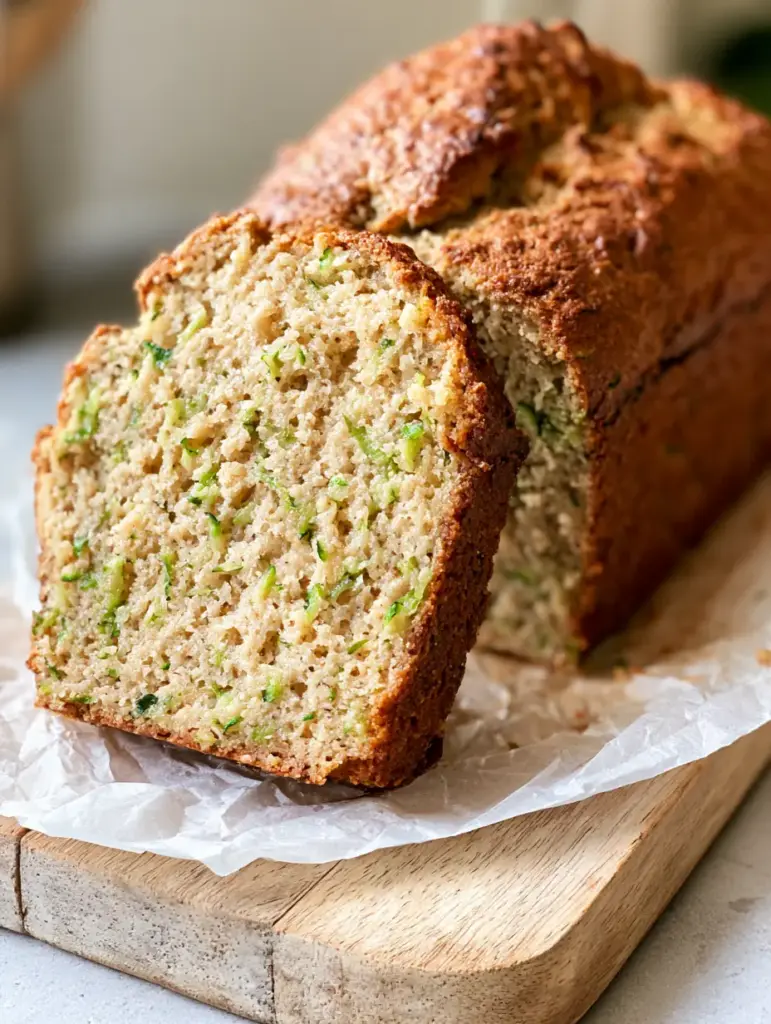
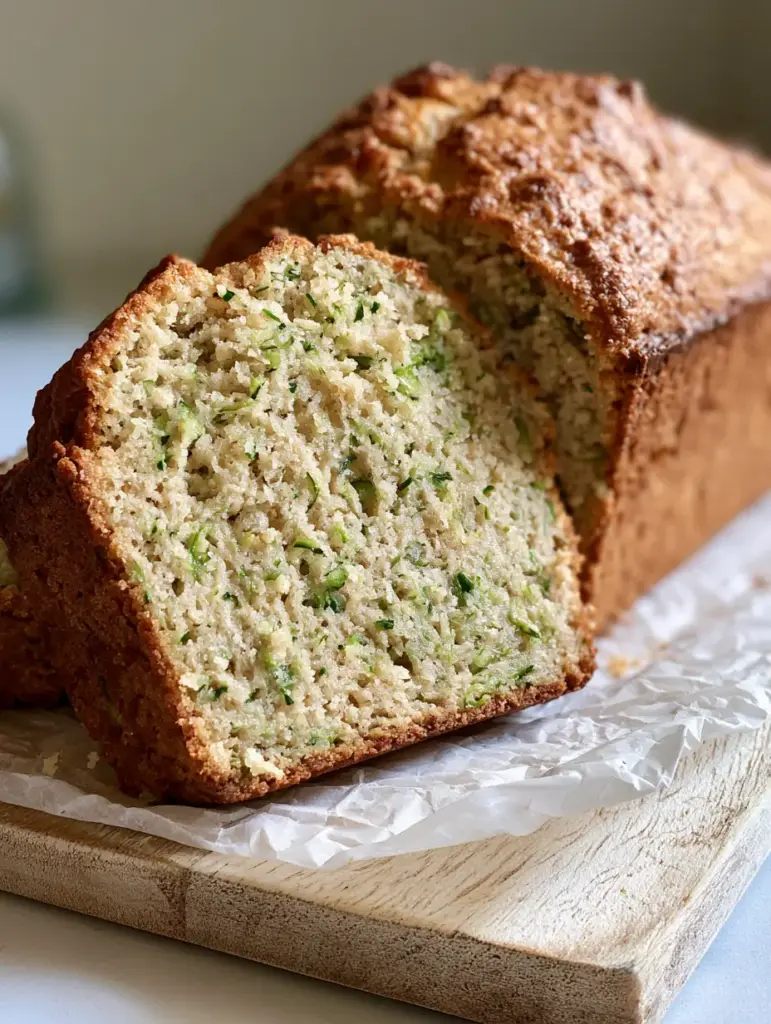
There is something undeniably comforting about a thick, generous slice of Paleo zucchini bread leaning against a freshly baked loaf. As the soft morning daylight catches the golden-brown domed crust, you can see the intricate textures that make this grain-free masterpiece so special. This isn’t just another health food substitute; it is a dense, cake-like experience that rivals any traditional bakery offering.
If you have been searching for a recipe that delivers a visibly moist interior studded with tiny, bright green flecks of fresh zucchini, you have arrived. We have engineered this recipe to provide the structural integrity of a classic quick bread while utilizing the fine grain of almond flour for a superior mouthfeel. Set upon a piece of crumpled white parchment paper on a rustic wooden board, this bread looks as authentic as it tastes.
Making a successful Paleo zucchini bread requires a deep understanding of moisture management and leavening science. In this guide, we will walk you through the forensic details of grain-free baking to ensure your loaf achieves that iconic domed top and tender crumb every single time. Get ready to transform your kitchen into a rustic bakery haven.
Why This Moist Grain-Free Loaf Outshines Traditional Quick Breads
- Perfectly Dense Texture: Unlike many gluten-free breads that feel gritty or dry, this recipe uses a precise ratio of almond flour to eggs to create a cake-like density.
- Visually Stunning Crumb: The fine green flecks of zucchini are not just for nutrition; they provide moisture pockets that keep the bread fresh for days.
- Golden Crust Development: We utilize natural sugars and specific oven temperatures to ensure a beautiful, uneven golden-brown domed crust that offers a slight crunch.
- Nutrient-Dense Foundation: By swapping refined grains for heart-healthy almond flour, this Paleo zucchini bread provides sustained energy without the glycemic crash.
Essential Elements for the Perfect Golden-Brown Domed Crust
Super-Fine Blanched Almond Flour: 2.5 cups (280g). This is the structural backbone of our loaf, providing the essential “crumb” texture described in our visual blueprint while ensuring a nutty, rich flavor profile.
Fresh Zucchini: 1.5 cups (approx. 225g), finely grated and squeezed. The bright green flecks come from using the fine side of your grater; ensure you squeeze out excess water to prevent the bread from becoming gummy.
Large Room-Temperature Eggs: 3 units. Eggs act as the primary binder in grain-free baking, providing the lift necessary to achieve that beautiful domed top during the rise.
Pure Maple Syrup or Honey: 1/2 cup (120ml). This natural sweetener helps in the caramelization process, contributing significantly to the golden-brown color of the crust.
Melted Coconut Oil: 1/3 cup (80ml). This foundational fat ensures the interior remains moist and provides a subtle richness that complements the almond flour.
Baking Soda: 1 tsp (5g). This is a critical invisible ingredient that reacts with the acidity in the sweetener to create carbon dioxide bubbles for a soft rise.
Ground Cinnamon: 1 tbsp (8g). Cinnamon adds warmth and depth, rounding out the earthy flavors of the zucchini and almond.
Sea Salt: 1/2 tsp (3g). A professional culinary secret, salt enhances the sweetness of the syrup and the natural flavor of the nuts.
Apple Cider Vinegar: 1 tsp (5ml). The acid here reacts with the baking soda to provide an extra “boost” of height, ensuring a rustic, uneven dome.
Vanilla Extract: 1 tsp (5ml). Vanilla adds a layer of aromatic complexity that makes the bread taste more like a treat and less like a health food.
The Culinary Toolkit for Professional-Grade Grain-Free Baking
To achieve the look of a handheld smartphone photo taken in natural light, your tools must be as precise as your ingredients. You will need a standard 8.5 x 4.5 inch (21 x 11 cm) loaf pan. Using a slightly smaller pan helps force the batter upward, creating that generous, thick slice seen in our visual prompt.
High-quality white parchment paper is also essential. Not only does it prevent sticking, but the aesthetic “crumpled white parchment paper” look adds a rustic, authentic feel to your final presentation. A light-colored rustic wooden cutting board is the ideal surface for cooling and slicing, as wood helps regulate the temperature of the loaf’s bottom, preventing sogginess.
Finally, a fine-mesh grater or a box grater with a fine setting is non-negotiable. Large chunks of zucchini will sink to the bottom and create wet spots, whereas tiny green flecks distribute evenly throughout the almond flour crumb. If you have extra zucchini, you might even consider making some crispy zucchini chips as a side snack!
Mastering the Perfect Fold: Step-by-Step Instructions
Phase 1: Preparing the Zucchini and Oven
Preheat your oven to 350°F (175°C). Line your loaf pan with crumpled white parchment paper, leaving a slight overhang on the sides for easy removal. Finely grate your zucchini and place it in a clean kitchen towel; squeeze forcefully until most of the liquid is removed, leaving you with dry, bright green flecks.
Phase 2: The Wet Emulsion
In a large mixing bowl, whisk the 3 eggs vigorously until they are slightly frothy. Add the maple syrup, melted coconut oil, vanilla, and apple cider vinegar. Whisking these thoroughly is vital for ensuring the Paleo zucchini bread has a uniform, cake-like density without oil streaks.
Phase 3: The Dry Integration
In a separate bowl, sift together the almond flour, baking soda, cinnamon, and salt. Sifting is a professional step that prevents almond flour clumps, which can ruin the “fine grain” appearance of the crumb. Slowly fold the dry ingredients into the wet until just combined.
Phase 4: Folding in the Visual Flecks
Gently fold the squeezed zucchini into the batter. Do not overmix; you want the tiny green flecks to be distinct and visible in the final slice. Pour the thick batter into the prepared pan, smoothing the top slightly but leaving a bit of texture for that uneven rustic dome.
Phase 5: The Bake and Sensory Cues
Bake for 45-55 minutes. You are looking for a deep golden-brown crust that feels firm to the touch. The smell of toasted almonds and warm cinnamon should fill your kitchen. A wooden skewer inserted into the center should come out clean, highlighting the moist, dense interior crumb.
Pro Secrets for the Best Zucchini Bread Results
- Squeeze Twice: Just when you think the zucchini is dry, squeeze it again. Excess moisture is the primary reason Paleo breads fail to rise.
- Measure by Weight: Almond flour density varies by brand. Using a scale (280g) ensures your Paleo zucchini bread isn’t too heavy or too crumbly.
- Tent with Foil: If your crust is getting golden brown too quickly (around the 30-minute mark), tent the pan loosely with foil to allow the center to finish cooking without burning the top.
- The Cooling Rule: Let the bread cool completely on the rustic wooden board before slicing. This allows the almond flour structure to set, ensuring those thick, generous slices stay intact.
How to Preserve That Freshly-Baked Texture
Because this bread is so moist, it needs to be stored properly to avoid spoilage. Once completely cool, wrap the loaf in fresh parchment paper and store it in an airtight container. It will stay fresh on the counter for 2 days or in the refrigerator for up to 7 days.
For long-term storage, slice the Paleo zucchini bread and freeze the slices individually. This allows you to pull out a single thick, generous slice and toast it whenever the craving hits. It toasts beautifully, intensifying the almond flavor and crisping up the golden crust.
Perfect Pairings for Your Rustic Slices
This bread is a versatile staple that fits into many meal plans. For a complete breakfast spread, serve a toasted slice alongside some fluffy Japanese soufflé pancakes for a variety of textures. The dense, moist crumb of the zucchini bread contrasts beautifully with the airy lightness of the pancakes.
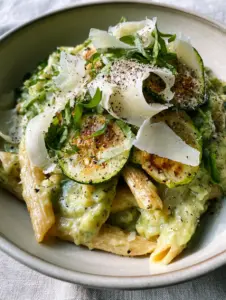
If you’re looking for a savory lunch pairing, this bread works surprisingly well with a bowl of creamy zucchini pasta. The theme of fresh garden vegetables carries through the entire meal. Whether you enjoy it as a snack or a side, the authentic, handheld smartphone photo appeal of this loaf makes every meal feel like a special occasion.
Frequently Asked Questions
Yes! You can gently fold in 1/2 cup of chopped walnuts or dark chocolate chips along with the zucchini flecks for added texture and flavor without compromising the structural integrity of the loaf.
No, coconut flour is much more absorbent than almond flour. Replacing it 1:1 will result in a very dry, crumbly bread. For this specific texture, stick to super-fine blanched almond flour.
The domed crust is achieved by the reaction between baking soda and apple cider vinegar. Additionally, using a slightly smaller loaf pan (8.5 x 4.5 inch) helps the bread rise upward rather than spreading out.
While this recipe is Paleo and grain-free, it uses maple syrup or honey. To make it keto-friendly, you would need to substitute the natural sweetener with a sugar-free alternative like monk fruit or erythritol.
Sogginess is usually caused by excess moisture in the zucchini. Ensure you grate the zucchini finely and squeeze it forcefully in a kitchen towel to remove as much water as possible before adding it to the batter.
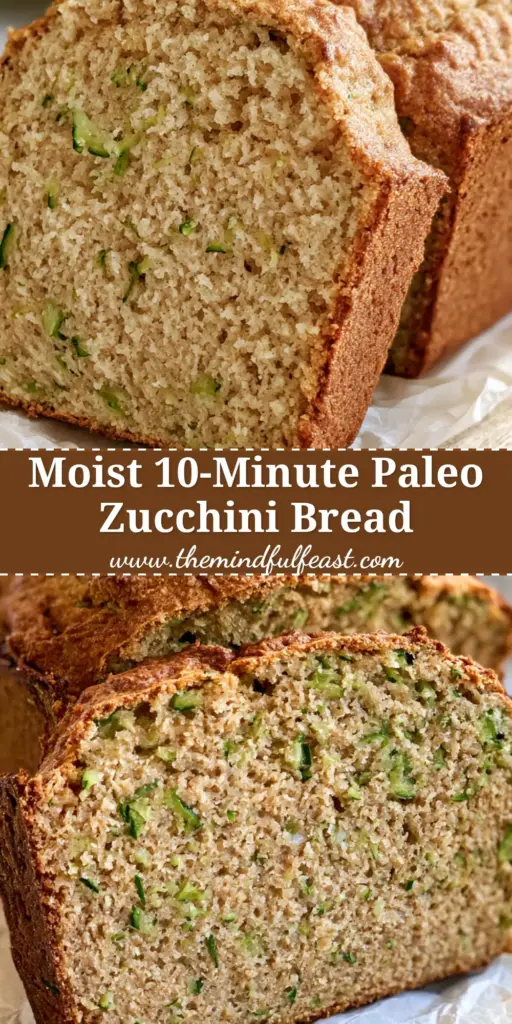
The Ultimate Paleo Zucchini Bread Recipe Card
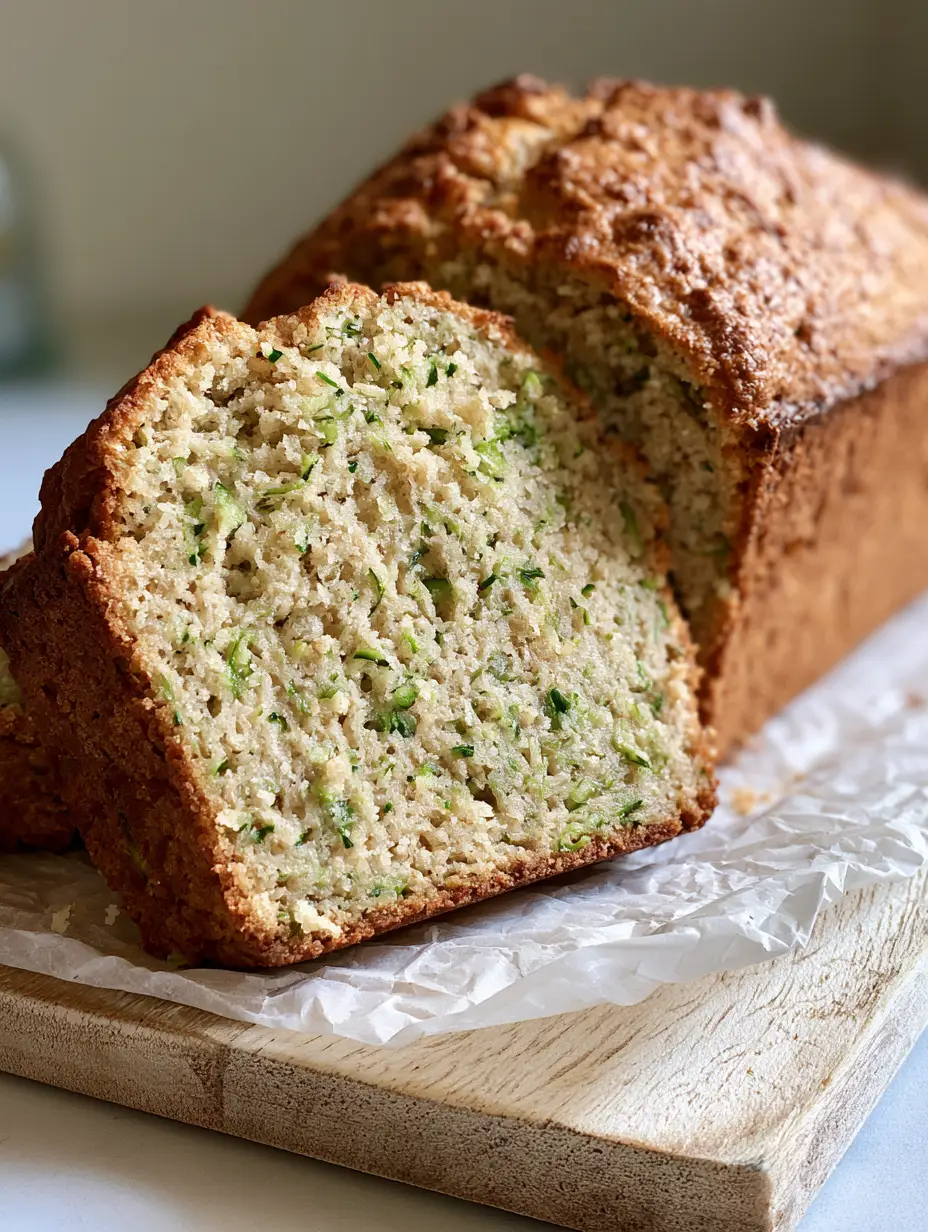
Paleo Zucchini Bread with a Moist Almond Flour Crumb
Ingredients
Equipment
Method
- Preheat oven to 350°F (175°C). Line a loaf pan with crumpled white parchment paper.
- Finely grate zucchini and squeeze out all excess moisture using a kitchen towel until you have 1.5 cups of dry green flecks.
- In a large bowl, whisk eggs, maple syrup, coconut oil, vinegar, and vanilla until smooth and slightly frothy.
- In a separate bowl, sift together almond flour, baking soda, cinnamon, and salt.
- Gradually add the dry ingredients to the wet, stirring until combined. Gently fold in the squeezed zucchini flecks.
- Pour batter into the pan. Bake for 45-55 minutes until the crust is golden brown and a skewer comes out clean.
- Cool completely on a rustic wood board before slicing into thick, generous pieces.
Notes
Sifting the almond flour is key for a fine, cake-like grain.
Conclusion: Bring the Rustic Bakery Home
There is nothing quite like the satisfaction of slicing into a home-baked Paleo zucchini bread and seeing that perfect almond flour crumb. With its golden-brown domed crust and moist, cake-like interior, this recipe is a testament to how delicious grain-free baking can be. It’s a rustic, authentic treat that satisfies both the eyes and the palate.
We hope you enjoy this recipe as much as we do! If you make this loaf, please leave a comment below and tell us how yours turned out. Don’t forget to share your photos and tag us on Pinterest to show off your beautiful, rustic creations!