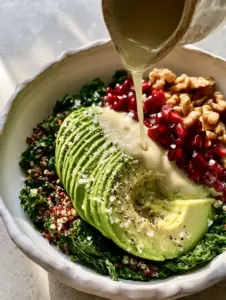
When it comes to achieving a radiant complexion, the most effective glowing skin tips often start in the kitchen rather than the vanity. This Glass Skin Beauty Bowl is a masterclass in culinary aesthetics and nutritional density, designed to nourish your skin from the inside out. By combining high-fiber grains, healthy fats, and antioxidant-rich fruits, we create a meal that reflects the “glass skin” trend—clear, luminous, and remarkably smooth.
Every element of this bowl serves a dual purpose: providing a satisfying, multi-textured dining experience and delivering the essential vitamins required for cellular repair. The visual appeal of the deep emerald kale against the bright, fluffy quinoa isn’t just for show; it’s a vibrant indicator of the phytonutrients awaiting your digestive system. Whether you are prepping for a busy week or looking for a restorative lunch, this recipe is your go-to guide for edible skincare.
How This Beauty Bowl Revolutionizes Modern Glowing Skin Tips
To truly understand the power of this recipe, we must look at how these specific ingredients interact with your biology. Integrating these glowing skin tips into your daily meal rotation can lead to visible changes in skin texture and hydration levels. This bowl is meticulously designed to provide a balanced ratio of macronutrients that prevent blood sugar spikes, which are often the culprit behind skin inflammation and breakouts.
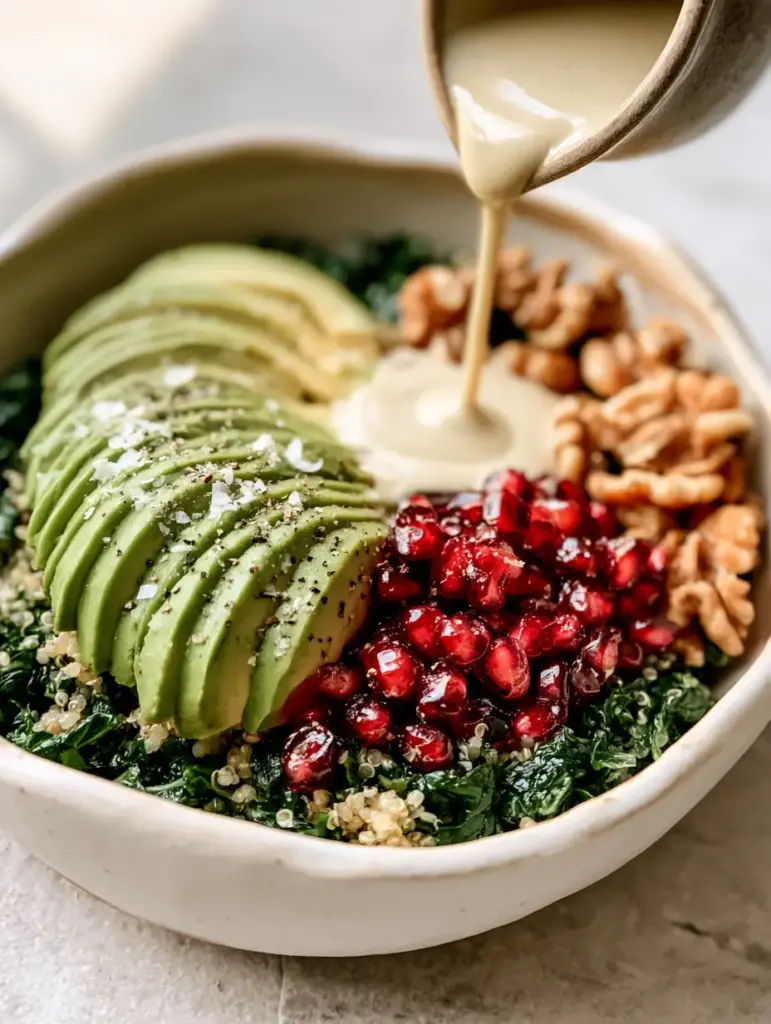
- Hydration through Healthy Fats: The fanned avocado provides monounsaturated fats that strengthen the skin’s lipid barrier, locking in moisture for that coveted dewy look.
- Internal Exfoliation: High-fiber quinoa and massaged kale act as a “broom” for the digestive tract, ensuring toxins are processed efficiently rather than surfacing through the skin.
- Oxidative Stress Protection: Ruby-red pomegranate seeds are packed with polyphenols that fight free radical damage from UV exposure and pollution.
- Texture Contrast: The crunch of toasted walnuts and the silkiness of the tahini dressing provide a sensory experience that makes healthy eating feel like an indulgence.
The Nutrient-Dense Foundations of Our Glowing Skin Bowl
Achieving the perfect “Glass Skin” aesthetic in a bowl requires specific ingredients that provide both structural integrity and a glossy finish. Here is what you will need to gather to bring these glowing skin tips to life on your plate.
Curly or Lacinato Kale: This serves as our mineral-rich base. Massaging the kale with acid and fat breaks down the tough cellulose, making it easier to digest and giving it a “deep emerald” glow.
White Quinoa: Quinoa provides the “bright” contrast in our bowl. When cooked properly, it becomes light and fluffy, acting as a protein-packed sponge for the creamy dressing.
Ripe Hass Avocado: The “creamy” element of the dish. Slicing it into thin, fanned sections ensures you get a buttery bite in every forkful while providing essential Vitamin E.
Pomegranate Seeds: These are the “ruby-red” jewels of the dish. They provide a tart pop of flavor and a glistening visual contrast against the matte greens.
Walnut Halves: Toasted walnuts provide the necessary crunch. Their Omega-3 fatty acids are legendary among glowing skin tips for reducing redness and irritation.
Creamy Tahini: The base of our “glossy sauce drip.” Tahini is rich in zinc, a mineral vital for collagen production and skin healing.
Foundational Flavors: You will also need 1 tbsp (15ml) of extra virgin olive oil, 2 tbsp (30ml) of fresh lemon juice, 1/2 tsp (2.5g) flaky sea salt, and a generous crack of black pepper to pull the flavors together.
Essential Kitchen Tools for Professional Presentation
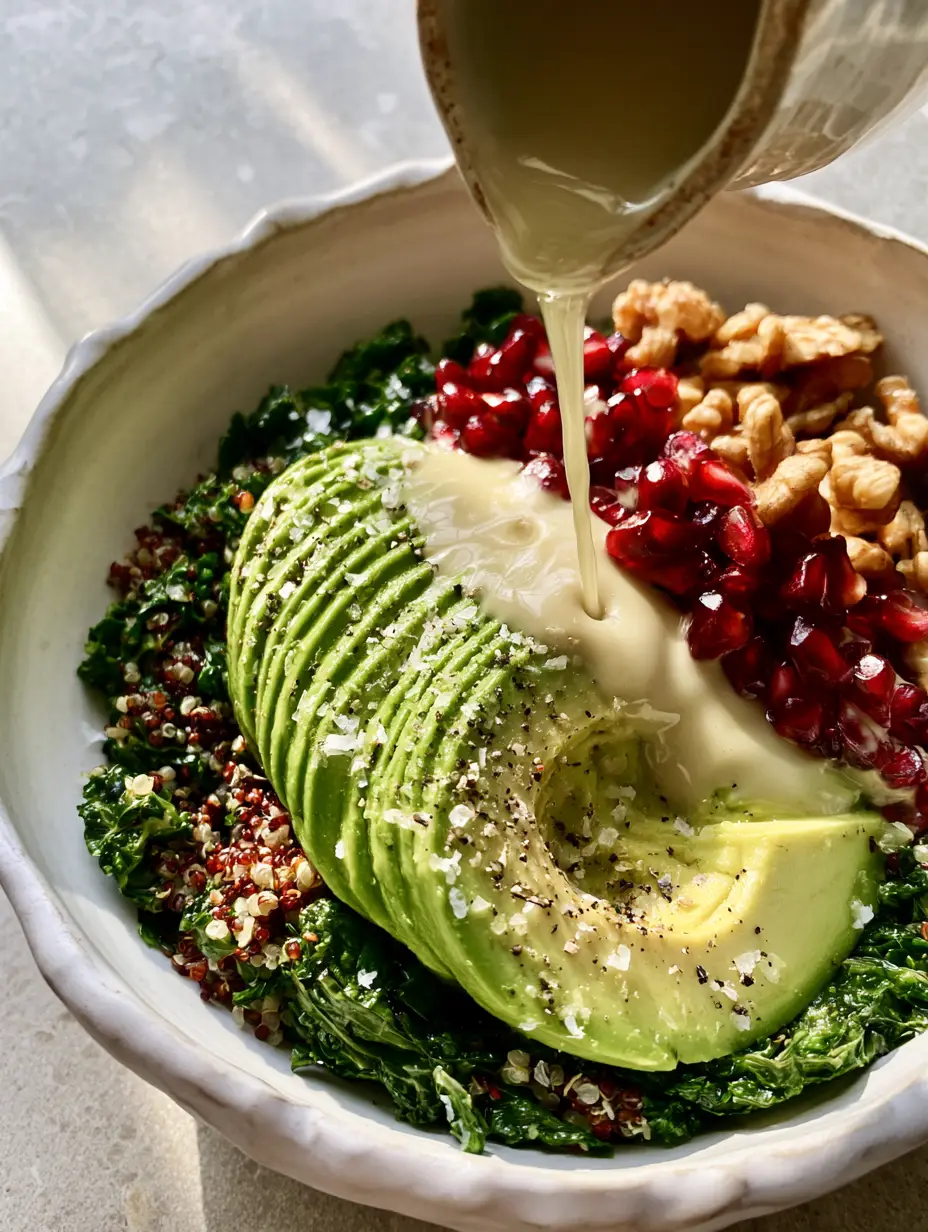
To replicate the macro, top-down angled shot of a professional food photographer, you need the right tools to prep your ingredients. Precision is key when fanning avocado or creating a silky emulsion for your dressing.
- Handcrafted Matte White Ceramic Bowl: The organic edges of a matte bowl prevent harsh glares and make the vibrant colors of the vegetables pop.
- Small Small Ceramic Pitcher: Vital for achieving that perfect “mid-drip” pour of tahini dressing over your bowl.
- Fine-Mesh Strainer: Essential for rinsing quinoa thoroughly to remove saponins, ensuring a clean, neutral flavor.
- Whisk or Small Jar: To emulsify the lemon-tahini dressing into a thick, silky consistency.
- Sharp Chef’s Knife: To achieve those paper-thin, fanned avocado slices that look like they belong in a high-end bistro.
Master the Art of the Glass Skin Beauty Bowl
Follow these steps to ensure your bowl doesn’t just look like the visual blueprint but tastes like a professional-grade health meal. These instructions emphasize the sensory cues that signal peak flavor development.
Step 1: Achieving the Fluffiest Quinoa
Start by rinsing 1/2 cup (90g) of white quinoa under cold water until the water runs clear. In a small pot, combine the quinoa with 1 cup (240ml) of water or vegetable broth and a pinch of salt. Bring to a boil, then reduce to a simmer, cover, and cook for 15 minutes. Once the water is absorbed, remove from heat and let it sit covered for 5 minutes; this “steam” phase is the secret to getting those bright, distinct grains that aren’t mushy.
Step 2: The Art of the Kale Massage
While the quinoa rests, strip the kale leaves from their woody stems and tear them into bite-sized pieces. Place them in a large bowl and drizzle with 1 tbsp (15ml) of olive oil and 1 tsp (5ml) of lemon juice. Use your hands to physically “massage” the leaves for 2-3 minutes. You will feel the leaves soften and see them transform from a pale green to a deep, translucent emerald. This step is non-negotiable for making raw kale palatable and bioavailable.
Step 3: Preparing the Glossy Tahini Drip
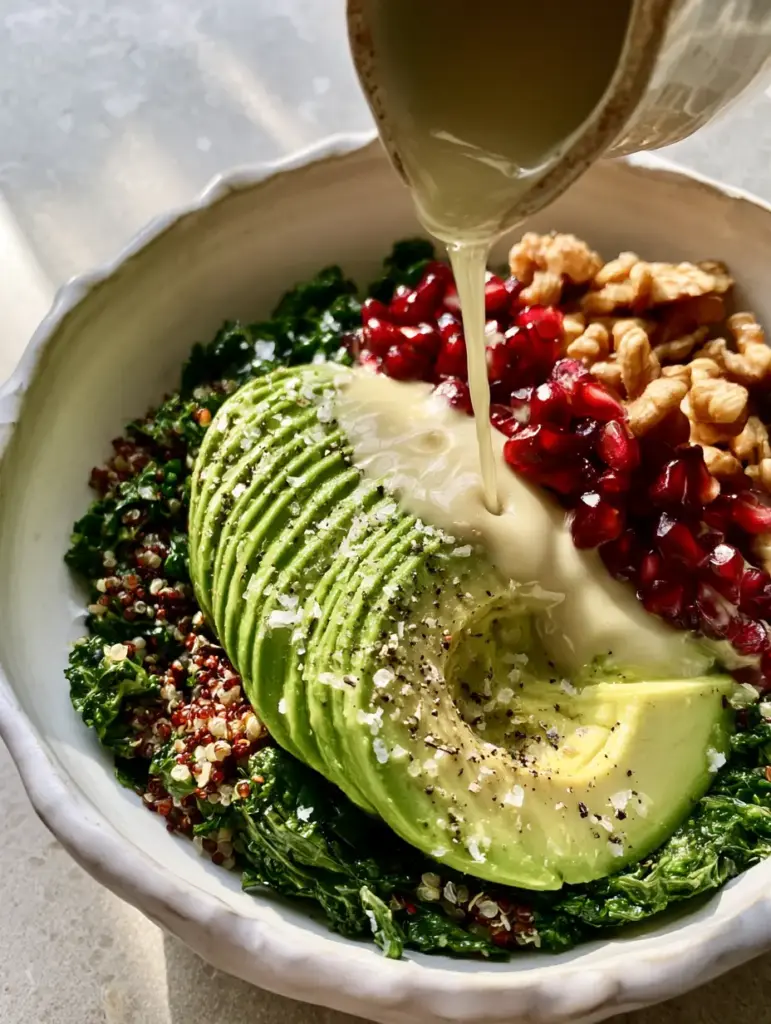
In a small bowl, whisk together 1/4 cup (60g) of tahini, the remaining lemon juice, a splash of warm water, and a pinch of salt. The mixture may “seize” and become thick at first—don’t panic. Continue adding warm water one teaspoon at a time until it reaches a silky, pourable consistency that holds its shape. It should look like liquid velvet and be thick enough to coat the back of a spoon with a glossy sheen.
Step 4: Precision Slicing and Toasting
Place your walnut halves in a dry skillet over medium heat. Toast for 3-5 minutes, shaking the pan frequently, until you smell a rich, nutty aroma and the skins turn a shade darker. For the avocado, cut it in half, remove the pit, and peel the skin away. Place the half flat-side down on a cutting board and use a sharp knife to create very thin vertical slices. Gently press your fingers against the side of the avocado to “fan” the slices out into a long, overlapping curve.
Step 5: The Final Aesthetic Assembly
Now, build your bowl using the “macro-shot” logic. Layer the massaged kale on one side of the matte white bowl and the bright quinoa on the other. Carefully lift the fanned avocado with the flat of your knife and place it atop the base. Sprinkle the fanned avocado immediately with flaky sea salt and cracked black pepper. Nestle the ruby-red pomegranate seeds and toasted walnuts into the remaining spaces. Just before serving, take your ceramic pitcher and pour the tahini dressing in a slow, deliberate motion, letting it drip over the avocado and kale to create that signature glossy highlight.
Culinary Secrets for a Picture-Perfect Plate
Creating a dish that looks as good as it feels requires a few professional “cheats.” These glowing skin tips for the kitchen will ensure your bowl is always Instagram-ready.
- The Temperature Contrast: Serve the quinoa warm but the kale chilled. This temperature play makes the salad feel more like a substantial meal.
- Acid and Oxidation: Never slice your avocado until the very last second. If you must prep ahead, brush the slices with extra lemon juice to prevent browning.
- Salt Placement: Only apply the flaky sea salt to the avocado. This draws the eye to the “creamy” center of the bowl and provides a targeted burst of flavor.
- The “Drip” Control: If your tahini dressing is too thin, it will disappear into the kale. It should be the consistency of heavy cream to achieve that “mid-drip” visual effect.
Keeping Your Prep Fresh: Storage and Longevity
This bowl is an excellent candidate for meal prep, provided you store the components correctly to maintain their textures. The massaged kale actually improves after a few hours in the fridge as it continues to soften in the lemon and oil.
Store the cooked quinoa and massaged kale in separate airtight containers for up to 4 days. Keep the pomegranate seeds and toasted walnuts in their own small jars to maintain the crunch and freshness. The tahini dressing can be stored in a glass jar for up to a week; if it thickens in the fridge, simply whisk in a teaspoon of warm water before serving. Always wait to slice the avocado until the moment you are ready to eat to ensure peak creaminess and color.
What to Serve Alongside Your Beauty Bowl
While this bowl is a complete meal on its own, you can expand your “beauty diet” menu by pairing it with other nutrient-dense options. For a light lunch, consider a side of crunchy cucumber feta salad to add a cooling element to the meal.
If you are serving this for dinner and want something warm to start, a bowl of soup or a vibrant vegetable salad recipe can round out the table. For those who prefer a bit of cooked comfort, this bowl pairs surprisingly well with a small portion of vegan lemon garlic zucchini pasta. If you’re in a rush and need a “grab-and-go” version of this nutrition, you might find inspiration in our creative snackle box ideas for skin-healthy snacking on the move. Finally, for the ultimate time-saving routine, look into our guide on no-cook breakfasts to start your day with the same radiance-boosting focus.
Your Skincare Diet Questions Answered
Yes, red quinoa works perfectly! It has a slightly earthier flavor and a firmer texture, which complements the massaged kale beautifully.
Massaged kale is incredibly hearty and can stay fresh and delicious in an airtight container for up to 3-4 days.
Absolutely! Every ingredient in this Glass Skin Beauty Bowl is 100% plant-based and vegan-friendly.
Toasted sunflower seeds or pumpkin seeds (pepitas) are excellent nut-free alternatives that still provide essential minerals for skin health.
Tahini often seizes when mixed with liquid. Keep whisking and add warm water one teaspoon at a time; it will eventually emulsify into a smooth, glossy sauce.
Full Recipe Card: The Glass Skin Beauty Bowl
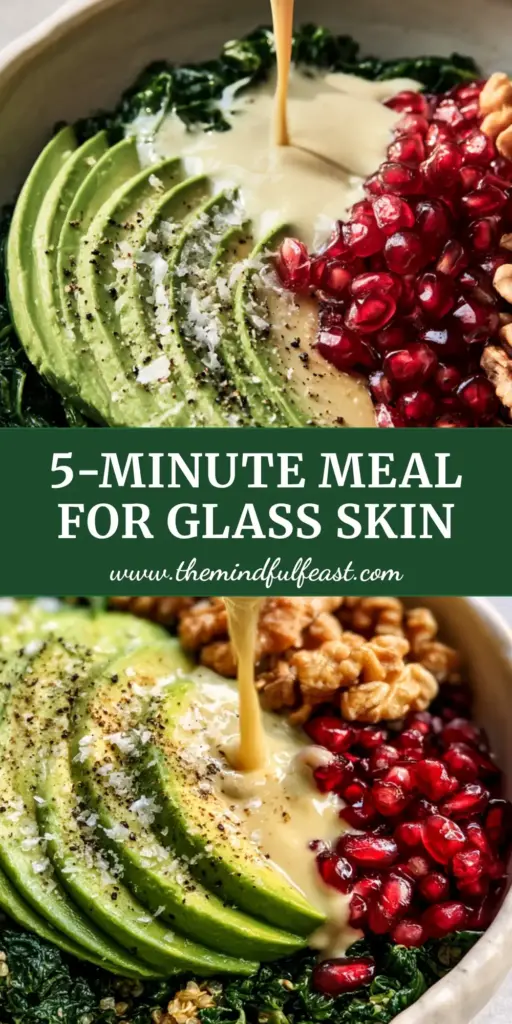
Glowing Skin Tips: The Ultimate Glass Skin Beauty Bowl Recipe
Ingredients
Equipment
Method
- Simmer quinoa in 1 cup (240ml) water for 15 minutes. Let rest covered for 5 minutes before fluffing with a fork to achieve a bright, fluffy texture.
- In a large bowl, combine kale with olive oil and 1 tsp (5ml) lemon juice. Rub the leaves between your fingers for 3 minutes until they turn deep emerald and soften.
- Whisk tahini with remaining lemon juice and warm water until a silky, thick, glossy consistency is reached.
- Place massaged kale and quinoa side-by-side in a matte white bowl. Top with fanned avocado, pomegranate seeds, and toasted walnuts.
- Pour the tahini dressing from a small pitcher, creating a glossy mid-drip sheen over the ingredients. Garnish avocado with sea salt and pepper.
Notes
Always toast your walnuts fresh for the best Omega-3 flavor profile.
Closing & Call to Action
Embracing these glowing skin tips through your diet is a delicious way to support your long-term health and complexion. This Glass Skin Beauty Bowl isn’t just a recipe; it’s a ritual of self-care that starts with wholesome, vibrant ingredients. The combination of textures—from the snap of the pomegranate to the silk of the tahini—proves that “eating for your skin” never has to be boring.
If you enjoyed this recipe, I would love to hear from you! Leave a comment below with your favorite skin-boosting ingredient, or sign up for our newsletter for weekly recipe inspiration. Don’t forget to share your beautiful creations and follow us at Pinterest for more culinary inspiration and wellness guides. Happy cooking, and here is to your glow!