There is a specific, unmatched joy in hearing the resounding crunch of a perfectly executed Quick Pickles Recipe. Imagine a heavy glass mason jar, pulled straight from the refrigerator, instantly clouded with a layer of cold condensation. Inside, vibrant emerald green cucumber rounds float in a crystal-clear brine, surrounded by feathery sprigs of fresh dill and pungent cloves of garlic. When you lift a thick-cut slice out with a silver fork, it doesn’t limp or sag; it stands firm, glistening with a brine infused with the warmth of black peppercorns and the snap of mustard seeds.
This isn’t just a side dish; it’s a masterclass in preservation science and sensory delight. Whether you are layering these rounds onto a lunch wrap (coming soon) or serving them alongside a heavy meal, the acidity and crispness provide the essential structural balance every palate craves. By following this guide, you will bypass the soggy, yellowed pickles of the grocery store and master the art of the 24-hour refrigerator transformation.
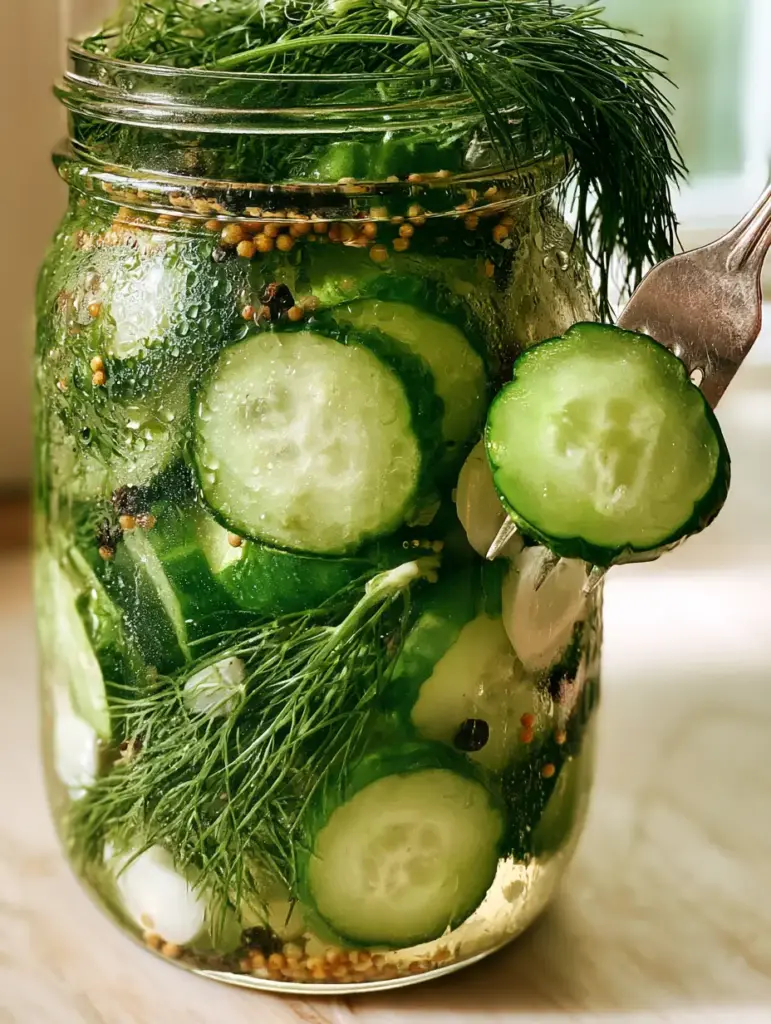
Why This Visual-First Quick Pickles Recipe Dominates Your Kitchen
- Unrivaled Structural Integrity: Unlike store-bought varieties that sit in brine for months, these thick-cut rounds maintain a “white center” and firm texture that snaps when bitten.
- Vibrant Aesthetic Brilliance: The use of clear distilled vinegar ensures the brine remains transparent, allowing the feathery green dill and golden mustard seeds to pop visually.
- Controlled Aromatics: By using whole peeled garlic cloves and whole peppercorns, we achieve a deep infusion of flavor without clouding the liquid or creating a gritty mouthfeel.
- Instant Gratification: This recipe skips the long fermentation process, relying on a precise vinegar-to-water ratio to deliver peak flavor in as little as two hours.
The Anatomy of an Emerald-Green Quick Pickles Recipe
To achieve the result seen in our visual blueprint, every ingredient must serve a structural or chemical purpose. We aren’t just flavoring cucumbers; we are manipulating their cellular structure to hold onto water while absorbing acid.
The Foundation: Picking Your Cucumbers
For the thick-cut rounds featured in our imagery, you need 1 lb (450g) of Kirby or Persian cucumbers. These varieties have thinner skins and lower water content than English cucumbers, which is essential for that signature snap. Ensure they are firm to the touch with no soft spots; a soft cucumber at the start will never become a crisp pickle at the end.
The Brine: The Clear Acidic Solution
We use 1 cup (240ml) of distilled white vinegar combined with 1 cup (240ml) of filtered water. The clear vinegar is non-negotiable if you want the “crystal-clear” look described in our prompt. We also include 1 tbsp (18g) of kosher salt and 1 tsp (4g) of granulated sugar. The salt draws out moisture, while the sugar balances the harshness of the acetic acid without making the pickles sweet.
The Aromatics: Visual and Flavor Layers
Freshness is key here. You will need 4-5 large sprigs of fresh dill (roughly 1/2 oz or 15g). The feathery leaves provide the “emerald” contrast. Pair this with 3 whole peeled garlic cloves, slightly smashed to release oils but left whole to maintain the visual clarity of the brine. Finally, 1 tsp (3g) of yellow mustard seeds and 1 tsp (3g) of whole black peppercorns add the “floating” textural elements that define a high-end food blog aesthetic.
Essential Equipment for Professional Refrigerator Pickles
To recreate the “vertical handheld smartphone photo” look, you need the right vessels. A 32 oz (950ml) wide-mouth glass mason jar is the gold standard. The wide mouth allows you to pack the thick-cut rounds tightly, ensuring they stay submerged below the brine line. You will also need a sharp chef’s knife or a mandoline to ensure every slice is exactly 1/4 inch (6mm) thick. A small stainless steel saucepan is required for the brine, as reactive metals like aluminum can impart a metallic taste when in contact with vinegar.
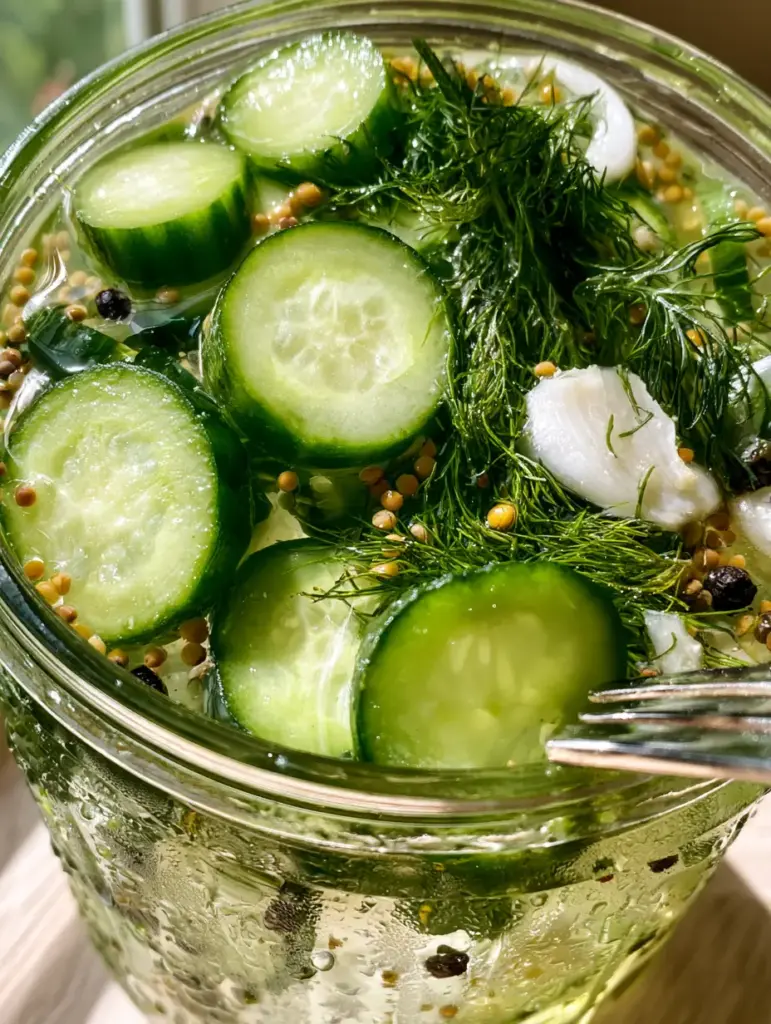
Step-by-Step Instructions to Perfect Refrigerator Crunch
Phase 1: The Precision Slice and Pack
Start by washing your cucumbers in ice-cold water. This shocks the skin and helps maintain the emerald green color. Using your knife or mandoline, cut the cucumbers into thick rounds, approximately 1/4 inch (6mm) thick. Discard the blossom end (the end opposite the stem), as it contains enzymes that can cause softening.
In your clean mason jar, layer the feathery dill sprigs at the bottom, followed by the whole peeled garlic cloves. Pack the cucumber rounds tightly into the jar, leaving about 1 inch (2.5cm) of headspace at the top. As you pack, sprinkle in the yellow mustard seeds and black peppercorns so they distribute between the layers. The goal is to see those seeds “floating” in the gaps once the liquid is added.
Phase 2: Crafting the Crystal-Clear Brine
In your small saucepan, combine the water, white vinegar, salt, and sugar. Place over medium-high heat and whisk until the salt and sugar are completely dissolved. Bring the mixture to a simmer (roughly 190°F / 88°C), but do not let it reach a rolling boil for too long, as this evaporates the acetic acid. You want the brine to be hot enough to penetrate the cucumbers but not so hot that it “cooks” them, which would ruin the white centers.
Phase 3: The Pour and Chill
Carefully pour the hot brine over the packed cucumbers until they are completely submerged. You should see the mustard seeds and peppercorns begin to dance in the clear liquid. Tap the jar gently on the counter to release any trapped air bubbles. Place the lid on the jar but do not tighten it fully until the jar has cooled to room temperature.
Once cooled, tighten the lid and move the jar to the back of the refrigerator. This is where the magic happens. As the temperature drops, condensation will form on the glass, signaling the pickles are reaching their peak refreshing state. For the best flavor, wait at least 2 hours, though 24 hours is the sweet spot for the aromatics to fully penetrate the thick rounds.
Expert Tips for the Ultimate “Snap”
- The Ice Water Bath: Before slicing, soak your whole cucumbers in a bowl of ice water for 30 minutes. This hydrates the cells and ensures a firm, non-soggy texture.
- Tannins for Crunch: Add a clean grape leaf or a pinch of loose black tea to the jar. The tannins help keep the cucumber cell walls strong.
- Temperature Control: Never pour boiling water directly from a rolling boil. Let the brine sit for 2 minutes off the heat before pouring to preserve the vibrant emerald hue.
- Vinegar Selection: While apple cider vinegar tastes great, it turns the brine brown. Stick to distilled white vinegar for that professional “clear brine” visual.
Creative Pairings for Your Homemade Pickles
These pickles are a versatile powerhouse. Their sharp acidity makes them the perfect foil for fatty proteins like savory smoked salmon or a rich creamy egg salad sandwich. If you are hosting a summer gathering, include them in a Mediterranean mezze bowl to provide a crisp texture alongside soft hummus and olives. They also work beautifully as a palate cleanser when served with a vibrant refreshing peach salad.
Storing and Maintaining Freshness
Because this Quick Pickles Recipe is a refrigerator method and not a shelf-stable canning method, these must be stored in the fridge at all times. They will stay perfectly crisp and safe to eat for up to 3 weeks. Always use a clean silver fork to remove pickles from the jar; introducing bacteria from fingers or used utensils will cause the brine to cloud and the pickles to spoil prematurely. If the brine becomes murky or smells “off,” it’s time to toss them and start a new batch.
Frequently Asked Questions
It is not recommended to reuse the brine for a second batch of pickles as the pH level changes after the first use, which can affect the crispness and safety of the new batch.
Simmering the brine is necessary to dissolve the salt and sugar and to help the aromatics (garlic, dill, peppercorns) release their oils into the liquid for better flavor infusion.
These pickles will maintain their peak crunch and flavor for about 3 weeks in the refrigerator. After this, they may begin to soften, though they remain safe to eat as long as the brine is clear.
Kirby or Persian cucumbers are best because they have a low water content and thin skins, ensuring the thick-cut rounds stay firm and crunchy rather than becoming soggy.
Cloudy brine can be caused by using table salt with anti-caking agents or by bacterial contamination. Use kosher salt and clean utensils to keep your brine crystal-clear.
Master the Quick Pickles Recipe Card
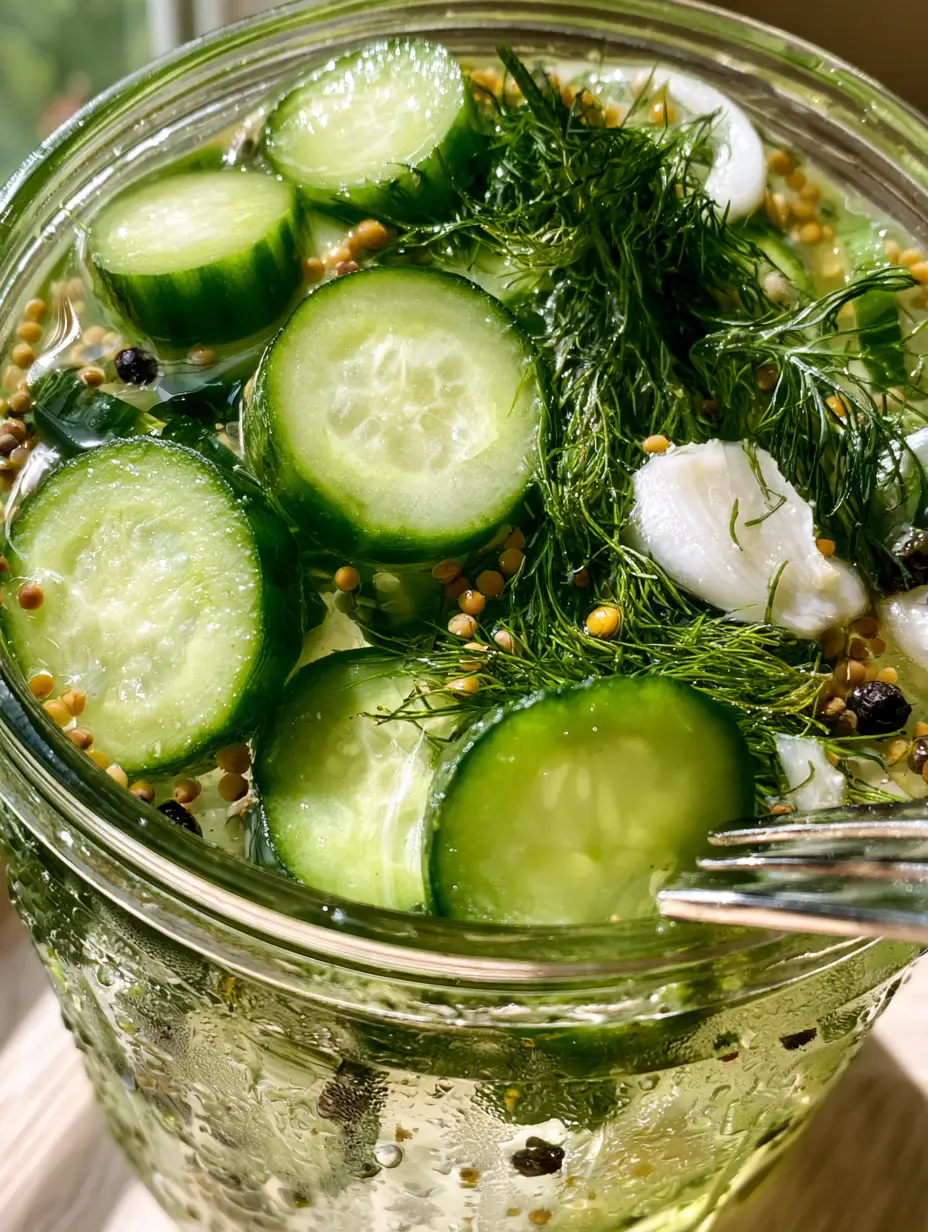
Quick Pickles Recipe: The Ultimate Guide to Ultra-Crispy Refrigerator Dill Pickles
Ingredients
Equipment
Method
- Wash cucumbers in ice water and slice into 1/4 inch (6mm) rounds, discarding the blossom ends.
- Place dill and garlic in the bottom of a clean quart jar. Pack cucumber rounds tightly, layering mustard seeds and peppercorns throughout.
- In a saucepan, simmer vinegar, water, salt, and sugar over medium-high heat until dissolved.
- Pour the hot brine over the cucumbers until fully submerged. Tap to remove air bubbles.
- Let the jar cool at room temperature before tightening the lid and refrigerating for at least 2 hours, preferably 24 hours.
Notes
Always keep refrigerated as these are not shelf-stable canned pickles.

Closing & Call to Action
Mastering the Quick Pickles Recipe is a foundational skill that elevates every meal from ordinary to artisanal. The combination of thick-cut crunch, feathery dill, and that crystal-clear brine creates a sensory experience that is as beautiful as it is delicious. If you enjoyed this recipe, please leave a comment below and share your results! Don’t forget to follow us and save this recipe to your boards on Pinterest for your next kitchen project.