The roasted beet and carrot salad is a masterclass in texture, color, and balanced earthy flavors. This isn’t just a side dish; it is a visually stunning centerpiece that captures the essence of rustic elegance through deeply caramelized root vegetables and a high-gloss finish.
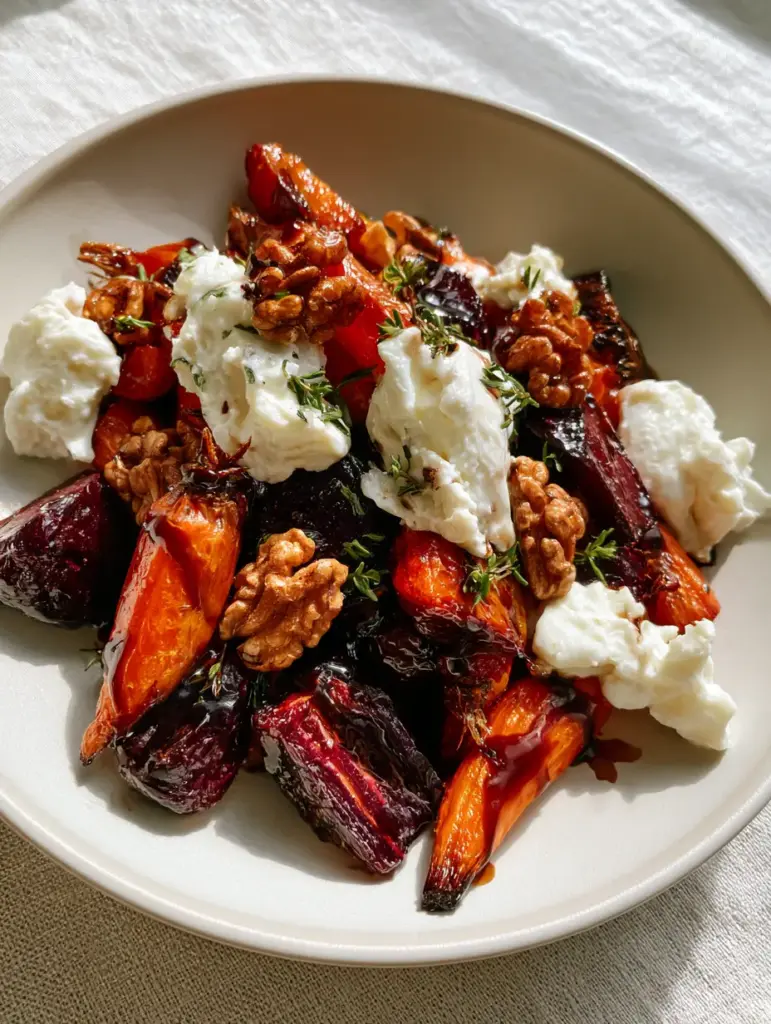
When you pull these vegetables from the oven, you are looking for specific sensory cues. The purple beets should be tender with concentrated sugars, while the orange heirloom carrots must exhibit those signature charred edges that provide a smoky counterpoint to their natural sweetness.
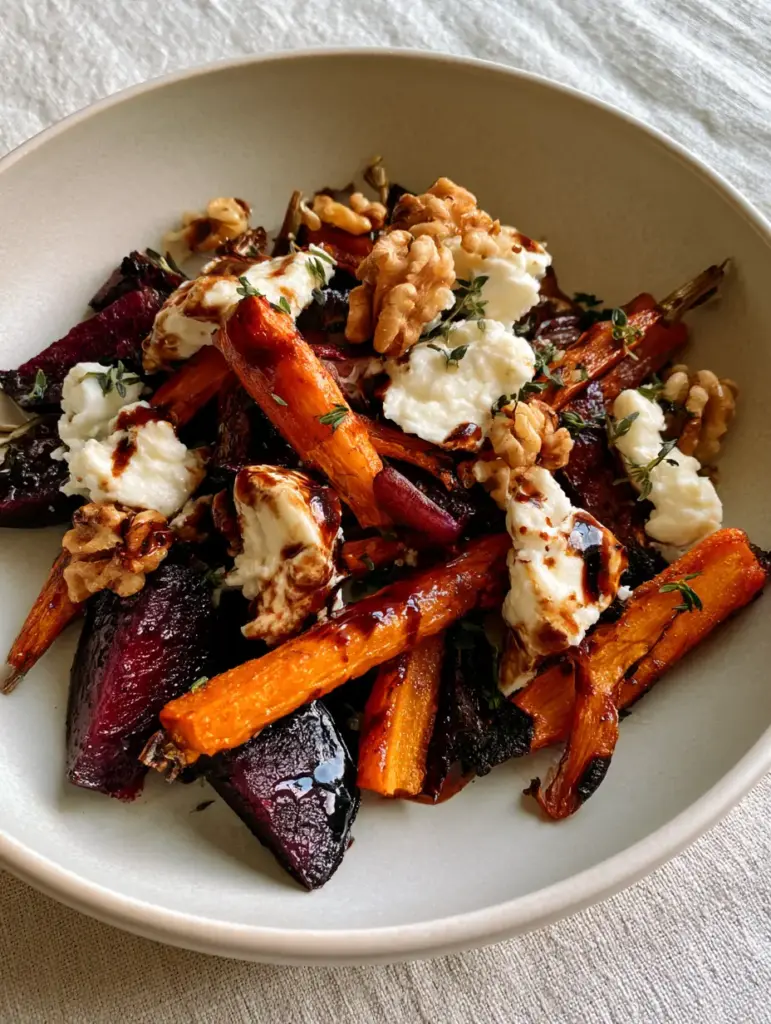
Imagine a shallow matte white ceramic bowl piled high with these vibrant roots, shimmering under a thick, dark maple balsamic glaze. The creamy white goat cheese crumbles melt slightly against the heat, contrasted by the structural crunch of toasted walnut halves and the aromatic brightness of fresh green thyme leaves.
Why This Roasted Root Vegetable Masterpiece Works
- Textural Harmony: We combine the velvet-softness of roasted beets with the snap of toasted walnuts and the creamy yield of goat cheese.
- Maillard Magic: High-heat roasting transforms simple starches into complex sugars, creating the charred, caramelized edges seen in the visual blueprint.
- Glossy Visual Appeal: The maple balsamic reduction is engineered to create specular highlights, making the dish look as professional as a high-end restaurant offering.
- Balanced Flavor Profile: The earthiness of the beets is cut by the acidity of the balsamic, while the thyme adds a necessary herbal top note.
Essential Components for Your Roasted Beet and Carrot Salad
Every ingredient in this recipe serves a specific culinary and aesthetic purpose. To achieve the results shown in our visual guide, high-quality fats and fresh aromatics are non-negotiable.
Purple Beets: 3 medium beets (approx. 450g), peeled and cut into 1-inch (2.5cm) wedges. These provide the deep, jewel-toned base and a rich, earthy foundation for the entire salad.
Heirloom Carrots: 1 lb (450g) of bright orange carrots, peeled and sliced into thick diagonals. Choosing heirloom varieties ensures a more robust flavor and helps achieve those beautiful charred edges during the roasting process.
Extra Virgin Olive Oil: 3 tbsp (45ml). This foundational fat is critical for heat conduction, ensuring the vegetables roast rather than steam, leading to a glistening finish.
Maple Balsamic Glaze: A combination of 1/2 cup (120ml) balsamic vinegar and 2 tbsp (30ml) pure maple syrup. This creates the thick, dark, and glossy coating that defines the dish’s visual highlight.
Creamy Goat Cheese: 4 oz (115g) of high-quality chèvre. The irregular, creamy white crumbles provide a sharp, tangy contrast to the sweet roasted vegetables.
Toasted Walnuts: 1/2 cup (50g) of whole walnut halves. Toasting these separately ensures they maintain their structural integrity and provide a distinct nutty crunch.
Fresh Thyme: 4-5 sprigs, leaves removed. These small green leaves offer a fine scattering of color and a woody, floral aroma that ties the earthy flavors together.
Seasoning: 1 tsp (6g) flaky sea salt and 1/2 tsp (2g) freshly cracked black pepper. The black pepper should be coarse to provide visible flecks across the glossy surface of the vegetables.
Professional Tools for Culinary Precision
To replicate the handheld smartphone photo aesthetic of this roasted beet and carrot salad, you need tools that manage heat and moisture effectively.
Heavy-duty rimmed baking sheets are essential. They prevent the vegetables from sliding off while allowing for maximum airflow, which is key to achieving the caramelization we see in the visual prompt.
A small heavy-bottomed saucepan is required for the balsamic reduction. Using a thick-bottomed pan prevents the sugars in the maple syrup from scorching before the vinegar has sufficiently thickened.
Finally, a shallow matte white ceramic bowl serves as the perfect canvas. The neutral, non-reflective surface of the matte ceramic allows the glossy glaze on the vegetables to stand out without distracting glare.
The Science of Caramelizing Root Vegetables
Preparing the Roots for Maximum Surface Area
Start by preheating your oven to 400°F (200°C). Consistency in cutting your vegetables is the secret to even roasting; aim for wedges that are uniform in thickness.
Toss the beets and carrots in a large bowl with the olive oil, salt, and pepper. Ensure every piece is glistening; this oil coating is what facilitates the Maillard reaction, leading to those desired charred edges.
Roasting for Depth and Color
Spread the vegetables in a single layer on your baking sheets. If the pan is crowded, the vegetables will release steam and become mushy rather than caramelized.
Roast for 35-45 minutes. Halfway through, use a metal spatula to flip the vegetables. You are looking for the moment the edges transition from deep orange to a dark, caramelized brown.
Perfecting the Glossy Maple Balsamic Glaze
While the vegetables roast, combine the balsamic vinegar and maple syrup in your saucepan over medium heat. Bring to a gentle simmer, not a rolling boil.
Reduce the liquid by half until it coats the back of a spoon. It should be thick, dark, and syrupy. This glaze is responsible for the specular highlights mentioned in our visual recipe blueprint.
The Final Assembly and Garnish
Once the vegetables are tender and charred, remove them from the oven and immediately drizzle with half of the glaze while they are still hot. This allows a base layer of flavor to soak in.
Transfer the vegetables to your matte white bowl. Top with the toasted walnut halves and large, irregular crumbles of goat cheese. Finish with the fresh thyme leaves and an extra crack of black pepper.
Expert Tips for a Picture-Perfect Salad
- Avoid Bleeding: If you want to keep the carrots bright orange, roast the beets on a separate tray or a foil-divided sheet to prevent the purple pigment from staining the carrots.
- Toast for Texture: Never use raw walnuts. Toasting them for 5-7 minutes at 350°F (175°C) transforms their texture from waxy to crisp.
- Glaze Consistency: If your glaze gets too thick as it cools, whisk in a teaspoon of warm water to regain that pourable, glossy consistency.
- Temperature Contrast: Serve the salad warm. The slight warmth softens the goat cheese just enough to create that “creamy” visual without it completely melting into a sauce.
Flavor Pairings and Serving Suggestions
This roasted beet and carrot salad is exceptionally versatile. It pairs beautifully with a hearty steak and potatoes dinner, where the acidity of the balsamic cuts through the richness of the meat.
If you are looking for a lighter lunch, consider serving this alongside a ruby red beet salad for a full exploration of beet varieties. For those who enjoy a bit of fruitiness, this dish also complements a peach salad recipe during the transitional seasons.
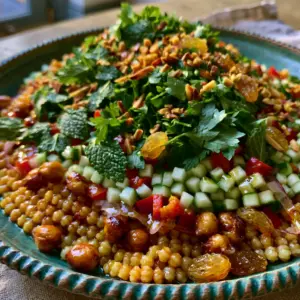
For a complete Mediterranean-inspired spread, you might also enjoy our moroccan couscous salad, which shares many of the same earthy spice profiles.
Frequently Asked Questions
Absolutely. Simply replace the goat cheese with a vegan feta alternative or extra toasted nuts for added richness without the dairy.
Yes, honey is an excellent substitute for maple syrup and will provide a similar glossy finish, though the flavor profile will be slightly more floral.
Yes, peeling the beets ensures the balsamic glaze can penetrate the flesh and allows for a smoother, more refined texture in the final salad.
The key is the reduction process. Simmering the balsamic and maple syrup until it reduces by half creates a syrupy consistency that catches the light for that signature glossy look.
You likely have too many vegetables on one pan. Space them out to allow hot air to circulate, which is necessary for moisture to evaporate and caramelization to begin.
The Ultimate Roasted Beet and Carrot Salad Recipe
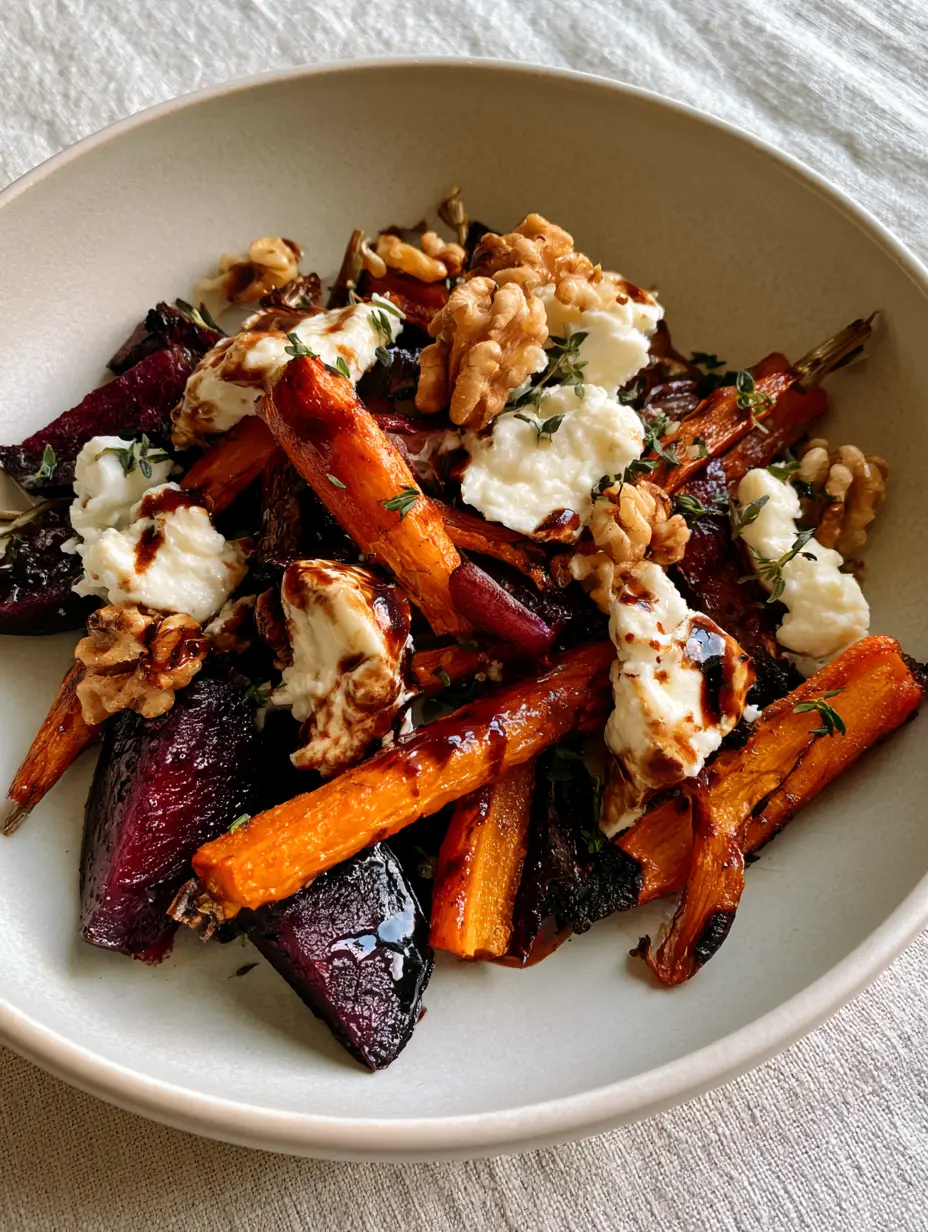
Roasted Beet and Carrot Salad with Maple Balsamic Glaze
Ingredients
Equipment
Method
- Preheat oven to 400°F (200°C). Peel and cut beets and carrots into uniform wedges/slices.
- Toss vegetables with olive oil, salt, and pepper until glistening.
- Spread in a single layer and roast for 35-45 minutes until charred edges and deep caramelization appear.
- Simmer balsamic vinegar and maple syrup in a saucepan until reduced by half and thick enough to coat a spoon.
- Toast walnuts in the oven or a dry skillet for 5-7 minutes until fragrant.
- Drizzle vegetables with glaze, top with goat cheese, walnuts, and fresh thyme.
Notes
Ensure the balsamic glaze is thick and glossy for the best visual specular highlights.
Storing and Reheating Your Roasted Vegetables
This salad is best enjoyed fresh, but leftovers can be stored in an airtight container in the refrigerator for up to 3 days. Note that the goat cheese may take on a pink hue from the beets over time.
To reheat, place the vegetables in a 350°F (175°C) oven for 10 minutes. Avoid the microwave, as it will make the walnuts soft and the carrots rubbery. Add fresh thyme and a fresh drizzle of balsamic after reheating to revive the flavors.
Closing Thoughts and Community Share
Mastering the roasted beet and carrot salad is about respecting the integrity of the ingredients. By focusing on the roast quality and the viscosity of your glaze, you create a dish that is as much a visual work of art as it is a culinary triumph.
If you enjoyed this recipe, please leave a comment below and share your results! You can also follow us for more visual recipe inspiration on our Pinterest page.