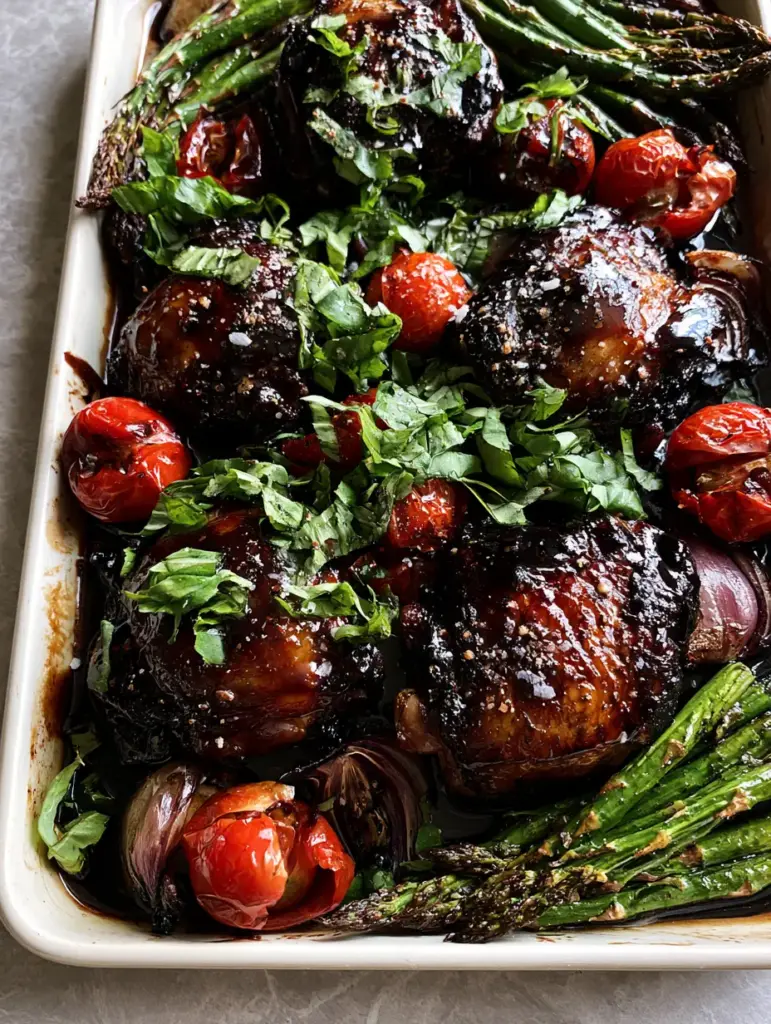
There is a specific culinary magic that happens when high-heat roasting meets a complex acid-sugar reduction. This One Pan Balsamic Chicken isn’t just a convenient weeknight solution; it is a masterclass in texture and flavor layering that results in succulent, skin-on chicken thighs boasting a deep mahogany char. The centerpiece of this dish is a thick, glistening, syrupy dark balsamic glaze that clings to every crevice of the meat, providing a sharp contrast to the bright, roasted vegetables.
Imagine pulling a premium blackened sheet pan from your oven, the sound of sizzling fat still audible as the cherry tomatoes reach their breaking point, their skins splitting to release sweet juices. The asparagus tips are perfectly crisped, the red onions have softened into caramelized wedges, and the aroma of reduced vinegar and fresh basil fills your kitchen. This is the ultimate “low effort, high reward” meal that looks like it belongs on the cover of a Mediterranean cookbook.
Why This Sheet Pan Masterpiece Works Every Time
- The Perfect Sear: We utilize a two-stage cooking process to ensure the chicken skin achieves a deep mahogany charred edge while the interior remains incredibly juicy.
- Texture Contrast: Between the snappy, roasted green asparagus spears and the soft, jammy blistered tomatoes, every bite offers a different sensory experience.
- Viscous Glaze Science: By reducing the balsamic vinegar with a touch of honey, we create a glaze that is visibly viscous, pooling slightly in the pan and coating the ingredients in a dark, sweet-savory lacquer.
- Vibrant Aromatics: The addition of fresh torn basil and coarse cracked black pepper at the very end provides a hit of raw herbal notes that cuts through the richness of the balsamic reduction.
The Anatomy of Flavor: Ingredients and Substitutions
Building the perfect One Pan Balsamic Chicken requires a balance of high-quality proteins, structural vegetables, and a robust acidic foundation. Every ingredient listed below serves a specific purpose in achieving the visual and flavorful profile seen in our professional photography.
Bone-In, Skin-On Chicken Thighs: You will need 4-6 large thighs (approximately 2 lbs / 900g). The skin is essential for achieving that seared, mahogany finish, and the bone keeps the meat moist during the roasting process.
Balsamic Vinegar of Modena: Use 1/2 cup (120ml) of a decent quality balsamic. It doesn’t need to be 25-year aged, but it should be thick enough to coat the back of a spoon once reduced.
Raw Honey or Brown Sugar: 2 tbsp (30ml) is necessary to provide the sugars needed for the glaze to become syrupy and glistening. This also helps balance the natural acidity of the vinegar.
Fresh Asparagus: 1 bunch (approx. 1 lb / 450g) of vibrant green asparagus spears. Ensure you trim the woody ends so the tips can become crispy and roasted in the oven heat.
Cherry Tomatoes: 1.5 cups (approx. 250g) of red cherry or grape tomatoes. We want these to blister and split, releasing their sugars to mingle with the balsamic sauce.
Red Onion: 1 large onion, cut into thick wedges. Red onions caramelize beautifully and provide a visual pop against the dark glaze and green asparagus.
Extra Virgin Olive Oil: 3 tbsp (45ml) for the initial sear and for tossing the vegetables. This is your “invisible” fat that facilitates the Maillard reaction.
Fresh Garlic: 3 cloves, minced (approx. 15g). Garlic provides the aromatic backbone that links the sweetness of the glaze to the savory chicken.
Finishing Touches: A heavy scattering of fresh torn basil leaves, 1 tsp (5g) flaky sea salt, and 1/2 tsp (2.5g) coarse cracked black pepper are non-negotiable for the final visual presentation.
Essential Equipment for a Professional Result
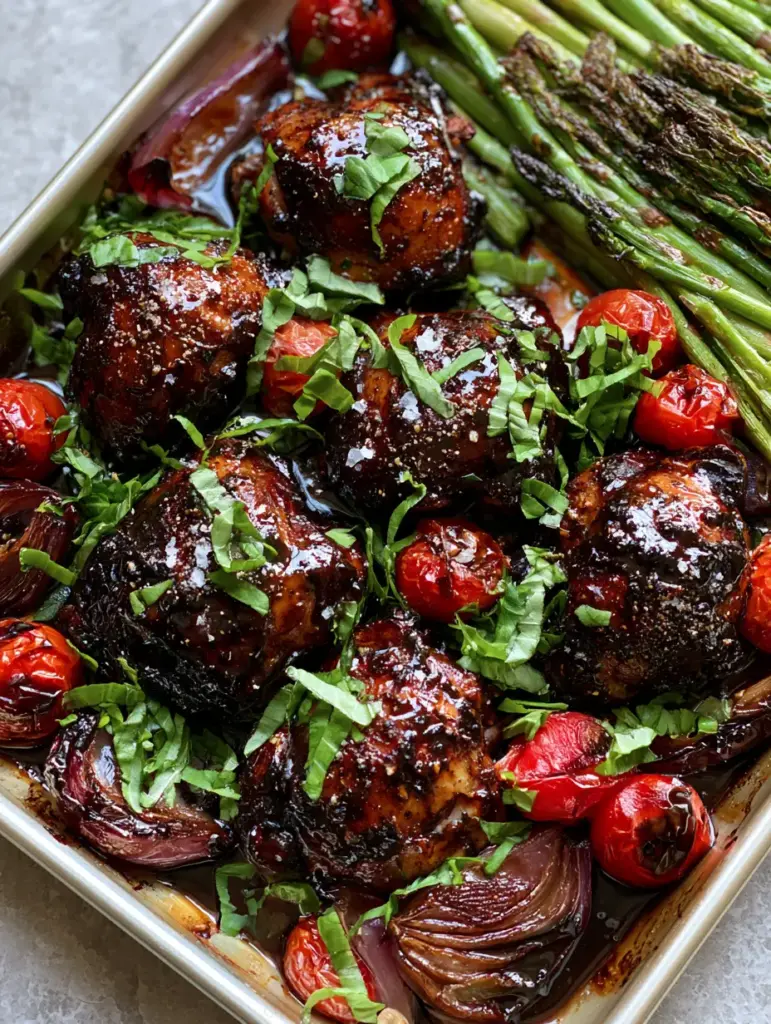
To achieve the “premium blackened sheet pan” look described in our blueprint, the equipment is just as important as the ingredients. A standard light-colored aluminum pan may not provide the same level of heat retention and bottom-up searing as a darker pan.
We recommend using a heavy-duty, dark-rimmed baking sheet. If you only have light pans, you may need to increase your roasting time by 5 minutes or place the pan on the lowest rack. A high-quality 12-inch (30cm) cast iron skillet is also an excellent alternative for searing the chicken before transferring everything to the oven.
Step-by-Step Mastery: How to Make One Pan Balsamic Chicken
Step 1: The Foundations of Flavor – Preparing the Glaze
In a small saucepan over medium heat, combine the balsamic vinegar, honey, and one minced garlic clove. Simmer the mixture for about 8-10 minutes until it has reduced by half. It should be thick enough to coat a spoon—this is how you achieve that syrupy, glistening finish that pools in the corners of the pan.
Step 2: Achieving the Mahogany Sear
Pat the chicken thighs extremely dry with paper towels. Season generously with salt and pepper. Heat 1 tbsp (15ml) of olive oil in a large skillet or directly on your sheet pan if it is stovetop-safe. Place the chicken skin-side down and sear for 5-7 minutes without moving them. Look for a deep mahogany charred edge before flipping.
Step 3: Prepping the Vegetable Bed
While the chicken sears, toss the asparagus spears, cherry tomatoes, and red onion wedges in a bowl with the remaining olive oil, salt, and pepper. If you enjoy Mediterranean flavors, this vegetable base is very similar to what you would find in a Grilled Chicken Caprese or a rustic Mediterranean Chicken Feta Pasta.
Step 4: The High-Heat Roast
Arrange the seared chicken thighs on the sheet pan, surrounding them with the prepared vegetables. Pour about half of the balsamic reduction over the chicken, using a brush to ensure even coverage. Roast at 400°F (200°C) for 20-25 minutes. You are looking for the tomato skins to split and the asparagus tips to turn crispy and dark green.
Step 5: The Glistening Finish
Remove the pan from the oven. Pour the remaining balsamic glaze over the chicken and vegetables while they are still piping hot. This second layer of glaze creates that “viscous” look. Finish with a heavy scattering of torn basil, flaky sea salt, and extra cracked pepper.
Expert Tips for Sheet Pan Success
- Don’t Crowd the Pan: If the vegetables are piled on top of each other, they will steam rather than roast. Use a large enough pan so the asparagus and tomatoes have direct contact with the metal.
- Room Temperature Meat: Take your chicken out of the fridge 20 minutes before cooking. This ensures even heat distribution and a better sear, much like the technique used for BBQ Chicken Thighs.
- The Honey Factor: If your glaze isn’t thickening, add an extra teaspoon of honey. The sugar content is what creates the sticky, syrupy texture that defines this One Pan Balsamic Chicken.
- Freshness Matters: Always tear the basil by hand just before serving. Cutting it with a knife can bruise the leaves and turn the edges black, losing that vibrant green contrast.
What to Serve With One Pan Balsamic Chicken
Because this dish contains both protein and vegetables, it is a complete meal on its own. However, to soak up that extra syrupy glaze, we recommend serving it over a bed of fluffy quinoa or alongside a crusty baguette. If you are looking for more one-pan inspiration, our Chicken Scarpariello offers a similar sweet-and-sour profile with Italian sausage.
For those who prefer a pasta pairing, the flavors here transition beautifully into a cold dish the next day, similar to a Mediterranean Chicken Pasta Salad. The balsamic reduction acts as a built-in dressing that only gets better with time.
Storage, Reheating, and Meal Prep
This One Pan Balsamic Chicken stores exceptionally well. Place leftovers in an airtight container for up to 3 days in the refrigerator. When reheating, use the oven or an air fryer at 350°F (175°C) to maintain the crispness of the chicken skin; the microwave will make the skin soft and rubbery.
We do not recommend freezing the roasted asparagus or tomatoes, as their cell structure breaks down when thawed, leading to a mushy texture. However, the balsamic chicken itself can be frozen for up to 2 months.
Frequently Asked Questions
Yes, but be careful not to overcook them. Breasts cook faster than bone-in thighs and lack the fat content that creates the deep mahogany char, so reduce roasting time by 5-8 minutes.
The key is reduction and sugar. Simmer the balsamic vinegar with honey or brown sugar until it reduces by half. It should coat the back of a spoon and appear glistening and viscous.
Yes, this One Pan Balsamic Chicken is naturally gluten-free. Always check your balsamic vinegar label to ensure no caramel coloring or gluten-containing thickeners were added.
A standard Balsamic Vinegar of Modena works best. Avoid very expensive traditional balsamic as the nuances are lost in high-heat roasting, but avoid ‘balsamic vinaigrette’ which is a dressing.
This usually happens if the chicken wasn’t patted dry before searing or if the pan was crowded. Ensure the chicken skin is bone-dry and seared skin-side down before adding vegetables.
The Ultimate One Pan Balsamic Chicken Recipe
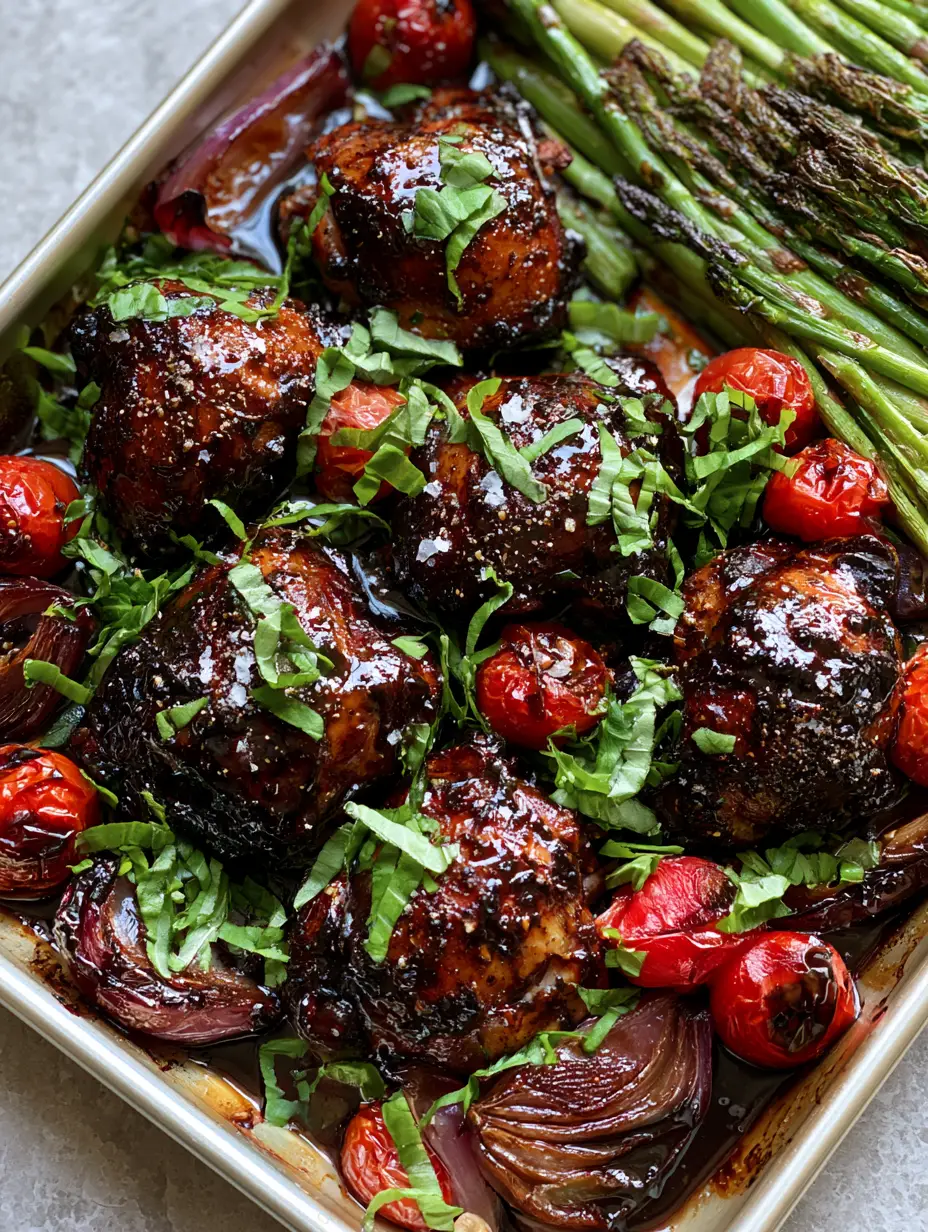
One Pan Balsamic Chicken with Roasted Asparagus and Blistered Tomatoes
Ingredients
Equipment
Method
- In a small saucepan, simmer balsamic vinegar, honey, and half the garlic until reduced by half and syrupy (8-10 mins).
- Pat chicken dry, season, and sear skin-side down in a pan with 1 tbsp oil until deep mahogany charred edges appear (5-7 mins).
- Coat asparagus, tomatoes, and onion wedges with remaining oil, salt, and pepper.
- Place chicken and vegetables on a sheet pan. Brush chicken with half the glaze. Roast at 400°F (200°C) for 20-25 minutes.
- Apply remaining glaze, scatter fresh basil, flaky sea salt, and cracked pepper before serving.
Notes
Wait to tear the basil until the very last second to prevent oxidation.
Closing & Call to Action
One Pan Balsamic Chicken is the quintessential example of how simple ingredients, when treated with the right culinary techniques, can produce a restaurant-quality meal. The combination of the mahogany seared chicken and the vibrant, blistered vegetables makes this a staple for any home cook’s rotation. If you enjoyed this recipe, please leave a comment below and share your photos with us!
Don’t forget to follow us on Pinterest for more visually stunning recipe inspiration and weeknight meal solutions. Happy cooking!