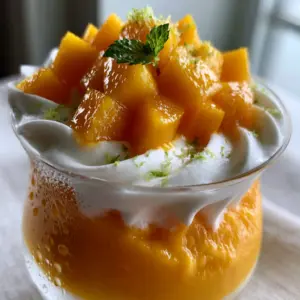
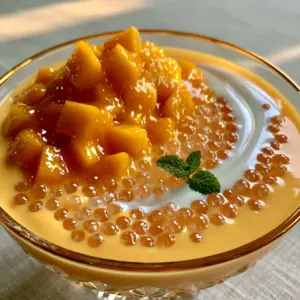
Mango bango is the ultimate refreshing treat that perfectly balances tropical fruit sweetness with a velvety, rich texture. If you have been searching for a dessert that looks as stunning as it tastes, this vibrant Filipino-inspired mango sago is your answer.
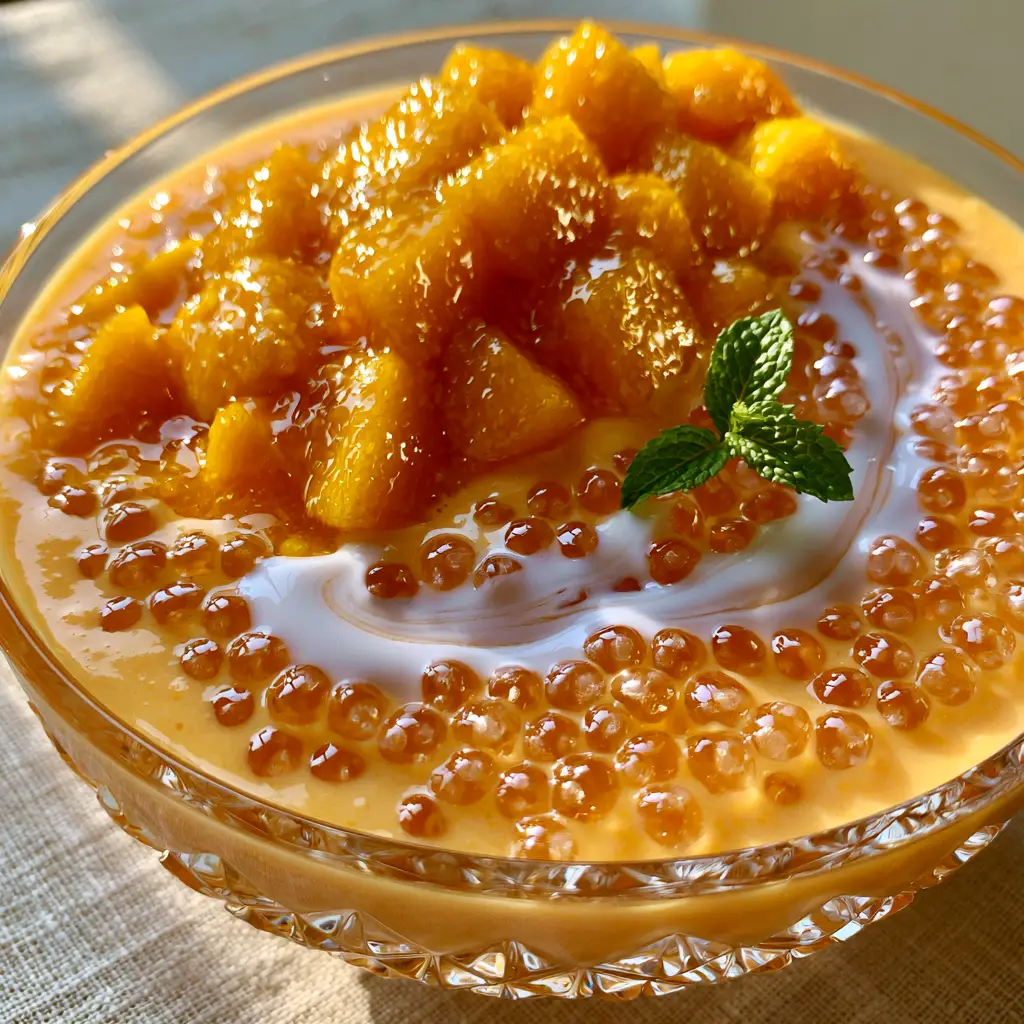
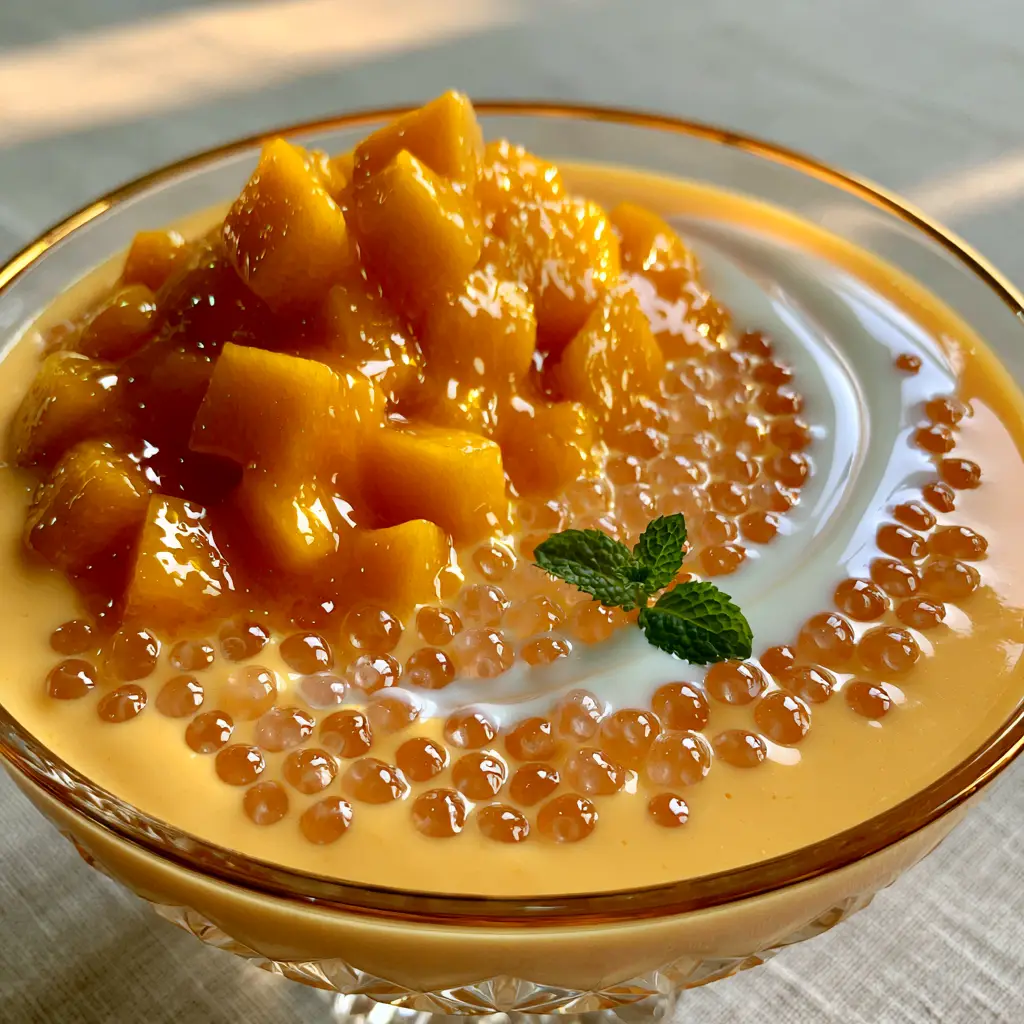
Imagine diving into a crystal glass filled with a thick, pale-orange mango cream, dotted with hundreds of glossy, translucent sago pearls that catch the light like tiny jewels. This mango bango recipe captures that exact “golden hour” glow, topped with sun-ripened Ataulfo mangoes and a delicate marble swirl of evaporated milk.
Whether you are a fan of traditional Asian sweets or just looking for a cooling summer palate cleanser, this dish delivers high-impact flavor with a professional aesthetic. It is a sophisticated cousin to our authentic mango sticky rice (coming soon), focusing on a drinkable, spoonable creaminess rather than chewy grains.
Why You Will Fall in Love With This Creamy Mango Bango
- Textural Harmony: The contrast between the soft, juicy mango cubes and the slippery, spherical sago pearls creates an addictive mouthfeel.
- Visually Stunning: The contrast of the bright green mint against the deep golden mango and the white evaporated milk swirl makes it a dinner party showstopper.
- Naturally Refreshing: Unlike heavy cakes, this dessert relies on the natural brightness of Ataulfo mangoes and chilled coconut cream.
- Simple Elegance: It uses accessible ingredients to create a result that looks like a high-end restaurant offering.
The Anatomy of a Perfect Mango Bango: Essential Ingredients
Ripe Ataulfo Mangoes: Also known as Champagne mangoes, these are preferred for mango bango because they are fiberless and incredibly buttery. You will need some for the blended cream base and some for dicing.
Small Sago Pearls: These starch-based pearls are the heart of the dish. When boiled correctly, they become perfectly translucent spheres that absorb the mango-infused cream.
Thick Coconut Cream: Use full-fat coconut cream (not milk) to achieve that heavy, velvety base described in our visual blueprint. It provides the necessary fat content to carry the mango flavor.
Sweetened Condensed Milk: This acts as our primary sweetener and thickener for the mango cream base. It provides a milky depth that granulated sugar simply cannot replicate.
Evaporated Milk: A final swirl of evaporated milk adds that artistic white marbling. Its slightly caramelized, concentrated dairy flavor cuts through the tropical richness of the coconut.
Fresh Mint Sprigs: A tiny garnish is essential for a pop of color. The aromatic oils in the mint provide a subtle herbal bridge to the mango’s sweetness.
Pinch of Sea Salt: An invisible but critical ingredient. A tiny amount of salt enhances the natural sugars in the fruit and balances the richness of the coconut cream.
Professional Tools for Culinary Success
To achieve the high-shine highlights and perfectly diced fruit seen in the photos, a few specific tools are helpful. A high-speed blender is necessary to emulsify the mango and coconut cream into a seamless, pale-orange mixture.
You will also need a fine-mesh strainer to rinse the sago pearls immediately after boiling. This prevents them from sticking together and ensures they remain individual, glossy spheres in the final mango bango.
Finally, clear glassware is a must. The condensation on the glass serves as a visual cue for how cold and refreshing the dessert is, so chilling your serving bowls beforehand is a pro tip.
Step-by-Step Instructions to Master Mango Bango
1. Preparing the Translucent Sago Pearls
Bring 6 cups (1.4L) of water to a rolling boil in a large pot. Gradually add 1/2 cup (100g) of small sago pearls, stirring constantly to prevent clumping at the bottom.
Reduce the heat to medium and simmer for 10-12 minutes. You are looking for a visual cue: the pearls should be mostly clear with a tiny white dot in the center.
Turn off the heat, cover the pot, and let them sit for another 10 minutes. This “carry-over” cooking ensures they become fully translucent spheres without becoming mushy.
2. Rinsing and Chilling
Drain the sago pearls through a fine-mesh sieve and immediately rinse under cold running water. This removes excess surface starch and stops the cooking process.
Once cooled, place the pearls in a bowl of cold water to keep them individual and glossy until you are ready to assemble your mango bango.
3. Crafting the Mango-Infused Coconut Cream
Peel two large mangoes and remove the flesh from the pits. Place the mango flesh into a blender with 1 cup (240ml) of thick coconut cream and 1/2 cup (120ml) of sweetened condensed milk.
Blend on high until the mixture is completely smooth and a vibrant, pale-orange color. Add a tiny pinch of salt and pulse once more to incorporate.
4. Dicing the Fresh Mango Topping
Take two more ripe Ataulfo mangoes and dice them into uniform 1/2-inch (1.25cm) cubes. The goal is to have glistening, sun-ripened golden cubes that will sit proudly on top of the cream.
If you enjoy simple fruit-forward recipes, you might also like our 3-ingredient mango mousse for a quicker weekday fix.
5. Final Assembly and the Artistic Swirl
In a large mixing bowl, fold the drained sago pearls into the mango cream mixture. Divide the mixture into clear crystal glasses or bowls.
Top each serving with a generous heap of the diced mango cubes. Just before serving, pour 1 tablespoon (15ml) of evaporated milk over the top and gently swirl it with a spoon to create a marbled effect.
Expert Tips for the Perfect Mango Bango
- Temperature Control: This dessert is best served ice-cold. Chill all your liquid ingredients (coconut cream, evaporated milk) for at least 4 hours before starting.
- Sago Timing: Do not overcook the sago. If they become too soft, they will lose their distinct spherical shape and blend into the cream, ruining the texture.
- Mango Quality: If your mangoes are slightly tart, add an extra tablespoon of condensed milk. The success of mango bango depends entirely on the quality of your fruit.
- Avoid Sticking: If you aren’t serving immediately, toss the cooked sago pearls in a little bit of simple syrup to keep them from clumping.
Serving Suggestions and Pairings
Mango bango is a versatile dessert that fits perfectly after a bold, savory meal. To balance the sweetness, consider serving it after a spicy dish like our Cajun BBQ chicken pasta or a savory classic pepper steak.
If you are hosting a tropical-themed brunch, this recipe pairs beautifully with fresh peach salad or even as a decadent side to creamy overnight oats.
Storage and Make-Ahead Advice
While mango bango is best enjoyed fresh, you can store it in the refrigerator for up to 2 days. The sago pearls will continue to absorb moisture, so the mixture may thicken over time.
If the dessert becomes too thick after refrigeration, simply stir in a splash of evaporated milk or coconut milk to loosen the consistency before serving. We do not recommend freezing this dish, as the texture of the sago pearls will become unpleasantly rubbery upon thawing.
Frequently Asked Questions
[faq_section]
The Complete Mango Bango Recipe
Mango Bango: The Ultimate Creamy Filipino Mango Sago Dessert
Ingredients
Equipment
Method
- Bring 6 cups of water to a boil, add sago, and simmer for 10-12 minutes until pearls are mostly clear.
- Cover and let sit for 10 minutes until fully translucent, then rinse under cold water using a fine-mesh strainer.
- Blend the flesh of 2 mangoes with coconut cream, condensed milk, and salt until a velvety pale-orange cream forms.
- Fold the translucent sago pearls into the mango cream. Chill for at least 30 minutes.
- Pour into glasses, top with diced mango cubes from the remaining fruit, and add a swirl of evaporated milk and a mint sprig.
Notes
Ensure sago pearls are rinsed thoroughly to prevent a gummy consistency.
Final Thoughts on This Tropical Delight
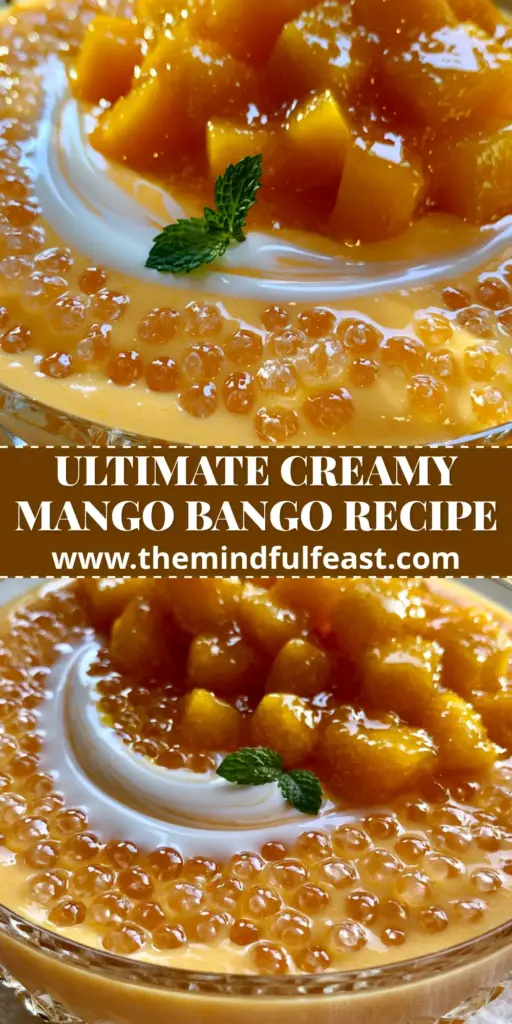
The beauty of mango bango lies in its simplicity and the high-quality ingredients used. By focusing on the visual cues—like the translucency of the sago and the vibrant gold of the Ataulfo mangoes—you can create a dessert that is truly world-class.
If you enjoyed making this recipe, we would love to hear from you! Please leave a comment below and share your photos with us. Don’t forget to follow us on Pinterest for more authentic flavor finds and visual recipe inspiration.