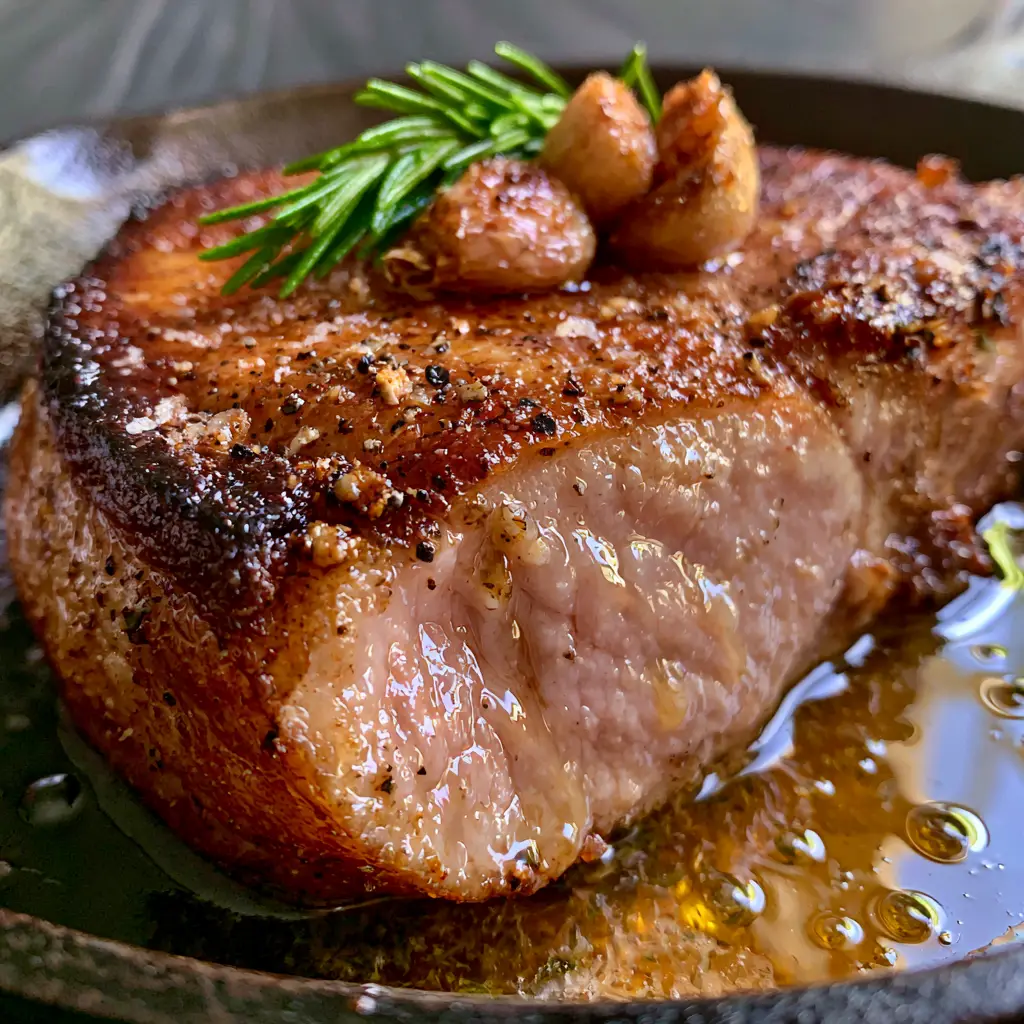
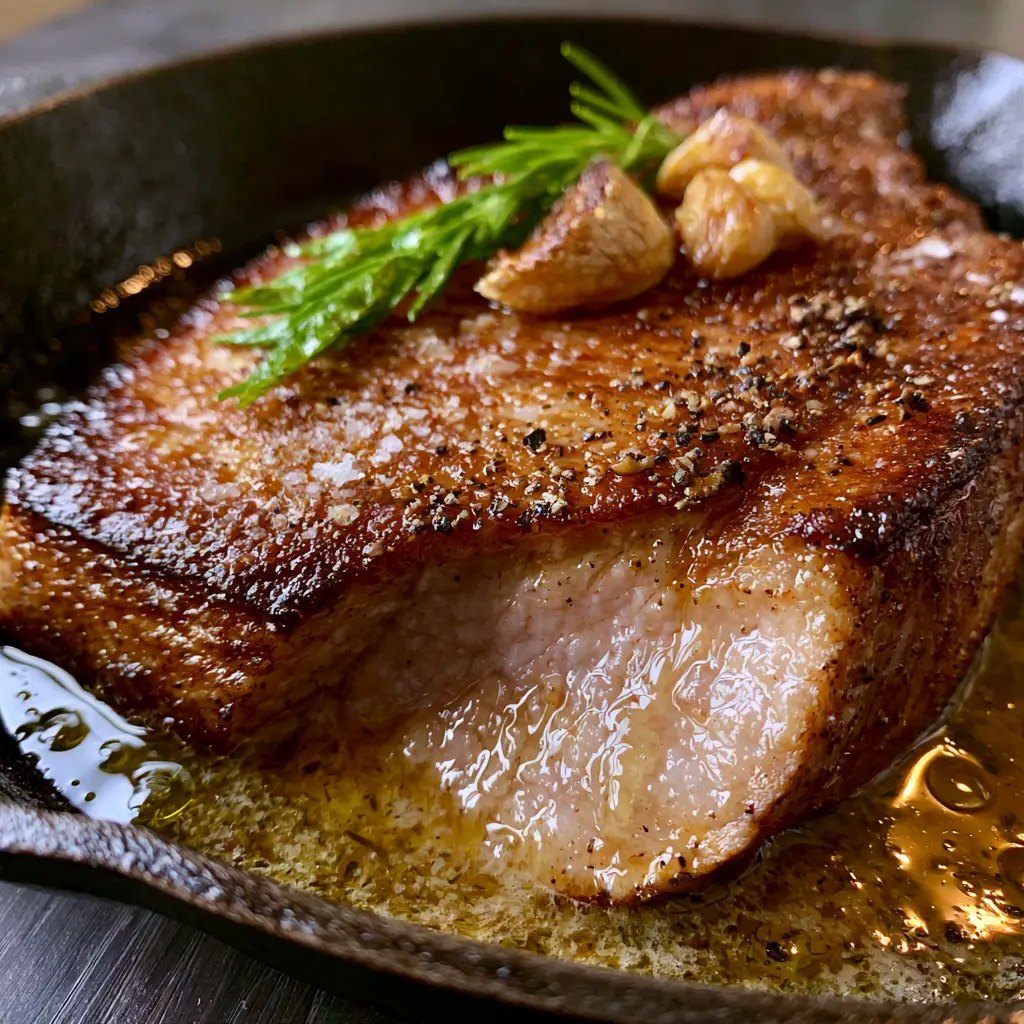
When it comes to elevated pork recipes, few dishes command as much respect as a perfectly executed, thick-cut pan-seared pork chop. This isn’t your average weeknight protein; this is a culinary masterclass in texture and temperature control. Imagine a deep, golden-brown caramelized crust that shatters under the knife, giving way to a glistening, pale-pink interior that practically weeps moisture with every slice.
The secret to this specific visual and flavor profile lies in the marriage of high-heat searing and the classic French technique of arrosé, or butter basting. By bathing the meat in a shimmering pool of amber-colored melted herb butter, we infuse the exterior with the essence of toasted garlic and flash-fried rosemary. This method ensures the meat remains incredibly moist while achieving a professional-grade aesthetic that looks just as good as it tastes.
Whether you are a seasoned home cook or just beginning to explore the versatility of pork recipes, this guide will walk you through the forensic details of heat management, fat rendering, and sensory cues. From the sound of the initial sizzle in a seasoned cast iron skillet to the aroma of fried rosemary sprigs, every step is designed to deliver a high-end restaurant experience in your own kitchen.
Why This Technique Redefines Standard Pork Recipes
- Unrivaled Texture: The thick-cut nature of the chop allows for a significant “crust-to-crumb” ratio, ensuring a crunch that gives way to tender meat.
- Flavor Infusion: Using smashed roasted garlic and fresh rosemary in the basting process creates a complex, aromatic profile that penetrates the surface.
- Visual Excellence: The contrast between the deep golden crust, the bright green fried rosemary, and the pale-pink center makes this a show-stopping centerpiece.
- Scientific Precision: By focusing on internal temperature and resting periods, we eliminate the dry, chewy texture often associated with inferior pork recipes.
Essential Components for a Five-Star Pan-Sear
Achieving this level of culinary perfection requires more than just meat and heat. Every ingredient in this list serves a specific functional purpose in building the layers of flavor and texture seen in our blueprint.
Thick-Cut Bone-In Pork Chops: You must select chops that are at least 1.5 to 2 inches (3.8 to 5cm) thick. This thickness is vital to ensure you can achieve a deep sear without overcooking the delicate, moist center.
Kosher Salt and Cracked Black Peppercorns: These provide the foundational seasoning and contribute to the “craggy” texture of the crust. The coarse grains of flaky sea salt added at the end provide a final hit of salinity and visual sparkle.
High-Smoke Point Oil: Use 2 tbsp (30ml) of avocado or grapeseed oil for the initial sear. Unlike butter, these oils won’t burn at the high temperatures required to trigger the Maillard reaction for that golden-brown crust.
Unsalted Butter: You will need 4 tbsp (56g) of high-quality butter for the basting phase. As the butter melts and foams, it picks up the flavors of the aromatics and coats the meat in a rich, amber-colored lacquer.
Fresh Rosemary Sprigs: These are not just for garnish; when flash-fried in the hot butter, they become crisp and deliver a concentrated herbal oil to the dish. Their bright green color provides a stunning visual contrast against the dark meat.
Fresh Garlic Cloves: Three large cloves, smashed but left in their skins, are essential. Smashed garlic releases its oils more effectively into the butter while the skins prevent the garlic from burning and turning bitter during the roasting process.
Foundational Tools for Professional Results
To replicate the macro, top-down visual aesthetic of this recipe, your choice of equipment is just as important as your ingredients. A seasoned cast iron skillet is the preferred vessel, as its superior heat retention creates a more even and intense sear than stainless steel.
You will also need a long-handled spoon for basting. The technique requires you to tilt the pan so the butter pools at the bottom, then continuously spoon that hot, bubbling fat over the pork. Finally, an instant-read meat thermometer is non-negotiable for achieving that perfect 145°F (63°C) pale-pink finish.
Step-by-Step Mastery of Pan-Seared Pork Recipes
Preparing the Meat for the Heat
Remove your pork chops from the refrigerator at least 30-45 minutes before cooking. This allows the internal temperature to rise, ensuring the meat cooks evenly and doesn’t “shock” the pan, which would drop the temperature and prevent a proper crust.
Pat the meat extremely dry using paper towels. Moisture is the enemy of the sear; any water on the surface will turn to steam, resulting in gray, boiled-looking meat rather than the deep, golden-brown caramelized crust we are aiming for. Season aggressively on all sides, including the fat cap, with kosher salt and cracked black peppercorns.
Executing the Forensic Sear
Place your cast iron skillet over medium-high heat until the oil begins to shimmer and just starts to show the first wisps of smoke. Carefully place the chops in the pan, laying them away from you to avoid oil splatter. Do not move them for the first 3-4 minutes.
Use tongs to press the meat down firmly, ensuring maximum surface contact with the hot iron. You are looking for a specific sensory cue: a loud, consistent sizzle. If the sound dies down, your heat is too low. Flip the chops once a dark, mahogany crust has formed. At this stage, use the tongs to stand the chops on their sides to render the fat cap until it is crispy and golden.
The Art of the Butter Baste
Reduce the heat to medium and add the 4 tbsp (56g) of butter, the three smashed garlic cloves, and the rosemary sprigs. As the butter melts and begins to foam, tilt the skillet slightly. The butter will turn amber and smell nutty—this is the “amber-colored melted herb butter” described in our visual blueprint.
Use your spoon to continuously pour the hot butter over the chops for the final 2-3 minutes of cooking. This process, known as arrosé, essentially deep-fries the rosemary and roasts the garlic while gently bringing the interior of the pork to the perfect temperature. Watch for the rosemary to turn a vibrant, translucent green.
Expert Tips for Success
- The “Finger Test” is Not Enough: When working with thick-cut pork recipes, always use a digital thermometer. Pull the meat at 140°F (60°C); carry-over cooking will bring it to the food-safe and delicious 145°F (63°C) during the rest.
- Dry Brining: For even better results, season the meat with salt 24 hours in advance and leave it uncovered in the fridge. This dries the surface further and seasons the meat to the bone.
- Don’t Crowd the Pan: If you are making multiple chops, cook them in batches. Overcrowding lowers the pan temperature and leads to steaming.
- Control the Butter: If the butter starts to smoke excessively or turn black, immediately add a small splash of oil or a fresh knob of butter to lower the temperature of the fats.
Storage, Reheating, and Freezing
Leftover pan-seared pork can be stored in an airtight container in the refrigerator for up to 3 days. To maintain the integrity of that pale-pink center, avoid the microwave. Instead, reheat the chop in a skillet over low heat with a splash of water and a lid, or slice it thin and serve it at room temperature over a salad.
While you can freeze cooked pork for up to 2 months, the texture of the golden caramelized crust will be lost upon thawing. If you must freeze, wrap the chop tightly in plastic wrap and then aluminum foil to prevent freezer burn.
Perfect Pairings for Your Pork Masterpiece
A dish this rich and savory needs sides that can cut through the fat or complement the herbal notes. Consider serving this alongside a bright Moroccan couscous salad to provide a refreshing citrus contrast to the heavy butter sauce.
If you prefer a more classic comfort food pairing, the roasted garlic from the pan can be folded into a side of garlic butter rice. For those looking to round out a full dinner menu, exploring other protein techniques like garlic butter mahi mahi or trout recipes can help you build a repertoire of high-heat skillet skills. Finally, if you have leftovers, they make an incredible addition to a Southern chicken salad (coming soon) style preparation, swapping the chicken for diced pork.
Frequently Asked Questions
In this specific recipe, fresh rosemary is highly recommended. The visual blueprint relies on flash-fried sprigs, and fresh rosemary provides the aromatic oils necessary for the butter-basting process which dried herbs cannot replicate.
Yes, according to the USDA, pork is safe to consume once it reaches an internal temperature of 145°F (63°C) followed by a three-minute rest. At this temperature, the meat is often slightly pink and much juicier than the overcooked white pork of the past.
Bone-in chops are preferred for this technique. The bone helps protect the meat from overcooking and provides a more complex flavor profile, while also helping the chop maintain its thick structure during the high-heat sear.
A weak crust is usually caused by moisture on the surface of the meat or a pan that isn’t hot enough. Ensure you pat the chops extremely dry with paper towels and wait for the oil to shimmer before adding the meat to the skillet.
The Ultimate Pan-Seared Garlic Herb Butter Pork Chop
Pork Recipes: The Ultimate Garlic Herb Butter Pan-Seared Thick-Cut Chop
Ingredients
Equipment
Method
- Remove pork chops from the fridge 30-45 minutes before cooking. Pat extremely dry with paper towels.
- Generously season all sides with kosher salt and cracked black peppercorns, pressing the seasoning into the meat.
- Heat oil in cast iron over medium-high until shimmering. Sear chops for 3-4 minutes without moving until a deep golden-brown caramelized crust forms.
- Flip the chops. Use tongs to sear the fat cap on the side until crispy. Lower heat to medium.
- Add butter, smashed garlic, and rosemary. Once foaming, tilt the pan and spoon the amber melted herb butter over the meat repeatedly for 2-3 minutes.
- Remove chops when internal temp hits 140°F (60°C). Let rest for 5-10 minutes until they reach 145°F (63°C).
- Top with the fried rosemary, roasted garlic cloves, and a sprinkle of flaky sea salt before slicing.
Notes
Use a high-smoke point oil like avocado oil to prevent the pan from smoking out your kitchen during the initial sear.
A New Standard for Your Kitchen
Mastering pork recipes like this one transforms a simple dinner into a culinary event. The combination of a scientific sear, aromatic basting, and the visual cues of fried rosemary and roasted garlic creates a sensory experience that is hard to match. By following these steps, you ensure every bite is a perfect balance of crispy, salty crust and moist, tender meat.
If you enjoyed this deep dive into skillet techniques, please leave a comment below and let us know how your crust turned out! Don’t forget to share your photos and save this recipe to your favorite boards on Pinterest to help other home cooks discover the joy of the perfect pan-sear.