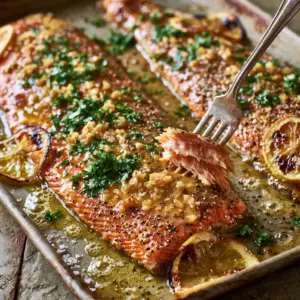
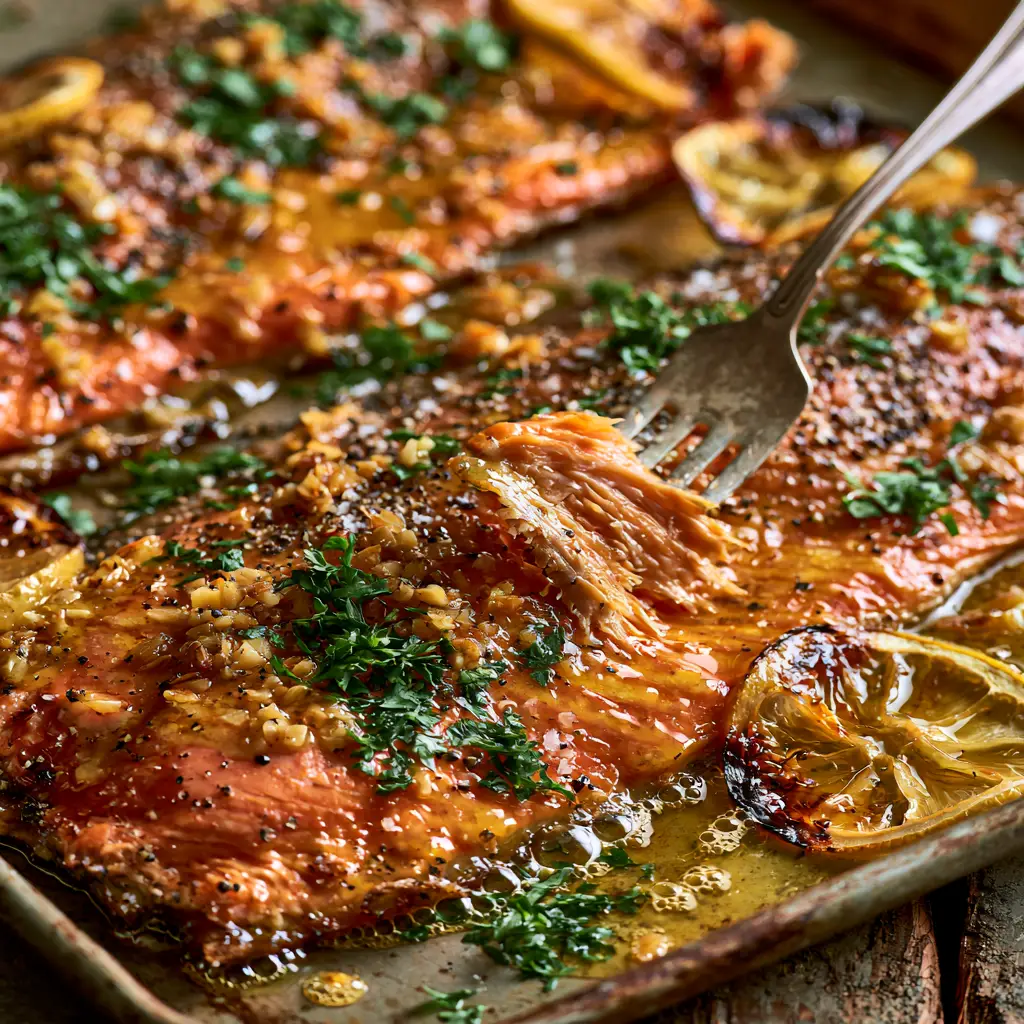
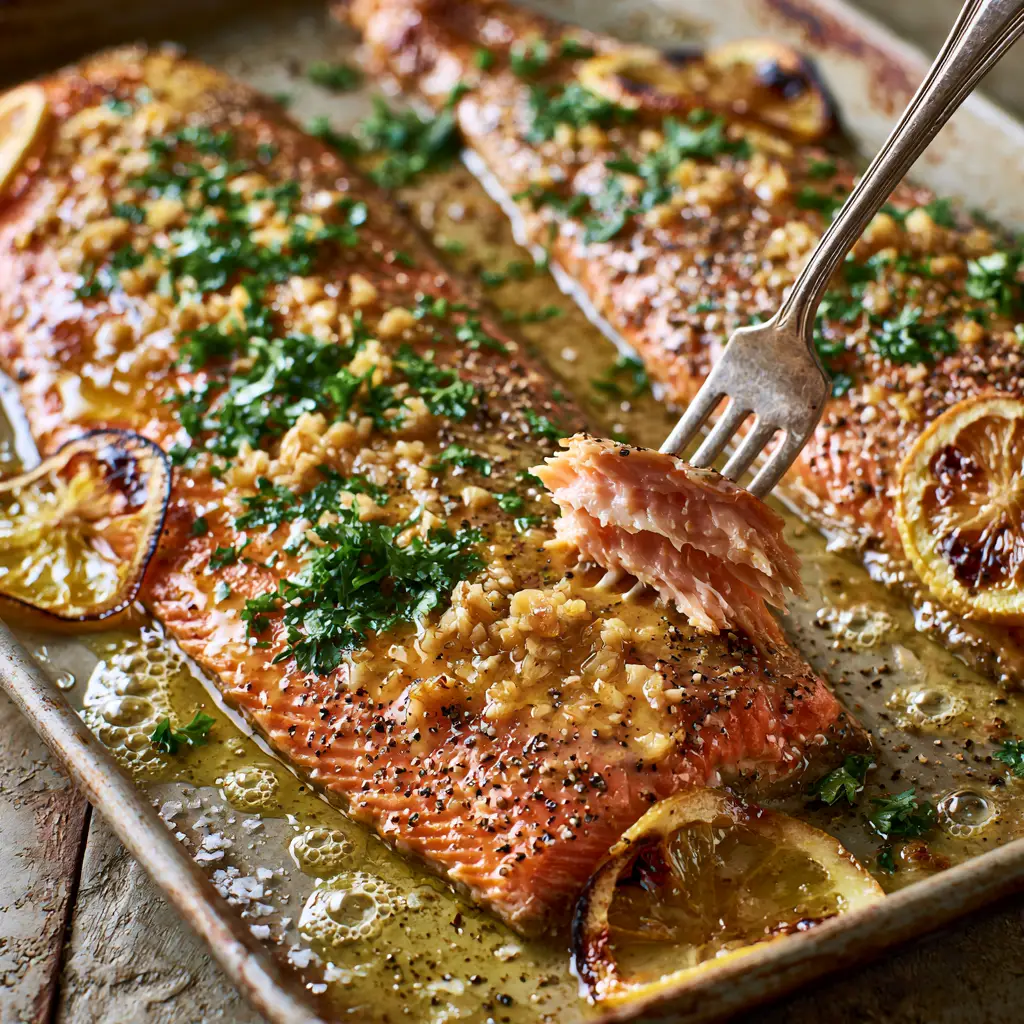
There is nothing quite like the sight of a garlic butter trout fresh from the oven, glistening under a thick, golden glaze of melted butter and aromatic sautéed garlic. Imagine a handheld smartphone photo capturing the moment: two large, juicy trout fillets resting on a golden-charred sheet pan, their pink-orange flesh perfectly flaky and moist. The vibrant green of finely chopped parsley contrasts against the caramelized edges of thin lemon slices, while tiny bubbles of hot butter still sizzle around the edges.
When you press a silver fork into the center of the fillet, it should lift a large, tender flake with ease, revealing a succulent interior that has been protected by a perfectly seared crust. This recipe isn’t just about flavor; it is about the meticulous detail of cracked black pepper and coarse sea salt flakes that catch the light in the soft, bright natural morning daylight of your kitchen. Whether you are a seasoned chef or a home cook looking for a restaurant-quality meal, this guide will show you how to master the art of the trout.
Why You Will Crave This Golden-Charred Trout Experience
- Perfectly Flaky Texture: We use a high-heat searing technique to ensure the deep pink-orange flesh remains moist and tender while developing a golden-charred exterior.
- Thick Garlic Butter Glaze: Forget thin sauces; this glaze is emulsified to cling to every flake, enriched by copious amounts of minced sautéed garlic bits.
- Complex Citrus Notes: By charring thin lemon wheels directly on the sheet pan, we transform sharp acidity into a mellow, caramelized sweetness that cuts through the rich butter.
- Sensory Mastery: From the sound of the sizzle to the smell of browning butter and the visual pop of vibrant green parsley, this dish hits every culinary note.
If you enjoy the rich, savory profile of this dish, you might also want to explore our garlic butter mahi mahi for a firmer white fish alternative. Both recipes celebrate the transformative power of a well-executed butter sauce.
The Essential Components for Restaurant-Quality Garlic Butter Trout
To achieve the hyper-realistic, 8k-resolution quality of the dish described in our visual blueprint, each ingredient must be selected for its specific contribution to flavor and structure. We aren’t just making dinner; we are engineering a masterpiece of sheet pan drippings and aromatic oils.
Fresh Trout Fillets: Look for fillets with vibrant pink-orange flesh, weighing approximately 6-8 oz (170-227g) each. The color indicates a high healthy fat content, which leads to that sought-after juicy interior.
Unsalted Butter: You will need 4 tbsp (56g) of high-quality unsalted butter. Using unsalted allows you to control the seasoning precisely with the coarse sea salt flakes later in the process.
Fresh Garlic: We use 4-5 large cloves (approx. 25g), finely minced. Sautéing these bits until golden is the key to the “glistening” look of the final glaze.
Avocado or Grapeseed Oil: You need 1 tbsp (15ml) of a high-smoke-point oil for the initial sear. This ensures you get that golden-charred skin without the oil breaking down and smoking out your kitchen.
Lemons: One large lemon (approx. 60g) should be sliced into paper-thin wheels. These will tuck around the fish and caramelize in the hot butter bubbles.
Fresh Flat-Leaf Parsley: A full 1/4 cup (15g) of finely chopped parsley provides the vibrant green contrast seen in our visual blueprint. Never use dried parsley for this specific recipe.
Seasoning Duo: Use 1 tsp (5g) of freshly cracked black pepper and 1 tsp (5g) of coarse sea salt flakes (like Maldon). The texture of the flakes is critical for that “meticulous detail” in the final presentation.
Must-Have Kitchen Tools for the Perfect Sear
To replicate the handheld smartphone photo aesthetic, your equipment needs to facilitate high-heat conduction and easy cleanup. A heavy-duty, rimmed sheet pan is the most important tool here, as it catches all the precious sheet pan drippings.
You will also need a wide stainless steel or cast iron skillet for the initial sear. The silver fork mentioned in our visual prompt isn’t just for show; it’s the best tool for checking the “flake” of the trout. Lastly, a sharp chef’s knife is essential for mincing the garlic and parsley to the required fine consistency.
Step-by-Step Mastery: How to Make Garlic Butter Trout
Phase 1: Preparing the Trout for Maximum Crispness
Start by patting your trout fillets extremely dry with paper towels. Any moisture on the surface of the fish will create steam, preventing that golden-charred crust from forming.
Season both sides generously with the cracked black pepper and half of the sea salt flakes. Let the fish sit at room temperature for about 10 minutes; this ensures even cooking once it hits the hot pan.
Phase 2: The High-Heat Skillet Sear
Heat your high-smoke-point oil in a skillet over medium-high heat until it shimmers. Place the trout fillets skin-side down (if skin is on) or presentation-side down.
Press down lightly with a spatula to ensure even contact. Sear for 2-3 minutes until a deep golden-brown crust forms. The goal here isn’t to cook the fish through, but to develop the visual color found in our trout recipes collection.
Phase 3: Crafting the Glistening Garlic Butter Glaze
While the fish sears, melt your butter in a small saucepan over medium heat. Once it begins to foam, add the minced garlic bits.
Sauté the garlic for 60-90 seconds until it is fragrant and just beginning to turn golden. Remove from heat immediately so the garlic doesn’t burn; it will continue to cook in the oven.
Phase 4: The Sheet Pan Finish and Caramelization
Transfer the seared trout fillets to a rimmed sheet pan. Arrange the thin lemon wheels around and slightly tucked under the edges of the fillets.
Pour the garlic butter glaze over the fish, ensuring the minced garlic bits are scattered across the top. Place the pan under a preheated broiler (high setting) for 3-4 minutes. Watch for the tiny bubbles of hot butter and the lemon edges turning dark and caramelized.
Phase 5: The Final Flourish
Remove the pan from the oven and immediately sprinkle the finely chopped vibrant green parsley over the hot fish. The residual heat will wake up the oils in the parsley without wilting it completely.
Finish with a final pinch of coarse sea salt flakes. The contrast of the salt against the glistening glaze is what gives this dish its hyper-realistic, gourmet appeal.
Expert Tips for a Flawless Fish Dinner
- Cold Butter Secret: If your glaze feels too thin, whisk in a small knob of cold butter at the very end of the sautéing process to create a thicker, more emulsified coating.
- Don’t Overcrowd: Ensure there is space between the fillets on the sheet pan so the air can circulate, creating those charred lemon edges rather than soggy ones.
- Check for Doneness: Trout is done when it reaches an internal temperature of 145°F (63°C). The flesh should be opaque but still show that deep pink-orange hue.
- Rest the Fish: Let the trout rest on the sheet pan for 2 minutes before serving. This allows the juices to redistribute, ensuring a “juicy trout” result every time.
Preserving Your Leftovers: Storage and Reheating
If you happen to have leftovers, garlic butter trout stays delicious for up to 2 days in the refrigerator. Store it in an airtight container, making sure to pour any remaining sheet pan drippings over the fish to keep it moist.
To reheat, avoid the microwave, which can make the trout rubbery. Instead, place the fillets in a shallow dish with a splash of water or extra butter, cover with foil, and warm in a 300°F (150°C) oven for 8-10 minutes. For more ideas on using leftover fish, check out our healthy fish recipes for inspiration on flaked fish salads.
What to Serve with Your Glistening Trout
To complete this meal, you need a side dish that can soak up the extra garlic butter glaze. A side of garlic butter rice is a natural choice that mirrors the flavors of the main protein.
If you prefer something lighter, a Moroccan couscous salad provides a bright, herbaceous contrast to the rich trout. The acidity in the salad complements the charred lemons perfectly, creating a balanced palate.
Frequently Asked Questions About Trout
While you can, you will lose the thick, glistening ‘glaze’ effect and the rich flavor profile that characterizes a classic garlic butter trout.
Absolutely. Just ensure they are completely thawed and patted extremely dry with paper towels to achieve the required golden-charred crust.
The trout is done when the flesh is opaque and flakes easily with a fork at the thickest part, or when it reaches an internal temperature of 145°F (63°C).
Yes, leaving the skin on helps hold the fillet together during the high-heat sear and provides a delicious textural contrast, though it can be removed after cooking if preferred.
Steelhead trout is migratory and usually has a deeper pink-orange flesh similar to salmon, while rainbow trout is often lighter and smaller. Both work perfectly in this recipe.
The Final Garlic Butter Trout Recipe
Garlic Butter Trout: The Ultimate Golden-Charred Sheet Pan Recipe
Ingredients
Equipment
Method
- Pat trout fillets extremely dry with paper towels. Season both sides with cracked black pepper and half of the sea salt flakes.
- Heat oil in a skillet over medium-high heat. Sear trout fillets presentation-side down for 2-3 minutes until golden-charred.
- Melt butter in a small pan, add minced garlic, and sauté for 60-90 seconds until fragrant and golden.
- Transfer fish to a sheet pan, tuck lemon wheels around them, and pour the garlic butter glaze over the top.
- Broil for 3-4 minutes until butter bubbles and lemons caramelize. Sprinkle with fresh parsley and remaining sea salt flakes.
Notes
Ensure the trout reaches an internal temp of 145°F (63°C).
Bring the Golden Char to Your Kitchen
Mastering the garlic butter trout is a rite of passage for any home cook who loves seafood. The combination of the golden-charred exterior, the thick garlic glaze, and the bright pop of parsley creates a dish that is as beautiful as it is delicious. This recipe proves that with the right technique, you can achieve hyper-realistic, restaurant-quality results on a simple sheet pan.
Did you try this recipe? We would love to hear about your results! Leave a comment below, and don’t forget to share your photos and follow us on Pinterest for more culinary inspiration. If you loved this, be sure to try our trout almondine (coming soon) for another classic preparation!