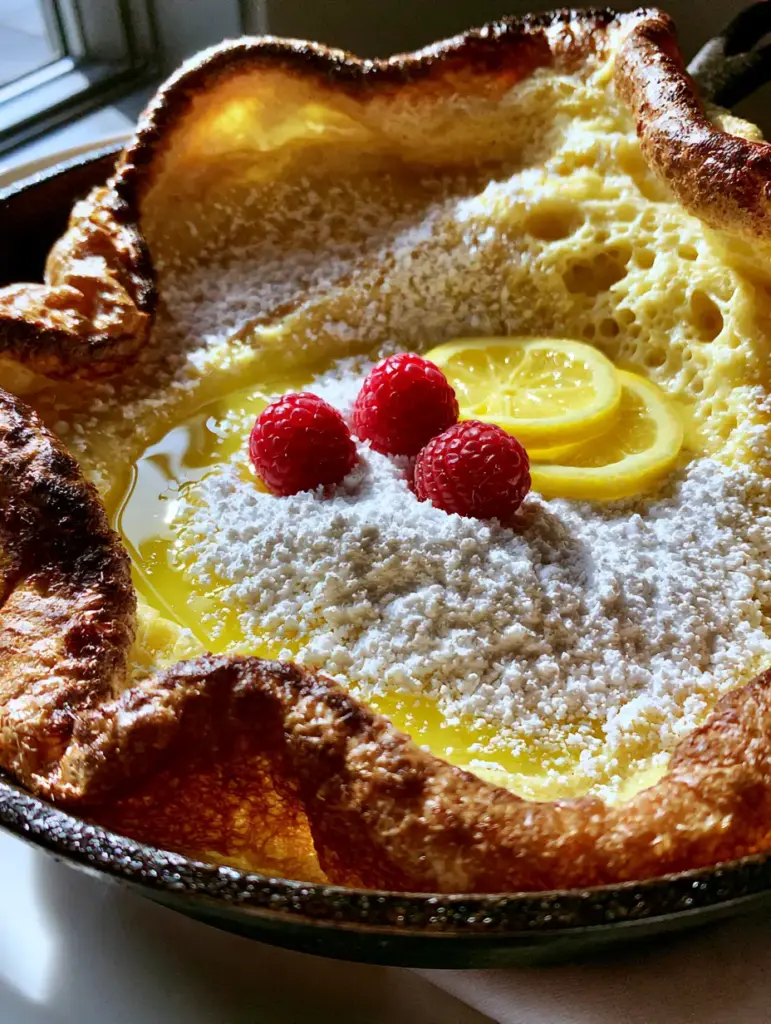
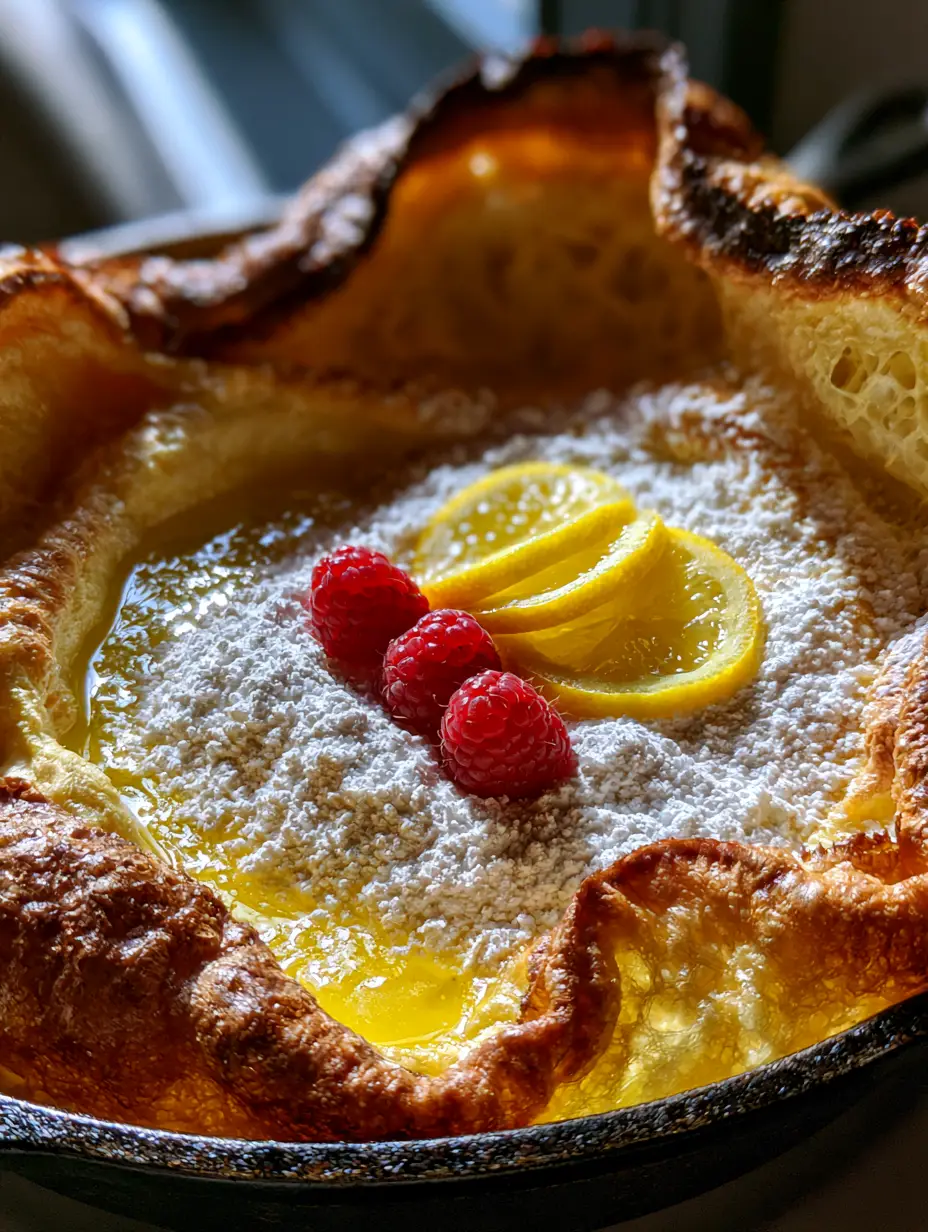
There is nothing quite as dramatic or satisfying in the culinary world as pulling a massive, golden-brown German pancake recipe out of a screaming hot oven. This breakfast centerpiece, also known as a Dutch Baby, is a masterclass in textures: towering, airy walls with crispy dark golden ridges and a soft, custardy interior that melts in your mouth.
This specific German pancake recipe is engineered for maximum lift and visual impact. Using a seasoned black cast iron skillet, we create a thermal environment that forces the batter to climb the walls of the pan, resulting in an egg-shell texture that is both delicate and structurally impressive.
Whether you are hosting a festive brunch or looking for the ultimate comfort food, this recipe delivers a restaurant-quality result in your own kitchen. Let’s dive into the science of the puff and the art of the perfect dusting.
The Magic Behind This Gravity-Defying Breakfast
- Extreme Vertical Lift: Witness the batter transform into a massive, golden-brown puffy crown that towers over the skillet edges.
- Multidimensional Texture: Experience the contrast between the crispy charred edges and the porous, custardy interior walls.
- Vibrant Flavor Profile: A shimmering pool of melted salted butter meets a heavy snowy dusting of powdered sugar, balanced by tart raspberries and bright lemon.
- Culinary Simplicity: Achieve a high-end rustic aesthetic with just a few pantry staples and a blender.
The Essential Components for a Perfect Puff
To achieve the visual result seen in high-end food photography, every ingredient serves a specific structural or flavor-based purpose. Quality matters when the ingredient list is this focused.
Large Eggs (4): These provide the leavening power and the protein structure required for the walls to climb the skillet. Ensure they are at room temperature to maximize volume.
Whole Milk (1 cup / 240ml): Milk provides the steam necessary for the “puff” while creating the rich, custardy base. Room temperature milk is vital for a smooth, airy batter.
All-Purpose Flour (1 cup / 125g): This creates the “egg-shell” texture and holds the structure together as it rises. Aerate your flour before measuring to ensure the batter isn’t too dense.
Salted Butter (4 tbsp / 56g): Melted directly in the cast iron skillet, this provides the fat for the crispy charred edges. The salt in the butter balances the sweetness of the sugar and fruit.
Fine Sea Salt (1/2 tsp / 3g): Salt is the ultimate flavor enhancer that prevents the pancake from tasting “eggy” or flat. It strengthens the flour’s gluten just enough to support the height.
Vanilla Extract (1 tsp / 5ml): A foundational aromatic that infuses the batter with a warm, comforting scent. It elevates the pancake from a simple egg dish to a dessert-like breakfast.
Powdered Sugar (for dusting): A heavy, snowy layer provides the iconic finish and a delicate sweetness. It also helps to absorb a bit of the surface moisture from the butter pool.
Fresh Red Raspberries and Lemon Slices: The raspberries provide a burst of acidity and color, while thin lemon slices allow you to squeeze fresh juice over the custardy center. This citrus hit is the secret to cutting through the richness.
The Heavy-Duty Tools for Success
You cannot achieve this specific look without a seasoned black cast iron skillet. The thermal mass of the iron retains heat, which is what triggers the immediate “spring” of the batter once it hits the pan.
A high-speed blender is also recommended. This aerates the batter and ensures there are no lumps of flour, which would act as weights and prevent the pancake from reaching its full potential height.
If you enjoy this technique, you might also be interested in our fluffy Japanese soufflé pancakes for another high-rise breakfast adventure.
Mastering the Oven-Puffed Technique
Preparing the Thermal Foundation
Place a 10-inch (25cm) seasoned black cast iron skillet into the center of your oven. Preheat the oven to 425°F (220°C). This ensures the iron is radiating heat before the batter ever touches it.
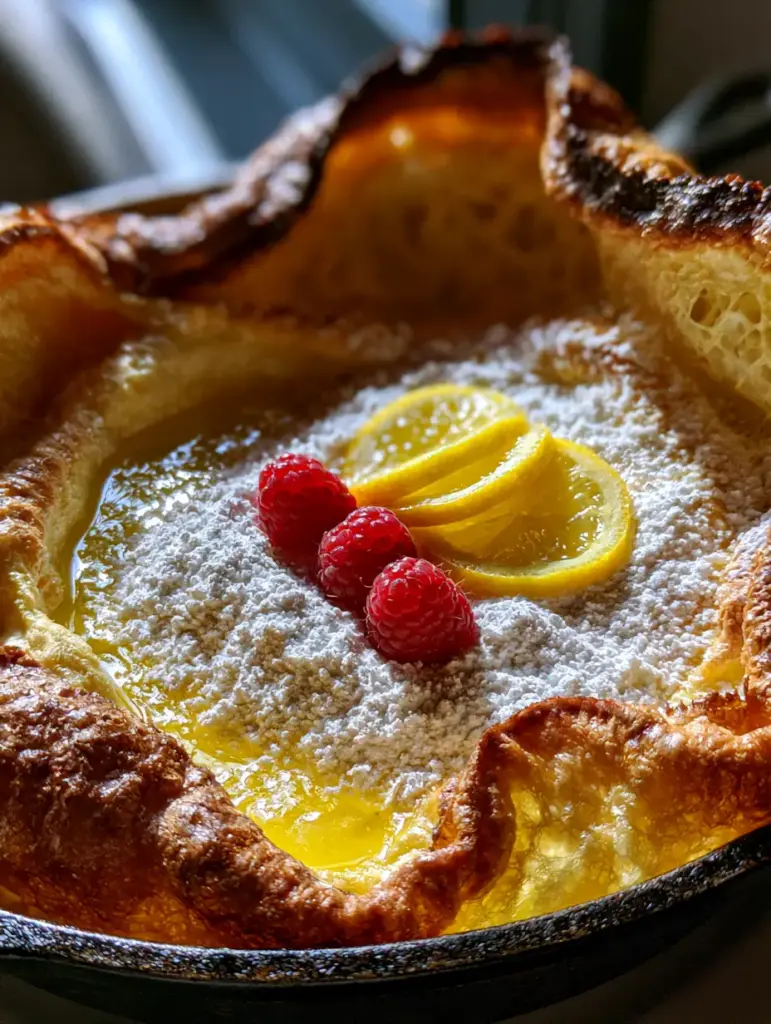
Allow the skillet to heat for at least 10 minutes after the oven reaches temperature. This intense heat is what creates the crispy, dark golden ridges you see in the blueprint.
Aerating the Batter
In your blender, combine the room-temperature eggs, milk, flour, salt, and vanilla. Blend on high for 30-45 seconds until the mixture is completely smooth and covered in a layer of tiny bubbles.
Let the batter rest for 5 minutes. This allows the flour to hydrate fully, which results in a more cohesive, custardy interior rather than a grainy one.
The Sizzle and Pour
Carefully remove the hot skillet from the oven using a heavy-duty oven mitt. Add the 4 tablespoons (56g) of salted butter to the pan, swirling it until it is completely melted and slightly browned.
Immediately pour the batter into the center of the pool of melted butter. Do not stir. You want the butter to be pushed to the edges, as this is what fries the sides of the pancake to create those charred, wavy edges.
The High-Heat Bake
Return the skillet to the oven and bake for 18-22 minutes. Watch through the oven window as the edges climb high and the center stays recessed.
Look for the visual cue: the top ridges should be a deep, dark golden brown and appear dry to the touch. Avoid opening the oven door during the first 15 minutes, or the steam will escape and the pancake will collapse prematurely.
Expert Tips for Success
- Temperature is Everything: If your eggs and milk are cold, the batter will take too long to heat up, and you won’t get that “towering” effect.
- The Blender Secret: Blending creates air bubbles that expand in the heat. If you don’t have a blender, whisk vigorously for at least 2 minutes.
- Don’t Be Afraid of Color: A pale German pancake is often a soggy one. Wait for those crispy charred edges to appear for the best flavor.
- Serve Immediately: Like a soufflé, a German pancake will begin to deflate within minutes of leaving the oven. Have your toppings ready!
Storage, Reheating & Freezing
This German pancake recipe is best enjoyed fresh from the oven to appreciate the “egg-shell” texture. However, if you have leftovers, they can be stored in an airtight container in the refrigerator for up to 2 days.
To reheat, place slices in a toaster oven or back into a hot skillet for 3-5 minutes. This helps restore some of the crispiness to the edges. We do not recommend freezing this dish, as the custardy interior can become rubbery upon thawing.
What to Serve for the Ultimate Brunch
To round out a full morning spread, pair this pancake with a savory side. A savory turkey skillet can provide a high-protein balance to the sweet pancake.
If you’re serving this for a special occasion, like a themed birthday morning, consider adding a side of fresh fruit or even a small portion of no-bake cookie dough bites for a truly indulgent treat.
For those who love late-night breakfast, this also makes one of the best midnight snacks because it comes together so quickly with minimal cleanup.
Frequently Asked Questions
Yes, you can refrigerate the batter for up to 24 hours. However, you must let it come back to room temperature before baking to ensure it reaches its maximum height.
While a cast iron skillet is best for heat retention and those charred edges, you can use any heavy, oven-safe metal baking dish or stainless steel skillet of similar size.
They are essentially the same dish. The term ‘Dutch Baby’ originated in a Seattle restaurant in the early 1900s, likely a corruption of ‘Deutsch,’ meaning German, referring to the pancake’s origin.
The most common reasons are using cold ingredients (eggs/milk), not preheating the cast iron skillet properly, or opening the oven door too early, which lets out the steam needed for the rise.
It is completely natural for a German pancake to deflate slightly as it cools and the steam escapes. To minimize this, serve it immediately while it’s at its peak height.
The Master German Pancake Recipe
German Pancake Recipe: The Ultimate Guide to a Towering, Crispy Dutch Baby
Ingredients
Equipment
Method
- Place a 10-inch cast iron skillet in the oven and preheat to 425°F (220°C).
- Combine eggs, milk, flour, salt, and vanilla in a blender. Blend on high for 45 seconds until bubbly. Let rest for 5 minutes.
- Carefully remove the hot skillet from the oven. Add butter and swirl until melted and sizzling.
- Pour batter into the center of the skillet. Bake for 18-22 minutes until edges are high, wavy, and dark golden brown.
- Dust heavily with powdered sugar, add fresh raspberries and lemon slices. Serve immediately while puffy.
Notes
Do not open the oven door during the first 15 minutes of baking.
Closing & Call to Action
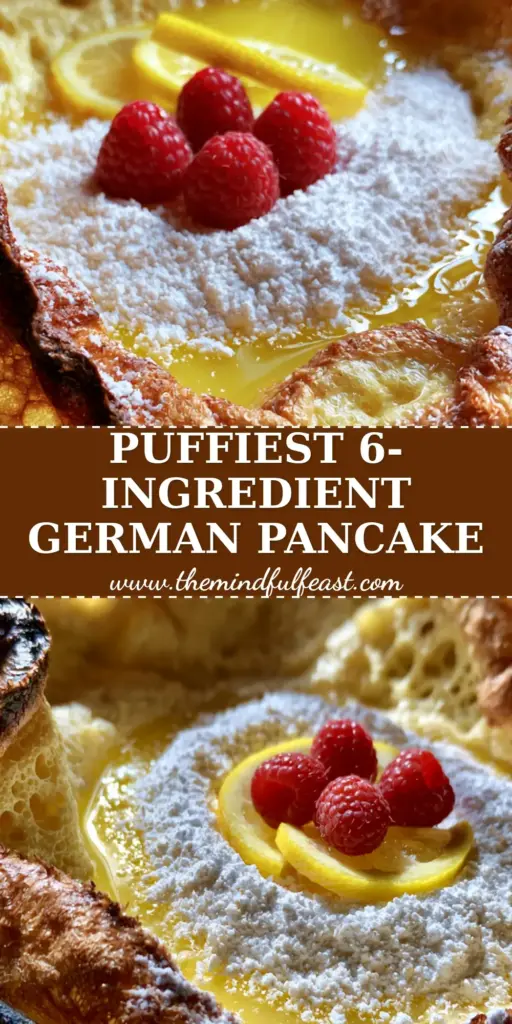
This German pancake recipe is more than just a meal; it is a kitchen performance. The way the batter defies gravity to create a towering, airy masterpiece never fails to impress. With its shimmering butter pool and snowy sugar dusting, it’s a dish that tastes every bit as good as it looks.
If you made this recipe and reached new heights in your skillet, please leave a comment and a rating below! We love seeing your culinary creations. Don’t forget to share your photos and follow us on Pinterest for more visually stunning recipe inspiration!