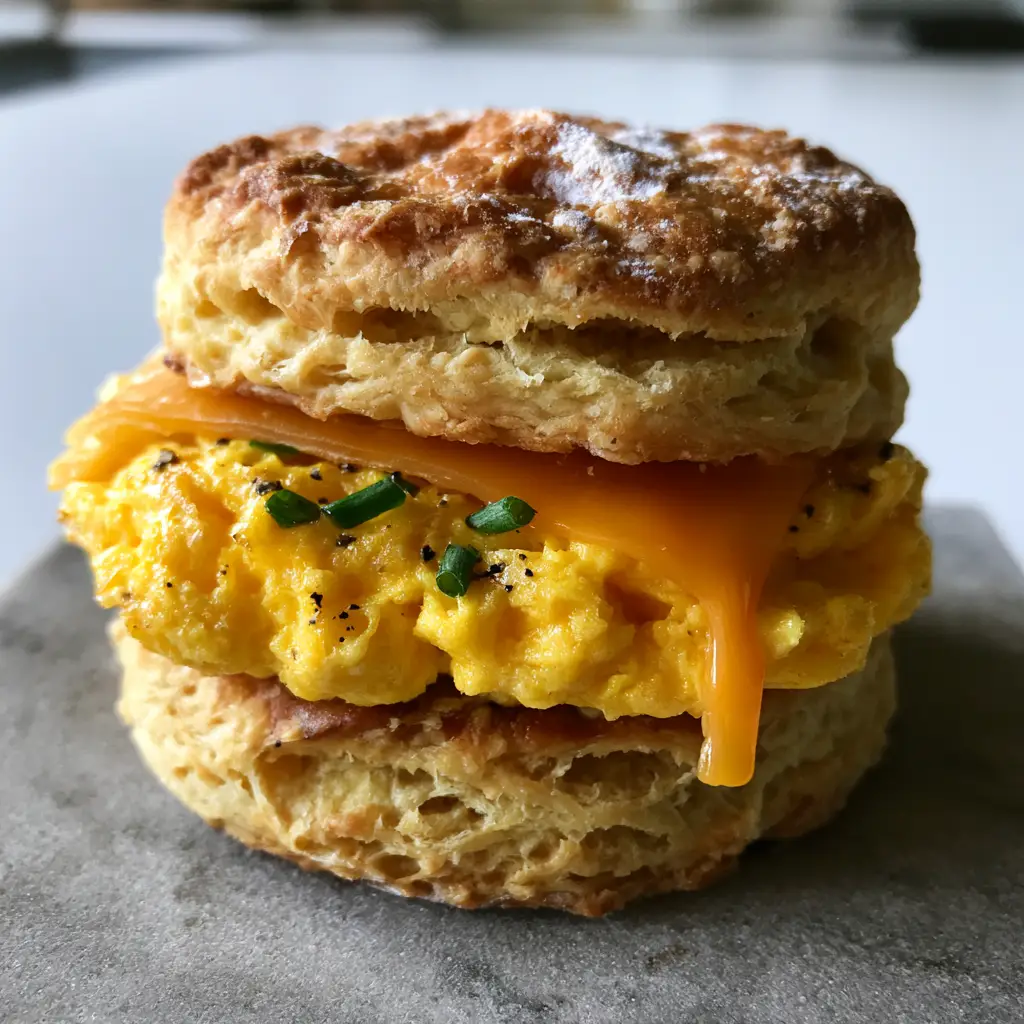
There is nothing quite like the aroma of fresh egg biscuits wafting through a kitchen in the early morning. These aren’t just your standard fast-food breakfast items; they are a culinary experience designed to mimic the high-end, high-protein offerings of a professional bakery. Imagine biting into a stack of warm, golden-brown layers that shatter with a buttery crunch, only to be met by a thick, ultra-fluffy steamed egg souffle and the sharp tang of melted cheddar cheese.
In this guide, we are diving deep into the science of the perfect breakfast sandwich. We will explore how to achieve that iconic “flour-dusted” look and the porous, airy texture of a perfectly cooked egg patty. Whether you are meal prepping for a busy week or hosting a slow Sunday brunch, mastering these egg biscuits will elevate your morning routine to a professional level.
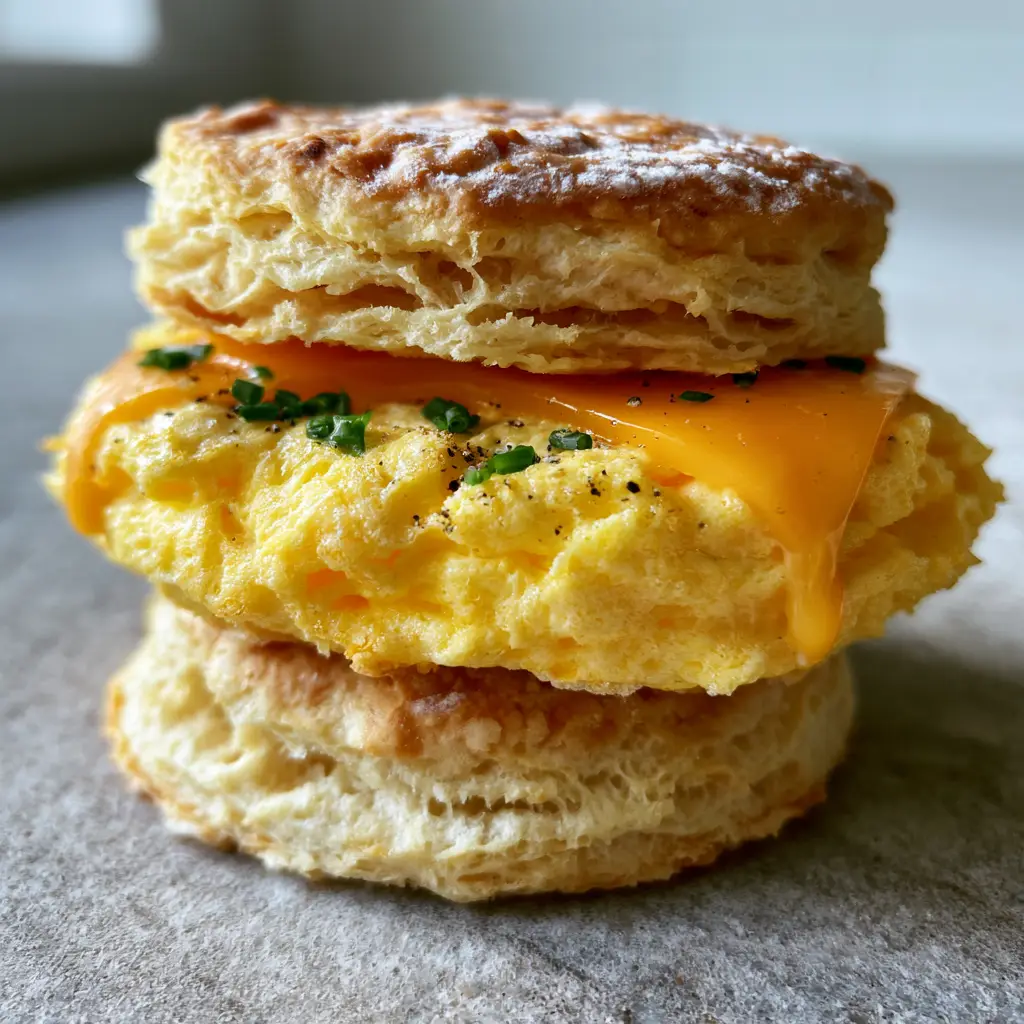
The visual appeal of this dish is undeniable—from the vibrant yellow of the souffle to the bright green flecks of fresh chives. Every element is designed to provide a balance of textures: the crumbly biscuit, the creamy melted cheese, and the soft, cloud-like egg. Let’s get started on creating this handheld masterpiece.
Why These High-Protein Egg Biscuits Beat the Drive-Thru
- Unrivaled Texture: We use a lamination technique to ensure the egg biscuits have visible, flaky layers that rise high in the oven.
- Superior Egg Quality: Unlike rubbery fried eggs, our “steamed souffle” method results in a thick, bright yellow patty with a porous, airy crumb.
- Sharp Flavor Profile: The combination of aged sharp orange cheddar and freshly cracked black pepper provides a sophisticated depth of flavor.
- Visual Perfection: Finely minced chives and a light dusting of flour on the biscuit tops create a photogenic, “bakery-style” finish.
Essential Components for the Ultimate Flaky Biscuit Base
The foundation of great egg biscuits is, of course, the biscuit itself. To achieve that bakery-style height and crumbly texture, we rely on high-quality fats and specific temperature controls. Using cold, unsalted butter is non-negotiable, as the water content in the butter creates steam, which pushes the dough layers apart during baking.
All-Purpose Flour: 2 cups (250g). This provides the necessary structure while maintaining a tender crumb that isn’t too “bread-like.” A light dusting on top before baking gives that rustic, artisanal appearance.
Cold Unsalted Butter: 1/2 cup (113g). We grate the butter while frozen to ensure it stays cold until the moment it hits the oven, which is the secret to those visible flaky layers.
Baking Powder: 1 tbsp (15g). This is our primary leavening agent, responsible for the “high-rise” look seen in professional bakery displays.
Buttermilk: 3/4 cup (180ml). The acidity in buttermilk reacts with the leavening agents to create a soft interior and a slight tang that complements the sharp cheddar.
Fine Sea Salt: 1 tsp (6g). Essential for enhancing the buttery notes of the dough; without it, the biscuit will taste flat against the savory egg.
The Secret to Ultra-Fluffy Steamed Egg Souffle Patties
To get the “thick, ultra-fluffy” egg layer described in our visual blueprint, we move away from the frying pan. Instead, we use a gentle baking method that incorporates air and moisture, resulting in a bright yellow souffle texture that holds its shape perfectly inside the egg biscuits.
Large Eggs: 6 units. We whisk these vigorously to incorporate air, which is the “invisible ingredient” for a porous and airy texture.
Heavy Cream: 1/4 cup (60ml). The fat in the cream stabilizes the air bubbles in the eggs, ensuring the souffle doesn’t collapse after it leaves the heat.
Fresh Chives: 2 tbsp (10g). Finely minced bright green chives are folded in at the last second to provide a pop of color and a mild onion-like freshness.
Cracked Black Pepper: 1/2 tsp (2g). Coarsely cracked pepper provides a visual “speckle” and a spicy bite that cuts through the richness of the cheese.
Sharp Orange Cheddar: 4 thick slices. We choose a high-moisture sharp cheddar to ensure that iconic “drip” down the side of the hot egg patty.
Professional Tools for Bakery-Quality Results
Achieving the specific look of professional egg biscuits requires a few specific kitchen tools. First, a 3-inch (7.5cm) circular biscuit cutter is essential. Never twist the cutter; a straight-down-and-up motion keeps the edges of the dough “open,” allowing for maximum rise.
For the eggs, a silicone muffin top pan or a square baking dish lined with parchment works best to achieve that uniform “patty” shape. If you use a square dish, you can use the same biscuit cutter to punch out perfectly round egg souffles that match the size of your biscuits exactly.
Finally, a pastry brush is used to apply a light coating of buttermilk to the tops of the biscuits. This acts as the “glue” for the flour dusting and helps the tops reach that perfect golden-brown hue under the oven’s heat.
Mastering the Art of Laminated Biscuit Layers
To create the “bakery-style” height seen in our egg biscuits, we use a simple lamination process. After mixing your flour and cold butter, add the buttermilk until a shaggy dough forms. Turn it out onto a floured surface and pat it into a rectangle.
Fold the dough into thirds, like a letter. Rotate 90 degrees and repeat this process three times. This creates dozens of microscopic layers of butter and flour. When the heat hits the oven, the butter melts, the water turns to steam, and the biscuit “lifts,” creating that crumbly, flaky texture we are looking for.
If you enjoy the process of making dough-based breakfasts, you might also find inspiration in our creative pancake designs for your next weekend project. However, for sheer savory satisfaction, nothing beats the structural integrity of a laminated biscuit.
How to Achieve That Porous, Airy Egg Texture
The “souffle” egg is the heart of the egg biscuits. To replicate the steamed texture, place a small tray of water on the bottom rack of your oven while the eggs bake. This creates a humid environment that prevents the eggs from browning or becoming tough on the edges.
Whisk the eggs, cream, salt, and half of the chives until very frothy. Pour the mixture into your prepared molds. Bake at 325°F (165°C) just until the center is set but still has a slight jiggle. This low-and-slow approach ensures the eggs remain bright yellow rather than turning a dull brown.
Once the eggs are done, immediately top them with the thick slice of sharp cheddar while they are still in the pan. The residual heat will start the melting process, creating that beautiful orange drip that characterizes a perfect breakfast sandwich.
Assembly: Creating the Iconic Melted Cheddar Drip
Timing is everything when assembling egg biscuits. You want the biscuit to be warm enough to further melt the cheese, but not so hot that it falls apart. Split the biscuit gently with a fork—not a knife—to preserve the craggy, porous interior which helps “grip” the egg patty.
Place the cheesy egg souffle on the bottom half. Sprinkle the remaining fresh chives and a final pinch of cracked black pepper directly onto the melted cheese. This ensures the aromatics are the first thing your nose catches when you lift the sandwich to take a bite. Place the flour-dusted top on, and press down slightly to marry the layers together.
Culinary Secrets for Consistent Breakfast Success
- Keep it Cold: If your kitchen is warm, put the cut biscuit dough in the freezer for 10 minutes before baking to ensure the butter hasn’t softened.
- The “Fork” Split: Always use a fork to split your biscuits. A knife sears the edges shut, while a fork leaves “nooks and crannies” for the cheese to settle into.
- Don’t Overmix: When adding buttermilk to the flour, mix until *just* combined. Overworking the dough develops gluten, which leads to tough, chewy biscuits rather than flaky ones.
- Steam the Eggs: If you don’t have a steam oven, covering your egg tray with foil for the first 10 minutes of baking mimics the steaming process perfectly.
Keeping Your Biscuits Fresh: Storage and Reheating
These egg biscuits are incredibly meal-prep friendly. To store, allow the assembled sandwiches to cool completely to room temperature. Wrap each sandwich tightly in parchment paper followed by a layer of aluminum foil. They will stay fresh in the refrigerator for up to 3 days.
For reheating, avoid the microwave if possible, as it can make the biscuit soggy. Instead, place the wrapped sandwich in a 350°F (175°C) oven or toaster oven for 10-12 minutes. This restores the crispness of the golden-brown exterior while gently melting the cheddar back into its signature drip.
Perfect Pairings to Complete Your Morning Spread
While these sandwiches are a meal in themselves, they pair beautifully with other savory dishes. For a balanced brunch, consider serving them alongside a fresh cucumber salad to provide a crisp, acidic contrast to the rich buttery biscuits.
If you’re looking for more cheesy breakfast options, our zucchini and cheese casserole makes an excellent side dish for a larger crowd. For those who prefer a bit of spice in the morning, these biscuits are surprisingly delicious when served with a side of spicy pickle poppers for a bold flavor kick.
Finally, if you have leftover chicken from the night before, you can even repurpose these biscuits for lunch by stuffing them with a scoop of our classic chicken salad for a southern-style treat.
Common Questions About Homemade Egg Biscuits
Yes! Once cooled, wrap them in parchment and foil. They refrigerate well for 3 days and can be reheated in the oven to maintain their flaky texture.
Buttermilk is highly recommended because its acidity reacts with the baking powder to create maximum lift and a tender, moist crumb.
The key is cold butter and lamination. Folding the dough multiple times creates layers of fat that steam and lift the dough in the oven. Also, never twist your biscuit cutter!
Bake the eggs at a lower temperature (325°F) with a pan of water in the oven. This ‘steaming’ effect prevents browning and keeps the texture airy and porous.
Sharp cheddar provides a necessary flavor punch that stands up to the buttery biscuit. Its higher acidity also helps it melt into that iconic ‘drip’ down the side.
The Ultimate High-Protein Egg Biscuits Recipe
Egg Biscuits: The Ultimate Bakery-Style Flaky Breakfast Sandwich Recipe
Ingredients
Equipment
Method
- Whisk flour, baking powder, and salt in a large bowl. Incorporate grated frozen butter using a pastry cutter until it resembles coarse crumbs.
- Stir in cold buttermilk. Turn dough onto a floured surface, pat into a rectangle, and fold into thirds three times to create flaky layers.
- Cut 3-inch rounds, dust tops with flour, and bake at 425°F (218°C) for 12-15 minutes until golden-brown and high-rising.
- Whisk eggs, cream, half the chives, and pepper until frothy. Pour into greased molds.
- Bake at 325°F (165°C) with a pan of water in the oven for 12-15 minutes until the center is set and airy.
- Place cheddar slices on hot egg patties immediately after removing from the oven to achieve a dripping melt.
Notes
Split the biscuits with a fork to maintain the airy texture and nooks for the cheese.

Closing & Call to Action
Mastering the art of egg biscuits is a rite of passage for any enthusiastic home cook. The combination of the flaky, flour-dusted biscuit and the airy, chive-flecked egg souffle creates a breakfast that is as beautiful as it is delicious. By following these professional techniques—from lamination to steaming—you can bring the bakery experience right into your own kitchen.
If you enjoyed this recipe, please leave a comment below and let us know how your flaky layers turned out! Don’t forget to sign up for our newsletter for more culinary deep-dives. We would love to see your creations; share your photos and tag us on Pinterest to inspire other home cooks!