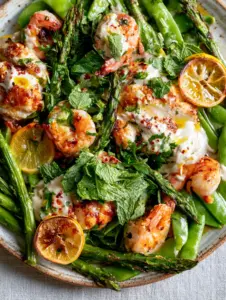
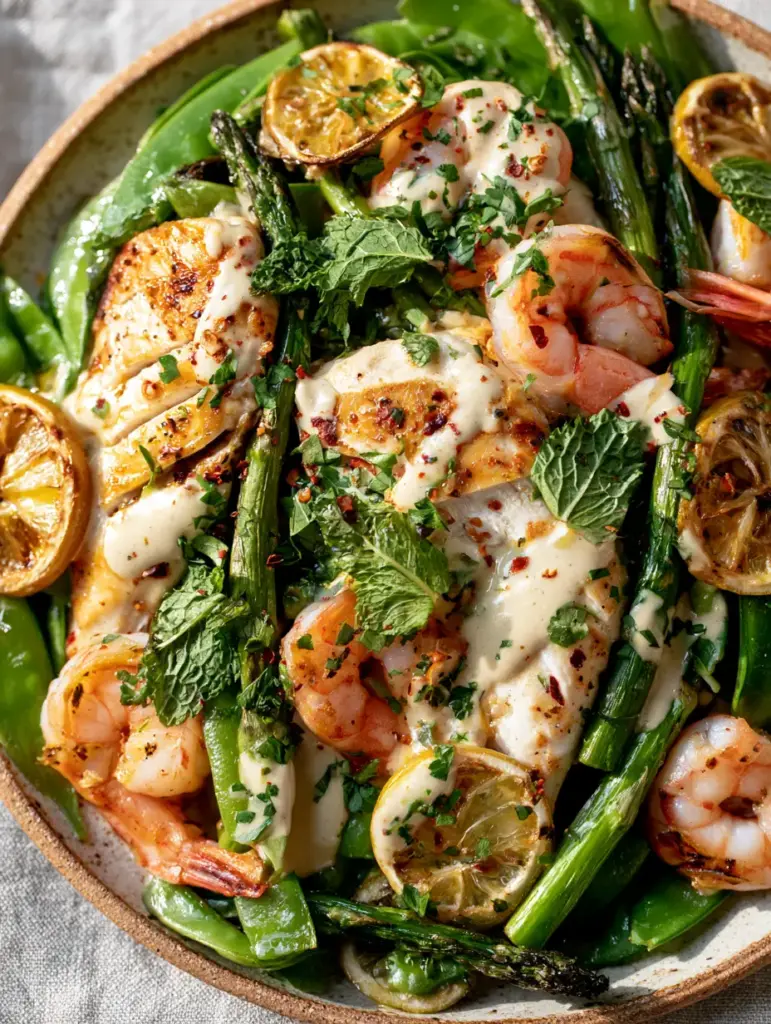
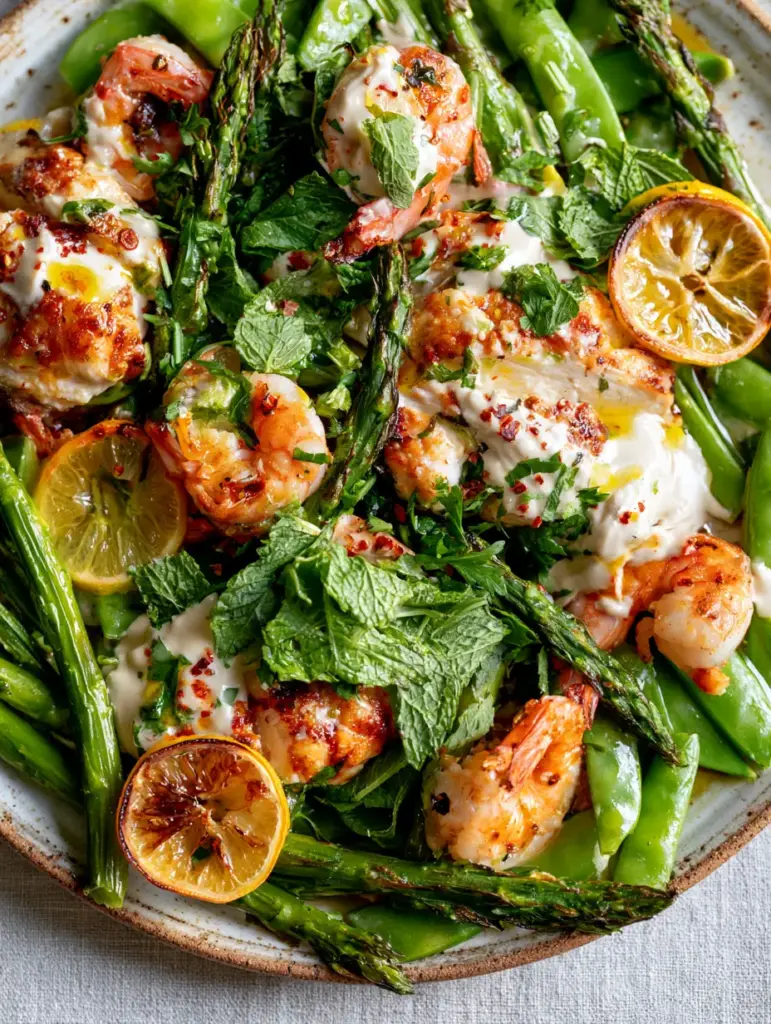
When the morning light hits a rustic ceramic platter filled with vibrant greens and golden proteins, you know you have mastered the art of seasonal cooking. These high protein spring dinners are not just about meeting your macros; they are about celebrating the specific, fleeting freshness of the spring harvest. This particular recipe combines the earthiness of charred asparagus with the bright, citrusy zing of roasted lemons, all anchored by juicy chicken and plump shrimp.
Achieving that perfect “glisten” seen in professional food photography requires more than just luck. It requires understanding the Maillard reaction on your chicken breast and the precise moment sugar snap peas transition from raw to blistered. If you are looking for more ways to fuel your body, check out these clean eating dinners that prioritize whole-food ingredients and bold flavors.
This dish is designed to be a “hero” meal—the kind that looks like a handheld smartphone photo taken in natural light but tastes like a multi-course bistro experience. By focusing on high-heat roasting and a creamy, emulsified tahini drizzle, we create a texture profile that ranges from crunchy and charred to silky and succulent.
The Aesthetic and Nutritional Power of This Spring Platter
- Dual-Protein Punch: By combining lean chicken breast with jumbo shrimp, we provide a complex amino acid profile and varied textures that keep the palate engaged.
- Visual Texture Contrast: The “char” on the asparagus stalks provides a bitter, smoky counterpoint to the “blistered” sweetness of the sugar snap peas.
- Functional Healthy Fats: The creamy lemon-tahini drizzle isn’t just for show; the healthy fats in the sesame paste help your body absorb the fat-soluble vitamins found in the greens.
- Vibrant Herb Finish: Fresh mint and flat-leaf parsley aren’t just garnishes; they provide a cooling floral note that lifts the heavier roasted flavors of the proteins.
Essential Components for This High Protein Masterpiece
Golden-Seared Chicken Breasts: 1.5 lbs (680g) of boneless, skinless chicken breast, sliced into even strips. Cutting them before cooking ensures more surface area for that signature golden-brown crust that defines elite high protein spring dinners.
Jumbo Shrimp: 1 lb (450g) of 16/20 count shrimp, peeled and deveined. Shrimp cook significantly faster than chicken, so their inclusion requires precise timing to remain plump and pink rather than rubbery.
Fresh Asparagus Stalks: 1 large bunch (approx. 450g) with the woody ends snapped off. Asparagus is the king of spring, and when charred, it develops a nutty flavor that pairs beautifully with lemon.
Sugar Snap Peas: 2 cups (300g) of whole peas. We want these to “blister”—meaning the skin should slightly puff and brown in spots while the interior remains crisp-tender.
Lemon Rounds: 2 medium lemons, thinly sliced into wheels. Roasting lemons mellows their acidity and concentrates their sugars, making the entire slice (even the rind!) edible and delicious.
The “Invisible” Foundation: 4 tbsp (60ml) of high-quality extra virgin olive oil and 1 tsp (5g) of flaky sea salt. The oil provides the “glisten” and heat transfer, while the salt draws out moisture for better searing.
Creamy Lemon-Tahini Drizzle: 1/3 cup (80g) runny tahini, 2 tbsp (30ml) fresh lemon juice, and 1 clove of microplaned garlic. This creates a thick, opaque sauce that clings to the ingredients.
Aromatic Finishes: A handful of fresh mint leaves, 1/4 cup (15g) chopped flat-leaf parsley, and 1 tsp (2g) red pepper flakes. These add the final layer of visual “pop” and heat.
Tools for Achieving the Perfect Char
To replicate the vibrant, aesthetic shot described in our visual blueprint, you need a heavy-duty rimmed baking sheet. A light-colored aluminum pan is preferred as it prevents the bottom of the vegetables from burning before the tops are charred. You will also need a sharp chef’s knife for clean cuts on the chicken and a small whisk to emulsify the tahini drizzle into a smooth, pourable consistency.
If you enjoy the efficiency of one-pan meals, you might also love this chicken stir-fry which uses similar high-heat techniques to lock in nutrients and flavor. For the best results here, ensure your oven is fully calibrated to 425°F (220°C) before the pan goes in.
Step-By-Step Guide to the Perfect Spring Roast
Preparing the Proteins and Greens
Start by patting your chicken strips and shrimp completely dry with paper towels. Moisture is the enemy of a good sear; if the proteins are wet, they will steam rather than brown. In a large bowl, toss the chicken, asparagus, and sugar snap peas with 3 tablespoons of olive oil, flaky salt, and a crack of black pepper.
Arrange the chicken and asparagus on the sheet pan first, as they require the longest cooking time. Ensure they are in a single layer with space between each piece—crowding the pan will lead to soggy vegetables instead of the charred stalks we are looking for.
The Roasting Process and Timing
Slide the pan into the center rack of your oven at 425°F (220°C). Roast for 10 minutes. You should start to hear a sizzle and smell the faint aroma of roasting garlic or lemon. At this point, remove the pan and add the shrimp, snap peas, and lemon slices to the mixture.
The lemon slices should be nestled directly against the metal of the pan to ensure they caramelize. Return to the oven for another 5–8 minutes. Look for the shrimp to turn opaque and pink, and for the chicken to reach an internal temperature of 165°F (74°C).
Mastering the Lemon-Tahini Drizzle
While the pan is finishing, whisk your tahini, lemon juice, and a splash of warm water in a small bowl. The mixture may “seize” or look chunky at first—this is normal. Continue whisking and adding water a teaspoon at a time until it becomes a smooth, creamy ribbons-off-the-spoon consistency.
Final Assembly and Sensory Cues
Transfer everything to a rustic ceramic platter. Look for the “glisten” of the olive oil and the bright green hues of the vegetables against the golden chicken. Drizzle the tahini sauce in thick, deliberate lines across the platter. Finish with a heavy sprinkle of torn mint, parsley, and red pepper flakes. The smell should be a mix of toasted sesame, bright citrus, and fresh herbs.
Expert Tips for Success
- The “Dry” Secret: Always salt your shrimp right before they hit the pan. Salting too early can draw out moisture and prevent that plump, snappy texture.
- Tahini Quality: Use a brand where the oil hasn’t completely separated into a hard brick. A “runny” tahini makes for a much smoother drizzle.
- Lemon Selection: Use thin-skinned Meyer lemons if available. They are sweeter and the rind is less bitter when roasted.
- Herb Handling: Tear the mint leaves by hand rather than chopping them with a knife to prevent bruising and preserve their bright green color.
Optimal Storage and Meal Prep Advice
These high protein spring dinners are excellent for meal prep. Store the roasted components in an airtight container for up to 3 days. However, I recommend storing the lemon-tahini drizzle in a separate small jar to prevent the vegetables from becoming mushy.
To reheat, avoid the microwave if possible. Instead, toss the chicken and vegetables in a dry skillet over medium heat for 3-4 minutes. This helps restore the “char” on the asparagus and the snap of the peas. The shrimp should be added at the very last second just to warm through, as overcooked shrimp are notoriously tough.
What to Serve With This Spring Harvest
Because this is a complete sheet pan meal, it stands perfectly on its own. However, if you want to stretch the servings, a light side can balance the richness of the tahini. Consider a Japanese cucumber salad for a cooling, vinegary crunch that cuts through the creamy sauce.
If you need even more protein or a complex carb, this Greek quinoa salad makes a fantastic base. Simply pile the roasted chicken and shrimp on top of the quinoa for a powerhouse lunch the next day. For a low-carb finish, these zucchini chips add a fun, salty crunch without the heavy calories.
Frequently Asked Questions
Absolutely. Extra-firm cubed tofu or chickpeas work well. Adjust the roasting time as tofu may take slightly longer to achieve a golden-brown crust.
Yes, but ensure they are completely thawed and patted extremely dry. Excess moisture from frozen shrimp will prevent them from searing and may make the vegetables soggy.
The key is slicing the chicken into even strips and roasting at 425°F. The high heat sears the outside quickly while the internal temperature reaches 165°F just as the vegetables finish.
While the proteins provide the bulk of the macros, the tahini adds healthy fats which are essential for absorbing the vitamins in the asparagus and snap peas, making it a functional part of high protein spring dinners.
Coat the stalks evenly in olive oil and avoid crowding the pan. The air needs to circulate around each stalk to create a char rather than a steam.
The Ultimate High Protein Spring Sheet Pan Recipe
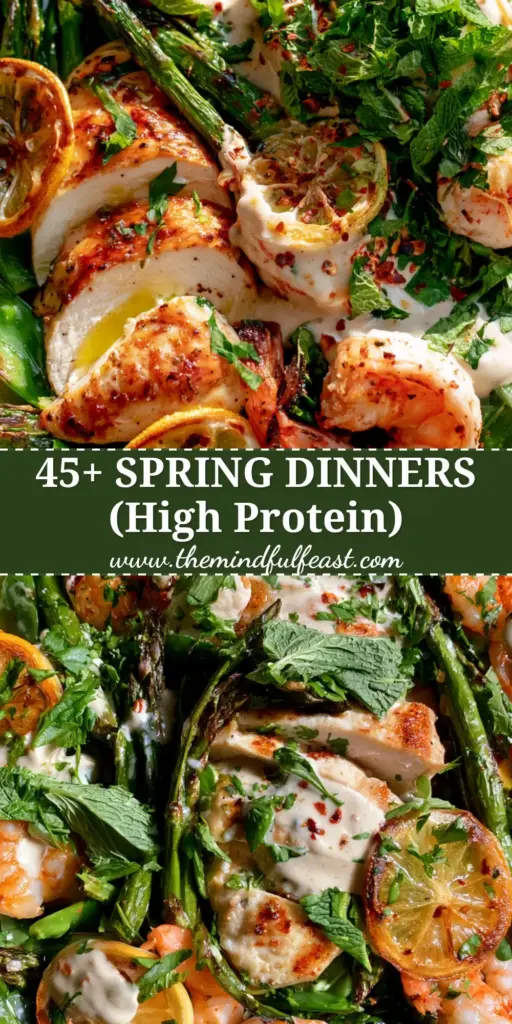
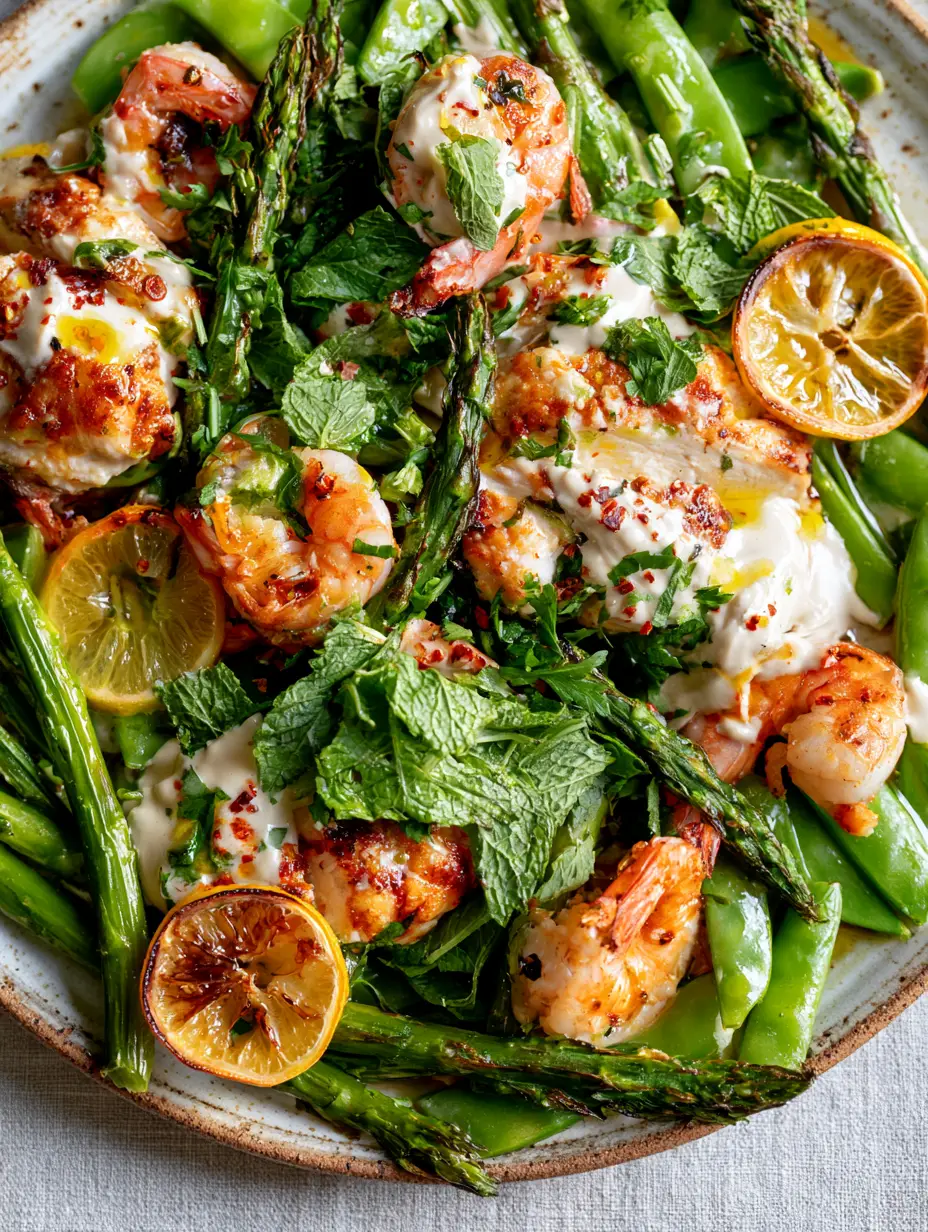
High Protein Spring Dinners: The Ultimate Lemon-Tahini Chicken and Shrimp Harvest
Ingredients
Equipment
Method
- Preheat your oven to 425°F (220°C). Pat the chicken and shrimp dry with paper towels to ensure a golden sear.
- In a large bowl, toss the chicken strips, asparagus, and snap peas with 3 tbsp (45ml) olive oil and flaky salt.
- Arrange chicken and asparagus on the sheet pan. Roast for 10 minutes until chicken begins to turn golden.
- Remove pan, add shrimp, lemon slices, and snap peas. Drizzle with remaining oil. Roast for another 5-8 minutes until shrimp are pink and lemon is charred.
- Whisk tahini, lemon juice, and warm water until a smooth, creamy consistency is reached.
- Plate everything on a platter. Drizzle with tahini sauce and top with torn mint, parsley, and red pepper flakes.
Notes
If tahini sauce is too thick, add warm water 1 tsp at a time.
Embrace the Season of Freshness
These high protein spring dinners are a testament to the fact that healthy eating can be visually stunning and incredibly flavorful. By mastering the balance of charred vegetables, seared proteins, and a bright citrus dressing, you bring the vibrancy of the spring season directly to your dinner table. The contrast of the hot roasted lemons against the cool fresh mint creates a sensory experience that is hard to beat.
Did you make this recipe? We would love to see your “platter goals!” Leave a comment below or share your photos with us. For more aesthetic food inspiration and clean eating tips, follow us on Pinterest and save this recipe to your “Spring Dinners” board.