There is a specific sensory magic that happens when a hot, herb-flecked Greek Zucchini Fritter meets a cool, velvety dollop of tzatziki. If you have ever scrolled through a high-end food blog and seen an extreme close-up of golden-brown fritters with charred lacy edges, you know the exact craving I am talking about. These are not just vegetable patties; they are a masterclass in texture and Mediterranean aromatics.
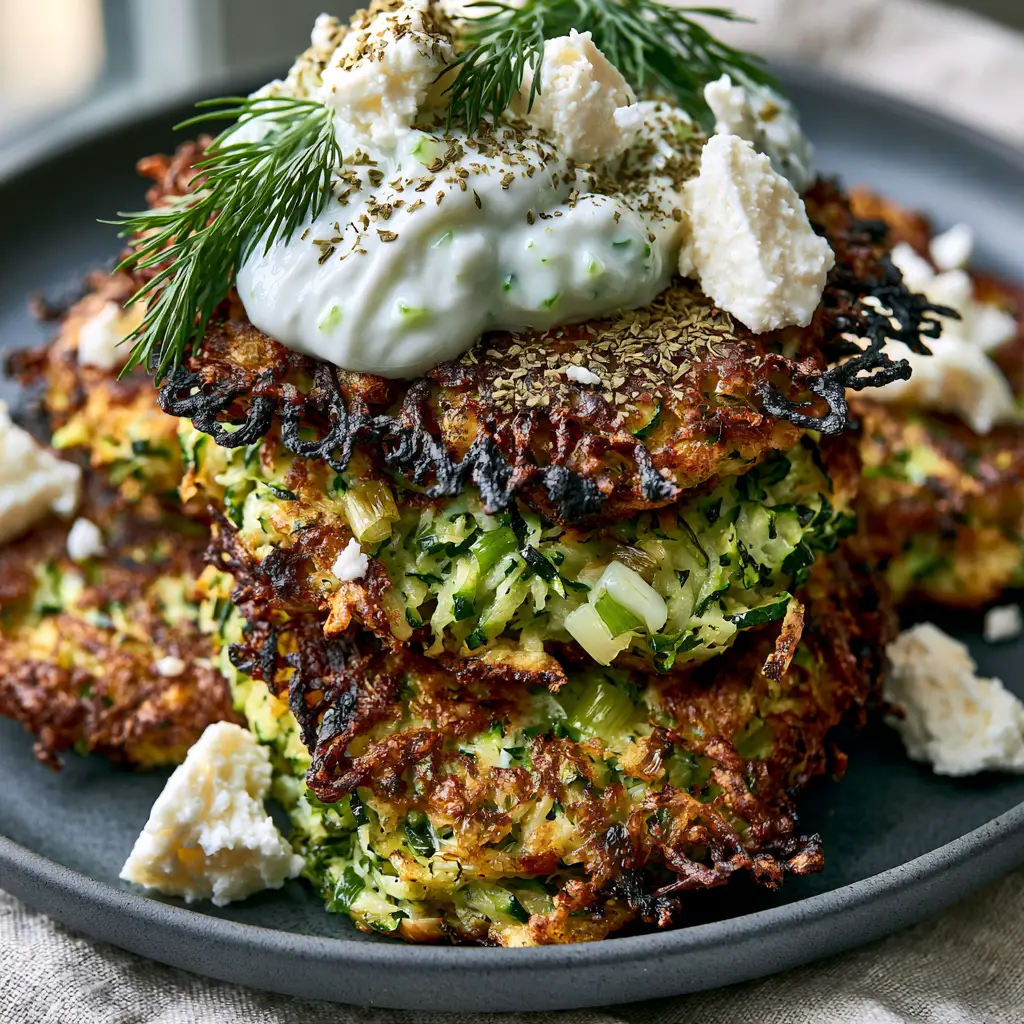
Capturing the perfect handheld smartphone photo of your culinary creations requires a dish that stands out. Imagine a stack of these ultra-crispy fritters, their vibrant green zucchini shreds peeking through a shattered-glass crust, plated on a dark grey matte ceramic dish. The contrast between the salty white feta crumbles and the fresh green dill sprigs creates a visual feast before you even take the first bite.
In this guide, we are diving deep into the culinary science of moisture management and high-heat searing. Whether you are serving these as a light lunch or a standout appetizer, these Greek Zucchini Fritters deliver a professional-grade result every single time. Let us unlock the secrets to achieving that signature crunch and the lacy, browned perimeter that defines a truly great fritter.
Why You Will Fall in Love With These Crispy Zucchini Patties
- The Perfect Crunch: Thanks to a specific moisture-wicking technique, these fritters achieve a shatteringly crisp exterior with deeply browned, charred lacy edges that rival any restaurant version.
- Vibrant Herbaceous Profile: The combination of fresh dill sprigs, dried oregano, and pungent scallions creates a layered flavor profile that tastes like a summer morning in the Aegean.
- Textural Contrast: We pair the hot, crispy fritter with a thick, velvety tzatziki sauce, creating a temperature and texture interplay that keeps you coming back for more.
- Visually Stunning Presentation: Plated on a dark matte surface with white feta and green herbs, this dish is designed to be the star of your social media feed and your dinner table.
The Anatomy of a Perfect Greek Zucchini Fritter: Ingredients
To achieve the visual and structural results described in our blueprint, every ingredient serves a specific scientific purpose. We are looking for structural integrity without heaviness.
3 medium (750g) Zucchini: Look for firm, vibrant green zucchini. The skin provides the visual “shreds” seen in the blueprint, while the flesh provides the tender interior.
1 tsp (5g) Fine Sea Salt: This is an “invisible” but mandatory ingredient used to draw out moisture via osmosis, preventing a soggy fritter. Without this step, you will never achieve the lacy edges shown in the photo.
4 large (40g) Scallions: We use both the white and green parts to ensure those visible green flecks are distributed throughout the golden-brown batter.
1/2 cup (75g) Crumbled White Feta Cheese: Use a high-quality sheep’s milk feta for that salty, tangy punch that balances the sweetness of the fried zucchini.
1/4 cup (10g) Fresh Dill: Chopped dill is folded into the batter, while whole sprigs are reserved for the final garnish to provide a professional, fresh-picked look.
1 tsp (2g) Dried Oregano: This adds an earthy, floral backbone to the flavor profile, dusted over the top for that final authentic touch.
1 large (50g) Egg: The primary binder that holds the shredded zucchini and scallions together during the high-heat frying process.
1/2 cup (65g) All-Purpose Flour: Just enough to coat the vegetables and create the “lacy” batter that fries into a golden-brown crust.
1/2 tsp (2g) Baking Powder: The secret to a light, airy fritter rather than a dense pancake; it creates tiny air pockets that crisp up beautifully.
High-Heat Oil (Grapeseed or Light Olive Oil): Essential for searing the fritters at the correct temperature to achieve the charred edges without burning the delicate herbs.
Essential Equipment for Culinary Success
To replicate the extreme close-up quality of a professional food blog photo, you need the right tools to manage heat and moisture. A standard box grater is required for those thick, distinct zucchini shreds.
A heavy-bottomed cast iron or carbon steel skillet is non-negotiable for achieving the charred lacy edges. These pans retain heat better than non-stick, allowing for the rapid moisture evaporation needed for a deep golden-brown crust.
Finally, a clean linen kitchen towel or cheesecloth is the most important tool in your arsenal. You will use this to manually wring every drop of excess liquid from the zucchini, which is the only way to ensure the fritters don’t fall apart in the pan.
The Science of Prepping Your Zucchini
The Grating and Salting Process
Start by grating your 3 medium (750g) zucchini using the large holes of a box grater. You want distinct shreds, not a mushy pulp, to ensure the vibrant green color is visible in the final stack.
Once grated, toss the zucchini with 1 tsp (5g) of sea salt in a large bowl. Let it sit for at least 15 minutes; you will notice a pool of water forming at the bottom—this is the moisture we must eliminate.
The “Great Squeeze” Technique
Transfer the salted zucchini to the center of a clean linen towel. Gather the corners and twist the towel forcefully over the sink, squeezing until no more liquid escapes.
You should be left with a concentrated ball of zucchini fibers that feels almost dry to the touch. This step is the difference between a soggy patty and the ultra-crispy Greek Zucchini Fritters you see in professional photography.
Mixing the Herb-Forward Batter
Combining the Aromatics
In a large mixing bowl, whisk your 1 large (50g) egg until frothy, then fold in the squeezed zucchini, 4 large (40g) chopped scallions, and 1/4 cup (10g) of chopped fresh dill. The smell at this stage should be incredibly fresh and herbaceous.
Gently fold in 1/2 cup (75g) of crumbled white feta. You want to keep the feta in somewhat large chunks so they create visible white pockets in the final fried fritter, exactly like the visual blueprint suggests.
Adding the Structural Components
Sift the 1/2 cup (65g) of flour and 1/2 tsp (2g) of baking powder over the zucchini mixture. Use a spatula to fold the dry ingredients in until just combined.
Do not overmix, as this will develop the gluten and make the fritters tough. The batter should look like a clump of vegetables lightly held together by a thin, pale coating.
Frying for the Ultimate Charred Lacy Edges
Achieving the Perfect Sear
Heat 3 tbsp (45ml) of oil in your heavy skillet over medium-high heat. To test the temperature, drop a tiny bit of batter into the oil; if it sizzles aggressively immediately, you are ready to cook.
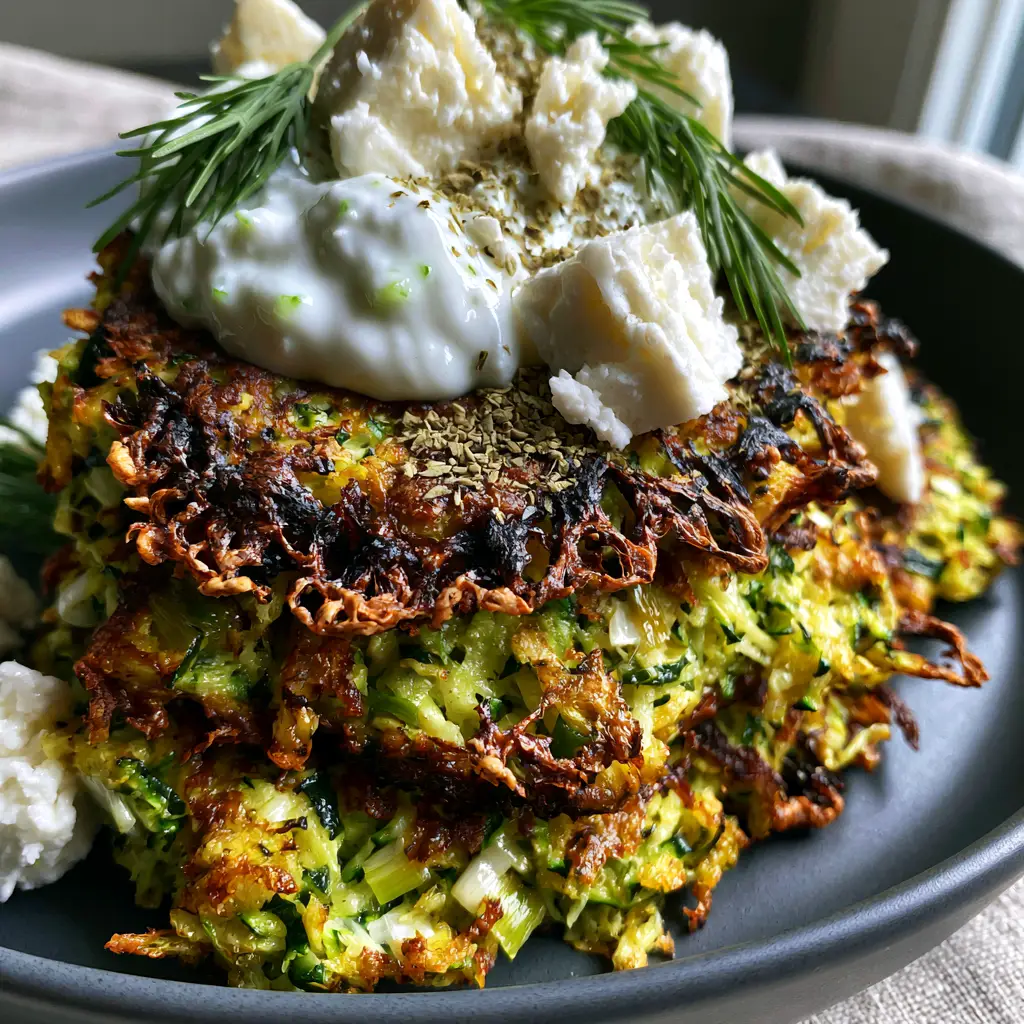
Drop large spoonfuls of the batter into the pan, pressing them down slightly with the back of the spoon to increase surface area contact. This is how you develop those deeply browned, charred edges that provide the crunch.
The Sensory Cues of Doneness
Listen for a constant, rhythmic sizzling sound and watch the edges of the fritters. When the perimeter turns a dark golden-brown and looks “lacy” or perforated, it is time to flip—usually about 3-4 minutes per side.
The second side will cook faster. Once both sides are ultra-crispy, transfer the fritters to a wire rack rather than paper towels. A wire rack allows air to circulate, preventing the bottom from steaming and becoming soft.
Crafting the Velvety Tzatziki Sauce
The thick creamy tzatziki sauce is the crowning jewel of this dish. To get that velvety texture with tiny green cucumber flecks, you must use strained Greek yogurt.
Grate 1/2 cup (120g) of cucumber and squeeze out its juice before stirring it into 1 cup (240g) of thick yogurt. Add a microplaned clove of garlic and a squeeze of lemon for brightness, ensuring the sauce is white and opaque to provide high contrast against the dark plate.
Expert Tips for Food Blog Quality Results
- Maintain Oil Temp: If the oil cools down, the fritters will absorb it and become greasy. Fry in batches to prevent overcrowding the pan.
- The Flour Balance: If your batter feels too wet even after squeezing, add flour 1 tbsp (8g) at a time. Too much flour, however, hides the vibrant green zucchini shreds.
- Chill the Batter: If you have time, let the batter rest in the fridge for 10 minutes. This helps the starch in the flour hydrate, leading to a more cohesive fritter.
- Visual Garnish: Always save your largest feta crumbles and the most delicate dill sprigs for the very top. A light dusting of dried oregano from a height ensures even coverage.
What to Serve With Your Greek Zucchini Fritters
These fritters are incredibly versatile and fit perfectly within a Mediterranean spread. For a complete meal, consider serving them alongside a traditional Greek salad featuring kalamata olives and crisp cucumbers.
If you are looking for more innovative zucchini side dishes, these fritters pair beautifully with grilled meats. They are a staple of modern Greek-inspired recipes, providing a vegetarian option that satisfies even the most dedicated meat-eaters.
For a tapas-style grazing board, place these fritters next to some tangy pickle poppers or a fresh chilled cucumber salad to echo the flavors in the tzatziki.
Storage, Reheating, and Freezing
While these are best served immediately to preserve the charred lacy edges, you can store leftovers in an airtight container in the refrigerator for up to 3 days. To reheat, avoid the microwave at all costs, as it will make them soggy.
Instead, place the fritters in a dry skillet over medium heat or in an air fryer at 375°F (190°C) for 3-5 minutes until the exterior crisps back up. These also freeze well; just flash-freeze them on a baking sheet before transferring to a freezer bag.
Frequently Asked Questions
While you can bake them at 400°F (200°C), you will not achieve the signature ‘charred lacy edges’ described in the recipe. Pan-frying is essential for the authentic texture.
Fold the feta in gently at the very end of the mixing process. Avoid over-stirring, which can cause the feta to break down into the batter and disappear.
All-purpose flour is best for the traditional texture. For a gluten-free version, a 1:1 gluten-free baking blend or chickpea flour works exceptionally well.
Use a neutral oil with a high smoke point, such as grapeseed or avocado oil. Light olive oil also works well and adds a traditional Mediterranean flavor.
Sogginess is usually caused by excess moisture. You must salt the grated zucchini and wring it out forcefully in a kitchen towel until it is completely dry before mixing the batter.
The Authentic Greek Zucchini Fritters Recipe Card
Greek Zucchini Fritters: The Ultimate Ultra-Crispy Kolokithokeftedes Recipe
Ingredients
Equipment
Method
- Grate the zucchini using a box grater. Toss with 1 tsp salt and let sit for 15 minutes to draw out moisture.
- Place zucchini in a clean towel and wring out all liquid until the zucchini is dry to the touch.
- Combine squeezed zucchini, egg, scallions, feta, dill, flour, and baking powder in a bowl. Fold gently.
- Heat oil in a skillet. Drop spoonfuls of batter and fry for 3-4 minutes per side until charred lacy edges form.
Notes
Use a wire rack for cooling to maintain the ultra-crispy texture.

Closing Thoughts: Bring the Taste of Greece Home
Mastering the Greek Zucchini Fritters is a rite of passage for any home cook who loves Mediterranean flavors. By focusing on the forensic details—the charred edges, the vibrant herbs, and the velvety sauce—you transform simple summer squash into a gourmet experience. This dish proves that with the right technique, you can achieve professional, food-blog-quality results in your own kitchen.
If you enjoyed this recipe, please leave a comment below and let us know how your lacy edges turned out! Don’t forget to share your photos and tag us, or save this recipe to your favorite boards on Pinterest for your next weekend brunch or dinner party.