There is a profound, rustic elegance in a true Greek salad recipe that most Western interpretations completely miss. When you step into a seaside taverna in Mykonos, you aren’t greeted by a bowl of limp romaine lettuce or watery dressing; instead, you are presented with the Horiatiki.
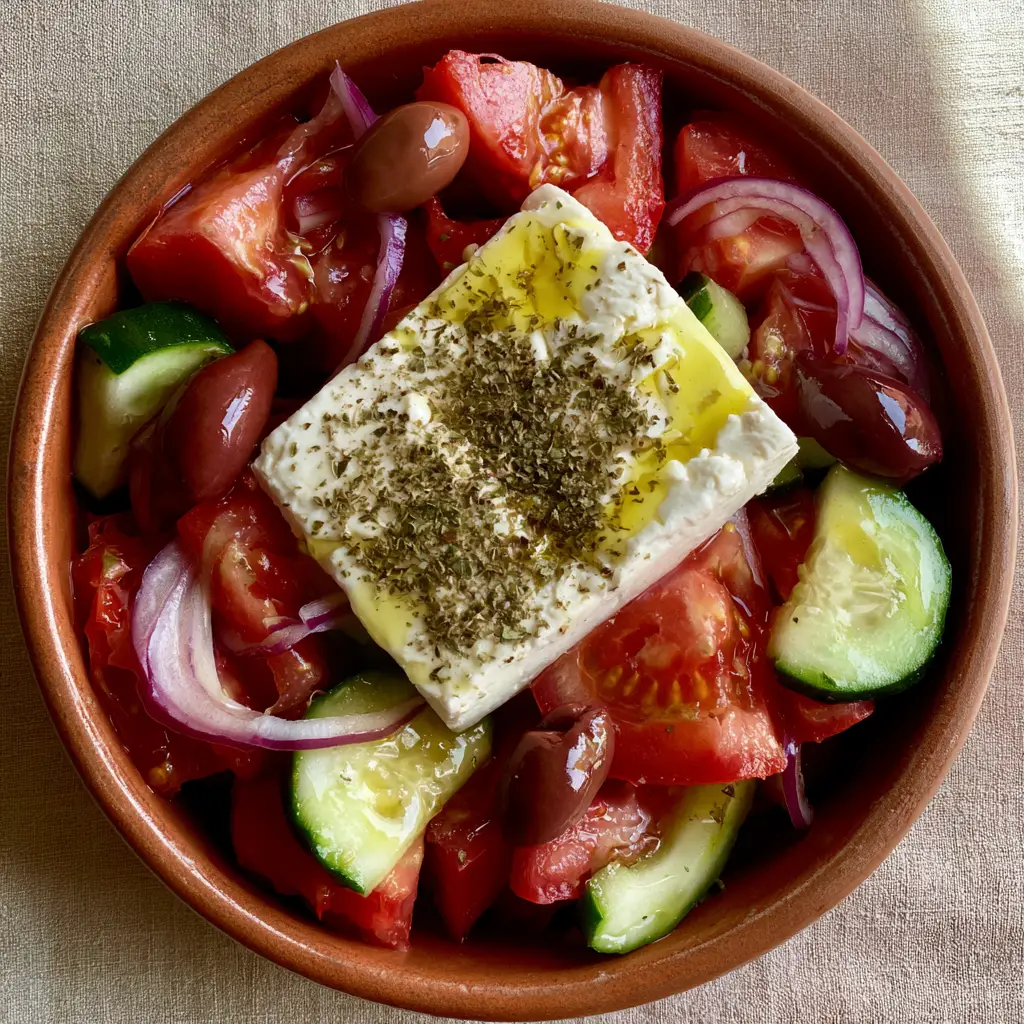
This traditional village salad is a masterclass in Mediterranean simplicity, relying entirely on the quality of its components. Imagine deep-red, vine-ripened tomatoes sliced into irregular, juicy chunks, their seeds shimmering under a coat of viscous golden oil.
The centerpiece of this experience is a massive, creamy slab of feta cheese, sitting proudly atop the vegetables like a crown. This Greek salad recipe isn’t just a side dish; it is a celebration of the sun-drenched harvest, designed to be mopped up with crusty bread until the very last drop of tomato-infused oil is gone.
Why This Authentic Horiatiki Greek salad recipe Works
- No-Lettuce Authenticity: By omitting leafy greens, the salad maintains its structural integrity and prevents the ingredients from becoming soggy.
- Textural Contrast: The crunch of thick-cut cucumber moons balances the soft, juicy yield of vine-ripened tomatoes and the matte creaminess of the feta.
- Flavor Siphoning: The thin, translucent red onion rings provide a sharp bite that cuts through the rich, buttery profile of the whole Kalamata olives.
- Viscous Mouthfeel: A generous drizzle of high-quality extra virgin olive oil binds the dried oregano to the vegetables, creating a shimmering, savory coating.
The Essential Elements for an Authentic Village Salad
Vine-Ripened Tomatoes: You need 3-4 large (approx. 600g) tomatoes that are heavy for their size. These provide the essential “shimmering seeds” and juice that form the base of the natural dressing.
English or Persian Cucumbers: Use 1 large (300g) cucumber, partially peeled to create a striped visual effect. The thick-cut moons provide the necessary “snap” that defines a fresh Greek salad recipe.
Red Onion: Half of a medium red onion (100g) should be sliced into paper-thin, translucent rings. Soaking them in cold water briefly can mellow their sharp sting while keeping them crisp.
Kalamata Olives: Seek out 1/2 cup (75g) of whole, glossy Kalamata olives with a natural sheen. Keeping them whole prevents the brine from overpowering the delicate tomato juices.
Block Feta Cheese: You must use one large 7-ounce (200g) rectangular slab of high-quality sheep’s milk feta. Avoid crumbles at all costs, as the matte, porous surface of the block is meant to absorb the oil and oregano.
Extra Virgin Olive Oil: Use 1/4 cup (60ml) of the highest quality “viscous” oil you can find. It should be golden-green and carry a peppery finish to complement the dried herbs.
Dried Oregano: 1 tablespoon (3g) of dried Greek oregano is the primary aromatic. Rubbing it between your palms over the salad releases the essential oils for a fragrant finish.
Red Wine Vinegar: A small splash (1 tbsp / 15ml) provides the necessary acidity to balance the fats. This is the “invisible” ingredient that heightens the natural sweetness of the tomatoes.
Sea Salt: A pinch of flaky sea salt (5g) is required to macerate the tomatoes. This draws out their liquid, creating the “shimmering” effect seen in professional culinary photography.
Professional Culinary Tools for This Recipe
To achieve the visual perfection of a rustic Greek salad recipe, you will need a sharp Chef’s knife for those irregular tomato chunks. A mandoline slicer is optional but helpful for achieving those translucent, window-pane thin red onion rings.
A rustic terracotta bowl is the traditional vessel of choice, as its matte finish contrasts beautifully with the glistening, oil-coated vegetables. Finally, a small wooden herb grinder or simply your clean hands will be needed to crush the dried oregano over the feta slab.
Step-by-Step Evolution of the Horiatiki
Preparing the Geometric Foundations
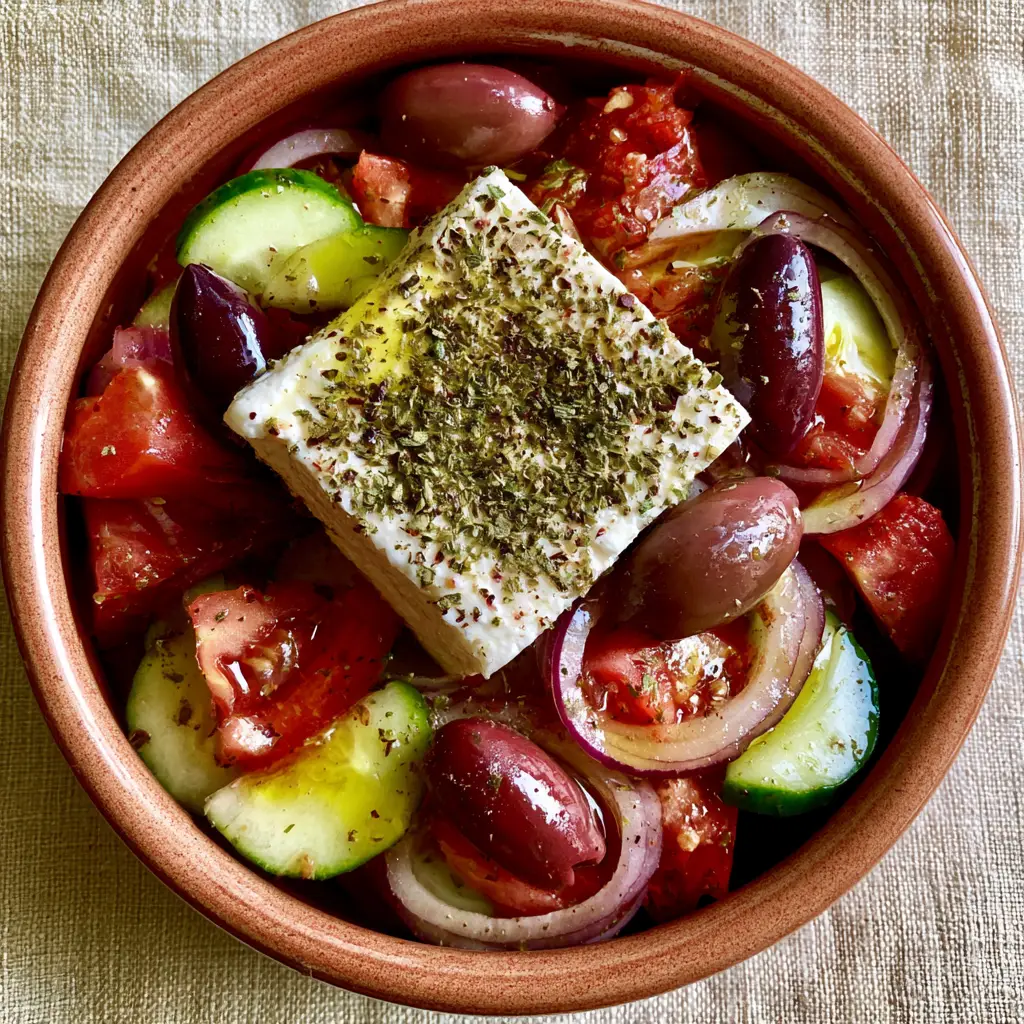
Begin by washing your vine-ripened tomatoes and cutting them into large, irregular chunks. Avoid uniform wedges; the goal of a traditional Greek salad recipe is a rustic, “village-style” appearance where every bite is a different shape.
Place the tomatoes in your terracotta bowl and sprinkle them with a pinch of flaky sea salt. Let them sit for 5 minutes; you will notice the seeds beginning to shimmer as the salt draws out the juices—this is the foundation of your dressing.
Sculpting the Cucumber and Onion
Take your cucumber and use a peeler to remove strips of skin lengthwise, leaving some green skin for a “striped” look. Slice the cucumber into thick moons, approximately 1/2 inch (1.25cm) thick, ensuring they are robust enough to stand up to the heavy tomatoes.
Slice your red onion into the thinnest possible rings. If you prefer a milder flavor, soak these in ice water for 2 minutes, then pat them dry before layering them over the cucumbers and tomatoes. This layering technique is essential for the vertical height required in modern cucumber salad recipes.
Integrating the Glossy Accents
Add the whole Kalamata olives to the bowl. Do not pit or slice them; their glossy sheen and deep purple hue provide a necessary visual anchor against the bright red and green of the vegetables. If you enjoy diverse textures, you might find similarities in the composition of an Arabic salad, though the Horiatiki is much more chunky.
Drizzle the red wine vinegar over the vegetables and give them one very gentle toss using your hands or large spoons. You want to coat the ingredients without breaking the delicate structures of the tomato chunks.
The Feta Centerpiece and Finishing Drizzle
Place the massive, thick rectangular slab of creamy white feta cheese directly on top of the vegetable mound. The block should be matte and dry before you add the oil, allowing the oil to “climb” the sides of the cheese.
Drizzle the viscous extra virgin olive oil over the entire salad, ensuring it cascades down the sides of the feta. Finish by heavily dusting the feta and vegetables with the dried oregano, rubbing it between your fingers as you sprinkle to maximize the aroma. This technique is a staple across many Greek food dishes to ensure the herb flavor is evenly distributed.
Expert Tips for a Stunning Greek salad recipe
- Temperature Matters: Never serve a Greek salad cold. The tomatoes should be at room temperature to allow their volatile aromatic compounds to reach their full potential.
- The Oil Quality: Since this recipe has so few ingredients, the olive oil acts as a primary flavor carrier. Use a “First Cold Pressed” variety for that shimmering, golden-green visual.
- Feta Selection: Look for feta stored in brine. When you remove the block, pat it dry slightly before placing it on the salad so the oregano adheres to the surface rather than sliding off.
- Bread is Mandatory: Serve this with a side of crusty sourdough or pita. The juice at the bottom of the bowl—a mixture of oil, vinegar, and tomato water—is considered the best part of the dish.
Storage and Preservation Guidelines
A Greek salad recipe is best enjoyed immediately after assembly. Because the salt draws moisture out of the tomatoes and cucumbers, the salad will become increasingly watery if left to sit for more than an hour.
If you must store leftovers, keep them in an airtight container in the refrigerator for up to 24 hours. Note that the feta will lose its matte texture and the onions may lose their crispness. This recipe is not suitable for freezing, as the high water content of the vegetables will lead to a mushy texture upon thawing.
What to Serve With This Traditional Salad
This salad is the perfect refreshing counterpoint to heavier Mediterranean proteins. It pairs beautifully with a Greek chicken marinade applied to grilled skewers, or alongside roasted lamb.
If you are looking for a lighter lunch, serve it alongside other vegetable-forward plates like Greek zucchini fritters or a bowl of hummus. For those who enjoy a variety of poultry dishes, this salad provides a crisp contrast to the richness of a chicken salad recipe or even spicy Mediterranean-inspired wraps.
Frequently Asked Questions
While any tomato works, vine-ripened or heirloom tomatoes are best. They have more juice and ‘shimmering seeds,’ which are vital for creating the natural dressing of the salad.
No, a traditional Horiatiki (village salad) never contains lettuce. It relies on the crunch of cucumbers and the bulk of large tomato chunks for its structure.
While high-quality olive oil is the star, a small splash of red wine vinegar provides acidity that balances the richness of the feta and heightens the sweetness of the tomatoes.
Authentic recipes use whole olives with the pits intact. This preserves the firm texture of the olive and provides a better visual ‘sheen’ in the bowl.
Serving the feta as a large slab is the traditional Greek method. It allows the diner to break off pieces as they eat, preserving the matte texture and preventing the cheese from dissolving into the tomato juices.
The Authentic Horiatiki Greek salad recipe
Greek salad recipe: The Authentic Horiatiki Village Salad Guide
Ingredients
Equipment
Method
- Cut the tomatoes into large, irregular chunks and place them in a terracotta bowl. Sprinkle with sea salt and let sit for 5 minutes until the seeds look wet and shimmering.
- Partially peel the cucumber for a striped effect, then slice into thick moons. Slice the red onion into translucent rings and add both to the bowl with the whole Kalamata olives.
- Drizzle with red wine vinegar and a small portion of the olive oil, tossing gently to coat the vegetables without bruising them.
- Place the whole slab of feta directly on top of the salad. Drizzle the remaining viscous olive oil over the cheese and vegetables, then dust heavily with dried oregano.
Notes
Use a high-quality Greek olive oil for a truly authentic peppery finish.
Bringing the Taste of Greece to Your Table
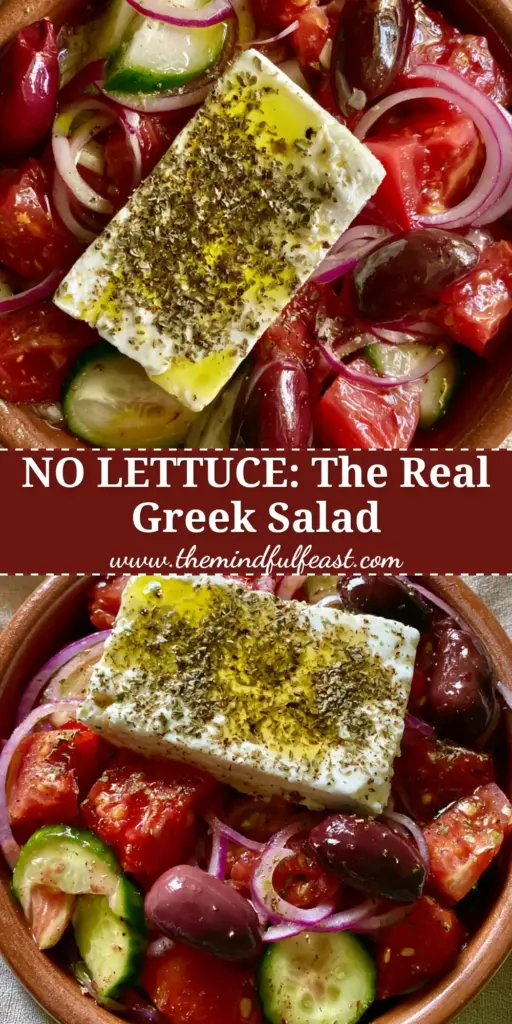
The beauty of this Greek salad recipe lies in its refusal to be complicated. By focusing on the “Visual Recipe Blueprint” of thick-cut vegetables and a bold block of feta, you create a dish that is as much a feast for the eyes as it is for the palate. We invite you to share your results and tag us in your culinary creations!
Whether you’re serving this at a summer BBQ or as a quiet weeknight dinner, the Horiatiki brings an unmistakable sense of place to your table. For more Mediterranean inspiration and authentic flavors, be sure to follow our boards at Pinterest and sign up for our newsletter.