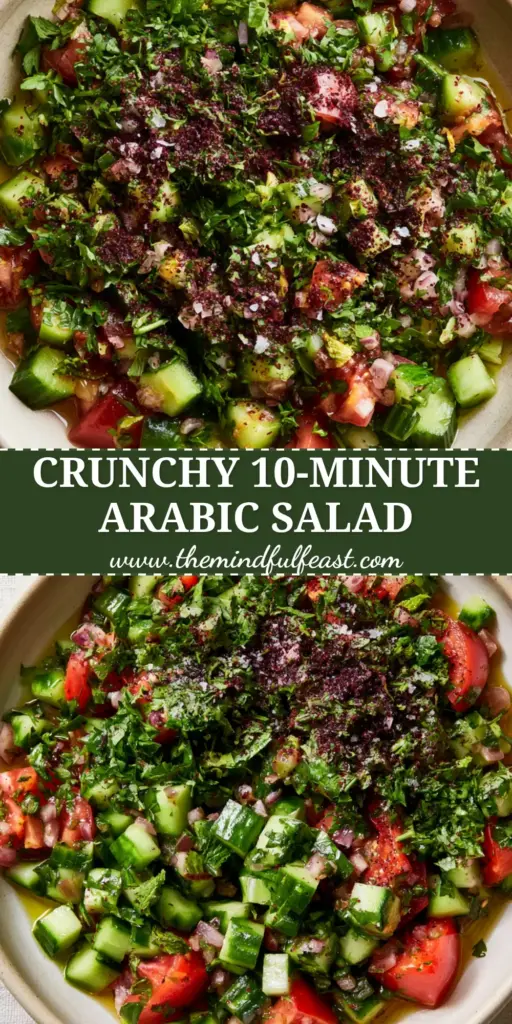
There is a specific kind of magic that happens when fresh vegetables are treated with precision and respect. This Arabic salad is the embodiment of that culinary philosophy, offering a refreshing explosion of flavor and texture in every single bite.
Commonly known across the Levant as Salata Arabieh, this dish is far more than a simple side. It is a masterclass in balance, pairing the cooling crunch of cucumbers with the acidic brightness of sumac and lemon.
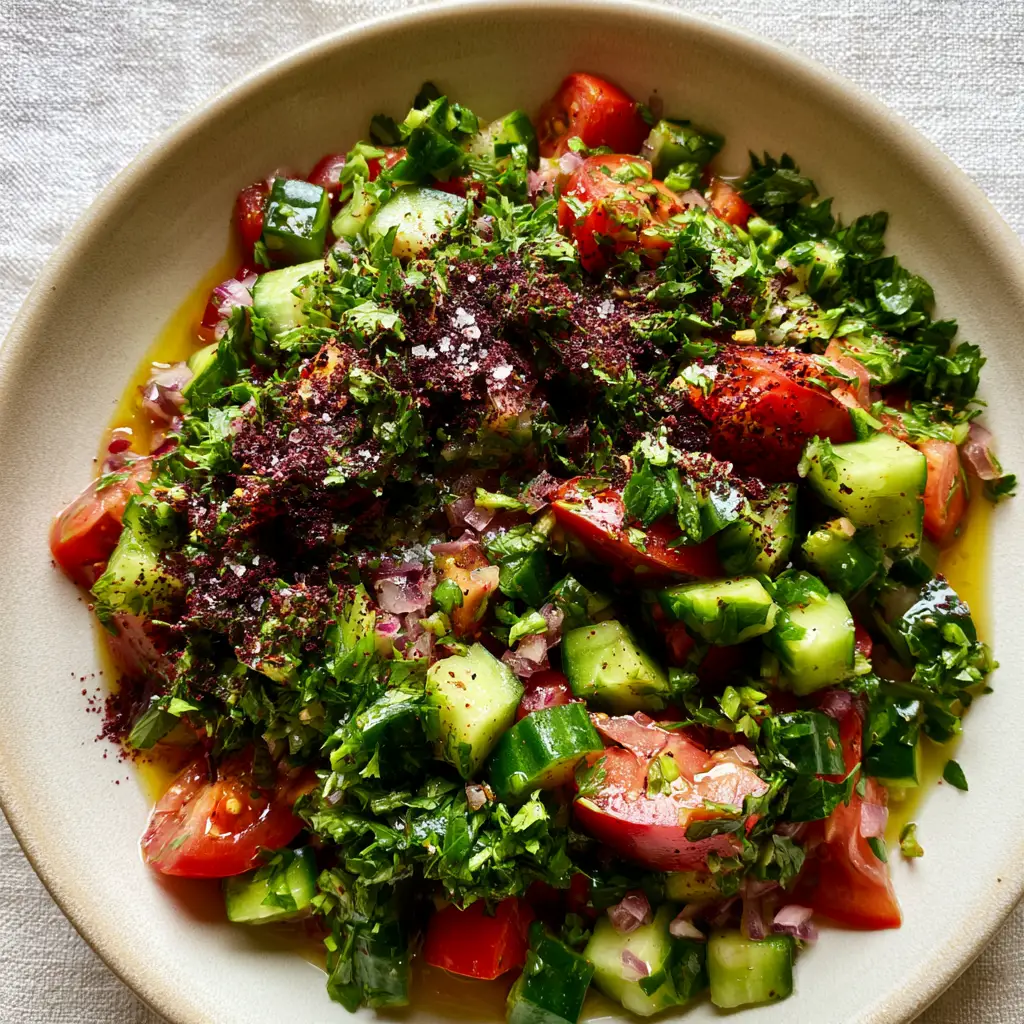
When you look at a perfectly prepared bowl, you should see a glistening mosaic of colors. The deep reds of the tomatoes and the vibrant greens of the parsley should pop against the golden sheen of high-quality extra virgin olive oil.
This recipe focuses on the exact ratios and techniques required to achieve the “handheld smartphone photo” aesthetic. We are looking for sharp focus on textures, precisely diced cubes, and a lush carpet of fresh herbs.
The Unmatched Appeal of a Perfectly Chopped Arabic Salad
What sets this Arabic salad apart from a standard garden salad is the structural integrity of the ingredients. By dicing everything into uniform, small cubes, you ensure that every forkful contains a perfect representative sample of the entire dish.
- Textural Contrast: The snap of skin-on Persian cucumbers provides a necessary resistance against the softer, meaty texture of firm Roma tomatoes.
- Herbaceous Depth: Using a high volume of flat-leaf parsley and fresh mint creates a “lush carpet” effect that elevates the salad from a vegetable dish to an aromatic experience.
- The Sumac Spark: Ground purple sumac offers a unique, floral tartness that lemon alone cannot provide, adding a beautiful dark-red dusting to the final presentation.
- Glistening Finish: A deliberate drizzle of extra virgin olive oil and fresh lemon juice ensures the vegetables look vibrant and hydrated under natural light.
The Vital Ingredients for an Authentic Flavor Profile
To achieve the results seen in our visual blueprint, you must select your produce with a discerning eye. The quality of these raw ingredients determines 100% of the final outcome.
The Crunch: Persian Cucumbers
You will need 4 to 5 medium Persian cucumbers (approximately 350g). These are preferred over English or slicing cucumbers because of their thin, non-bitter skin and very small seeds, which keep the salad from becoming watery.
Leave the skins on to provide that bright green visual contrast against the deep red tomatoes. This also adds a necessary structural snap to the precisely diced cubes.
The Body: Firm Roma Tomatoes
Select 4 large, firm Roma tomatoes (approximately 400g) that are deep red but still hold their shape when squeezed. If the tomatoes are too soft, they will turn into a mushy pulp during the dicing process.
By using firm Romas, you can achieve those clean edges on your cubes. This is essential for that high-angle, sharp-focus look where every vegetable piece remains distinct.
The Aromatics: Red Onion and Fresh Herbs
Use 1/2 of a small red onion (50g), minced as finely as possible. Finely mincing the onion allows its pungent sweetness to distribute evenly without overwhelming the delicate cucumbers.
The herbs are the soul of this Arabic salad. You will need 1 large bunch of fresh flat-leaf parsley (about 1 cup (30g) when chopped) and 1/4 cup (10g) of torn fresh mint leaves.
The Dressing: Gold and Purple
3 tbsp (45ml) of premium extra virgin olive oil provides the golden glistening effect. Pair this with 2 tbsp (30ml) of freshly squeezed lemon juice for that sharp, citrusy bite.
Finish with 1 tsp (3g) of ground purple sumac and 1/2 tsp (3g) of coarse sea salt flakes. The sumac adds an intricate textural detail and a deep red hue that is visually stunning.
Essential Equipment for Culinary Precision
To replicate the precise cubing seen in professional food photography, your tools are just as important as your ingredients. Achieving a “small-cubed” look requires stability and sharpness.
A sharp 8-inch (20cm) Chef’s Knife is non-negotiable. A dull blade will bruise the parsley and crush the tomatoes, leading to a “weepy” salad rather than a glistening one.
You will also need a large wooden or bamboo cutting board. The natural texture helps grip the cucumbers and onions as you perform the fine dicing required for this specific Arabic salad aesthetic.
Finally, prepare a shallow, matte-finish cream ceramic bowl for serving. The matte finish prevents harsh reflections when photographing your creation under side-lighting from a window.
Mastering the Knife Work: Step-by-Step Instructions
Step 1: The Precision Cucumber Dice
Wash the Persian cucumbers and pat them completely dry. Do not peel them, as the bright green skin is a core component of our visual blueprint.
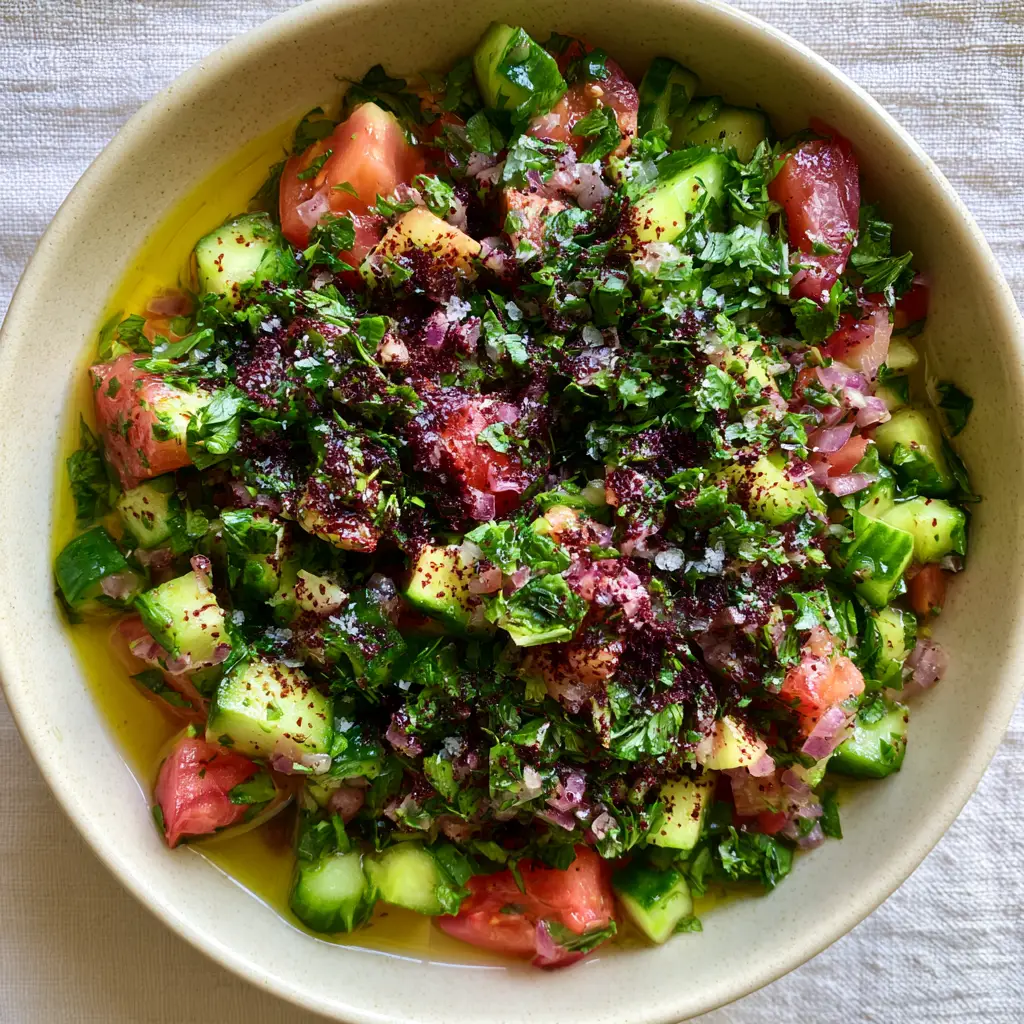
Slice the cucumbers lengthwise into 1/4-inch (6mm) planks, then into 1/4-inch strips. Turn the strips and dice them into uniform, small cubes. Set them in your ceramic bowl as the foundation.
Step 2: Preparing the Firm Roma Tomatoes
Slice the Roma tomatoes into quarters. If the centers are excessively watery, you can lightly scrape out the seeds with a spoon, though for a traditional Arabic salad, keeping some of the juice is acceptable for flavor.
Dice the tomato flesh into cubes that match the size of the cucumbers. The goal is a 1:1 ratio of cucumber to tomato pieces, creating a balanced visual mosaic.
Step 3: The Mincing of the Red Onion
Peel the red onion and mince it into tiny, translucent pieces. These should be much smaller than the cucumber cubes, appearing as fine flecks scattered throughout the dish.
If the onion is particularly sharp, you can soak the minced pieces in cold water for 5 minutes and then pat dry. This retains the crunch while mellowing the bite.
Step 4: Creating the Lush Herb Carpet
Remove the thick stems from the flat-leaf parsley. Use a very sharp knife to chop the leaves finely—avoid “sawing” back and forth, which can darken the herbs.
Tear the fresh mint leaves by hand into tiny flecks. Tearing rather than chopping helps preserve the volatile oils and keeps the edges from turning black immediately.
Step 5: The Glistening Dressing and Finish
In a separate small jar, whisk the extra virgin olive oil and fresh lemon juice until slightly emulsified. Drizzle this slowly over the vegetable and herb mixture.
Just before serving, sprinkle the ground purple sumac and coarse sea salt flakes over the top. The flakes should be visible, catching the light alongside the golden oil droplets.
Expert Tips for a Restaurant-Quality Result
- Temperature Control: For the best “snap” in your vegetables, chill the cucumbers and tomatoes in the refrigerator for at least an hour before dicing.
- Dress at the Last Moment: Salt draws moisture out of vegetables. To prevent the salad from becoming a soup, wait to add the salt and lemon juice until you are ready to put the bowl on the table.
- The Oil Quality: Since there is no cooking involved, use your “good” olive oil—one with peppery or grassy notes that will complement the fresh mint.
- Herb Ratio: If you love a more “green” salad, feel free to increase the parsley. Many traditional versions are almost half-herbs, half-vegetables.
Storage and Freshness Advice
Arabic salad is at its absolute peak about 15 minutes after it has been tossed, allowing the flavors to meld without the vegetables losing their structural integrity.
If you have leftovers, store them in an airtight glass container in the refrigerator for up to 24 hours. Note that the purple sumac will eventually bleed into the lemon juice, turning the dressing a light pink hue.
We do not recommend freezing this salad, as the high water content of the cucumbers and tomatoes will cause them to turn mushy upon thawing.
What to Serve With This Vibrant Arabic Salad
This salad is an incredibly versatile side dish that cuts through the richness of grilled meats and heavy grains. It is a staple of the Mediterranean table.
For a complete feast, serve this alongside Moroccan meatballs or a perfectly cooked piece of fish using this best salmon marinade. The acidity of the sumac balances the fats in the protein beautifully.
If you are looking for a lighter vegetarian lunch, it pairs wonderfully with a simple zucchini stir fry recipe or a warm bowl of spiced rice. It also acts as a refreshing palate cleanser between bites of a hearty beef and hashbrown casserole.
Frequently Asked Questions
You can dice the vegetables ahead of time and store them separately. However, do not add the salt, lemon, or oil until just before serving, as the salt will cause the vegetables to release water and lose their crunch.
No, it is best to leave the skin on Persian cucumbers. This provides a bright green color contrast and a necessary crunch that defines the dish’s texture.
If you don’t have sumac, you can use a bit of extra lemon zest or a tiny pinch of citric acid. However, sumac provides a unique floral tartness and deep purple color that is hard to fully replicate.
Roma tomatoes are ideal because they are firm and meaty with fewer seeds. This allows for the precise dicing required for an authentic chopped salad appearance.
This usually happens if the salad sits too long after being salted. To prevent this, serve immediately after dressing, or deseed the tomatoes before dicing to reduce excess moisture.
The Authentic Arabic Salad Recipe Card
Arabic Salad: The Ultimate Vibrant Middle Eastern Chopped Salad Recipe
Ingredients
Equipment
Method
- Wash and dry the Persian cucumbers. Slice into 1/4-inch planks, then strips, then small cubes. Place in the serving bowl.
- Quarter the Roma tomatoes and dice into cubes matching the size of the cucumbers. Add to the bowl.
- Finely mince the red onion into translucent flecks and scatter throughout the bowl.
- Finely chop the parsley and tear the mint leaves into tiny flecks. Layer these over the vegetables.
- Drizzle with olive oil and lemon juice. Dust with sumac and sea salt flakes. Toss gently just before serving.
Notes
Dress the salad immediately before serving to maintain the crunch.
Share Your Culinary Creations!
This Arabic salad is a testament to how simple ingredients can create a world-class dish when prepared with care and precision. The vibrant colors and refreshing taste make it a guaranteed hit for your next gathering.
If you made this recipe, I would love to hear how it turned out! Please leave a comment below or share your photos on social media.
Don’t forget to follow us and pin this recipe to your favorite boards on Pinterest so you always have it on hand!