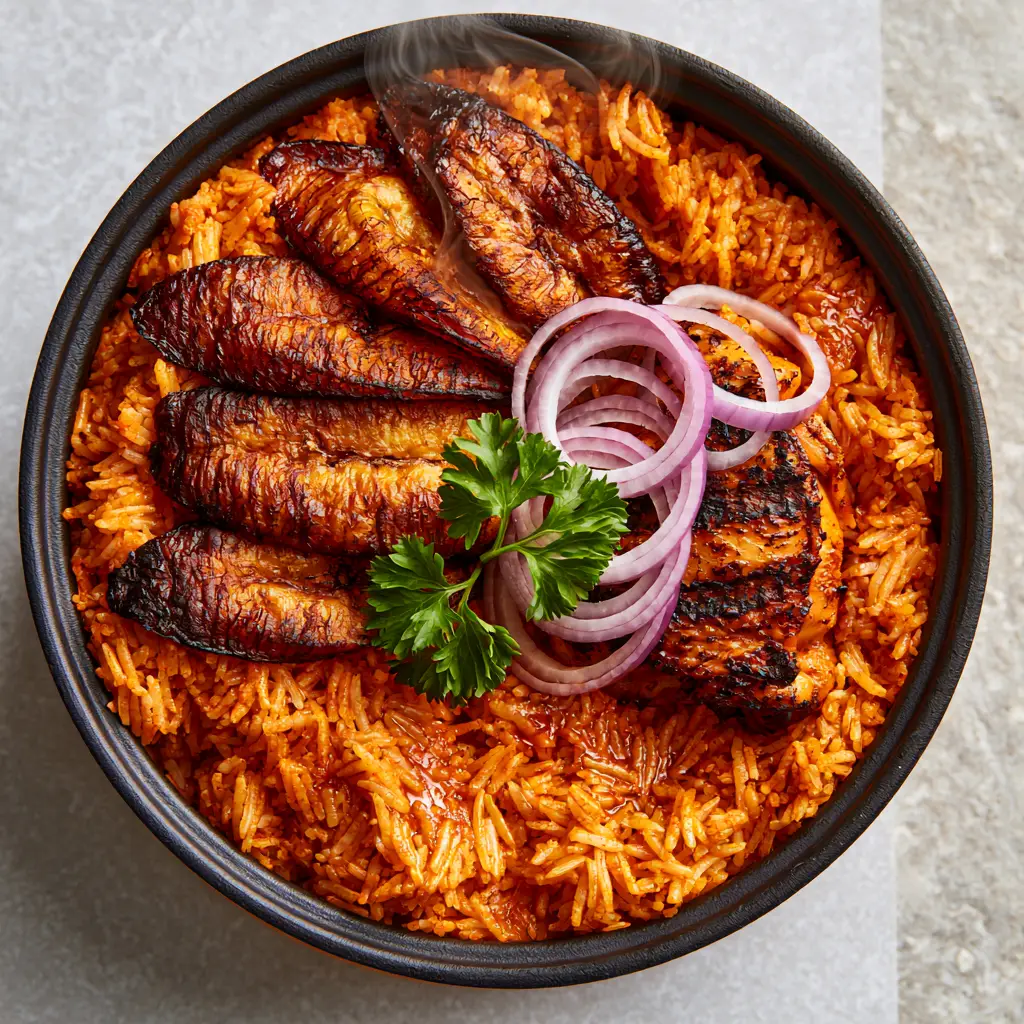
The Riz Jollof Nigérian is not just a meal; it is a cultural icon, a centerpiece of celebration, and the subject of intense, friendly rivalry across West Africa. When you lift the lid of a heavy pot filled with this vibrant, deep orange-red rice, the first thing that hits you is the aroma—a complex blend of roasted peppers, aromatic spices, and that unmistakable hint of wood-fire smoke.
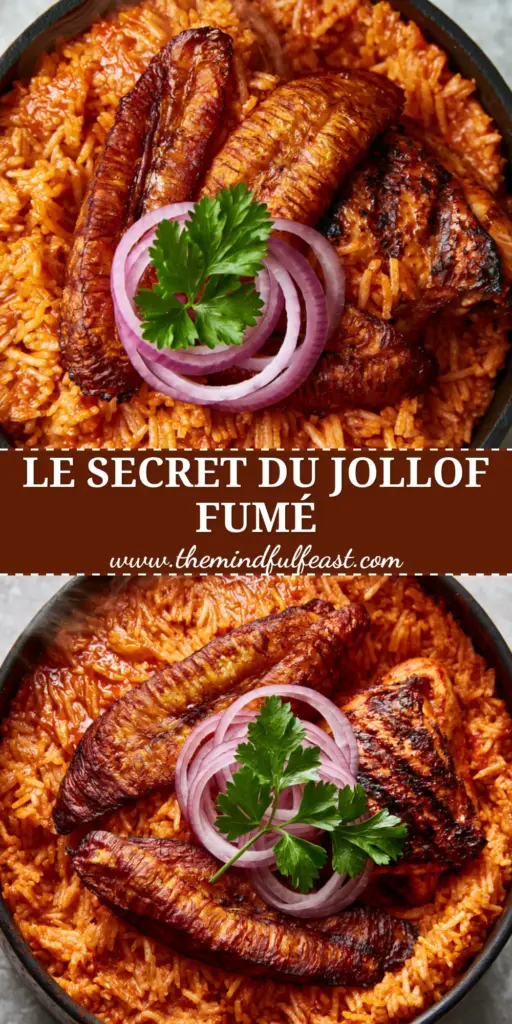
This recipe is designed to recreate the specific “Party Jollof” experience right in your kitchen. We are aiming for a visual masterpiece that matches the soul of Lagos: glistening long grains that remain perfectly separated, topped with deeply caramelized plantains and char-grilled chicken that boasts a professional-grade sear.
Whether you are a seasoned cook or exploring West African flavors for the first time, this guide provides the culinary forensics needed to master the textures and flavors that define an authentic Riz Jollof Nigérian. Get ready to experience a dish that is as visually stunning as it is delicious.
Why This Authentic Riz Jollof Nigérian Recipe Works
- The Perfect Grain Separation: By using long-grain parboiled rice and a specific rinsing technique, we ensure each grain is distinct and coated in a rich tomato-oil sheen, avoiding the dreaded “soggy rice” pitfall.
- Layered Flavor Depth: We build a foundational “Obe Ata” (pepper base) that is fried until the oil separates, creating a concentrated red-orange sauce that provides the rice with its iconic vibrant hue.
- Multi-Sensory Garnishes: The contrast between the sweet, caramelized diagonal plantain slices (Dodo) and the sharp, raw red onion slivers creates a professional plate balance.
- The Signature Smokey Finish: Even without an outdoor firewood setup, our specific “foil-steam” method traps heat to create the authentic charred bottom (the legendary “bottom pot”) that infuses the entire batch with smokiness.
Essential Ingredients for the Vibrant Red-Orange Base
Long-Grain Parboiled Rice: 4 cups (800g). This specific variety is non-negotiable for Nigerian Jollof as it stands up to long steaming without breaking, maintaining that firm, glistening texture seen in professional photography.
Red Bell Peppers (Tatashe): 3 large. These provide the primary red pigment and a sweet, earthy base for the sauce without adding excessive heat.
Scotch Bonnet Peppers (Ata Rodo): 2-3 peppers. These are the source of the recipe’s characteristic “kick” and fruity undertones; adjust based on your heat tolerance.
Roma Tomatoes: 5 medium (approx. 500g). Tomatoes add acidity and moisture, helping to create the “glistening” sauce that coats every grain of rice.
Red Onions: 2 large. One is blended into the base for sweetness, while the other is sliced and sautéed to provide a savory aromatic foundation.
Tomato Paste: 1/2 cup (135g). A high-quality paste is crucial for achieving the deep, vibrant orange-red color that defines the Riz Jollof Nigérian.
Vegetable Oil: 3/4 cup (180ml). This may seem like a lot, but it is necessary to fry the sauce properly and give the rice its beautiful, glistening sheen.
Chicken Stock: 3 cups (720ml). Use a high-quality, flavorful stock rather than water to ensure the rice is seasoned from the inside out.
Seasoning Essentials: 2 bay leaves, 1 tsp (5g) dried thyme, 1 tbsp (15g) curry powder, and 2 bouillon cubes (Maggi/Knorr). These provide the traditional savory profile found in West African kitchens.
Proteins and Garnishes for Forensic Visual Accuracy
Chicken Thighs: 4-6 pieces, skin-on. We use thighs because they remain juicy under the high heat required to achieve those dark, seared grill marks.
Ripe Plantains: 2 large. Look for yellow skin with black spots; these yield the deeply caramelized, golden-brown “Dodo” slices that contrast beautifully with the rice.
Garnish Accents: 1 small red onion (for raw slivers) and 1 sprig of fresh parsley. These provide the final pop of color and a fresh aromatic finish to the plate.
The Culinary Toolbox: Equipment for Success
To achieve the results seen in our lifestyle photography, you will need a heavy-bottomed pot, ideally a cast-iron Dutch oven or a rustic black pot. The heavy lid is essential for trapping steam, which is what actually cooks the rice after the liquid has been absorbed.
You will also need a high-speed blender to create a perfectly smooth pepper puree. For the chicken, a cast-iron grill pan or an outdoor grill is necessary to get those distinct, charred sear marks on the skin. Finally, a sharp chef’s knife is required for the diagonal plantain cuts and the paper-thin red onion rings.
Step 1: Mastering the Vibrant Pepper Base (Obe Ata)
Begin by blending your red bell peppers, Scotch bonnets, tomatoes, and one onion until completely smooth. Pour this mixture into a pot and bring to a boil; simmer until the volume reduces by half and you are left with a thick, concentrated paste.
In your main cooking pot, heat the vegetable oil over medium heat. Add the second sliced onion and sauté until translucent and fragrant. Stir in the tomato paste and fry for 3-5 minutes—this “frying” step removes the metallic taste of the paste and deepens the red color.
Add the reduced pepper puree to the fried paste. This is the most critical stage: fry the mixture together until the oil starts to float to the top (oil separation). This ensures the raw pepper taste is gone, replaced by a rich, savory sweetness.
Step 2: Preparing the Char-Grilled Chicken
Season your chicken thighs with salt, white pepper, and a touch of curry powder. While the rice base is simmering, heat your grill pan until it is smoking hot.
Place the chicken thighs skin-side down. Do not move them for at least 5-6 minutes; you want to develop a deep, seared crust with visible grill marks. Flip and cook until the internal temperature reaches 165°F (74°C). The skin should be crispy and dark, providing a beautiful textural contrast to the soft rice.
If you enjoy diverse chicken preparations, you might find the technique for this French Mustard Chicken interesting, though the Riz Jollof Nigérian demands a much more aggressive, charred finish.
Step 3: The Secret to Perfectly Separated Grains
Wash your parboiled rice in warm water multiple times until the water runs completely clear. This removes excess surface starch, which is the primary cause of sticky or mushy Jollof.
Stir the washed rice into the fried pepper base, ensuring every grain is coated in the red oil. This “toasting” step further prevents the grains from sticking together. Add the chicken stock, thyme, curry, bay leaves, and bouillon.
The liquid level should be just barely covering the rice (about half an inch above). Cover the pot tightly with a layer of aluminum foil, then place the lid on top. The foil creates a pressurized seal, forcing the rice to cook in the steam rather than boiling in the liquid.
Step 4: Frying the Caramelized Diagonal Plantains (Dodo)
While the rice steams on low heat, prepare the Dodo. Peel the ripe plantains and cut them at a sharp diagonal, about half an inch thick. This diagonal cut provides more surface area for caramelization.
Fry the slices in hot oil until they are deeply golden-brown on both sides. The edges should be slightly tacky and sweet. Unlike a quick Zucchini Stir Fry, plantains need a few minutes on each side to allow the natural sugars to fully develop.
Step 5: The “Party Smoke” and Final Assembly
Once the rice has absorbed all the liquid (usually 20-25 minutes), turn the heat up to medium-high for the last 3-5 minutes. You will hear a slight crackling sound—this is the rice at the bottom of the pot charring slightly. This is intentional! It creates the “Party Jollof” smoke that permeates the entire dish.
Turn off the heat and let the rice rest, covered, for 10 minutes. Fluff the rice with a large fork; you should see vibrant, orange-red grains glistening and perfectly separated. Subtle wisps of steam should rise from the center as you serve.
Expert Tips for Success
- Don’t Peek: Resist the urge to lift the lid frequently. Each time you do, you lose the steam pressure required to cook the parboiled grains evenly.
- The Oil Factor: If your rice looks dull or matte, you didn’t use enough oil in the base. The “glistening” look comes from the rice being coated in the infused pepper oil.
- Rice Variety: Avoid using Jasmine or short-grain rice for this specific recipe. They contain too much starch and will result in a texture closer to Taco Rice Casserole than authentic Nigerian Jollof.
- Control the Heat: If the rice is still hard but the liquid is gone, do not add more water. Instead, add a tiny bit more steam by dampening the foil and continuing to rest the pot on the lowest heat setting.
What to Serve With Riz Jollof Nigérian
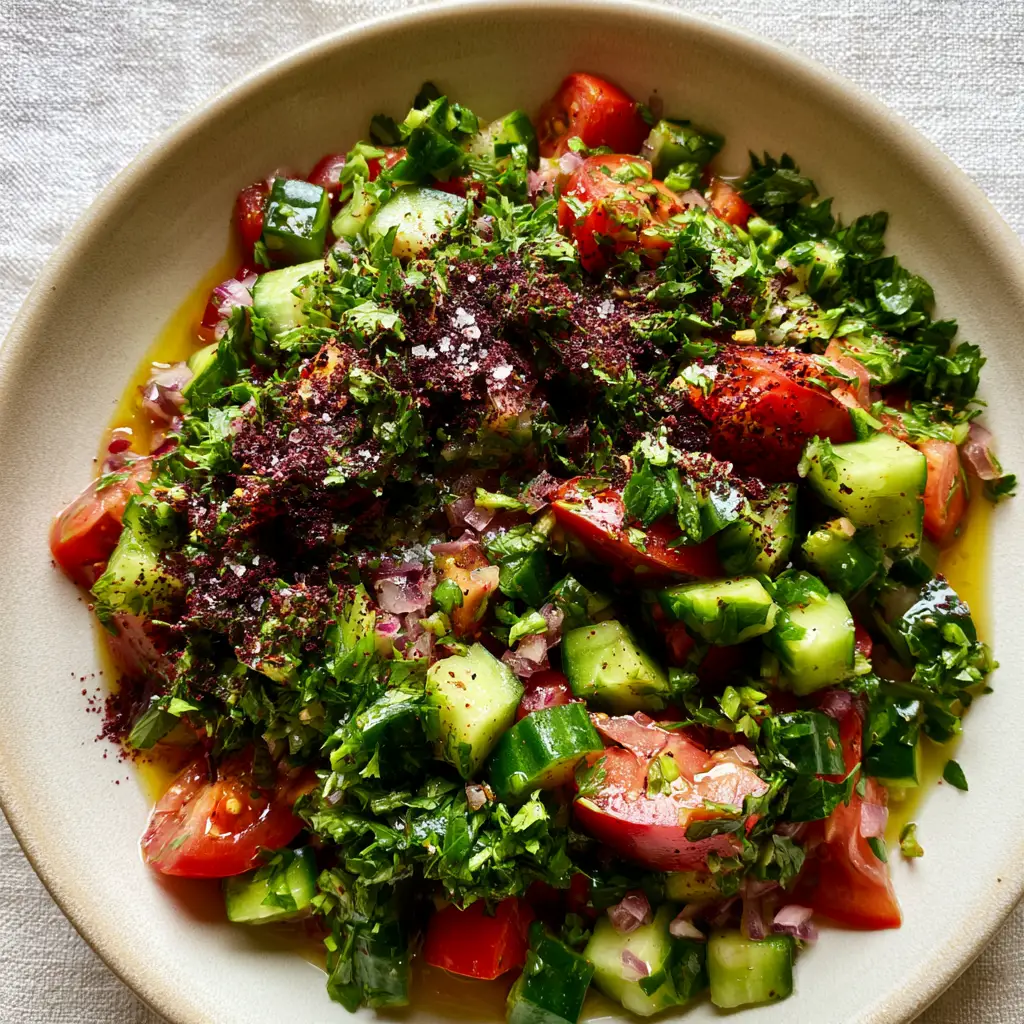
While this dish is a complete meal on its own, it is traditionally part of a larger spread. You can pair it with a crisp Arabic Salad to cut through the richness of the fried oil. If you are looking for a different starch profile for another night, you might enjoy comparing this to a Ghanaian Jollof Rice, which often uses Basmati rice and a slightly different spice blend.
For those who prefer seafood, the smokey rice base also pairs exceptionally well with a Salmon Marinade before grilling the fish to achieve a similar seared effect as the chicken.
Storage, Reheating & Freezing
Storage: Keep leftover Riz Jollof Nigérian in an airtight container in the refrigerator for up to 4 days. The flavors actually deepen overnight, making it a fantastic “next-day” meal.
Reheating: To maintain the glistening texture, reheat in a microwave with a damp paper towel draped over the bowl, or briefly stir-fry in a pan with a teaspoon of water to restore the steam.
Freezing: This rice freezes remarkably well for up to 3 months. Thaw in the fridge overnight before reheating. The plantains and raw onions should be prepared fresh for the best experience.
Frequently Asked Questions
While you can, it will technically be more similar to Ghanaian Jollof. Basmati is more fragile and aromatic; for authentic Nigerian Jollof texture, stick to parboiled long-grain.
The color comes from frying a high ratio of red bell peppers (Tatashe) and tomato paste in oil until the oil separates. This concentrated base dyes the grains naturally.
The ‘Party Jollof’ smoke is achieved by sealing the pot with aluminum foil and allowing the bottom layer of rice to slightly burn or char (the bottom pot) during the last few minutes of cooking.
Long-grain parboiled rice is the gold standard. It has a lower starch content than Jasmine or Basmati, allowing it to withstand long steaming while remaining firm and perfectly separated.
Mushy rice is usually caused by too much liquid or using a high-starch rice variety. Ensure you wash the rice until the water is clear and use a 1:0.75 ratio of rice to liquid, relying on steam to finish the cooking.
The Definitive Riz Jollof Nigérian Recipe
Riz Jollof Nigérian: The Ultimate Authentic Smokey Party Rice Guide
Ingredients
Equipment
Method
- Blend tomatoes, bell peppers, scotch bonnets, and one onion. Boil in a pot until reduced by half to concentrate the flavor.
- Sauté sliced onions in vegetable oil until translucent. Add tomato paste and fry for 5 minutes until dark red.
- Add the parboiled rice to the fried base and stir to coat every grain in the red oil.
- Add stock and seasonings. Cover with foil and a tight lid. Cook on low for 25 minutes. Increase heat at the end for 3 minutes to create the smokey 'bottom pot'.
- Season and grill chicken thighs skin-side down until deep char marks form and internal temp is 165°F.
- Slice plantains diagonally and fry until deeply caramelized and golden-brown.
Notes
The 'bottom pot' (burnt rice) is a delicacy and provides the signature smokey flavor.
Closing & Call to Action
Mastering the Riz Jollof Nigérian is a milestone for any home cook looking to expand their global palate. The combination of the smokey, spice-infused grains, the sweetness of the caramelized dodo, and the savory char of the chicken creates a culinary experience that is truly world-class. If you enjoyed this recipe, please leave a comment below and share your results! Don’t forget to follow us on Pinterest for more authentic flavor finds and visual recipe inspiration.