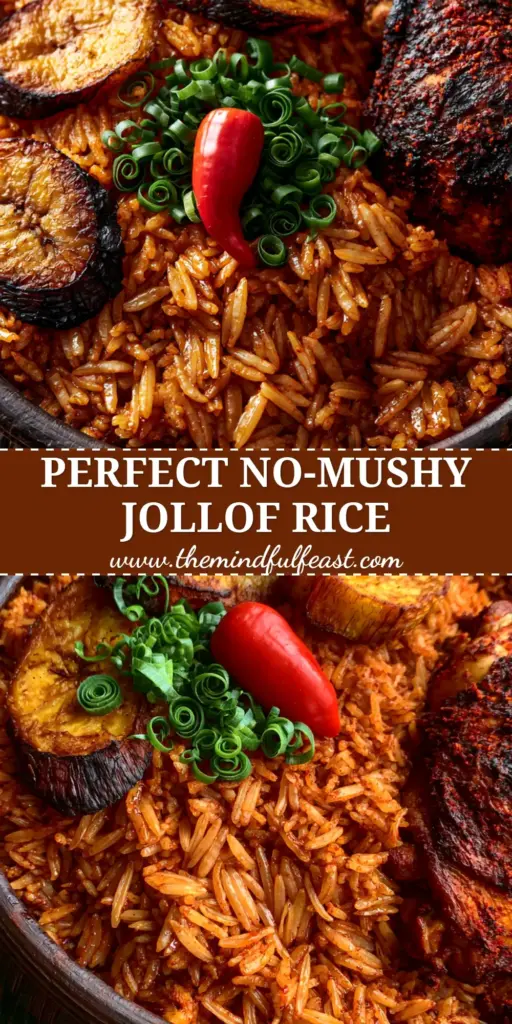
There is perhaps no dish that sparks more passionate debate across West Africa than jollof rice. However, when you experience a bowl of authentic Ghanaian jollof rice, you understand exactly why it stands in a league of its own. This isn’t just a meal; it’s a culinary masterpiece defined by its deep reddish-orange hue, individual grains that never clump, and a complex heat that lingers just long enough to keep you coming back for another bite.
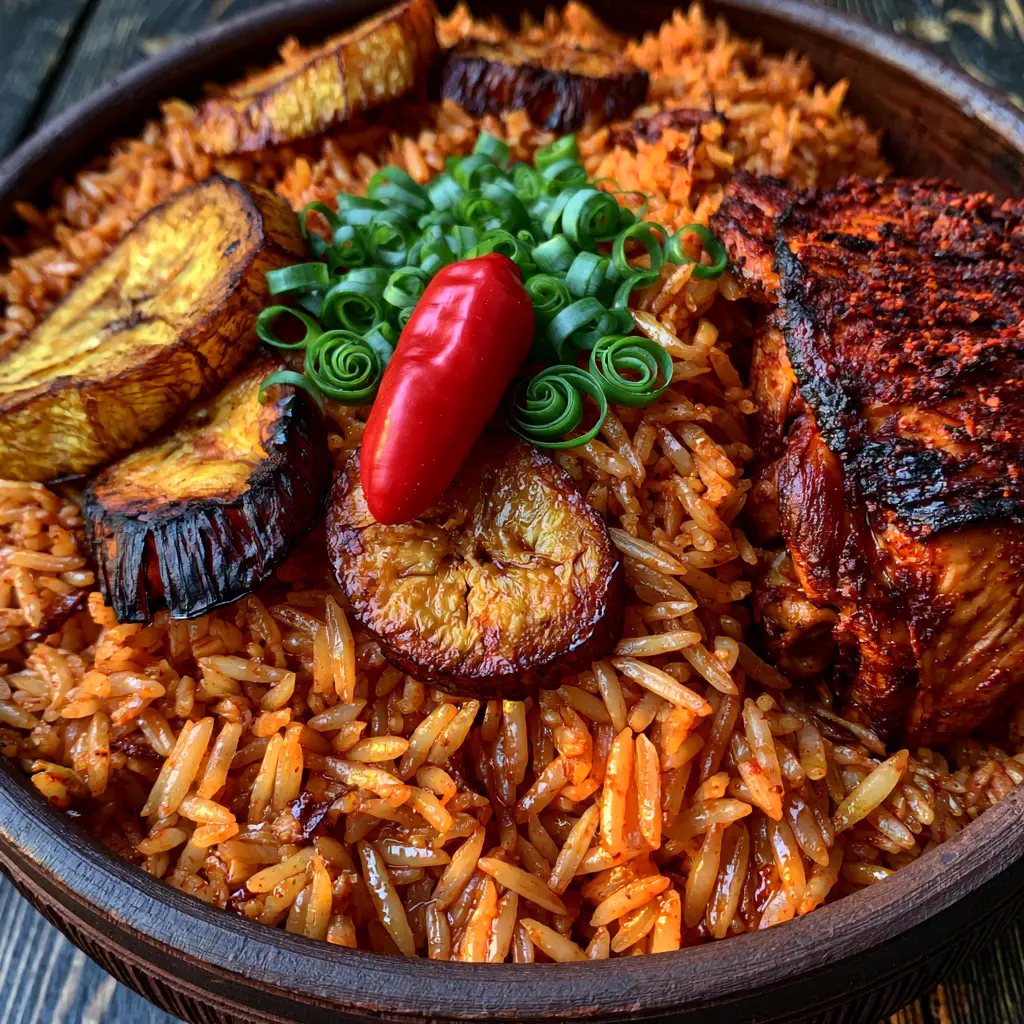
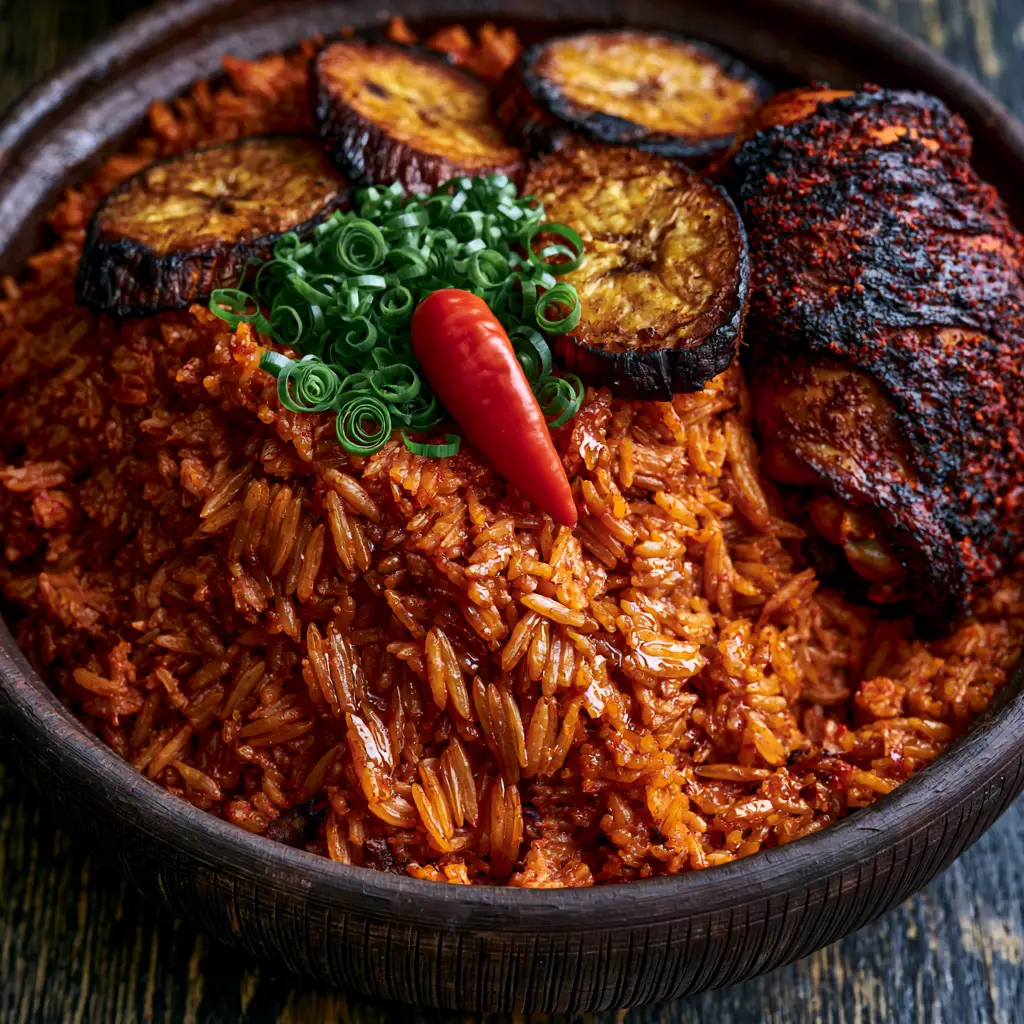
In this guide, we are recreating the exact visual and sensory experience of a traditional Ghanaian feast. Imagine an ultra-realistic, extreme close-up of this vibrant rice served in a traditional dark clay Asanka bowl. Every individual long-grain parboiled rice is clearly separated, glistening with a light, flavorful oil, and topped with the sweet contrast of caramelized fried plantains and the smoky crunch of charred grilled chicken skin. This is the recipe that finally brings that restaurant-quality, authentic food photography look to your home kitchen.
Whether you are a seasoned cook or a curious beginner, the secret to this dish lies in the foundation of the tomato and red pepper stew base. By the time you finish this recipe, you’ll have mastered the art of “party rice” that tastes even better than it looks. If you enjoy this flavor profile, you might also want to explore our Nigerian Jollof Rice for a comparison of regional techniques.
The Signature Elements of Authentic Ghanaian Jollof Rice
- Separated, Fluffy Grains: Unlike other varieties, the Ghanaian method uses parboiled long-grain rice to ensure each grain remains distinct, firm, and non-clumpy.
- Rich Tomato Stew Base: A concentrated blend of roasted red peppers, tomatoes, and onions creates the deep reddish-orange “sofrito” that flavors the rice from the inside out.
- Caramelized Contrast: Sweet, golden-brown fried plantains with dark caramelized edges provide the perfect counterpoint to the spicy, savory rice.
- Charred Umami: Succulent grilled chicken with deeply charred, spicy skin adds a layer of smoke and texture that completes the plate.
- Aromatic Depth: A punchy infusion of fresh ginger and garlic aromatics ensures every bite is fragrant and complex.
Essential Ingredients for the Ultimate Jollof Experience
Long-Grain Parboiled Rice: You will need 3 cups (approx. 555g) of rice. Parboiled rice is essential for the Ghanaian style because the grains are pre-treated to maintain their structural integrity, resulting in the “separated grain” look seen in professional food photography.
Red Bell Peppers and Plum Tomatoes: Use 3 large red bell peppers and 1 can (400g) of plum tomatoes. These form the bulk of your stew base, providing both the vibrant color and the natural sweetness required for balance.
Scotch Bonnet Peppers: For the authentic kick, use 2-3 peppers in the base and 1 whole red scotch bonnet for garnish. These peppers provide a fruity, tropical heat that defines West African cuisine.
Ginger and Garlic Aromatics: A 3-inch (7.5cm) piece of fresh ginger and 6 cloves of garlic are non-negotiable. These are blended into the base to provide a sharp, fresh zing that cuts through the richness of the oil.
Vegetable Oil: 1/2 cup (120ml) of high-quality vegetable oil. This is a “foundational invisible ingredient” that allows the rice to glisten and prevents the grains from sticking together during the long steaming process.
Chicken Thighs: 4-6 bone-in, skin-on thighs. The skin is vital for achieving that deeply charred, crispy texture described in our visual blueprint.
Over-Ripe Plantains: 2 large plantains with yellow-and-black skins. These contain the high sugar content necessary for those dark, caramelized edges when fried.
Green Scallions: 2 stalks, thinly sliced into curls. These provide a vibrant green contrast against the deep orange rice, adding a fresh, oniony finish.
Spices and Seasoning: 1 tbsp (15g) curry powder, 1 tsp (5g) dried thyme, 2 bay leaves, and salt to taste. To enhance the savory profile, similar to our Moroccan-inspired dishes, these spices bridge the gap between the vegetable base and the rice.
The Culinary Tools You’ll Need
To achieve the precise textures of this Ghanaian jollof rice, you will need a heavy-bottomed pot or a Dutch oven. This ensures even heat distribution and prevents the bottom of the rice from burning before the top has steamed through. You will also need a high-speed blender to create a perfectly smooth tomato and pepper puree.
For the chicken, a cast-iron grill pan or an outdoor grill is ideal for getting those deep char marks. Lastly, if you want to be truly authentic, serving this in a dark clay Asanka bowl will not only keep the rice warm but also provide the rustic aesthetic seen in high-end food photography.
Step-by-Step Instructions to Jollof Perfection
1. Crafting the “Obe Ata” Stew Base
In your blender, combine the red bell peppers, plum tomatoes, 2 scotch bonnets, ginger, garlic, and one onion. Blend until the mixture is completely smooth and vibrant red. Pour this into a medium saucepan and simmer over medium heat for 15-20 minutes until the water has evaporated and the paste has thickened significantly.
2. Searing the Chicken and Developing Flavor
Season your chicken thighs with salt, pepper, and a touch of ginger powder. In your heavy-bottomed pot, heat 1/2 cup (120ml) of oil over medium-high heat. Sear the chicken thighs skin-side down until the skin is deeply charred and crispy—listen for the intense sizzle. Remove the chicken and set aside; it will finish cooking later.
3. Frying the Aromatics and Concentrating the Base
In the same oil (now infused with chicken fat), add a thinly sliced onion. Sauté until translucent, then stir in the curry powder and thyme. Add your concentrated tomato-pepper paste. Fry this mixture for 10-12 minutes, stirring constantly, until the oil begins to separate from the sauce and turns a dark, rich orange.
4. The Steaming of the Rice
Wash your parboiled rice thoroughly until the water runs clear. Add the rice to the pot, stirring well to ensure every grain is coated in the glistening oil and sauce. Pour in 3 cups (720ml) of chicken stock or water. Cover the pot tightly with a layer of foil, then the lid. Reduce heat to the lowest setting and let the rice steam for 30-35 minutes. Do not peek! The steam is what creates the separated, fluffy grains.
5. Caramelizing the Plantains
While the rice steams, peel and slice your over-ripe plantains on a bias. In a separate skillet, heat 1/4 cup (60ml) of oil and fry the slices until they are golden-brown with dark caramelized edges. The texture should be soft and sweet inside with a slight crunch on the perimeter.
6. The Final Assembly
Once the rice is tender, fluff it gently with a fork—you should see every individual long-grain parboiled rice clearly separated. Place the charred chicken back on top to warm through. Garnish with vibrant green scallion curls and a single whole red scotch bonnet pepper for that striking color contrast.
Expert Tips for Success
- The Foil Trick: Always use a layer of aluminum foil under your pot lid. This creates a tight seal that traps steam, which is the only way to cook the rice through without it becoming mushy.
- Don’t Scrape the Bottom: In Ghana, the slightly burnt rice at the bottom (known as “kanzo”) is a delicacy, but for the fluffiest serving rice, leave the very bottom layer alone when fluffing.
- Oil is Flavor: If the rice looks dull, you haven’t used enough oil. The grains should glisten under the light, as seen in the morning sunlight highlights of our reference photo.
- Balance the Heat: If you prefer a milder dish, deseed the scotch bonnets before blending, but don’t skip them entirely as they provide the essential aroma.
Storage, Reheating, and Freezing
Ghanaian jollof rice is famous for tasting even better the next day. Store leftovers in an airtight container in the refrigerator for up to 4 days. To reheat, sprinkle a teaspoon of water over the rice and microwave it covered, or steam it briefly on the stovetop to restore the glistening texture.
This dish also freezes beautifully. You can freeze the rice and the chicken (separately or together) for up to 3 months. Thaw overnight in the fridge before reheating. For a fresh side to serve with leftovers, consider our Arabic Salad for a refreshing, crunchy contrast.
What to Serve With This Flavorful Rice
While this dish is a complete meal on its own, it pairs beautifully with other vibrant sides. If you want to expand your West African feast, a side of cool slaw or a fresh salad works wonders. If you’re looking for more rice inspiration from around the world, try our Moroccan Chicken and Rice for a different take on one-pot poultry and grains.
For those who love a seafood twist, you might even consider serving a piece of Pan-Seared Rainbow Trout alongside the jollof for a lighter protein option that still stands up to the bold spices.
Frequently Asked Questions
Absolutely! Simply swap the chicken stock for vegetable stock and serve with fried tofu or extra plantains instead of grilled chicken. The flavor base of the rice is entirely plant-based.
The secret is to concentrate your pepper and tomato puree before adding it to the oil, and then frying that paste (frying the ‘stew’) until the oil turns orange and separates. This intensifies the color and flavor.
Yes, authentic jollof has a notable kick from Scotch Bonnet peppers. However, you can control the heat by removing the seeds from the peppers or using fewer of them in the blended base.
You likely used too much water or didn’t seal the pot tightly enough. Use a 1:1 ratio of rice to liquid and always use aluminum foil under the lid to trap the steam, which cooks the rice without drowning it.
Parboiled rice is traditional in Ghana because it has a firmer structure. This allows the grains to stay separate and ‘fluffy’ rather than becoming soft or sticky like Basmati can in a heavy tomato stew.
Authentic Ghanaian Jollof Rice Recipe
Ghanaian Jollof Rice: The Ultimate Guide to Perfectly Fluffy Grains and Smoky Flavor
Ingredients
Equipment
Method
- Blend peppers, tomatoes, ginger, garlic, and one onion until completely smooth.
- Simmer the blended mixture in a saucepan until thickened and the water has evaporated.
- In a heavy pot, sear chicken in oil until skin is charred and crispy. Remove chicken.
- Fry the thickened paste in the chicken oil until it turns a dark orange and oil separates.
- Stir in washed rice and stock. Seal with foil and a lid. Cook on lowest heat for 35 minutes.
Notes
The 'Low and Slow' method is the only way to prevent burning while ensuring the rice is tender.
Share Your Culinary Journey!
We hope this recipe brings the vibrant flavors of Ghana into your home. The combination of the deep reddish-orange rice and the sweet caramelized plantains is a sensory experience like no other. If you make this dish, we would love to see your results! Tag us in your photos and share this recipe with fellow food lovers on Pinterest. For more global flavors, don’t forget to check out our Taco Rice Casserole for a quick weeknight alternative!