There is a specific kind of magic that happens when high-quality seafood meets the transformative power of a hot skillet and a citrus-based reduction. This orange glazed salmon is the embodiment of that culinary synergy, offering a visually stunning and palate-cleansing experience that rivals any high-end bistro.
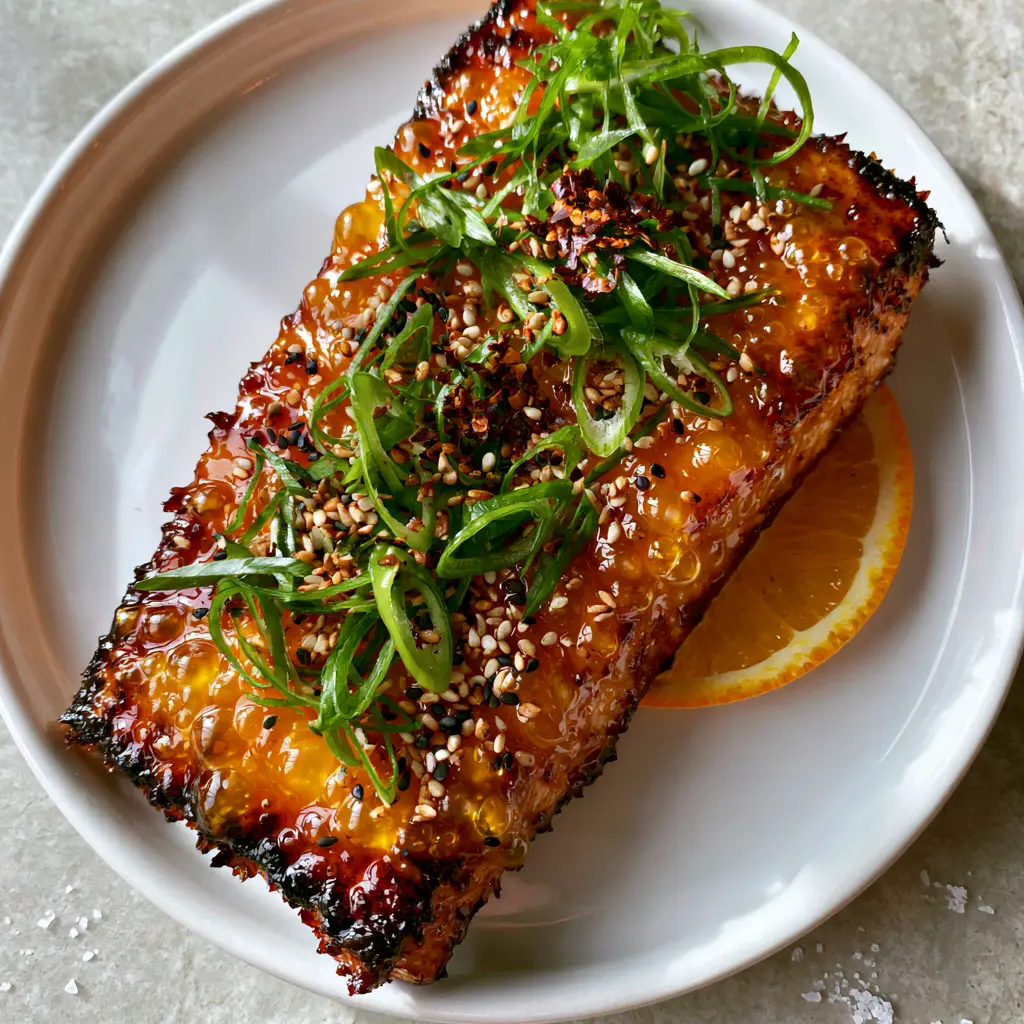
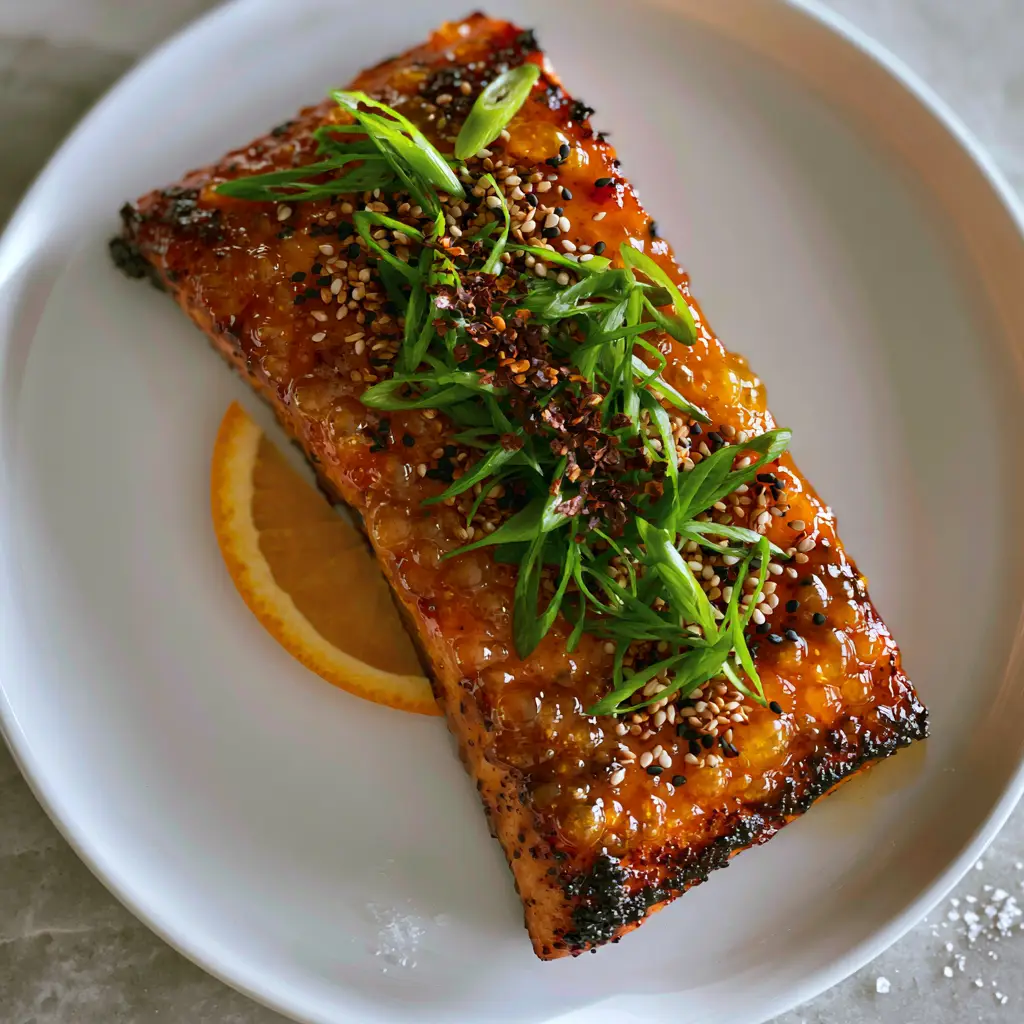
Imagine a thick, center-cut salmon fillet with edges so perfectly charred they offer a delicate crunch, transitioning into a flakey, buttery interior. The entire piece is enveloped in a translucent, amber-hued glaze that clings to the protein like liquid gold, bubbling with intensified sugars and bright citrus notes.
Whether you are looking for a quick weeknight upgrade or a centerpiece for a dinner party, this recipe delivers on every sensory front. From the aromatic scent of caramelizing honey to the vibrant pop of green scallions against the deep orange sauce, this is a dish designed to be savored with the eyes before the first bite.
Why This Sticky Citrus Salmon Works So Well
- The Perfect Texture Balance: By pan-searing the salmon first, we achieve a crispy exterior that provides a structural contrast to the viscous, sticky orange glaze.
- Visual Complexity: The combination of toasted white and black sesame seeds against the glossy orange surface creates a professional, multi-dimensional look.
- Optimized Flavor Profile: The natural acidity of fresh orange juice cuts through the rich fats of the salmon, while red pepper flakes provide a gentle, background heat.
- Speed and Simplicity: Despite its gourmet appearance, this dish comes together in under 25 minutes, making it a staple for busy but discerning home cooks.
Anatomy of the Ultimate Glossy Orange Glaze
The secret to a world-class orange glazed salmon lies entirely in the reduction process. A glaze is not merely a sauce; it is a concentrated syrup that must have enough “cling” to coat the fish without running off into a puddle on the plate.
We start with fresh-squeezed orange juice for high-vibrancy acidity and natural pectin. This is bolstered by honey, which provides the viscosity and the sugars necessary for those beautiful, slightly charred edges seen in professional food photography.
To balance the sweetness, we incorporate elements of umami and salt. While the visual blueprint focuses on the orange, the “invisible” addition of a splash of soy sauce or tamari provides the depth required to make the citrus flavors truly sing.
Essential Components for Your Pan-Seared Masterpiece
Thick Salmon Fillets (approx. 6oz / 170g each): Choose center-cut fillets for even cooking. The thickness is crucial for achieving that “smartphone-ready” look where the glaze bubbles on top without overcooking the center.
Fresh Orange Juice & Zest (1/2 cup / 120ml): Always use fresh fruit rather than bottled juice. The oils in the zest provide the floral aroma that defines the primary keyword flavor profile.
Honey (3 tbsp / 45ml): Honey is the structural backbone of our caramelization. It creates the “sticky” factor and allows the glaze to achieve that translucent amber glow.
Garlic and Ginger (1 tsp / 5g each, minced): These aromatics provide a foundational warmth. They are the “hidden” ingredients that bridge the gap between simple fruit juice and a complex culinary sauce.
Toasted White & Black Sesame Seeds (1 tsp / 5g total): These provide a nutty crunch and essential visual contrast. Using both colors is a professional plating secret for high-end food aesthetics.
Fresh Green Onions (2 stalks, thinly sliced): These provide a bright, herbaceous “bite” that refreshes the palate between the rich, glazed mouthfuls.
Dried Red Pepper Flakes (1/2 tsp / 1g): A small pinch adds just enough heat to stimulate the taste buds without overwhelming the delicate citrus notes.
Avocado Oil or Grapeseed Oil (1 tbsp / 15ml): You need a high-smoke-point oil for the initial sear. Butter will burn too quickly at the temperatures required to get those crispy edges.
Flaky Sea Salt & Cracked Black Pepper: Used for both seasoning the raw fish and as a final finishing touch to catch the light on the plate.
Culinary Tools for Professional Results
To achieve the exact look of a thick seared salmon fillet on a clean white ceramic plate, you need the right equipment. A heavy-bottomed stainless steel or cast-iron skillet is non-negotiable for superior heat retention.
A flexible fish spatula is also highly recommended. This allows you to flip the delicate fillets without breaking the skin or the flesh. Finally, a microplane zester is essential for extracting the fine orange zest without hitting the bitter white pith.
Step-by-Step: Mastering the Sear and Glaze
1. Preparing the Protein
Pat the salmon fillets completely dry with paper towels. Any moisture on the surface will create steam, preventing the formation of that golden-brown crust we are looking for.
Season generously with flaky sea salt and cracked black pepper. If you’ve enjoyed our best salmon marinade, you know that seasoning the fish directly is the first step toward deep flavor penetration.
2. The High-Heat Sear
Heat your oil in the skillet over medium-high heat until it begins to shimmer. Place the salmon fillets in the pan, skin-side down (if they have skin) or top-side down to start the browning process.
Press down lightly with your spatula for the first 30 seconds to ensure even contact. Sear for 4-5 minutes until the edges are visibly opaque and a deep golden crust has formed.
3. Emulsifying the Orange Glaze
While the salmon sears, whisk together the orange juice, zest, honey, garlic, ginger, and a splash of soy sauce in a small bowl. This is the base of your orange glazed salmon.
Flip the fillets carefully. Pour the glaze mixture into the hot pan around the salmon. The liquid will immediately begin to hiss and bubble vigorously as the water evaporates and the sugars concentrate.
4. Basting for That Glossy Finish
Using a spoon, continuously pour the bubbling sauce over the top of the fillets. This technique, known as “arroser,” ensures the fish is coated in a thick, translucent amber-orange glaze.
Continue cooking for another 2-3 minutes. Watch for the visual cue: the glaze should be reduced to a thick, syrupy consistency that leaves a trail when you move the spoon through it. Look for those “slightly charred” edges where the honey has caramelized against the hot pan.
Expert Tips for Success
- Cold Start for the Glaze: If your pan is too hot when you add the honey-based sauce, it can burn before it reduces. If the pan looks dry, add a teaspoon of water or more orange juice to loosen the fond.
- Room Temperature Fish: Take your salmon out of the fridge 15-20 minutes before cooking. This ensures the center reaches the perfect medium-rare temperature at the same time the exterior finishes glazing.
- The “Carry-Over” Effect: Salmon continues to cook once removed from the pan. Remove it when the center still looks slightly translucent; it will reach the perfect flakey texture while you are garnishing.
- Toasting the Seeds: If your sesame seeds aren’t pre-toasted, toss them in a dry pan for 2 minutes until fragrant before adding them to the fish. The flavor difference is immense.
Storing, Reheating, and Meal Prep
Orange glazed salmon is best enjoyed immediately to appreciate the contrast between the hot glaze and the crispy fish. However, leftovers can be stored in an airtight container in the refrigerator for up to 2 days.
To reheat, avoid the microwave, which can make the salmon rubbery. Instead, place the fillet in a cold oven and set it to 275°F (135°C). Heat for 10-15 minutes until warmed through; this preserves the moisture and the integrity of the glaze.
What to Serve Alongside This Vibrant Dish
This salmon is quite rich and sweet, so it pairs beautifully with clean, earthy sides. A simple zucchini stir fry offers a fresh crunch that complements the sticky sauce without competing for attention.
If you prefer a starch, serving this over a bed of jasmine rice or even a light lemon pasta can help soak up the extra orange reduction. For a lower-carb option, consider an Arabic salad with its bright parsley and lemon notes to act as a palate cleanser.
If you love the flavor profile of citrus and seafood, you might also enjoy our pan-seared rainbow trout for a lighter alternative on weeknights.
Frequently Asked Questions
Absolutely. Maple syrup provides a different depth of flavor but has the necessary sugar content to achieve that same caramelized, charred edge on the salmon.
Yes, but ensure it is completely thawed and patted extremely dry. Excess moisture from frozen fish will prevent the glaze from sticking and ruin the sear.
The salmon is done when it reaches an internal temperature of 125°F-130°F (52°C-54°C) for medium. Visually, the flesh should easily flake with a fork but remain moist.
It can be! Simply substitute the soy sauce in the glaze for tamari or coconut aminos to ensure the entire dish is 100% gluten-free.
The key is high heat and honey. The sauce needs to boil and reduce in the pan; if it’s too thin, continue simmering for an extra 60 seconds until it reaches a syrupy consistency.
The Ultimate Orange Glazed Salmon Recipe
Follow these instructions to create a restaurant-quality meal that features a thick seared salmon fillet resting on a clean white ceramic plate, just like the professionals. The combination of the caramelized honey orange glaze and the fresh garnishes makes this a perennial favorite.
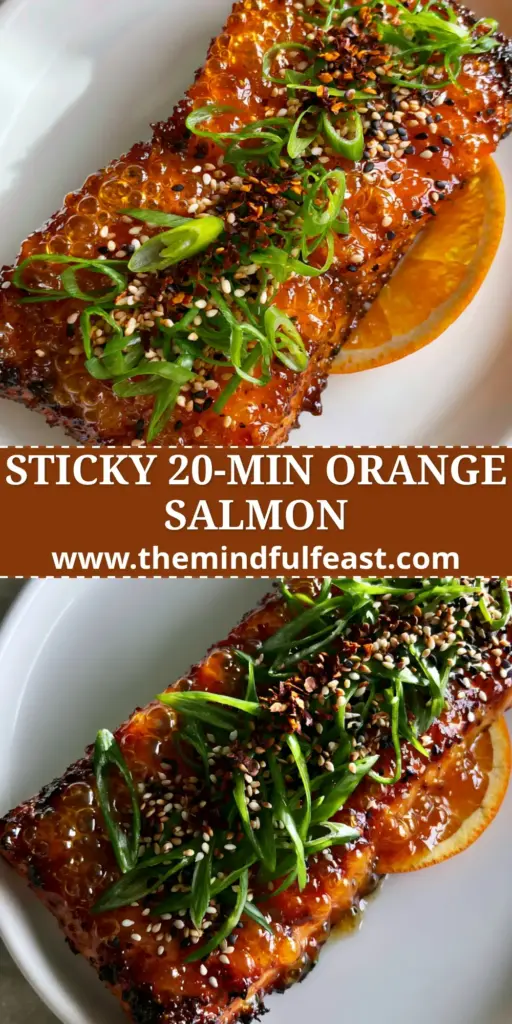
Orange Glazed Salmon with a Sticky Honey Citrus Glaze
Ingredients
Equipment
Method
- Pat the salmon fillets dry with paper towels. Season all sides with flaky sea salt and cracked black pepper.
- In a small bowl, whisk together the fresh orange juice, zest, honey, minced garlic, ginger, and soy sauce until well combined.
- Heat oil in a large skillet over medium-high heat. Place salmon in the pan and sear for 4-5 minutes without moving until a deep golden-brown crust forms on the bottom.
- Flip the salmon fillets. Pour the orange glaze mixture into the pan. The sauce should immediately begin bubbling and hissing as it hits the heat.
- Using a spoon, continuously baste the salmon with the glaze for 2-3 minutes. Cook until the glaze is thick, syrupy, and starting to char slightly at the edges of the salmon.
- Transfer salmon to a white ceramic plate. Top heavily with sliced scallions, toasted white and black sesame seeds, and a pinch of red pepper flakes. Tuck a thin orange slice under the side and finish with a pinch of sea salt.
Notes
Make sure the pan is hot before adding the fish to ensure a crispy sear.
Closing & Call to Action
Mastering the orange glazed salmon is a rite of passage for any home cook looking to elevate their seafood game. The balance of sweet, salty, and citrusy flavors creates a profile that is universally loved and incredibly photogenic.
If you made this recipe and loved that sticky, bubbling glaze, please leave a comment below and let us know! Don’t forget to snap a photo of your masterpiece and share it with us by tagging our Pinterest profile. For more inspiration, check out our honey sriracha salmon recipe for a spicy twist on this classic technique!