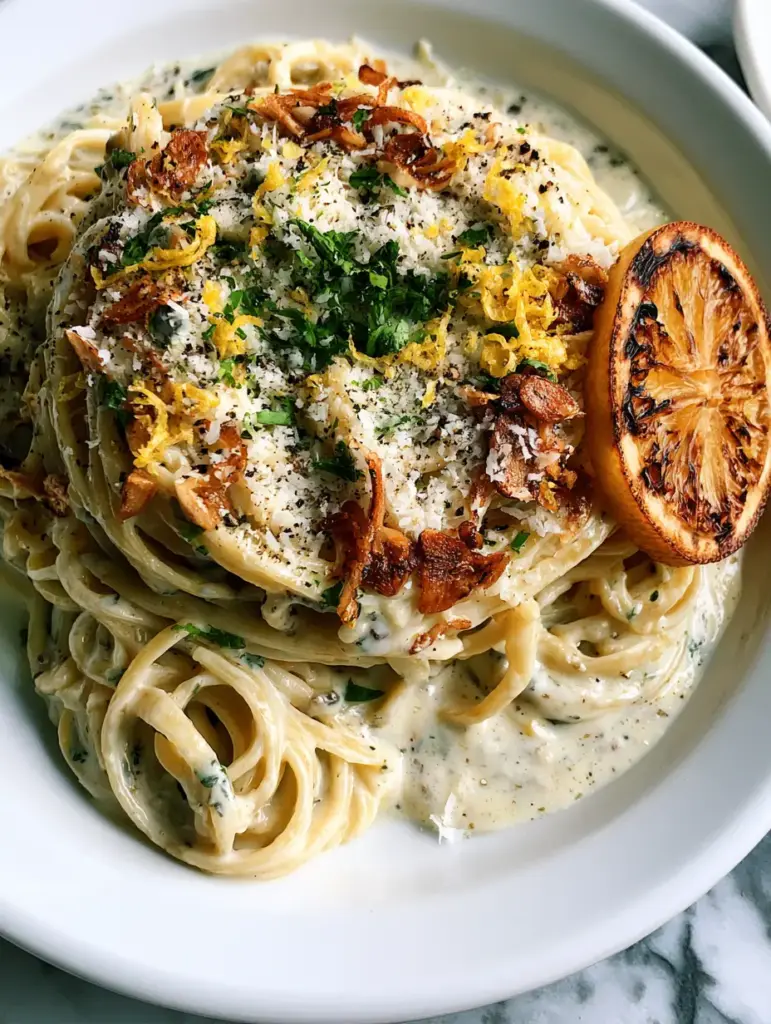
There is something inherently sophisticated about a perfectly executed lemon pasta. It is a dish that relies on the harmony of bright acidity, rich fats, and the structural integrity of al dente linguine. This specific recipe isn’t just a meal; it’s a sensory experience designed to mimic the high-end aesthetic of a professional kitchen, featuring tight, glossy swirls of pasta drenched in a velvety sauce.
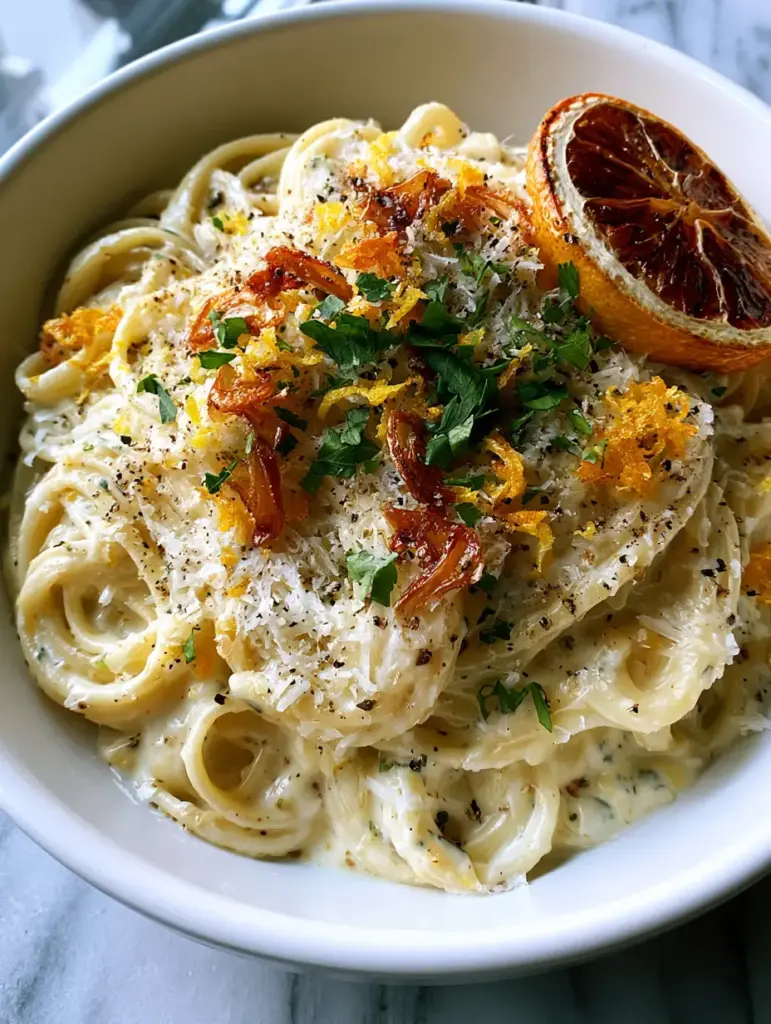
Imagine sitting at a marble kitchen countertop, a white ceramic plate before you, steam rising from a mound of linguine topped with golden-brown garlic slivers and vibrant green parsley. The aroma of charred lemon and aged parmesan fills the air, promising a balance of savory, citrusy, and creamy notes in every bite. Whether you are looking for a quick weeknight indulgence or a show-stopping date night dinner, this lemon pasta delivers on every front.
By focusing on the science of emulsification and the Maillard reaction—specifically through the pan-searing of garlic and the caramelization of lemon wheels—we elevate humble ingredients into a gourmet masterpiece. This guide will walk you through every technique required to achieve that elusive, opaque, rich texture seen in the world’s finest trattorias.
Why This Creamy Lemon Linguine Works
- Visually Stunning Presentation: The contrast between the bright green flat-leaf parsley, the golden garlic chips, and the vibrant micro-planed zest creates a restaurant-quality aesthetic.
- Perfectly Emulsified Sauce: By combining heavy cream and high-quality butter with starchy pasta water, we create a thick, glossy lemon cream butter sauce that clings to every strand.
- Complex Texture Profile: From the snap of al dente linguine to the delicate crunch of pan-seared garlic slivers, this dish offers a sophisticated mouthfeel.
- Depth of Flavor: We utilize lemon in three ways—zest for aroma, juice for acidity, and charred wheels for a deep, smoky sweetness.
The Anatomy of an Elite Lemon Pasta
To achieve the visual and culinary results described, you must start with the right components. Every ingredient serves a specific purpose in building the flavor profile and texture of this lemon pasta.
The Foundational Ingredients
Linguine Pasta: 1 lb (450g) of high-quality bronze-cut linguine is essential. The rough surface of bronze-cut pasta allows the thick lemon cream butter sauce to adhere better than standard smooth pasta.
Heavy Cream: 1 cup (240ml) provides the opaque richness and velvety body required for the sauce. Do not substitute with milk, as the fat content is necessary for stable emulsification.
Unsalted Butter: 1/2 cup (113g) or one full stick. Using unsalted butter allows you to control the seasoning precisely, ensuring the parmesan cheese doesn’t make the dish overly salty.
Fresh Lemons: You will need 3 large lemons. One will be sliced into elegant wheels for charring, one will be micro-planed for fresh zest, and two will be juiced to provide the acidic backbone of the dish.
Garlic Cloves: 6 large cloves, thinly sliced into slivers. These are pan-seared until they become golden-brown “chips,” providing a nutty contrast to the bright citrus notes.
Parmesan Cheese: 1 cup (90g) of finely grated aged Parmigiano-Reggiano. The fine grate ensures it melts instantly into the sauce without becoming clumpy or grainy.
Fresh Parsley: 1/2 cup (15g) of finely chopped flat-leaf Italian parsley. This adds a necessary earthy freshness and a vibrant pop of color across the top of the dish.
Foundational Additions: 2 tbsp (30ml) of extra virgin olive oil for searing the garlic, 1 tsp (6g) of kosher salt for the pasta water, and 1 tsp (2g) of freshly cracked coarse black pepper for the final garnish.
Essential Equipment for Professional Results
Achieving the tight, silky swirls of pasta seen in the blueprint requires a few specific tools. A large, heavy-bottomed skillet or stainless steel sauté pan is necessary for developing the sauce and tossing the pasta with enough surface area for evaporation.
A microplane grater is non-negotiable for the lemon zest and the parmesan; it creates the “heavy dusting” effect rather than thick shreds. Finally, use a pair of long kitchen tongs to twirl the linguine into a tight mound, ensuring the presentation looks as good as it tastes.
Mastering the Art of the Lemon Cream Sauce
The secret to a world-class lemon pasta lies in the timing. You want to ensure the sauce and the pasta reach their peak readiness at the exact same moment.
Step 1: The Aromatic Foundation
Start by slicing your garlic cloves into paper-thin slivers. In a large skillet over medium-low heat, add 2 tbsp (30ml) of olive oil and the garlic. Watch closely as the garlic begins to sizzle softly; you are looking for a visual cue of a pale, golden-brown crust. Once they are crisp and golden, remove them with a slotted spoon and set aside on a paper towel. This prevents them from turning bitter.
Step 2: Charring the Citrus
In the same oil-coated skillet, turn the heat up to medium-high. Lay your thinly sliced lemon wheels flat. Sear them for 1-2 minutes per side until the edges are caramelized and charred. This process mellows the acidity and adds a smoky dimension to your lemon pasta. Set these aside for the final plating.
Step 3: The Pasta and The Water
Bring a large pot of heavily salted water to a boil. Add the 1 lb (450g) of linguine. Cook the pasta for exactly 2 minutes less than the package instructions. This ensures it remains “al dente,” providing a firm bite that will withstand being finished in the hot cream sauce. **Crucial Step:** Reserve 1 cup (240ml) of the starchy pasta cooking water before draining.
Step 4: Building the Glossy Emulsion
In your skillet, combine the 1/2 cup (113g) of butter and 1 cup (240ml) of heavy cream over medium heat. Whisk constantly as the butter melts into the cream. Add the fresh lemon juice and half of the lemon zest. As the mixture begins to simmer, it will thicken slightly. This is your thick lemon cream butter sauce forming its velvety, opaque base.
Step 5: The Marriage of Sauce and Pasta
Add the undercooked linguine directly into the skillet with the cream mixture. Pour in 1/2 cup (120ml) of the reserved pasta water. Use your tongs to toss the pasta vigorously. The starch in the water acts as a bridge, binding the fats to the noodles. Continue tossing for 2-3 minutes until the sauce has reduced into a thick, glossy coating that hugs every swirl of linguine.
Expert Tips for a Perfect Lemon Pasta
- Cold Butter Finish: For an even glossier sauce, whisk in two tablespoons of cold butter right before serving. This technique, known as *monter au beurre*, creates a professional shine.
- Don’t Over-Zest: When using the microplane, only take the yellow part of the skin. The white pith underneath is bitter and will ruin the delicate balance of the cream sauce.
- Temperature Control: If the sauce looks too thick or begins to break, whisk in an additional splash of warm pasta water. The heat and starch will re-emulsify the sauce instantly.
- Cheese Quality: Always grate your parmesan from a block. Pre-shredded cheeses are coated in potato starch to prevent clumping, which will prevent your sauce from reaching that silky, smooth consistency.
Serving and Pairing Suggestions
To truly embrace the elegance of this dish, serve it alongside light, Mediterranean-inspired sides. A crisp fresh Arabic salad provides a cooling contrast to the richness of the cream sauce. If you want to add a protein element, this pasta is the perfect bed for pan-seared rainbow trout or a piece of citrus-marinated salmon.
If you enjoy the flavor profile of this dish but want to try a different pasta shape, consider my recipe for creamy mafaldine pasta limone, which uses ribbon-like noodles to catch even more of that decadent sauce. For a complete dining experience, pair this meal with a honey lemon butterfly fizz to echo the citrus notes in the glass.
Storage, Reheating, and Make-Ahead Advice
Storage: This lemon pasta is best enjoyed immediately. However, leftovers can be stored in an airtight container in the refrigerator for up to 2 days. The sauce will thicken significantly as it cools.
Reheating: Do not use a microwave, as it will cause the butter and cream to separate. Instead, place the pasta in a skillet over low heat. Add a splash of water or milk and toss gently until the sauce becomes creamy and loose again.
Freezing: We do not recommend freezing this dish. The dairy-based sauce will lose its structural integrity and become grainy upon thawing.
Commonly Asked Questions About Lemon Pasta
Yes, you can substitute the heavy cream with full-fat coconut milk or a cashew-based cream, and use a high-quality vegan butter and nutritional yeast in place of the parmesan cheese.
While linguine is traditional for its ability to hold thick sauces, you can also use spaghetti, fettuccine, or even tagliatelle. The key is to use a long pasta shape that can be swirled to trap the glossy sauce.
Start with cold oil and sliced garlic. Heat them together over medium-low heat. As soon as the garlic turns a light golden-brown, remove them immediately, as they will continue to cook for a few seconds off the heat.
Pasta water contains starch released during cooking. When added to the butter and cream, it acts as an emulsifier, helping the sauce thicken and bind to the pasta instead of sliding off.
Curdling usually happens if the heat is too high when adding the lemon juice to the dairy. To prevent this, whisk the cream and butter together first to create a stable base, and ensure you use heavy cream with a high fat content.
The Ultimate Creamy Lemon Linguine Recipe
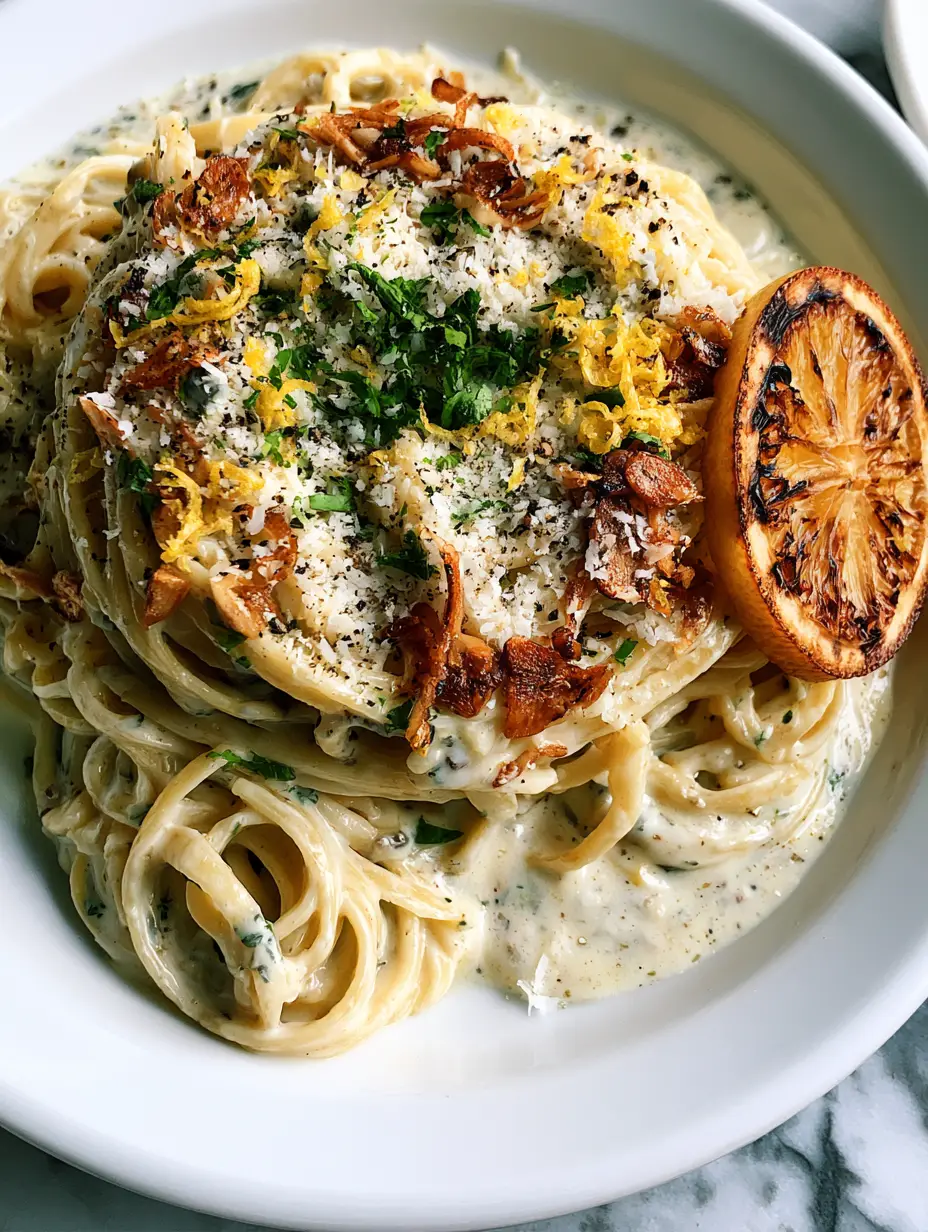
Lemon Pasta with Silky Butter Cream Sauce and Golden Garlic Chips
Ingredients
Equipment
Method
- In a large skillet, heat olive oil over medium-low heat. Add garlic slivers and sear until they develop a golden-brown crust. Remove and set aside.
- In the same skillet, increase heat to medium-high. Place lemon wheels in the pan and sear until edges are caramelized and charred. Remove and set aside.
- Cook linguine in salted boiling water until 2 minutes before al dente. Reserve 1 cup (240ml) of pasta water before draining.
- In the skillet, whisk butter, heavy cream, lemon juice, and zest. Simmer until the sauce is velvety and opaque.
- Add pasta and reserved water to the skillet. Toss vigorously with tongs until a thick, glossy lemon cream butter sauce coats the noodles.
- Top with golden garlic chips, micro-planed zest, parmesan, parsley, cracked pepper, and the charred lemon wheel.
Notes
Reserve more pasta water than you think you need to adjust the sauce consistency at the end.
Closing & Call to Action
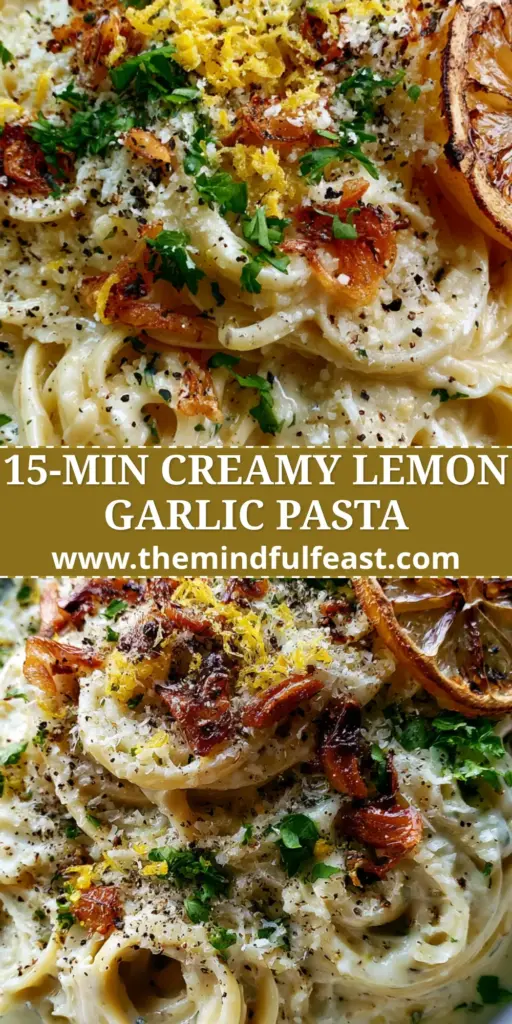
Mastering this lemon pasta is a rite of passage for any home cook looking to improve their sauce-making skills. The combination of the charred lemon wheels and the crispy garlic chips creates a depth of flavor that is rarely found in simpler recipes. We hope you enjoy the silky, tight swirls of pasta and the rich, velvety sauce as much as we do!
If you made this recipe, please leave a comment below and let us know how it turned out! Don’t forget to share your beautiful plating photos on Pinterest and follow us for more culinary inspiration. Happy cooking!