Pineapple Glazed Salmon is the perfect marriage of tropical sweetness and savory depth, creating a restaurant-quality meal right in your own kitchen. This recipe focuses on achieving that elusive, deeply caramelized crust while keeping the interior moist, flaky, and tender.
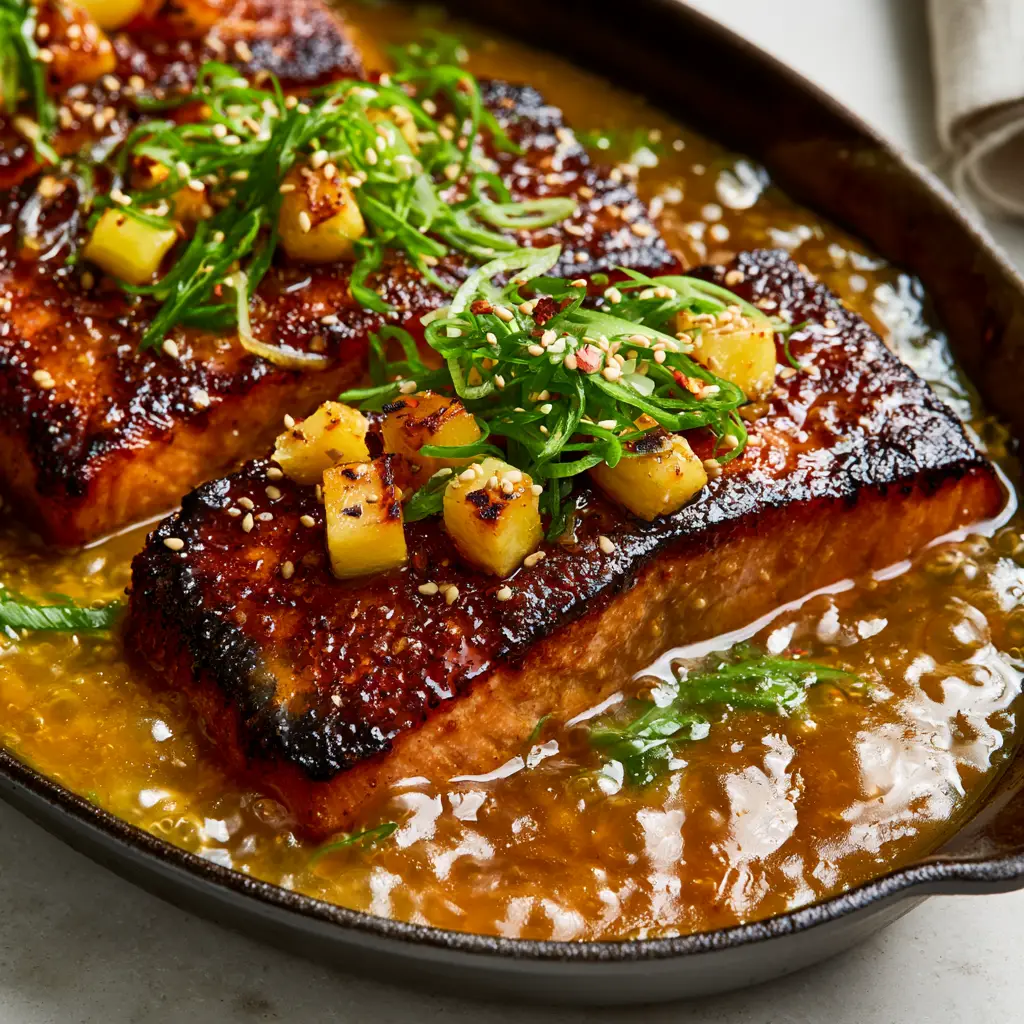
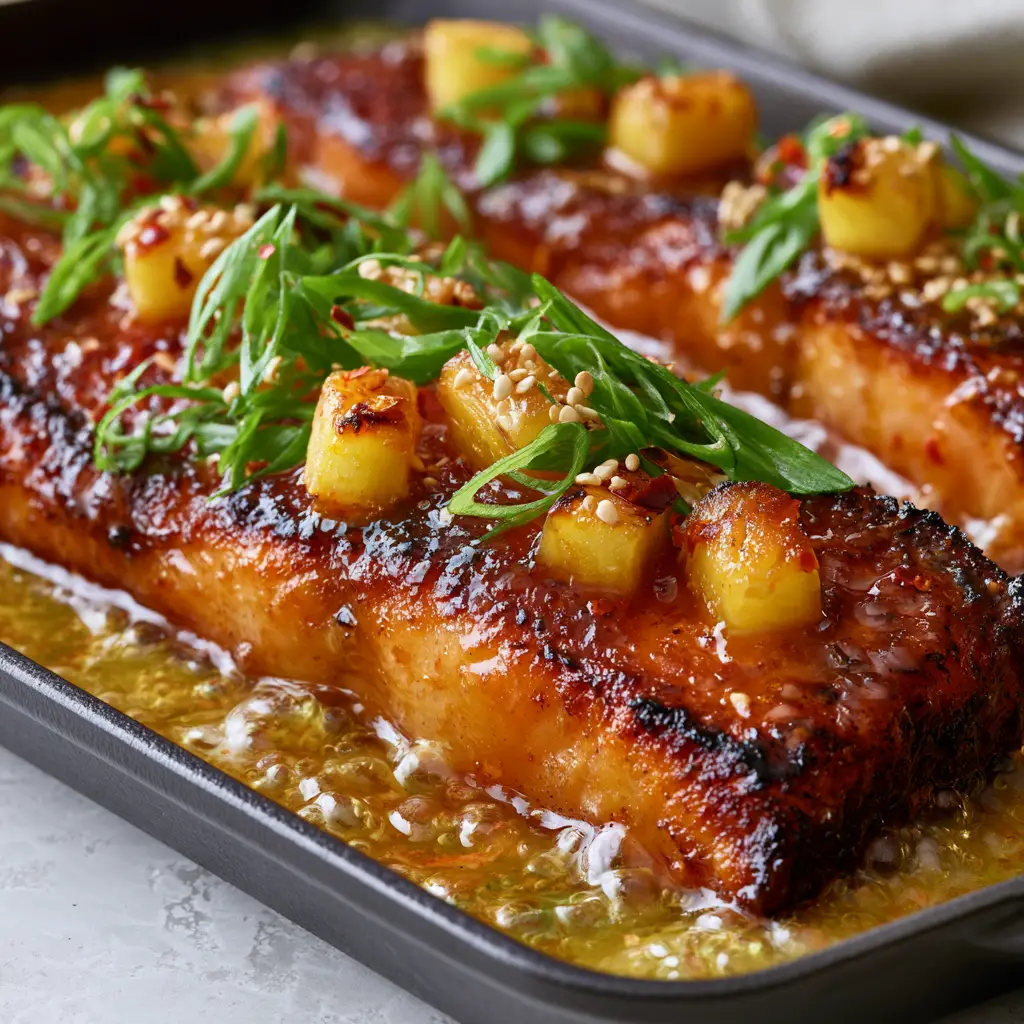
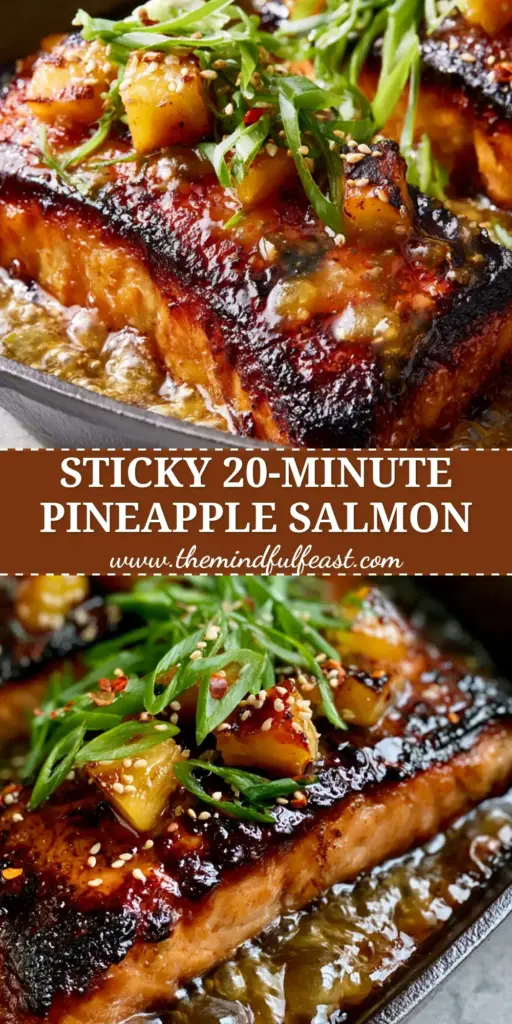
The visual appeal of this dish is undeniable, featuring thick fillets drenched in a translucent amber sauce that bubbles and clings to every curve of the fish. By using a cast iron skillet, we ensure a high-heat sear that transforms the pineapple sugars into a sticky, golden glaze.
Whether you are looking for a vibrant weeknight dinner or a centerpiece for a tropical-themed dinner party, this Pineapple Glazed Salmon delivers on every sensory promise. The addition of charred fruit and bright aromatics creates a professional handheld smartphone-photo-worthy plate every single time.
Why This Sticky Pineapple Salmon Recipe Works
- The Perfect Sear: We utilize the thermal mass of cast iron to create deeply caramelized, crispy edges that provide a structural contrast to the succulent flakes.
- Visual Brilliance: The thick, translucent amber glaze is engineered to glisten under natural light, making it a masterpiece of food styling.
- Textural Balance: From the crunch of toasted white sesame seeds to the soft, charred pineapple chunks, every bite offers a new experience.
- Flavor Complexity: A hint of heat from red chili flakes cuts through the tropical sweetness, ensuring the profile remains sophisticated rather than cloying.
The Secret Ingredients for a Translucent Amber Glaze
To achieve the specific visual results of our Pineapple Glazed Salmon, the quality and preparation of your ingredients are paramount. Each component serves a functional role in the chemistry of the sear and the viscosity of the sauce.
Fresh Salmon Fillets (approx. 6oz (170g) each): Look for center-cut fillets with even thickness to ensure they cook at the same rate and develop a uniform crust. The fat content in the salmon is essential for that “moist and flaky” look under the glaze.
Fresh Pineapple Cubes (1 cup (165g)): Fresh fruit is non-negotiable here because it contains natural enzymes and sugars that char beautifully without turning to mush. These cubes will be seared until they show distinct dark edges, adding a smoky sweetness to the skillet.
Pineapple Juice (1/2 cup (120ml)): This forms the base of our amber sauce, providing the natural sugars needed for a bubbling, sticky reduction. Use 100% juice without added sugars to maintain a balanced acidity.
Brown Sugar or Honey (2 tbsp (30g)): These act as the thickening agents that create the “translucent” and “sticky” quality described in our visual blueprint. They lower the evaporation point, allowing the sauce to coat the fish effectively.
Soy Sauce (2 tbsp (30ml)): The salt and umami in soy sauce darken the glaze to that desired amber hue while balancing the fruit’s natural sweetness. If you enjoy this flavor profile, you might also love our honey sriracha salmon for a spicier kick.
Rice Vinegar (1 tbsp (15ml)): A touch of acid breaks up the sugar molecules, ensuring the glaze remains a pourable liquid rather than a hard candy coating. It also brightens the overall flavor of the seafood.
Fresh Garlic and Ginger (1 tsp (5g) each, minced): These foundational aromatics infuse the oil and the glaze with a pungent depth that smells incredible as it hits the hot cast iron. Similar to the aromatics used in our signature salmon marinade, they are essential for a professional finish.
Neutral High-Smoke Point Oil (2 tbsp (30ml)): Use avocado or grapeseed oil to sear the salmon at high temperatures without the oil breaking down or smoking excessively. This is the key to those crispy edges.
Toasted White Sesame Seeds and Red Chili Flakes: These are your visual “finishers.” The seeds add a nutty crunch and white contrast, while the tiny red flakes provide a pop of color and a slow-building heat.
Sliced Green Scallions: Use the bright green tops for a fresh, herbaceous finish that cuts through the richness of the seared fish and sweet glaze.
Essential Tools for the Perfect Pan-Sear
Achieving the forensic visual accuracy of this Pineapple Glazed Salmon requires the right heat-management tools. A standard non-stick pan will not produce the same caramelized, crispy edges as the equipment listed below.
12-inch (30cm) Cast Iron Skillet: The heavy bottom and superior heat retention are what allow the salmon to develop a deep crust while the pineapple chunks char quickly. It is the star of this recipe’s “handheld photo” aesthetic.
Fish Spatula: A thin, flexible metal spatula is necessary to get underneath the delicate salmon skin without tearing it, ensuring the fillet remains intact and moist.
Kitchen Tongs: Use these to precisely place and flip the charred pineapple chunks, ensuring they get even contact with the hot surface of the pan.
Mastering the Sear: Step-by-Step Instructions
Preparing the Salmon and Pineapple
Start by patting your salmon fillets completely dry with paper towels. Any moisture on the surface of the fish will create steam, preventing the development of the crispy, caramelized edges we are looking for. Season the fillets generously with salt and pepper.
Cut your fresh pineapple into small, uniform cubes, approximately 1/2 inch (1.25cm) in size. A uniform size ensures that the cubes char evenly in the skillet without some pieces burning while others remain raw. Set them aside on a plate, separate from the fish.
Building the Amber Glaze Base
In a small bowl, whisk together the pineapple juice, soy sauce, rice vinegar, and honey or brown sugar. If you are looking for a variation with a different citrus profile, check out our zesty orange glazed salmon.
Ensure the sugar is fully dissolved into the liquid. This mixture will look thin at first, but don’t worry—the reduction process in the hot cast iron skillet will transform it into a thick, translucent, and bubbling glaze.
Achieving the Deeply Caramelized Crust
Place your cast iron skillet over medium-high heat and add the neutral oil. Wait until the oil is shimmering and just starting to show a faint wisp of smoke. This is the sensory cue that the pan is hot enough to sear.
Carefully place the salmon fillets in the pan, skin-side down (or top-side down if skinless). Press gently with your spatula to ensure full contact. Sear for 4-5 minutes without moving them. You are looking for a deep golden-brown, crispy edge to form around the bottom of the fillet.
Charring the Pineapple and Reducing the Sauce
Flip the salmon carefully. The interior should still look moist and slightly translucent. Immediately toss the pineapple cubes into the empty spaces of the skillet. Let the pineapple sit for 1-2 minutes until dark charred spots appear on the edges.
Pour the glaze mixture directly into the skillet. The liquid will immediately begin to bubble vigorously. As the water evaporates, the sugars will concentrate. Use a spoon to continuously baste the salmon with the bubbling amber liquid for another 2-3 minutes.
The Final Garnish and Presentation
Once the glaze has reached a thick, sticky consistency that coats the back of a spoon, remove the skillet from the heat. The residual heat of the cast iron will continue to cook the fish for another minute, keeping it flaky and succulent.
Sprinkle the toasted white sesame seeds and a few tiny red chili flakes over the glistening fillets. Finish with a generous handful of thinly sliced green scallions. The bright green against the amber sauce creates the high-detail, realistic food photography look we are aiming for.
Expert Tips for Culinary Success
- Room Temperature Salmon: Take the fillets out of the fridge 15 minutes before cooking. This ensures the center warms through without the exterior burning, maintaining that moist and flaky texture.
- Don’t Overcrowd the Pan: If the salmon fillets are too close together, the temperature of the cast iron will drop, and the fish will steam. Use a large skillet or cook in batches to maintain the sear.
- Glaze Viscosity: If your glaze gets too thick or “tacky” too quickly, add a teaspoon (5ml) of water or extra pineapple juice to loosen it back to a translucent sheen.
- The “Flake” Test: Use a fork to gently press the side of the salmon. If it begins to separate into layers (flakes) easily, it is done. Avoid overcooking, which leads to a chalky texture.
What to Serve With Pineapple Glazed Salmon
This dish is vibrant and bold, so it pairs best with sides that can soak up the extra sticky glaze. A simple bowl of steamed jasmine rice is a classic choice, or you could try a fresh zucchini stir fry to keep the meal light and low-carb.
For a more complex flavor profile, serve the salmon alongside our fresh Arabic salad, which provides a cooling contrast to the warm chili flakes and sweet pineapple. If you are hosting a larger feast, consider adding a side of Ghanaian jollof rice for a fusion of tropical and savory grains.
Storage, Reheating, and Freezing
Storage: Keep leftover Pineapple Glazed Salmon in an airtight container in the refrigerator for up to 2 days. The glaze will thicken further when cold, so it may appear more opaque until reheated.
Reheating: The best way to preserve the flaky texture is to reheat the salmon in a pan over low heat with a splash of pineapple juice or water. Cover with a lid for 2-3 minutes until warmed through. Microwave reheating is not recommended as it toughens the fish.
Freezing: While you can freeze cooked salmon, the texture of the pineapple chunks and the glossy sheen of the glaze will be compromised upon thawing. It is best enjoyed fresh from the skillet.
Common Questions About This Recipe
While canned pineapple works for the juice, fresh pineapple cubes are highly recommended for the charred chunks. Canned pineapple is often too soft and contains excess moisture, which prevents it from getting those distinct dark, caramelized edges in the cast iron skillet.
Ensure your skillet is properly seasoned and the oil is shimmering hot before adding the fish. Most importantly, pat the salmon skin completely dry with paper towels. Any moisture will cause the skin to tear rather than crisp and release from the pan.
It has a very mild heat from the tiny red chili flakes used as a garnish. You can easily control the spice level by omitting the flakes or adding more if you prefer a bolder kick to contrast the sweet amber glaze.
The salmon is done when it is opaque on the outside and flakes easily when pressed with a fork. For a ‘moist and flaky’ result, aim for an internal temperature of 125°F (52°C) for medium-rare or 145°F (63°C) for fully cooked.
The glaze needs enough heat and time to reduce. Ensure the skillet is at medium-high heat so the liquid bubbles vigorously. The sugars from the honey and pineapple juice need to concentrate; if it remains thin, simmer for an additional 1-2 minutes until it coats the back of a spoon.
The Ultimate Pineapple Glazed Salmon Recipe
Pineapple Glazed Salmon: The Ultimate Sticky and Crispy Cast Iron Guide
Ingredients
Equipment
Method
- Pat salmon fillets dry with paper towels. Season with salt and pepper.
- Mix pineapple juice, soy sauce, honey, and rice vinegar in a small bowl until sugar dissolves.
- Heat oil in cast iron skillet over medium-high until shimmering. Sear salmon for 4-5 minutes until deeply caramelized edges form.
- Flip salmon, add pineapple cubes to the pan. Cook 2 minutes until fruit has charred edges.
- Pour in glaze. Baste salmon with bubbling liquid for 2-3 minutes until glaze is thick and translucent amber.
Notes
Ensure the skillet is piping hot before adding the fish to guarantee crispy edges.
Experience the Tropics in Your Kitchen
This Pineapple Glazed Salmon is more than just a meal; it is a sensory experience that combines the best of pan-searing techniques with a vibrant, tropical flavor profile. The combination of crispy edges, sticky amber glaze, and charred fruit ensures every bite is balanced and satisfying.
We encourage you to try this technique in your own cast iron skillet and see the difference a high-heat sear makes. If you enjoyed this recipe, please leave a comment below and share your results! You can also find more visual inspiration by following us on Pinterest.