There is something inherently therapeutic about the rhythmic preparation of a Mango Chia Pudding. It is a dish that rewards patience, turning a few simple, nutrient-dense ingredients into a breakfast that feels like a decadent dessert. If you have been searching for that perfect balance between health-conscious meal prepping and a vibrant, Instagram-worthy aesthetic, you have arrived at the right destination.
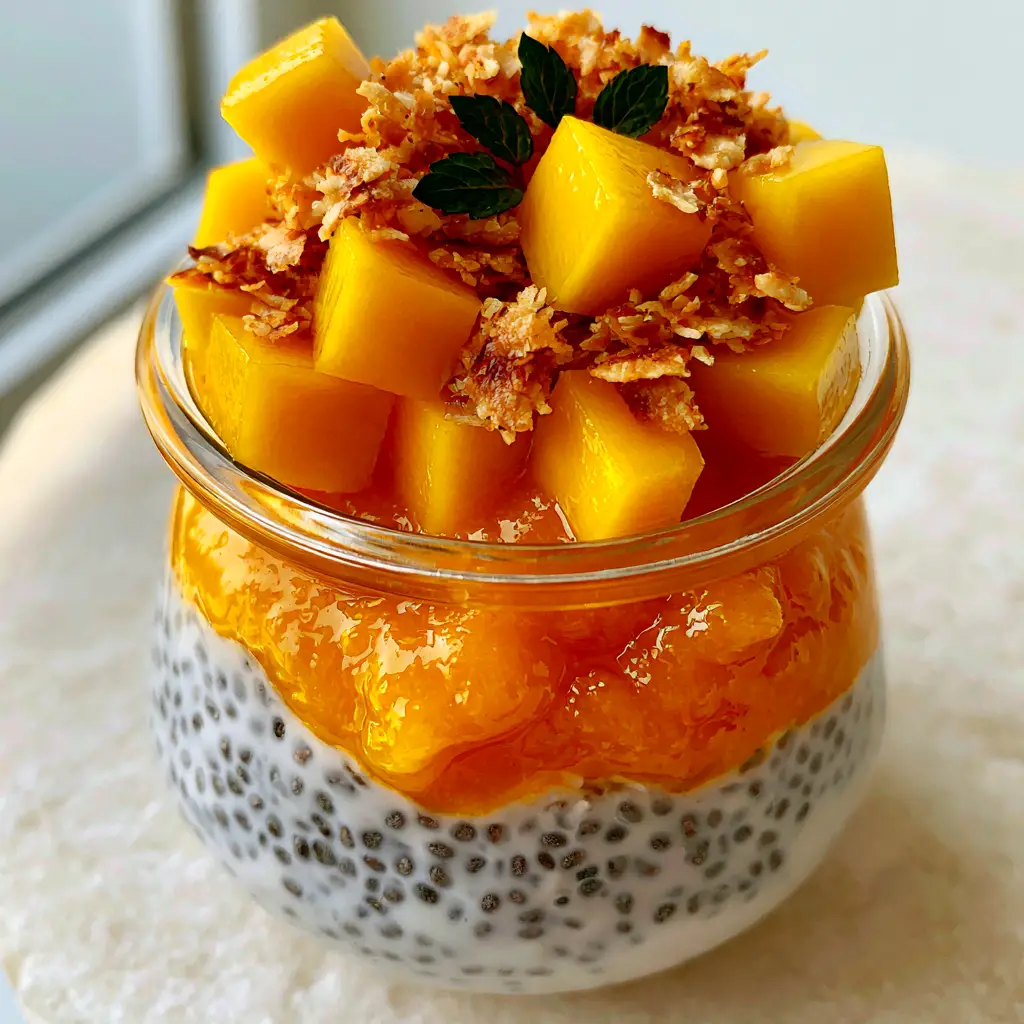
This recipe captures the essence of a tropical morning. Imagine a handheld smartphone photo of a sleek glass jar: the soft side-lighting from a kitchen window catching the gentle glow of ultra-creamy white coconut milk. Each layer is distinct, from the plump, swollen black chia seeds at the base to the glossy, deep orange mango coulis that sits like a sunset in the middle. Finally, a crown of sun-yellow honey mango cubes and toasted coconut flakes provides the textural contrast that elevates this dish from a simple pudding to a culinary experience.
Whether you are looking for more stunning mango dessert recipes or simply need a reliable, high-energy fuel for your workday, this Mango Chia Pudding delivers. It is a masterpiece of textures: the “pop” of the chia, the silkiness of the puree, and the crunch of the golden coconut. Let’s dive into the science and artistry of building this perfect jar.
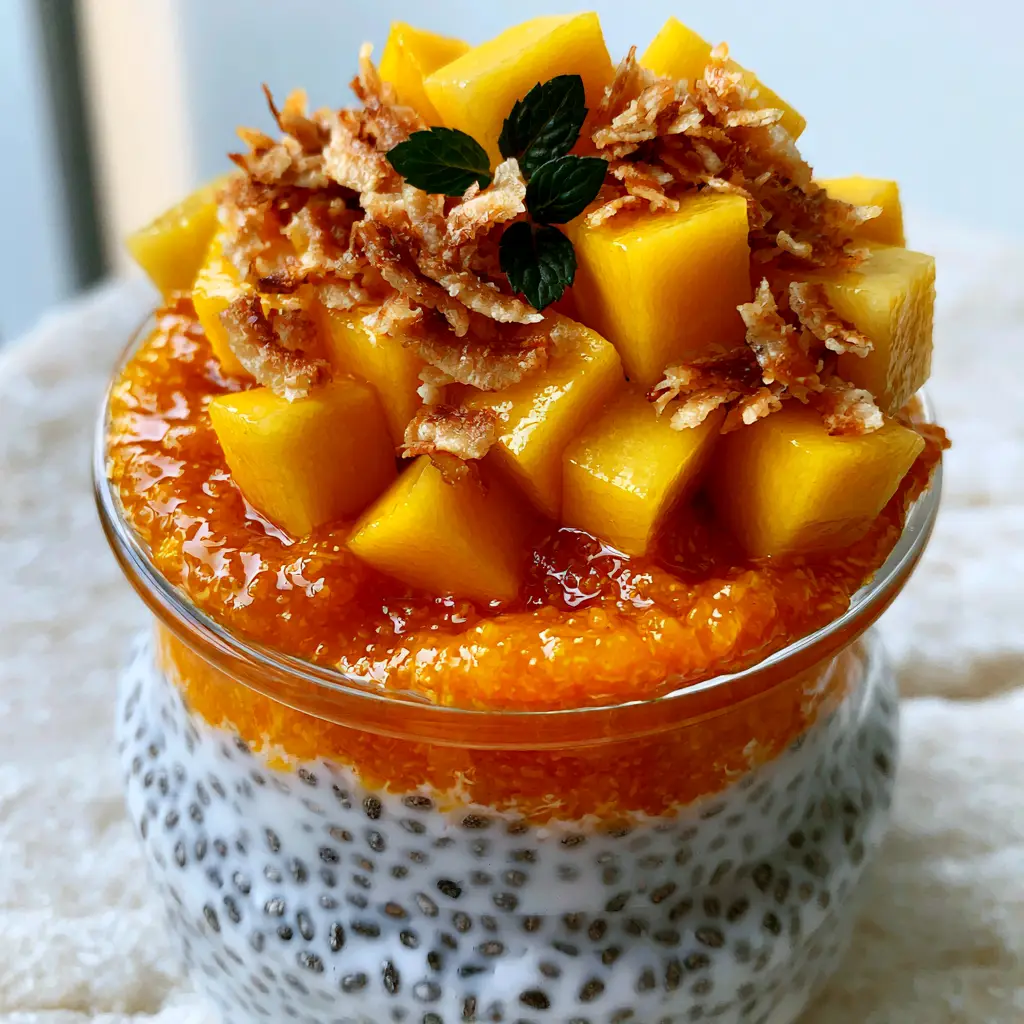
The Anatomy of the Perfect Tropical Parfait
To achieve the visual and textural perfection seen in professional food styling, we must understand the “why” behind every component. This isn’t just a mix-and-go recipe; it is an exercise in layering and flavor balancing.
- Ultra-Creamy Foundation: We use full-fat canned coconut milk to ensure a “thick, ultra-creamy” base that stays suspended and doesn’t separate.
- Vibrant Visual Contrast: The transition from the stark white pudding to the deep orange mango puree is the hallmark of a high-end cafe breakfast.
- Triple Mango Threat: By using mango in two forms—a smooth, glossy coulis and fresh, hand-cut cubes—we maximize the fruit’s floral notes.
- Toasted Textures: The golden-brown coconut flakes aren’t just a garnish; they provide a nutty, toasted aroma that cuts through the richness of the coconut milk.
The Tropical Toolkit: Essential Ingredients and Their Science
Every ingredient in this Mango Chia Pudding has been selected to match our visual blueprint while ensuring structural integrity. Here is what you will need to gather for your mise en place.
The Hydration Elements
Black Chia Seeds: 1/4 cup (40g). These tiny powerhouses can absorb up to 10-12 times their weight in liquid. We use black seeds specifically for the visual “speckled” look against the white coconut background.
Full-Fat Canned Coconut Milk: 1 cup (240ml). Unlike the thin milk found in cartons, canned coconut milk contains the necessary fat solids to create a “thick, ultra-creamy” mouthfeel that mimics a traditional custard.
Pure Maple Syrup: 1 tbsp (15ml). A natural sweetener that dissolves instantly in cold liquid, providing a subtle caramel undertone without the grittiness of granulated sugar.
Vanilla Bean Paste or Extract: 1 tsp (5ml). This “invisible” ingredient bridges the floral notes of the mango with the nuttiness of the coconut. If using paste, you will see tiny black flecks that add to the premium look.
Fine Sea Salt: A pinch. Scientifically, salt suppresses bitterness and enhances the perception of sweetness, making the mango flavor “pop.”
The Mango Layers
Ripe Honey Mangoes (Ataulfo): 2 large mangoes. Known for their buttery, non-fibrous texture and deep yellow hue, these are the gold standard for purees and cubing.
Fresh Lime Juice: 1 tsp (5ml). Added to the puree, the acidity prevents oxidation, ensuring that “vibrant orange” color remains bright even after 24 hours in the fridge.
The Final Flourish
Unsweetened Coconut Flakes: 2 tbsp (10g). We will toast these until “golden-brown” to add a savory, smoky dimension to the sweet fruit.
Fresh Mint Leaves: 3 tiny leaves per jar. The dark green provides the final color contrast against the bright yellow mango, while the scent adds a refreshing top note as you take your first bite.
Equipment for a Professional Finish
While you don’t need a commercial kitchen, a few specific tools will help you achieve the “sleek glass jar” aesthetic seen in our reference photo.
Wide-Mouth Glass Jars (8oz/240ml): These allow for clear, distinct layering. A wide mouth makes it easier to place the mango cubes and mint leaves without smudging the sides of the glass.
High-Speed Blender or Food Processor: Essential for creating a “glossy, deep orange mango puree” that is completely smooth and free of lumps.
Small Skillet: For toasting the coconut flakes. This allows you to monitor the color change in real-time to avoid burning.
Silicone Spatula: To ensure you incorporate all the chia seeds from the bottom of the bowl during the initial “swell” phase.
The Layer-by-Layer Guide to Assembling Your Masterpiece
Achieving the perfect Mango Chia Pudding requires a two-stage process: the hydration phase and the assembly phase. Follow these steps for a result that looks exactly like a professional food styling shot.
Step 1: The Initial Hydration
In a medium mixing bowl, whisk together the 1 cup (240ml) of coconut milk, 1 tbsp (15ml) maple syrup, vanilla, and the pinch of salt. Once combined, pour in the 1/4 cup (40g) of black chia seeds.
The Pro Secret: Whisk vigorously for two minutes, let it sit for five minutes, and then whisk again. This “double-whisk” method prevents the seeds from clumping at the bottom, ensuring they are “suspended” throughout the creamy liquid.
Cover and refrigerate for at least 4 hours, or ideally overnight. You will know it’s ready when the mixture has transformed into a thick, spoonable pudding and the seeds look plump and translucent around the edges.
Step 2: Crafting the Vibrant Mango Coulis
Take one of your honey mangoes and slice the flesh away from the pit. Scoop the fruit into your blender and add the 1 tsp (5ml) of lime juice. Blend on high until the mixture is “vibrant and glossy.”
If your mango is slightly fibrous, pass the puree through a fine-mesh sieve. This ensures that “deep orange” layer is perfectly smooth against the white pudding. Chill this puree until you are ready to assemble.
Step 3: The Art of the Cube and Toast
While the pudding sets, take your second mango and cut it into “perfectly cubed” pieces. Aim for 1/2-inch (1.25cm) squares. The uniformity of the cubes is what gives the dish its “professional food styling” appeal.
Place your coconut flakes in a dry skillet over medium-low heat. Shake the pan constantly. Watch for the edges to turn a “toasted golden-brown.” This happens quickly (usually 2-3 minutes), so do not walk away! Remove from heat immediately once they smell like toasted macaroons.
Step 4: Precision Assembly
To achieve the “layered” look, start by spooning the thick white chia pudding into the bottom half of your glass jars. Use the back of a spoon to level the surface.
Carefully pour the mango puree over the pudding layer. If you want a sharp line, pour the puree over the back of a spoon to break its fall. Finally, crown the top with a “generous pile” of the mango cubes, a sprinkle of toasted coconut, and those three “tiny dark green mint leaves.”
Expert Tips for Success
- The Milk Temperature Matters: Ensure your coconut milk is at room temperature before whisking. If it’s too cold, the coconut fats might clump before the chia seeds have a chance to hydrate.
- Selecting the Mango: Look for mangoes that give slightly to pressure and have a fragrant, fruity aroma at the stem. For the best creamy mango lassi or pudding, ripeness is non-negotiable.
- Preventing “The Sink”: If your mango cubes are sinking into the puree, your chia pudding might be too thin. Ensure it has chilled for at least 4 hours to provide a firm foundation.
- Color Maintenance: The lime juice in the puree isn’t just for flavor; it keeps the orange hue “vibrant” and prevents it from turning a muddy brown color.
Storage and Meal Prep Wisdom
The Mango Chia Pudding is a meal-prepper’s dream, but it does have a shelf life if you want to maintain the “vibrant tropical colors.”
Refrigeration: The assembled jars will stay fresh for up to 3 days. However, the toasted coconut flakes will lose their crunch after the first day. For the best experience, store the toasted coconut in a small container at room temperature and add it just before serving.
Freezing: You can freeze the chia pudding base and the mango puree separately for up to 3 months. Thaw in the fridge overnight before assembling with fresh mango cubes. Do not freeze the fully assembled jar, as the fresh mango and mint will become mushy upon thawing.
What to Serve With This Tropical Delight
This pudding is a complete breakfast on its own, but it also pairs beautifully with other vibrant dishes. If you are hosting a brunch, consider serving it alongside a crisp refreshing cucumber salad to balance the richness of the coconut milk.
For a more savory contrast, these crispy zucchini fritters offer a salty crunch that complements the sweet mango. If you’re looking for more light lunch inspiration, check out our creative adult lunchable ideas which often feature fresh fruit pairings similar to this recipe.
Frequently Asked Questions
You can, but the result will be much thinner. For that ultra-creamy, thick texture shown in the photos, full-fat canned coconut milk is essential because of its high fat content and solids.
Yes, you can use thawed frozen mango for the glossy puree layer. However, I highly recommend using fresh honey mangoes for the cubed topping to maintain the best texture and visual appeal.
The secret is the ‘double-whisk’ method. Whisk the chia seeds into the coconut milk, let it rest for five minutes, and then whisk again vigorously before refrigerating. This ensures the seeds are evenly suspended.
For the best texture, the chia seeds need at least 4 hours to fully hydrate. For a truly thick and ‘swollen’ seed appearance, prepping the jars the night before is ideal.
Absolutely! It is packed with Omega-3 fatty acids and fiber from the chia seeds, healthy fats from the coconut, and Vitamin C from the fresh mango, all with no refined sugars if you use pure maple syrup.
The Ultimate Mango Chia Pudding Recipe Card
Mango Chia Pudding: A Creamy Tropical Escape in a Jar
Ingredients
Equipment
Method
- Whisk coconut milk, maple syrup, vanilla, and salt in a bowl. Add chia seeds and whisk vigorously for 2 minutes.
- Let rest for 5 minutes, whisk again to prevent clumping, then cover and refrigerate for 4+ hours.
- Blend one mango with lime juice until it becomes a vibrant, glossy, deep orange puree.
- Dice the second mango into uniform 1/2-inch cubes for the topping.
- Toast coconut flakes in a dry skillet over medium-low heat until golden-brown and fragrant.
- Spoon chia pudding into jars, top with mango puree, cubed mango, toasted coconut, and mint leaves.
Notes
If the pudding is too thick, stir in a tablespoon of almond milk before assembling.
Closing & Call to Action
This Mango Chia Pudding is more than just a quick meal; it is a vibrant, nutrient-packed start to your day that brings a slice of the tropics into your kitchen. The combination of “ultra-creamy” coconut, “vibrant orange” puree, and “toasted golden” coconut creates a sensory experience that is as satisfying to eat as it is to look at.
We would love to see your creations! Did you manage to get those perfect layers? Let us know in the comments below or tag us in your photos. Don’t forget to save this recipe to your “Healthy Breakfast” board on Pinterest so you can find it whenever the tropical cravings hit!