When you step into a bustling kebab house in Istanbul, the first thing to greet you isn’t just the smell of charbroiled meat, but the vibrant, ruby-red presence of Turkish onion salad. This isn’t your standard raw onion garnish; it is a transformation of humble ingredients into a zesty, supple, and deeply savory accompaniment. The sight of paper-thin, translucent half-moons stained a deep crimson by ground sumac is enough to make any food lover’s mouth water.
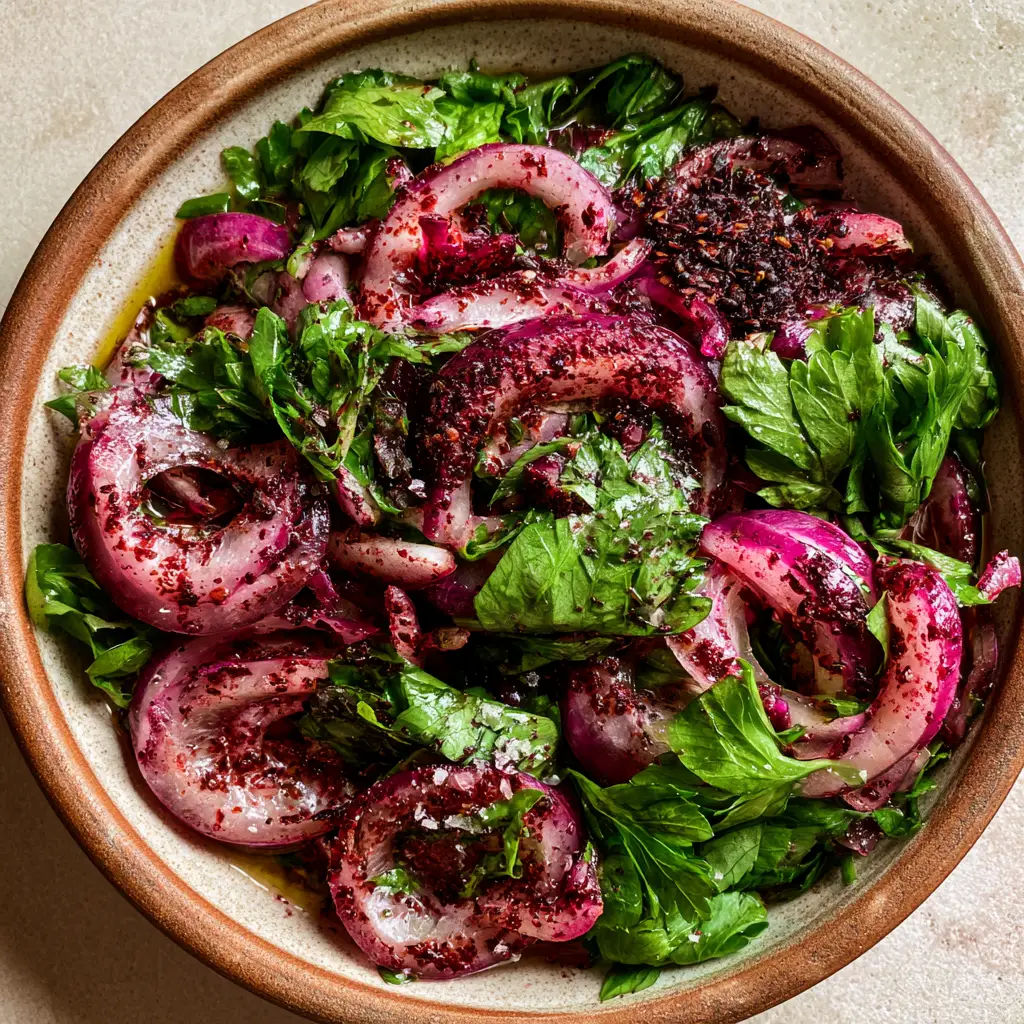
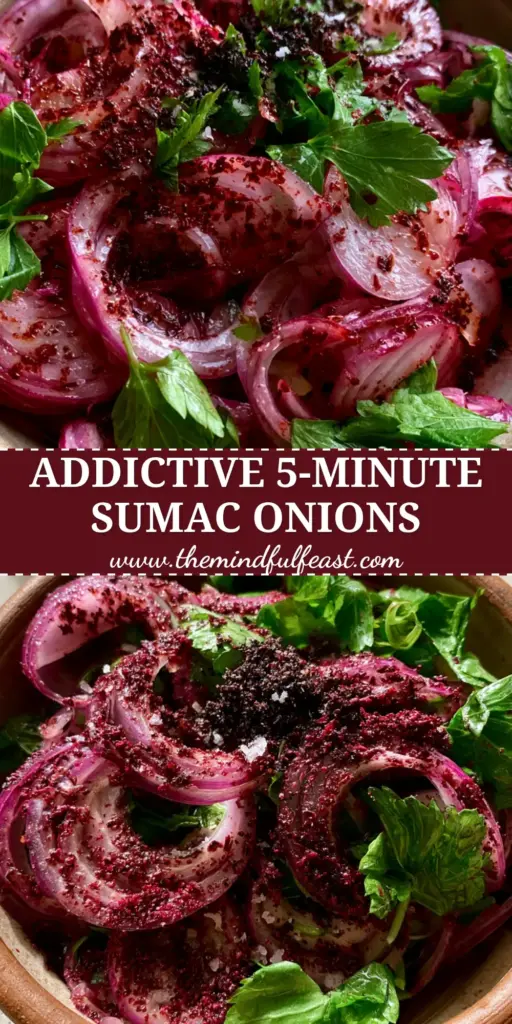
Our authentic version captures the exact visual and sensory profile found in the most rustic Anatolian kitchens. Imagine a rustic earthenware bowl, catching the soft glow of afternoon sunlight, filled with onions that have been massaged until they lose their harsh bite. The emerald green of freshly torn flat-leaf parsley contrasts beautifully against the deep ruby-red grains of sumac. Every slice glistens with a coating of premium extra virgin olive oil and the bright droplets of fresh lemon juice.
Whether you are serving this alongside a charred lamb skewer or using it to brighten up a simple lunchtime wrap, this Turkish onion salad is a masterclass in balance. It provides the necessary acidity to cut through fats and a crunch that remains sophisticated rather than aggressive. Let’s dive into the culinary science and traditional techniques required to achieve this masterpiece at home.
The Visual and Flavor Profile of Authentic Sumaklı Soğan
- Textural Contrast: The onions are massaged until supple and slightly translucent, yet they retain a delicate, refreshing crunch.
- Chromatic Brilliance: A heavy dusting of high-quality sumac provides a deep ruby-red stain that coats every fiber of the onion.
- Herbal Freshness: Roughly torn leaves of bright emerald flat-leaf parsley provide a peppery finish and visual pop.
- Zesty Emulsion: A simple yet effective dressing of extra virgin olive oil and lemon juice creates a visible glisten on every ingredient.
- Artisanal Finish: Stray grains of flaky sea salt and an extra pinch of dark sumac provide the final forensic touch of authenticity.
The Essential Components for a Vibrant Onion Base
Large Red Onions: We use red onions specifically for their natural sweetness and their ability to hold the deep red pigment of the sumac. When sliced into paper-thin half-moons, they become the perfect vessel for absorbing the dressing without becoming mushy.
Ground Sumac (The Star Ingredient): This spice is derived from dried and ground berries of the sumac flower. It offers a unique, tart, and almost citrusy flavor profile that is absolutely non-negotiable for an authentic Turkish onion salad.
Fresh Flat-Leaf Parsley: Unlike curly parsley, flat-leaf (Italian) parsley offers a more robust flavor and a better mouthfeel. We tear or roughly chop the leaves to maintain their structural integrity and vibrant emerald color.
Extra Virgin Olive Oil: This provides the “glisten” described in the visual blueprint. Use a high-quality oil with peppery notes to complement the sharpness of the onions.
Fresh Lemon Juice: The acid in the lemon juice works in tandem with the sumac to further soften the onions and brighten the overall flavor profile. It should be squeezed fresh just before serving to maintain its enzymatic punch.
Fine Sea Salt (For Massaging): This is a “foundational invisible ingredient.” The salt draws out moisture from the onion cells, breaking down their rigid structure to make them supple.
Flaky Sea Salt (For Finishing): These larger crystals provide a targeted burst of salinity and a beautiful visual garnish that catches the light in your earthenware bowl.
Must-Have Tools for the Professional Home Cook
To achieve the paper-thin, translucent half-moons required for this dish, a sharp Chef’s Knife or a Mandoline Slicer is essential. Uniformity in slicing ensures that every piece of onion massages at the same rate, preventing some pieces from being too crunchy while others are too soft.
A Rustic Earthenware Bowl isn’t just for aesthetics; the porous nature of ceramic can help keep the salad cool. You will also need a large mixing bowl to perform the “onion massage” comfortably without spilling the ingredients.
Mastering the Art of the Onion Massage
Step 1: The Precision Cut
Begin by peeling your red onions and cutting them in half from root to stem. Place the flat side down on your cutting board and slice into paper-thin half-moons. The goal is translucency; you should almost be able to see the blade of your knife through the onion slice.
Step 2: The Softening Massage
Place the sliced onions in a bowl and sprinkle with 1 tsp (5g) of fine sea salt. Use your hands to firmly but carefully massage the onions for about 2 to 3 minutes. You will feel the onions transition from stiff and brittle to supple and flexible. If you prefer a milder flavor, you can rinse the onions under cold water at this point and pat them dry, though many purists skip this step to retain the onion’s soul.
Step 3: Staining with Ruby Sumac
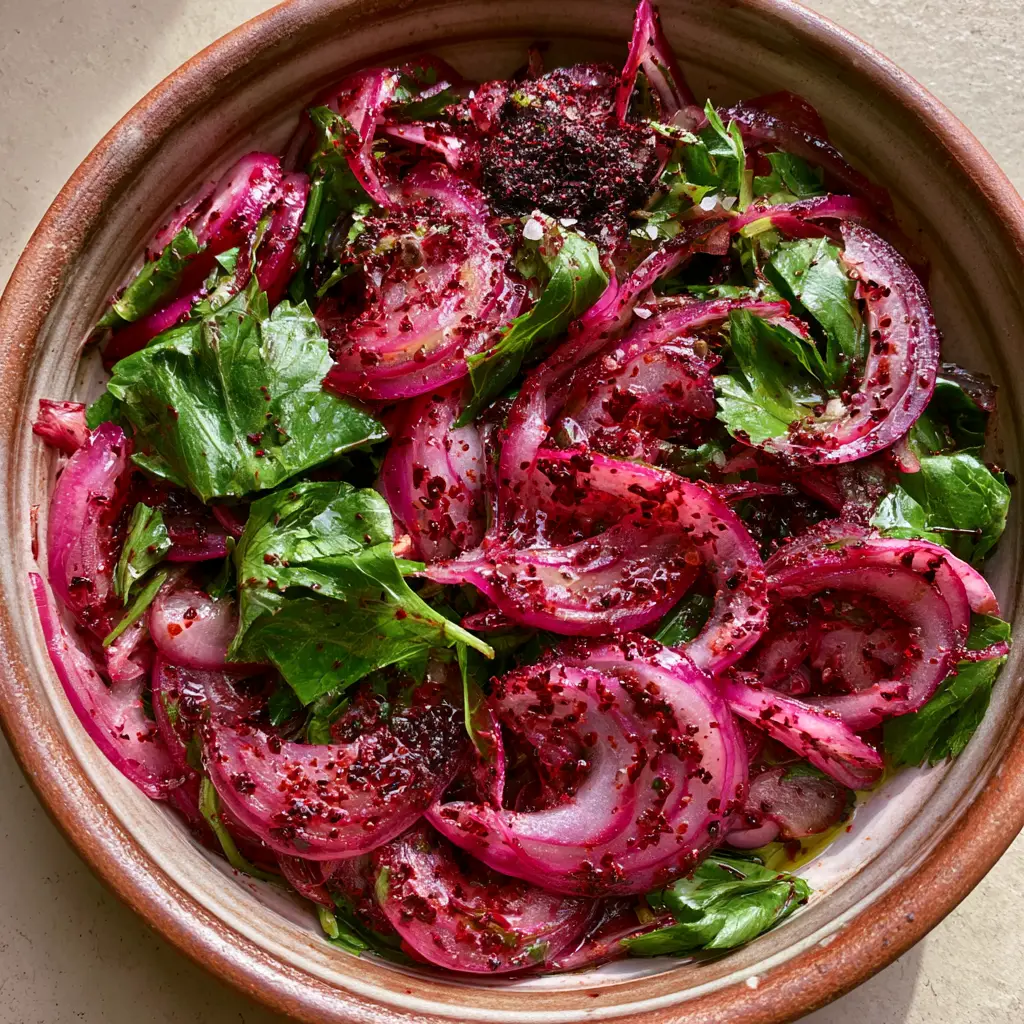
Add the ground sumac to the massaged onions. Toss vigorously until the onions are no longer pink but have taken on a deep, dark ruby-red hue. The sumac should appear grainy and well-distributed, coating every surface of the onion half-moons.
Step 4: Incorporating the Emerald Greens
Roughly chop or tear your fresh flat-leaf parsley. Add it to the bowl, ensuring a generous ratio of green to red. The leaves should look like “large, fresh torn leaves” rather than a fine mince, providing a rustic texture that matches our visual prompt.
Step 5: The Final Glisten
Drizzle the extra virgin olive oil and fresh lemon juice over the mixture. Toss gently to combine, ensuring every leaf and onion slice is glistening. Transfer the salad to your earthenware bowl and finish with a stray garnish of flaky sea salt and a final pinch of dark sumac powder.
Expert Tips for a Perfectly Balanced Salad
- Sumac Quality Matters: Look for sumac that is deep crimson rather than brownish. The fresher the spice, the more vibrant the “ruby-red” stain will be on your onions.
- Don’t Over-Massage: While we want the onions to be supple, we don’t want them to lose all their texture. Stop as soon as they become flexible and start to release their juices.
- Temperature Control: Serve this salad at room temperature to allow the flavors of the olive oil and sumac to bloom, but ensure the onions were chilled before slicing for the crispest results.
- The “Bitter” Fix: If your red onions are particularly pungent, a quick 10-minute soak in ice water after slicing (but before massaging) can help mellow the sulfur compounds.
Optimal Storage and Meal Prep Advice
Turkish onion salad is best enjoyed within an hour of preparation to maintain the vibrant contrast between the crunchy onions and the fresh parsley. However, leftovers can be stored in an airtight container in the refrigerator for up to 2 days.
Note that the parsley will wilt over time and the onions will release more liquid, losing that “glistening” quality. If you are meal prepping, store the massaged onions and the chopped parsley separately, then toss with the oil, lemon, and sumac just before serving.
Authentic Pairings: What to Serve with Sumac Onions
This salad is the ultimate companion for grilled proteins. It is traditionally served with Adana kebabs, Köfte, or grilled chicken. The acidity of the sumac onions acts as a palate cleanser between bites of rich, fatty meats.
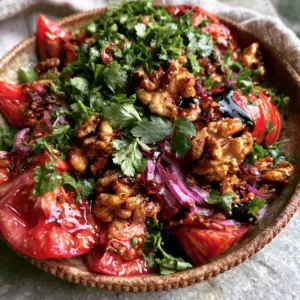
If you are looking to build a Mediterranean feast, consider serving this alongside a Gavurdağı (tomato and walnut salad) for a variety of textures. It also pairs wonderfully as a topping for a cold chicken salad wrap or as a zesty side for a spicy cucumber salad. For a more fusion-style lunch, these onions provide a fantastic acidic pop to cruncy salads or even a hearty tuscan artichoke tomato salad.
Frequently Asked Questions
Sumac has a unique tangy, earthy flavor that is essential for authenticity. If you cannot find it, a mix of lemon zest and a pinch of paprika can mimic the acidity and color, but the flavor will not be identical.
After slicing the onions, soak them in ice-cold water for 10-15 minutes. Drain and pat them dry thoroughly before proceeding with the salt massage to remove excess sulfur.
It is best served within 1 hour. However, it will keep in the fridge for up to 2 days, though the parsley will wilt and the onions will release more juice over time.
No. While sometimes confused, Piyaz is traditionally a Turkish bean salad that often includes onions, whereas Sumaklı Soğan is a dedicated onion and sumac salad usually served as a garnish or side.
Massaging the onions with salt breaks down their cell walls, removing the harsh raw bite and making them supple and translucent while maintaining a pleasant crunch.
The Ultimate Turkish Onion Salad Recipe
Turkish onion salad: The Authentic Sumac Onion Recipe (Sumaklı Soğan)
Ingredients
Equipment
Method
- Slice the red onions into paper-thin, translucent half-moons using a mandoline or sharp knife.
- Place onions in a bowl with fine sea salt. Massage by hand for 2-3 minutes until they become supple and slightly translucent.
- Add ground sumac and toss until the onions are heavily stained a deep ruby-red.
- Fold in the torn flat-leaf parsley leaves.
- Drizzle with olive oil and lemon juice. Toss to create a glisten, then garnish with flaky sea salt and an extra pinch of sumac.
Notes
Massage the onions just until they lose their rigidity; don't overwork them into mush.
Closing Thoughts on this Mediterranean Classic
Turkish onion salad is a testament to the power of simple ingredients treated with the right technique. By mastering the onion massage and using high-quality sumac, you bring a piece of Turkish culinary heritage into your kitchen. The vibrant colors and bold flavors are guaranteed to impress your guests and elevate your next BBQ or dinner party.
We would love to see your recreations of this rustic dish! Leave a comment below telling us what you served your sumac onions with, and don’t forget to share your photos and pin this recipe to your favorite boards on Pinterest. For more Mediterranean inspiration, subscribe to our newsletter and never miss a zesty update!