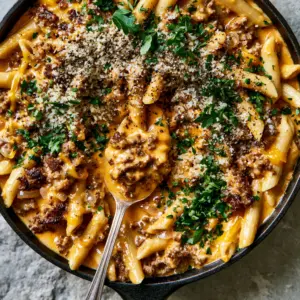
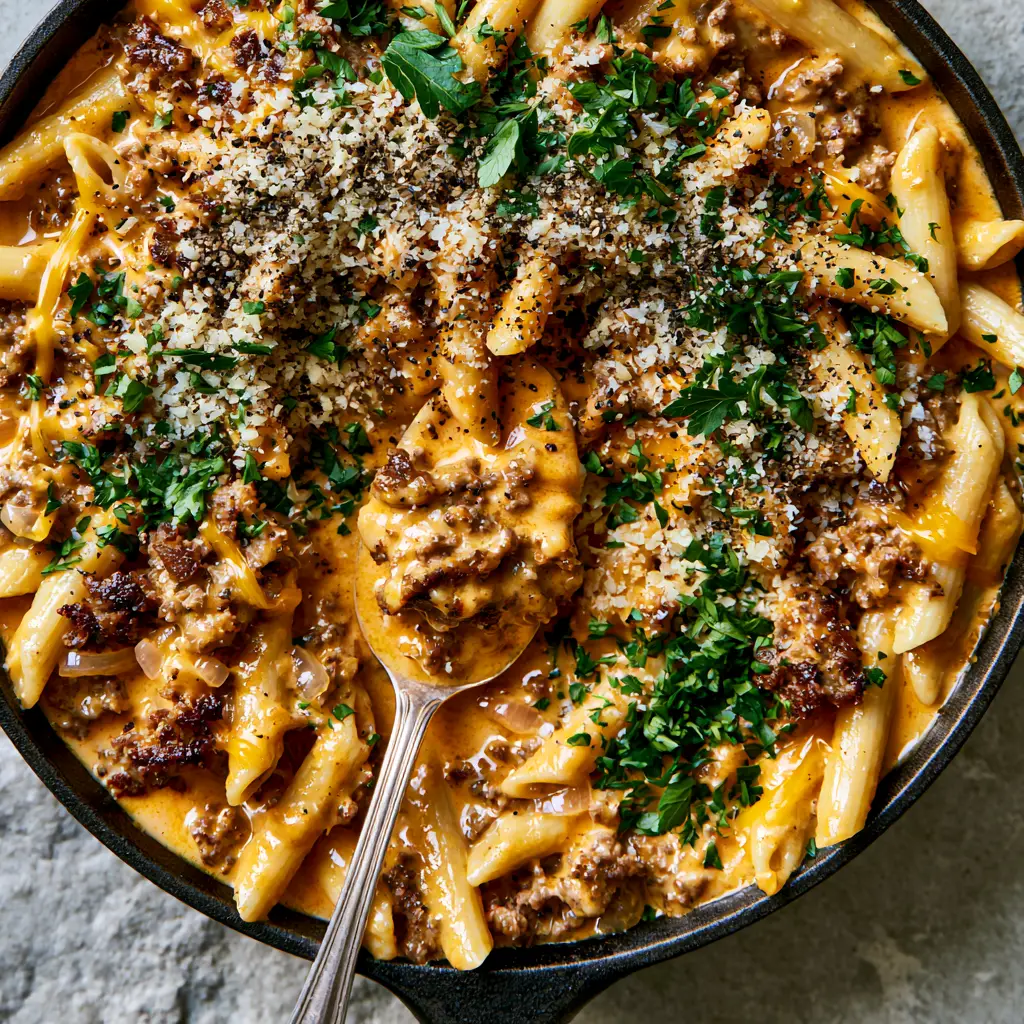
There is something inherently soul-warming about a creamy beef pasta that has been cooked to perfection in a seasoned cast iron skillet. When the heavy cream hits the rendered fat of well-seared beef, it creates a glossy, orange-tinted emulsion that clings to every ridge of the penne pasta. This isn’t just a quick weeknight meal; it is a study in texture, from the snap of al dente pasta to the delicate strings of melted sharp cheddar cheese.
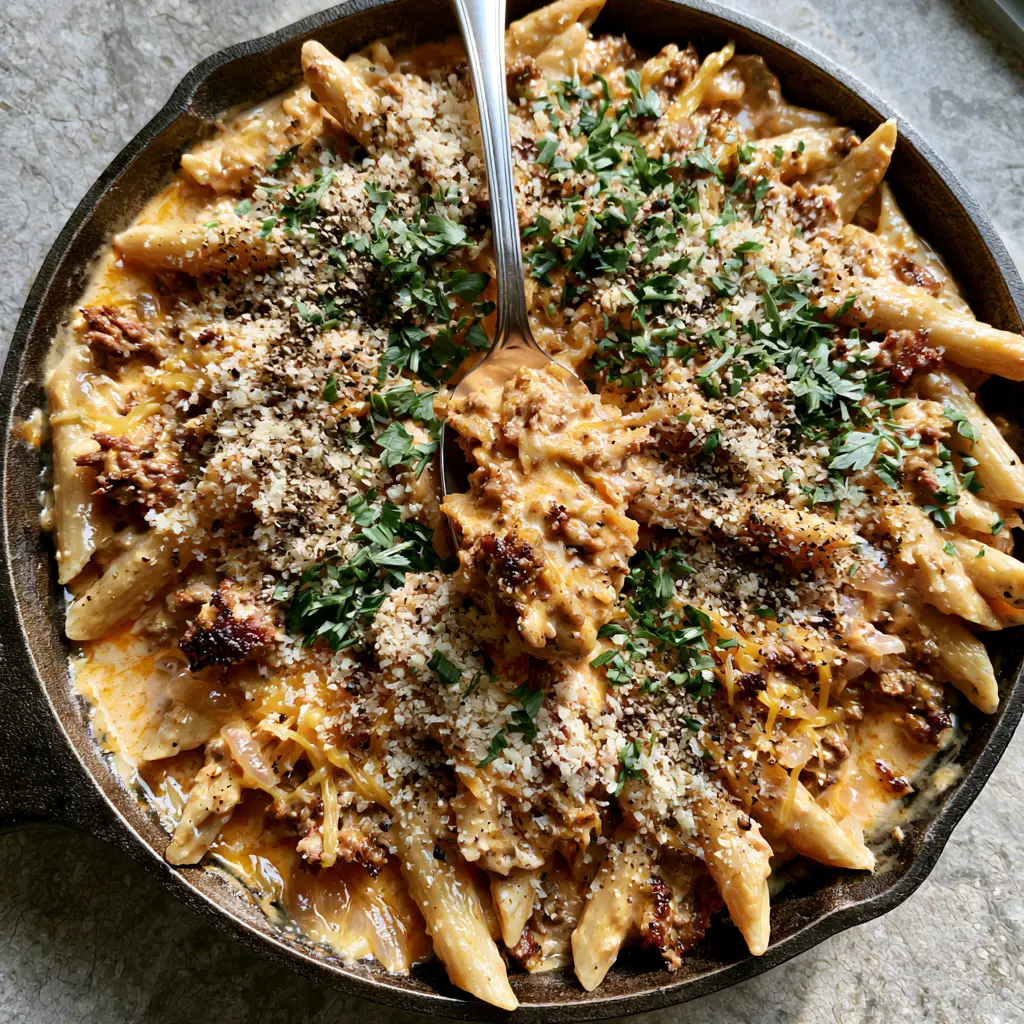
As you gaze into the skillet, you see the forensic details of a masterfully constructed dish: the vibrant scatter of finely chopped fresh flat-leaf parsley against the deep matte black of the pan, and the heavy dusting of finely grated parmesan that begins to melt on contact. Every bite is punctuated by the sharp heat of freshly cracked coarse black pepper, cutting through the richness of the dairy. Whether you are cooking for a hungry family or looking to master the art of the pan-sauce, this recipe delivers a sensory experience that rivals any high-end bistro.
The Anatomy of a Perfect One-Pan Masterpiece
- Shatteringly Crisp Beef: We don’t just “brown” the meat; we sear the ground beef crumbles until a deep mahogany crust forms, ensuring maximum flavor through the Maillard reaction.
- The “Silk Factor” Sauce: A thick, orange-tinted cream sauce achieved through the marriage of high-fat dairy and the golden pigments of sharp cheddar.
- Textural Contrast: Soft, translucent sautéed onions provide a subtle sweetness that balances the savory, salt-forward profile of the parmesan and beef.
- Al Dente Precision: Using penne rigate (with ridges) ensures the sauce is trapped inside and out, providing a satisfying “bite” in every mouthful.
The Ultimate Pantry List for Skillet Success
To achieve the visual and flavorful results seen in our professional kitchen, each ingredient must be selected with intention. Here is what you will need to gather for this creamy beef pasta masterpiece.
Ground Beef: Use 1 lb (450g) of 80/20 lean-to-fat ratio ground beef. The higher fat content is essential for searing the crumbles to a crisp and providing the base for our roux-less cream sauce.
Penne Pasta: You will need 1 lb (450g) of dried penne pasta. Ensure it is cooked in heavily salted water to a firm al dente state, as it will continue to soften slightly once tossed in the hot cream sauce.
Heavy Cream: 2 cups (480ml) of full-fat heavy cream. This provides the “silkiness” mentioned in our blueprint and ensures the sauce stays stable without breaking.
Sharp Cheddar Cheese: 1.5 cups (150g) of freshly shredded sharp cheddar. Avoid the pre-shredded bags; the cellulose coating prevents the cheese from creating those iconic, elastic “strings.”
Parmesan Cheese: 0.5 cup (50g) of finely grated parmesan. This acts as a seasoning agent, providing a salty, umami-rich finish to the dish.
Yellow Onion: 1 medium (approx. 150g) yellow onion, finely diced. We cook these until they are translucent and glassy, allowing their flavor to melt into the background of the sauce.
Tomato Paste: 1 tbsp (15g) of concentrated tomato paste. This is the secret to the orange-tinted hue and adds a necessary acidic backbone to the rich dairy.
Fresh Herbs & Seasoning: 1 bunch (approx. 30g) of flat-leaf parsley, 1 tbsp (6g) of coarse black pepper, and 1 tsp (6g) of kosher salt. The parsley must be chopped finely to provide that “vibrant scatter” seen in the skillet.
Foundational Fats: 1 tbsp (15ml) of extra virgin olive oil or neutral oil. This is used strictly to jumpstart the beef searing process before the natural fats render out.
Essential Equipment for the Modern Home Cook
The centerpiece of this recipe is a 12-inch (30cm) rustic matte black cast iron skillet. Cast iron is superior for this dish because its heat retention allows for a consistent sear on the beef and keeps the cream sauce at a gentle, steady simmer. You will also need a heavy-duty silver spoon for serving and stirring, a microplane for the finely grated parmesan, and a high-quality pepper mill to achieve the coarse grind required for the finish.
Your Masterclass in One-Pan Culinary Execution
Searing the Beef Crumbles to Perfection
Place your cast iron skillet over medium-high heat and add the 1 tbsp (15ml) of oil. Once the oil begins to shimmer and a light wisp of smoke appears, add the 1 lb (450g) of ground beef. Do not crowd the pan; use a wooden spoon to break the meat into small, irregular crumbles.
Resist the urge to stir immediately. Let the beef sit undisturbed for 3-4 minutes until a deep golden-brown crust forms on the bottom. Flip and continue to cook until the beef is fully browned and crisp. Remove the beef with a slotted spoon, leaving the rendered fat in the pan.
Developing the Translucent Onion Base
Lower the heat to medium. Add the finely diced onion to the beef fat. Sauté for 5-7 minutes. You are looking for a specific visual cue: the onions should turn from opaque white to a soft, glassy translucence without taking on any brown color. Stir in the 1 tbsp (15g) of tomato paste and cook for 1 minute until the oil turns a bright orange-red.
Constructing the Glossy Cream Sauce
Pour in the 2 cups (480ml) of heavy cream. Use your spoon to scrape the bottom of the skillet, releasing all the browned bits (fond) from the beef. This is where the flavor lives. Bring the liquid to a gentle simmer—look for small, lazy bubbles around the edges. Do not let it reach a rolling boil, or the cream may separate.
Integrating the Cheese and Pasta
Add the al dente penne pasta directly to the skillet. Sprinkle in the 1.5 cups (150g) of sharp cheddar cheese. Fold the pasta and cheese into the warm cream. As the cheddar melts, you will see those signature cheese strings forming, and the sauce will take on a thick, rich, orange-tinted consistency. If the sauce is too thick, add 1/4 cup (60ml) of reserved pasta water.
The Final Flourish and Garnishing
Turn off the heat. This is the moment for the “forensic” finishing touches. Sprinkle the 0.5 cup (50g) of finely grated parmesan evenly over the top. Follow with a generous dusting of the 1 tbsp (6g) of freshly cracked coarse black pepper. Finally, scatter the finely chopped fresh flat-leaf parsley across the surface. The heat from the pasta will wake up the oils in the parsley, releasing a fresh, grassy aroma.
Pro Secrets for a Restaurant-Quality Finish
- The Water Reserve: Always save a cup of your pasta cooking water. The starches in the water help emulsify the cream and cheese, creating a smoother sauce if the skillet starts to look dry.
- Temperature Control: If you add cheese to boiling liquid, it can become grainy. Always lower the heat before folding in your cheddar and parmesan for a silky result.
- The Maillard Factor: If your beef looks grey, the pan wasn’t hot enough. Wait for the oil to shimmer before adding the meat to ensure those savory browned crumbles.
- Pepper Precision: Use a coarse setting on your pepper grinder. The large “flecks” of pepper provide pops of heat rather than a muted spiciness throughout the dish.
Proper Storage and Reheating Protocols
This creamy beef pasta is best enjoyed immediately while the cheese is at its peak elasticity. However, if you have leftovers, store them in an airtight container in the refrigerator for up to 3 days. To reheat, add a splash of milk or water to the pasta before microwaving or heating on the stovetop. This moisture is necessary to “loosen” the sauce, as the pasta will absorb the cream as it sits.
We do not recommend freezing this dish, as the high dairy content in the cream sauce tends to separate and become grainy upon thawing.
What to Serve With This Skillet Dinner
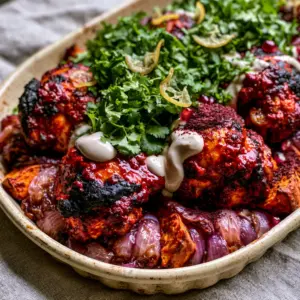
This is a heavy, indulgent meal, so it pairs beautifully with bright, acidic side dishes. A simple arugula salad with a lemon vinaigrette works wonders to cleanse the palate between bites of rich cheddar sauce. While this skillet meal is a household favorite, sometimes we crave the aromatic heat of spicy Moroccan harissa chicken for a different flavor profile.
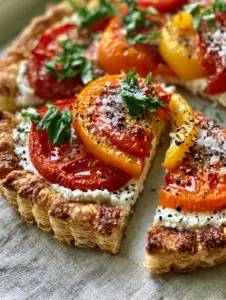
If you’re hosting a brunch or a multi-course dinner, a flaky tomato tart makes for a stunning, light side dish that complements the beefy notes of the pasta. Crusty sourdough bread is also a must for swiping up every last drop of that orange-tinted sauce from the bottom of your cast iron skillet.
Frequently Asked Questions
Yes, but we recommend shapes with ridges like penne rigate, fusilli, or rigatoni. These ridges are essential for ‘grabbing’ the thick cream sauce.
The orange hue comes from a combination of concentrated tomato paste sautéed with the onions and the natural pigments found in high-quality sharp cheddar cheese.
While any heavy-bottomed pan works, cast iron provides superior heat retention for searing the beef and maintains a steady temperature for emulsifying the cream and cheese.
Reheat it slowly on the stovetop with a splash of milk or cream. This restores the moisture that the pasta absorbs while sitting in the refrigerator.
Grainy sauce is usually caused by adding pre-shredded cheese (which contains anti-clumping starch) or by adding cheese to a boiling liquid. Always use freshly grated cheese and lower the heat to a simmer before mixing.
The Ultimate Creamy Beef Pasta Recipe
Creamy Beef Pasta with Sharp Cheddar and Seared Beef Crumbles
Ingredients
Equipment
Method
- Heat oil in the skillet over medium-high. Add ground beef and sear undisturbed for 4 minutes until a dark crust forms. Break into crumbles and finish cooking.
- Remove beef. Add onions to the fat. Cook until translucent and glassy. Stir in tomato paste for 1 minute.
- Add heavy cream and deglaze the pan. Bring to a light simmer.
- Fold in cooked penne and sharp cheddar. Stir until the sauce is glossy and the cheese forms strings.
- Top with finely grated parmesan, coarse black pepper, and chopped parsley. Serve directly from the skillet.
Notes
Save 1/4 cup of pasta water to adjust sauce thickness if needed.
Closing & Call to Action
Mastering this creamy beef pasta is a rite of passage for any home cook looking to elevate their comfort food game. The combination of seared beef, sharp cheddar, and that glossy, silky sauce creates a dish that is as visually stunning as it is delicious. If you enjoyed this recipe, please leave a comment below and tell us how your skillet turned out! Don’t forget to share your photos and follow us on Pinterest for more culinary inspiration.