When you crave the ultimate comfort food, nothing rivals a traditional smothered pork chops recipe. This dish is defined by its deep, dark golden-brown seared crust and a pool of glossy, thick, mahogany-colored gravy. It is the kind of meal that stops time, inviting you to savor every translucent sliver of caramelized onion and every flake of coarse cracked black pepper.
Imagine standing in your kitchen, the soft natural daylight hitting your well-seasoned matte black cast iron skillet. As you lift your phone to snap a photo, the highlights dance off the surface of a sauce so rich it looks like liquid silk. This recipe isn’t just about feeding a family; it is about mastering the art of the sear and the science of the roux to create a visual and culinary masterpiece.
Achieving this specific visual result—a single, thick, bone-in pork chop partially submerged in a decadent onion-laden gravy—requires precision. We are moving beyond basic frying into the realm of professional deglazing and slow-braising techniques. Let’s dive into how to create this restaurant-quality dish in your own home.
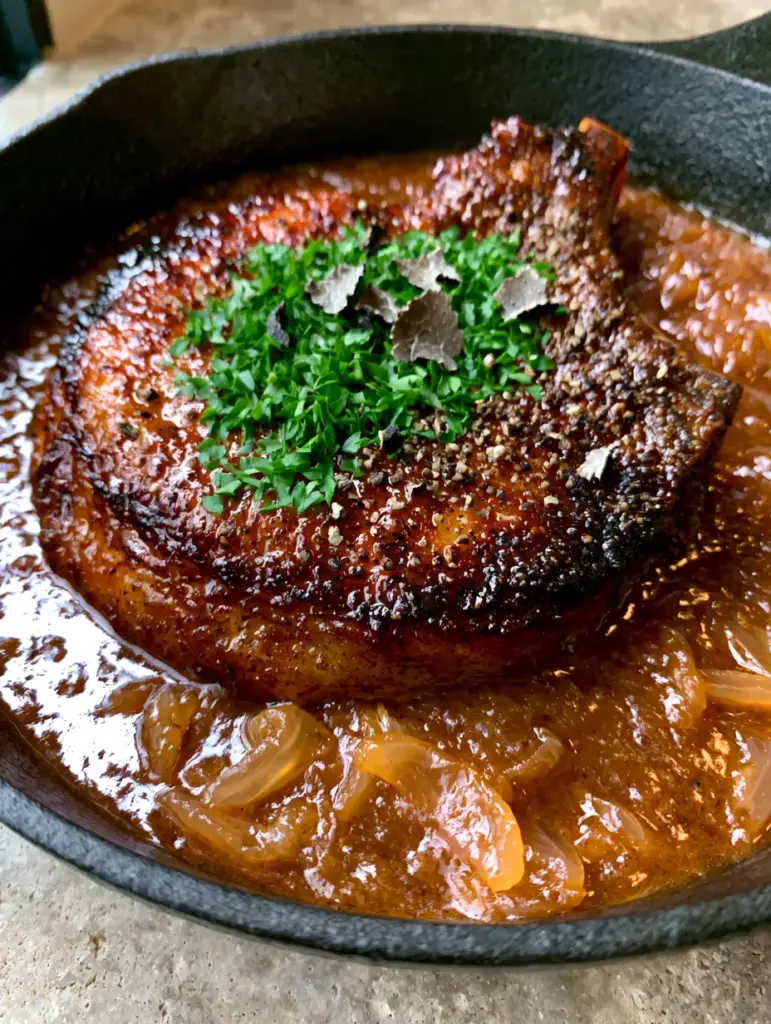
Why You Will Love This Cast Iron Classic
- Unmatched Texture: The contrast between the hard-seared mahogany crust and the tender, juicy interior of the thick bone-in chop is a sensory delight.
- The Mahogany Gravy: Unlike pale country gravies, this version uses caramelized onions and beef stock to achieve a deep, glossy brown hue that coats the back of a spoon.
- Visual Precision: Every element, from the vibrant green finely chopped parsley to the large flakes of black pepper, is designed for maximum plate appeal.
- One-Pan Simplicity: Utilizing a matte black cast iron skillet ensures even heat distribution and makes clean-up a breeze while providing the best possible sear.
Essential Components for the Perfect Smothered Pork Chops Recipe
To achieve the visual and flavor profile described in our blueprint, every ingredient serves a specific purpose. We don’t just season; we build layers of flavor that result in that signature mahogany finish.
Thick Bone-In Pork Chops: You need chops at least 1-inch (2.5cm) thick. The bone helps retain moisture during the “smothering” process and provides a structural anchor for the deep sear.
Yellow Onions: Two large yellow onions (about 500g), sliced into thin slivers. These will be cooked until translucent and softened, providing the sweet, caramelized foundation for your gravy.
Beef Stock: 2 cups (480ml) of high-quality beef stock. While chicken stock is common, beef stock is the secret to achieving that dark, mahogany-colored sauce seen in the visual prompt.
All-Purpose Flour: 3 tbsp (25g) of flour. This is the thickening agent that, when toasted in the pork fat and butter, creates the “roux” responsible for the glossy, thick texture.
Unsalted Butter: 2 tbsp (30g) of butter. Added after the sear, the milk solids in the butter help brown the onions and add a luxurious mouthfeel to the final sauce.
Fresh Flat-Leaf Parsley: 1/4 cup (10g) finely chopped. The vibrant green color provides a stark, appetizing contrast against the dark brown tones of the gravy.
Coarse Cracked Black Pepper: 1 tsp (2g) of large, visible flakes. This adds a pungent bite and a professional, “hand-crafted” aesthetic to the finished skillet.
Foundational Seasonings: 1 tsp (6g) kosher salt, 1/2 tsp (1g) garlic powder, and 2 tbsp (30ml) neutral oil (like avocado or vegetable oil) for the initial high-heat sear.
The Right Tools for a Professional Sear
The visual blueprint specifically calls for a matte black cast iron skillet, and for good reason. Cast iron has a high volumetric heat capacity, meaning once it gets hot, it stays hot. This is critical for achieving that “dark golden-brown seared crust” without overcooking the center of the meat.
You will also need a pair of heavy-duty tongs to flip the chops safely and a whisk to ensure your mahogany gravy is perfectly smooth and free of lumps. A sharp chef’s knife is essential for creating those “translucent softened slivers” of onion that define the texture of the sauce.
If you find yourself enjoying the process of preparing these fresh ingredients, you might also enjoy the precision required for a vibrant shakshuka or the delicate vegetable layering in a classic ratatouille.
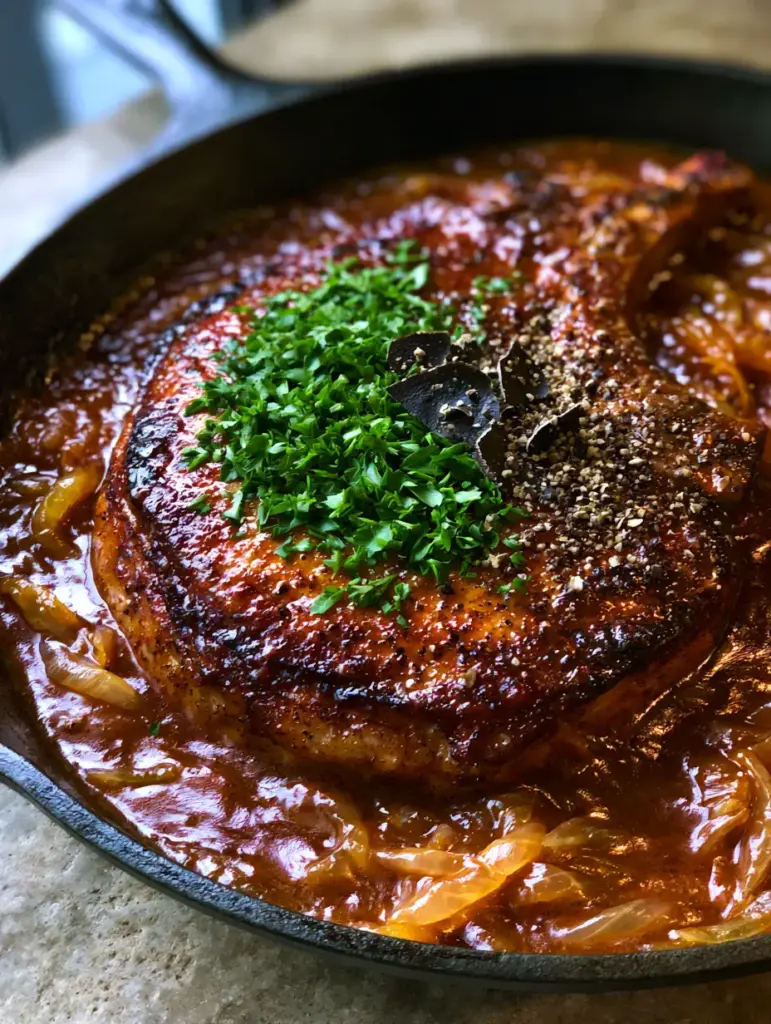
Mastering the Sear: Step-by-Step Instructions
Phase 1: Preparing and Seasoning the Meat
Pat your pork chops dry with paper towels. This is the most important step for a good sear; moisture is the enemy of the Maillard reaction. Season both sides generously with salt, garlic powder, and half of the coarse cracked black pepper.
Let the chops sit at room temperature for about 15 minutes. This prevents the muscle fibers from seizing up when they hit the hot pan, ensuring the meat remains tender through the smothering process.
Phase 2: Achieving the Mahogany Crust
Heat your matte black cast iron skillet over medium-high heat. Add the 2 tbsp (30ml) of oil. Once the oil is shimmering and just starting to wisps of smoke, carefully lay the chops into the pan away from you.
Sear for 4-5 minutes per side. Do not move them! You are looking for a deep, dark golden-brown crust. Once achieved, remove the chops from the skillet and set them aside on a plate. The interior will not be fully cooked yet, which is exactly what we want.
Phase 3: Caramelizing the Onion Slivers
Lower the heat to medium and add the 2 tbsp (30g) of butter to the remaining fat in the skillet. Toss in your yellow onion slivers. Sauté them for 8-10 minutes, stirring occasionally.
The goal is for the onions to become “translucent and softened” while picking up the brown bits (fond) from the bottom of the pan. They should look like golden ribbons before you move to the next step.
Phase 4: Crafting the Glossy Mahogany Gravy
Sprinkle the 3 tbsp (25g) of flour over the onions. Stir constantly for 2 minutes to cook out the raw flour taste. The mixture will look like a thick paste. Slowly pour in the 2 cups (480ml) of beef stock while whisking vigorously.
Bring the liquid to a simmer. As it bubbles, the sauce will thicken into a “glossy, thick, mahogany-colored gravy.” Taste the sauce and adjust the seasoning with more salt or pepper if needed.
Phase 5: The Smothering Process
Nestle the seared pork chops back into the pool of gravy in the skillet. Cover the pan (or use a large lid) and reduce the heat to low. Let the chops simmer in the sauce for 5-7 minutes.
This “smothering” allows the meat to reach a perfect internal temperature of 145°F (63°C) while absorbing the savory notes of the caramelized onions. The gravy should be thick enough to coat the chop but still remain fluid and glossy.
Expert Tips for the Ultimate Smothered Pork Chops Recipe
- Don’t Rush the Onions: True caramelization takes time. If the onions are browning too fast without softening, add a splash of water to the pan to deglaze and slow the process down.
- The Flour Secret: For an even darker gravy, cook the flour-onion mixture (the roux) until it reaches a peanut butter color before adding the stock.
- Rest the Meat: Even after cooking in the gravy, let the chops rest in the skillet for 3 minutes off the heat before serving. This allows the juices to redistribute.
- Finish with Freshness: Only add the finely chopped parsley at the very end. Its vibrancy will fade if it sits in the hot gravy for too long.
Storage, Reheating, and Freezing
This smothered pork chops recipe makes for incredible leftovers. Store any remaining chops and gravy in an airtight container in the refrigerator for up to 3 days. The gravy will thicken significantly when cold.
To reheat, place the chop and gravy back into a skillet with a splash of beef stock or water. Cover and heat over low until the sauce is glossy again and the meat is warmed through. Avoid microwaving at high power, as it can make the pork tough.
You can freeze this dish for up to 2 months. Thaw overnight in the refrigerator before following the skillet reheating method described above.
What to Serve With Mahogany Pork Chops
A dish this rich needs something to soak up the gravy. A bed of creamy mashed potatoes or a side of savory fried rice can work, though traditionalists prefer white rice or egg noodles.
To balance the richness of the mahogany sauce, consider something bright and acidic. A chilled cucumber and onion salad provides the perfect crunch and vinegar tang to cut through the savory gravy. If you want to keep the onion theme going, a savory zucchini onion pie is a wonderful textural companion.
For those looking for a complete Southern-style breakfast the next day, try serving the leftover gravy over fluffy pancakes for a savory-sweet twist, or tuck the pork into hearty breakfast burritos.
Frequently Asked Questions
You can use boneless chops, but they cook much faster and are prone to drying out. We recommend reducing the simmering time by 2-3 minutes if using boneless cuts.
While a matte black cast iron skillet provides the best heat retention for a superior crust, any heavy-bottomed stainless steel or non-stick skillet will work as long as it is oven-safe or has a tight-fitting lid.
The secret to a dark mahogany gravy is using beef stock instead of chicken stock and allowing your onions and flour to brown deeply in the cast iron skillet before adding liquid.
To ensure a smooth, glossy sauce, add your beef stock very slowly to the flour and onion mixture, whisking constantly until each addition is fully incorporated.
Pork chops usually become tough due to overcooking. Ensure you use thick, bone-in chops and use a meat thermometer to pull them at an internal temperature of 145°F (63°C).
The Final Smothered Pork Chops Recipe
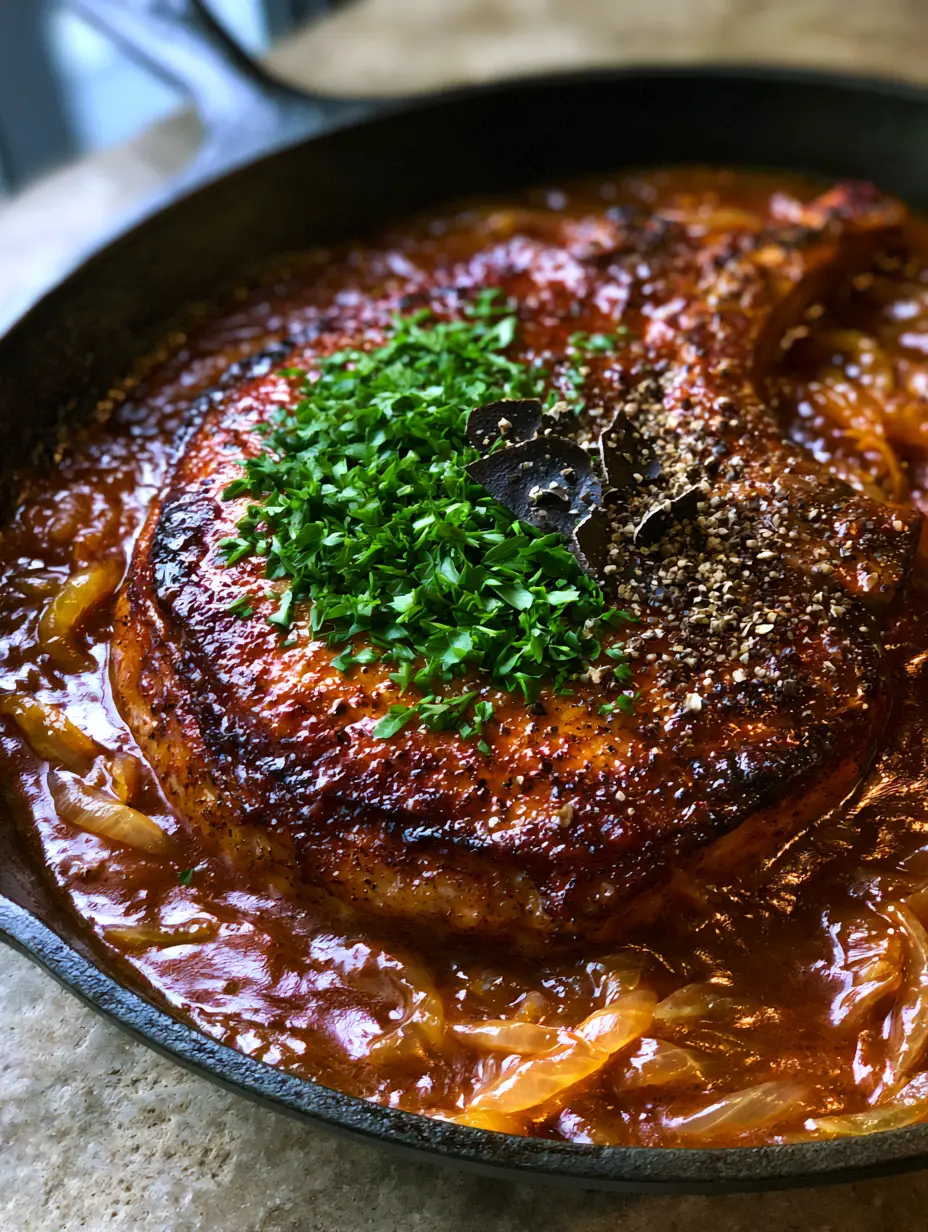
Smothered Pork Chops Recipe with Mahogany Onion Gravy
Ingredients
Equipment
Method
- Pat the pork chops dry with paper towels. Season both sides generously with salt, garlic powder, and half of the cracked black pepper.
- Allow the chops to sit at room temperature for 15 minutes to ensure even cooking.
- Heat oil in the cast iron skillet over medium-high heat. Sear the chops for 4-5 minutes per side until a deep mahogany crust forms. Remove and set aside.
- Lower heat to medium, add butter and onion slivers. Sauté for 8-10 minutes until translucent and softened.
- Whisk in flour for 2 minutes. Gradually pour in beef stock, whisking until thick, glossy, and mahogany-colored.
- Return chops to the skillet. Cover and simmer on low for 5-7 minutes until the internal temperature reaches 145°F (63°C).
- Top with fresh parsley and the remaining coarse black pepper flakes before serving.
Notes
Always use beef stock rather than chicken stock to achieve the mahogany visual.
Bring the Skillet to the Table
This smothered pork chops recipe is more than just a meal; it is a centerpiece. The combination of the matte black cast iron, the mahogany gravy, and the precise garnish of parsley and black pepper creates a visual experience that is as satisfying as the first bite.
We invite you to share your results with us! Did your gravy achieve that perfect glossy sheen? Leave a comment below or share your handheld smartphone photos with us on Pinterest. For more comforting dinner inspiration, be sure to sign up for our weekly newsletter.