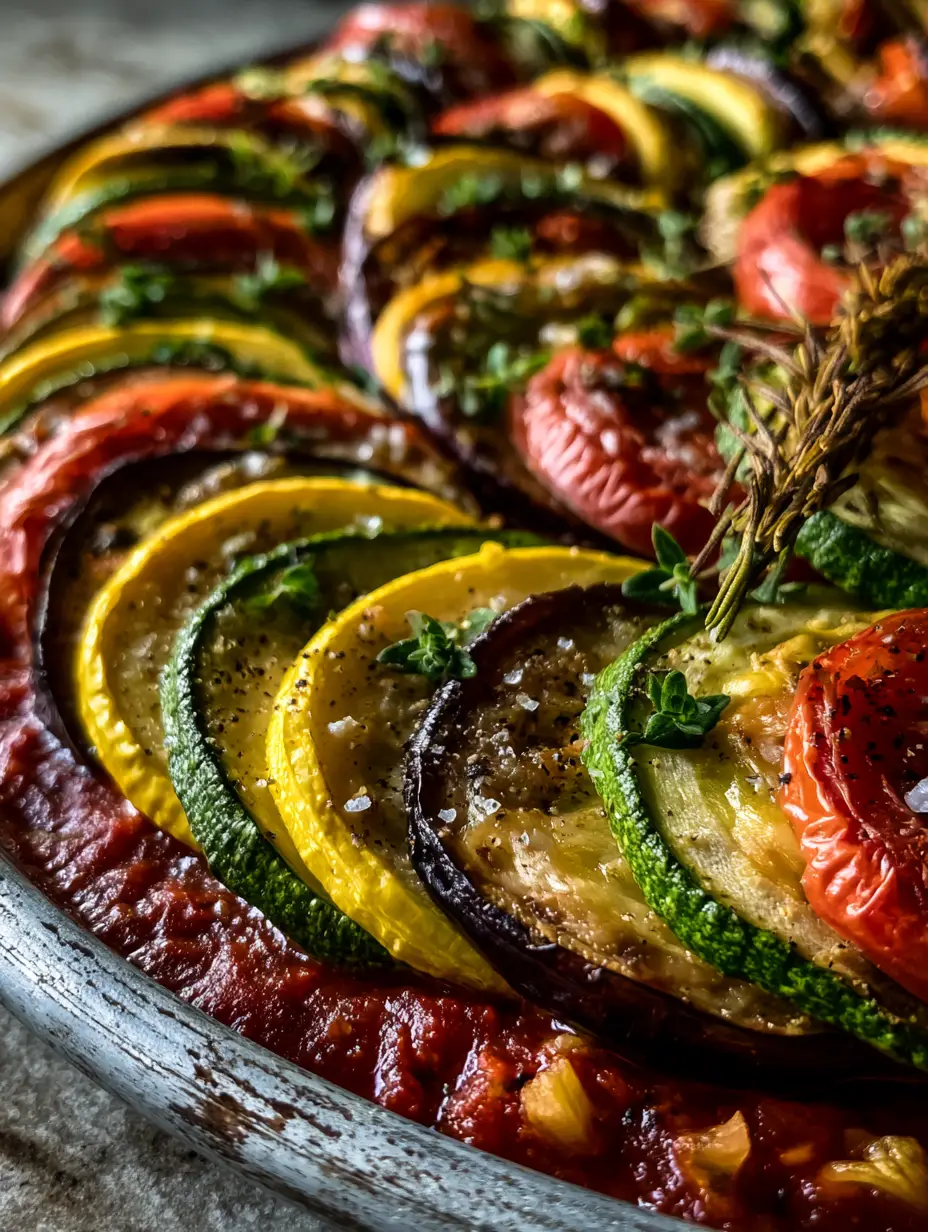
This Ratatouille recipe is a breathtaking celebration of summer’s bounty, transforming humble garden vegetables into a cinematic masterpiece. Inspired by the “Confit Byaldi” style made famous on the silver screen, this version focuses on a high-heat roasting technique on a rustic sheet pan to achieve concentrated flavors. By layering paper-thin slices of zucchini, squash, eggplant, and tomato over a rich, velvety roasted red pepper base, we create a dish that is as visually stunning as it is delicious.
The magic of this specific Ratatouille recipe lies in the contrast between the tender-crisp vegetable interior and the slightly charred, caramelized edges that only a weathered metal pan can provide. Every bite offers a symphony of Provencal herbs, premium olive oil, and the deep umami of roasted peppers. Whether you are looking to impress guests at a dinner party or simply want to elevate your weeknight vegetable intake, this guide provides the forensic precision needed to achieve professional results.
Why This Rustic Sheet Pan Masterpiece Works
- Textural Contrast: Unlike traditional stewed versions, this method ensures vegetables retain their individual integrity and a vibrant “tender-crisp” bite.
- Concentrated Umami: The thick roasted red pepper sauce base acts as a flavor anchor, providing a rich, savory foundation for the lighter vegetables.
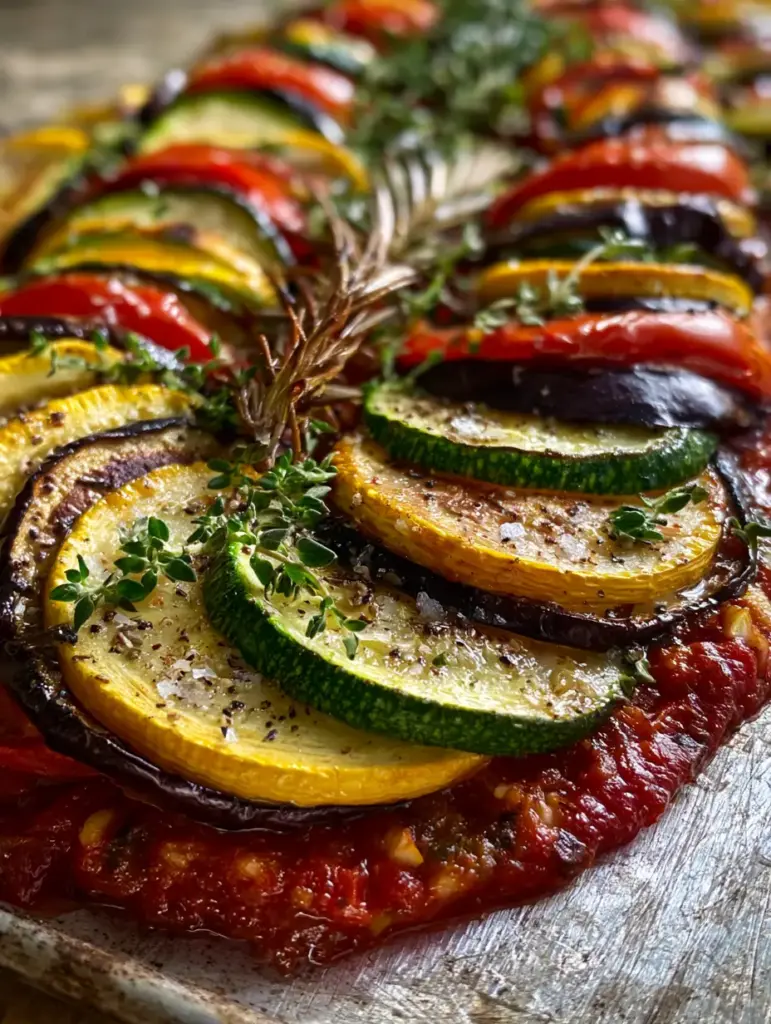
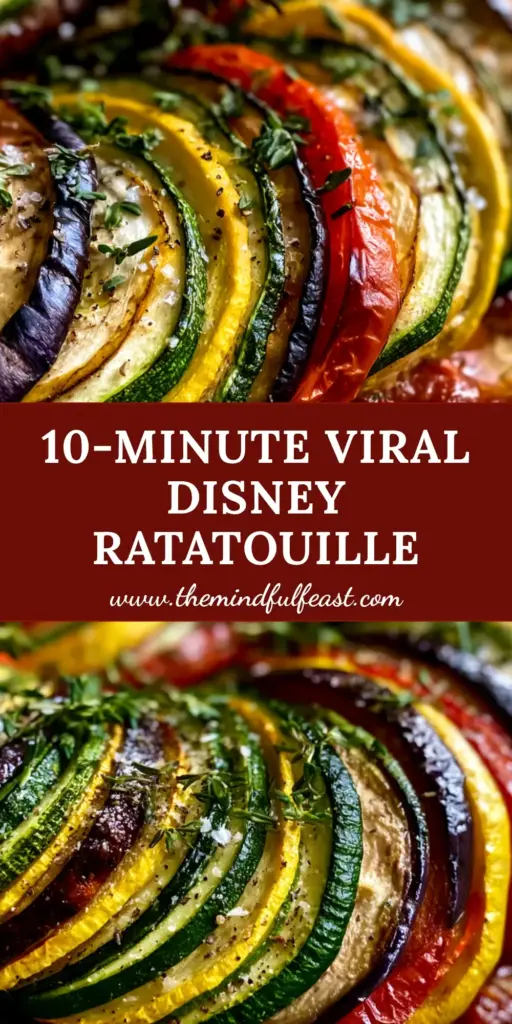
- Visual Sophistication: The tight, overlapping spiral pattern creates a high-definition culinary aesthetic that mimics the famous “Disney” look.
- Caramelized Edges: Roasting on a weathered metal sheet pan allows for superior heat conduction, resulting in those sought-after charred vegetable edges.
Vibrant Harvest Essentials for the Perfect Spiral
Success starts with the quality of your produce; since the vegetables are the stars, they must be uniform in diameter to create that iconic spiral. Look for “Chinese Eggplant” specifically, as its slender profile perfectly matches the width of a standard zucchini and Roma tomato.
Zucchini: Select 2 medium, firm green zucchini. Their skin provides a vibrant green border for each slice, adding crucial color contrast to the finished dish.
Yellow Summer Squash: You will need 2 medium squash with a bright yellow hue. These provide the sunny mid-tones in your vegetable arrangement and a mild, buttery flavor.
Purple Chinese Eggplant: Choose 2 slender eggplants with deep purple, glossy skin. These are less bitter than globe eggplants and their size ensures they fit the tight spiral pattern without overlapping too much.
Roma Tomatoes: Use 5-6 firm Roma tomatoes. Their dense flesh and low water content prevent the sauce from becoming “soupy” during the roasting process.
Roasted Red Pepper Sauce: This is the “invisible” engine of the dish. A thick blend of roasted peppers, tomatoes, and aromatics creates a luxurious bed for the vegetables to rest upon.
Extra Virgin Olive Oil: Use 1/4 cup (60ml) of high-quality oil. This creates the glossy sheen seen in professional photography and helps facilitate the caramelization of the edges.
Aromatic Herbs: Fresh thyme leaves and a whole rosemary sprig are non-negotiable. The thyme provides a delicate earthiness, while the toasted rosemary adds a woody fragrance that permeates the entire pan.
Seasoning: Flaky sea salt and freshly cracked black pepper. These are applied last to provide “high-definition” flavor highlights and a visible crystalline texture on the roasted vegetables.
Essential Tools for Paper-Thin Precision
To achieve the visual standard of this Ratatouille recipe, you cannot rely on a standard kitchen knife alone. A mandoline slicer set to 1/16th of an inch (1.5mm) is the only way to ensure the paper-thin, uniform circular slices required for a tight spiral.
Furthermore, use a weathered, textured metal sheet pan rather than a non-stick or silicone-lined version. The raw metal surface interacts with the olive oil to create a micro-sear on the bottom of the vegetables, enhancing the overall depth of flavor and providing those charred edges mentioned in our visual blueprint.
Mastering the Art of the Vegetable Spiral
Preparing the Thick Roasted Red Pepper Base
In a food processor, blend 1 cup (240ml) of roasted red peppers with 1/2 cup (120ml) of crushed tomatoes and 2 cloves of minced garlic. Spread this mixture evenly across the bottom of your weathered metal sheet pan until it forms a thick, rich, deep-red foundation.
This base should be viscous enough to hold the vegetables upright during the assembly phase. If it looks too thin, simmer it in a small saucepan for 5 minutes to reduce the moisture before spreading it on the pan.
Achieving the Paper-Thin Slice
Set your mandoline to its thinnest setting. Carefully slice the zucchini, yellow squash, and Chinese eggplant into uniform rounds. For the Roma tomatoes, use a very sharp serrated knife to match the thickness of the other vegetables, as a mandoline may crush the soft interior.
Keep the vegetable slices in separate piles. This organizational step is critical for the “assembly line” process of building the spiral, ensuring you don’t miss a color in the sequence.
Constructing the Overlapping Spiral
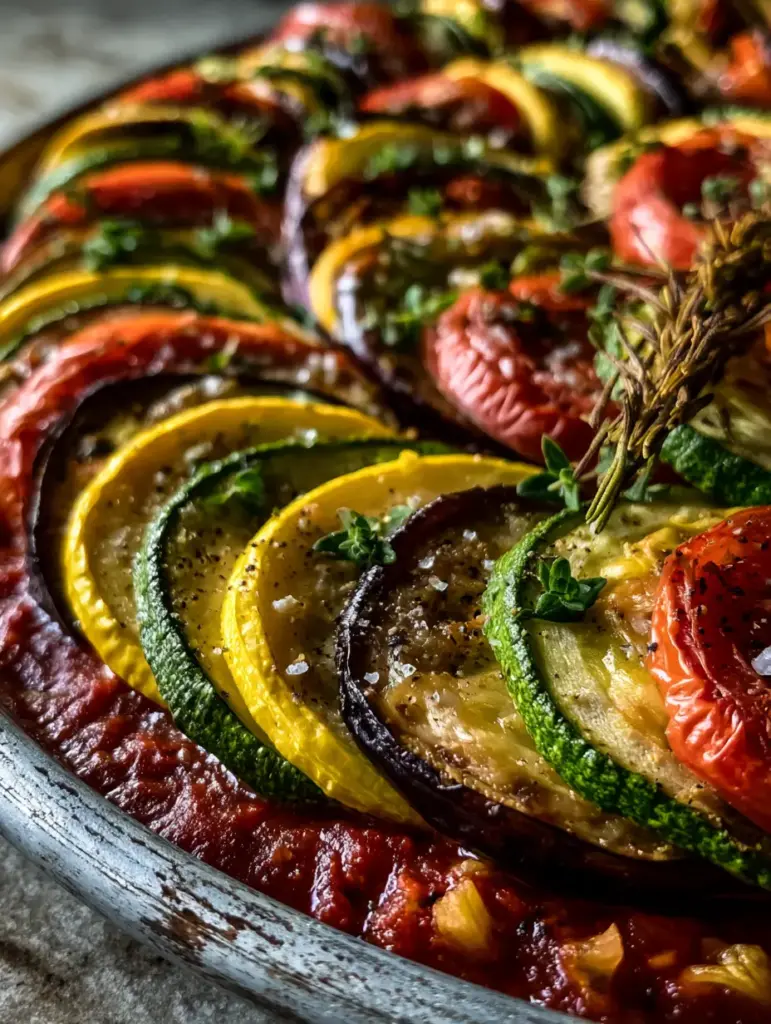
Starting at the outer edge of the sheet pan, begin leaning the slices against the rim. Follow a repeating sequence: zucchini, squash, eggplant, tomato. Continue this pattern, overlapping each slice by about 75% to create a tight, dense spiral.
Work your way toward the center in a concentric circle. The tighter the spiral, the better the dish will hold its shape after roasting. If you have extra slices, tuck them into any gaps to ensure the roasted red pepper base is completely covered.
Professional Techniques for Caramelized Charred Edges
Once the spiral is complete, it is time to apply the “glaze” that creates the glossy sheen. Drizzle the 1/4 cup (60ml) of extra virgin olive oil slowly over the vegetables, ensuring every slice is lightly coated. Use a pastry brush to move the oil around if necessary.
Sprinkle the tiny fresh thyme leaves and the whole rosemary sprig over the top. Roast in a preheated oven at 375°F (190°C) for 45-50 minutes. You are looking for a specific sensory cue: the edges of the vegetables should look slightly shriveled and dark brown, while the centers remain vibrant and moist.
In the final five minutes, you might hear a faint sizzling sound. This is the moisture evaporating and the sugars in the vegetables beginning to caramelize against the hot metal of the pan. This is exactly when you want to pull it out.
Sensory Cues: How to Know Your Ratatouille is Perfect
A successful Ratatouille recipe is defined by more than just time; it’s about the visual and aromatic changes. When you open the oven, the scent of toasted rosemary should be immediate and pungent. The deep purple of the eggplant should have darkened further, and the zucchini edges should be crisp.
Look for the “glossy sheen” on the surface. If the vegetables look matte or dry, a final light brush of olive oil before serving can restore that professional look. Finally, the dusting of flaky sea salt should sit prominently on the surfaces, catching the light like tiny diamonds.
Troubleshooting Your Provencal Vegetable Bake
If your dish appears too watery, it is likely because the tomatoes were too juicy or the oven temperature was too low. To fix this, you can carefully drain any excess liquid from the corner of the pan and return it to the oven on a higher rack for an additional 5 minutes.
If the vegetables are browning too quickly before they are tender, tent the sheet pan loosely with foil. However, remove the foil for the last 10 minutes of cooking to ensure you still achieve those signature charred edges that define this rustic style.
Preserving the Flavor: Storage and Reheating Tips
This Ratatouille recipe is one of the rare dishes that actually improves the next day. As it sits, the vegetables continue to marinate in the roasted pepper sauce, deepening the flavor profile. Store leftovers in an airtight container in the refrigerator for up to 4 days.
To reheat, avoid the microwave, which will make the vegetables mushy. Instead, place the slices back on a baking sheet and warm them in a 350°F (175°C) oven until the oil begins to sizzle again. This preserves the “tender-crisp” texture we worked so hard to achieve.
Elevating the Meal: What to Serve with Ratatouille
While this dish is a powerhouse on its own, it pairs beautifully with other Mediterranean-inspired flavors. For a hearty breakfast or brunch, serve a scoop of these roasted vegetables alongside a Mediterranean shakshuka to double down on the rich tomato and pepper profiles.
For a lighter lunch, this Ratatouille recipe acts as a perfect side for a grilled chicken salad. If you find yourself with leftover zucchini, you might even consider using it to top a savory zucchini onion pie the following day. If you are serving a crowd and need more bulk, a side of simple fried rice provides a neutral, satisfying base for the saucy vegetables.
Frequently Asked Questions
Yes, but it requires exceptional knife skills. Use a very sharp chef’s knife for the squash and eggplant, and a serrated knife for the tomatoes to ensure even thickness.
Using a weathered metal sheet pan (not non-stick) and a high roasting temperature of 375°F allows the natural sugars to caramelize against the metal surface.
Traditional Ratatouille is a rough-cut vegetable stew (Provençal style), while this version (Confit Byaldi) uses thin, layered slices roasted to preserve texture and presentation.
Using a mandoline slicer set to 1/16th of an inch (1.5mm) is essential for achieving the uniform, thin slices required for a tight Disney-style spiral.
Wateriness often comes from high-moisture tomatoes or a thin sauce base. Use firm Roma tomatoes and ensure your roasted pepper sauce is reduced to a thick paste before assembly.
The Final Rustic Ratatouille Recipe Card
The following recipe card consolidates all the technical steps and measurements discussed above. Follow these precisely to replicate the visually stunning results seen in our “Visual Recipe Blueprint.”
Ratatouille Recipe: The Ultimate Rustic Sheet Pan Disney-Style Guide
Ingredients
Equipment
Method
- Combine roasted peppers, crushed tomatoes, and garlic in a processor. Blend until thick and spread over the weathered metal sheet pan.
- Use a mandoline to slice zucchini, squash, and eggplant into paper-thin 1/16th inch rounds. Slice Roma tomatoes with a serrated knife.
- Arrange slices in a tight, overlapping spiral starting from the edge of the pan. Follow the zucchini-squash-eggplant-tomato sequence.
- Drizzle with olive oil, sprinkle thyme, and place the rosemary sprig. Roast at 375°F (190°C) until edges are charred and centers are tender-crisp.
Notes
Use a weathered metal pan for superior heat conduction and edge charring.
Closing & Call to Action
Mastering this Ratatouille recipe is a rite of passage for any home cook looking to improve their knife skills and understanding of vegetable textures. The combination of the thick pepper base and the concentric spiral creates a dish that is as much a piece of art as it is a meal. We would love to see your rustic sheet pan creations!
Please leave a comment below with your results or any substitutions you tried. If you found this guide helpful, sign up for our newsletter for more “forensic” recipe breakdowns. Don’t forget to share your beautiful vegetable spirals on Pinterest and tag us!