There is a specific kind of culinary magic that happens when smoky, salty fats meet the bright, popping sweetness of spring vegetables. This Bacon and Pea Pasta is the physical embodiment of that harmony. It isn’t just a quick weeknight dinner; it is a masterclass in textural contrast and flavor layering.
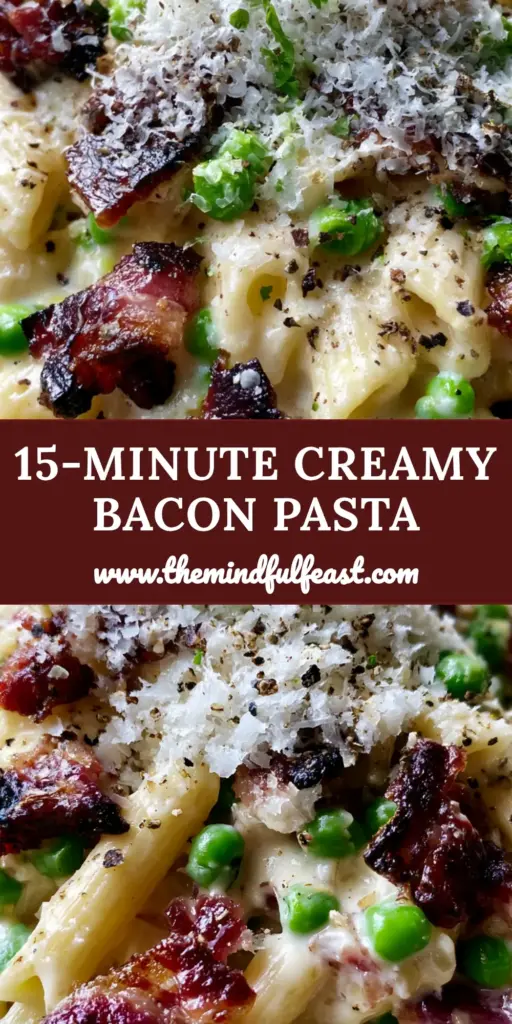
Imagine ridges of perfectly al dente penne, each one acting as a vessel for a thick, glossy, ivory-colored velvet cream sauce. Nestled within those ridges are oversized, thick-cut bacon chunks boasting deep mahogany charred edges. To balance the richness, we fold in plump, vibrant emerald green sweet peas that provide a necessary snap in every bite.
To finish, we crown the dish with a snowy mound of micro-planed Pecorino Romano and a heavy dusting of coarse cracked black pepper. This recipe is designed to look as stunning on your table as it does in a professional food shoot, utilizing simple techniques to achieve restaurant-quality results.
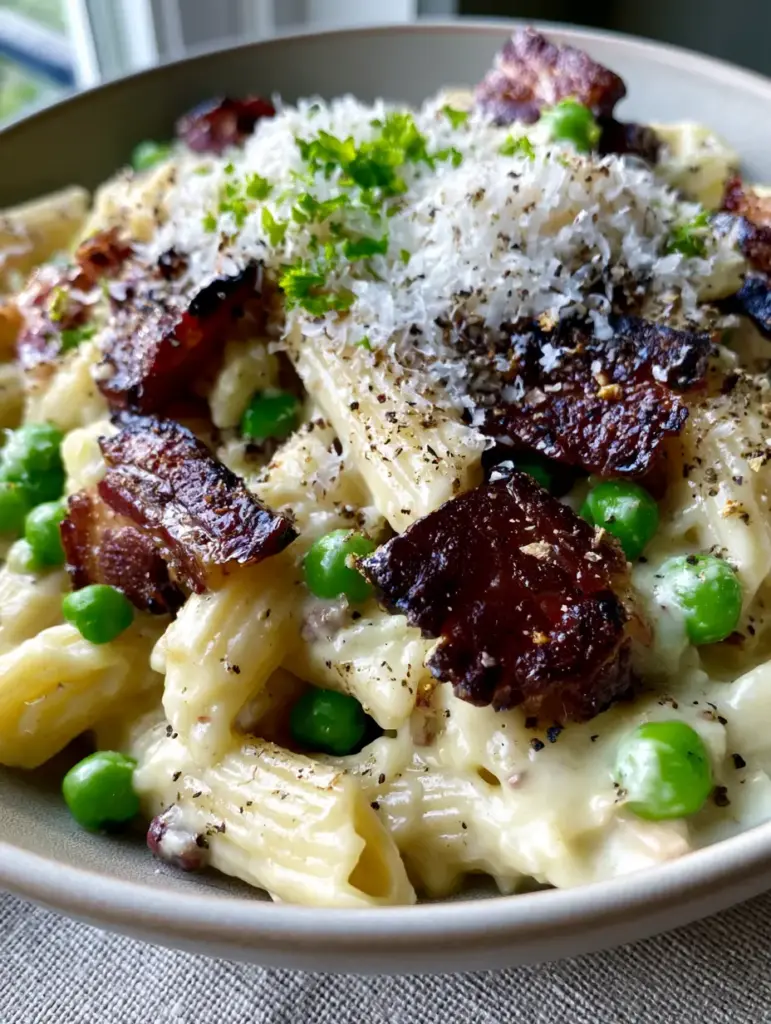
The Irresistible Allure of This Creamy Bacon and Pea Pasta
- Textural Masterpiece: We prioritize the contrast between the “snap” of the peas, the “crunch” of the charred lardons, and the “velvet” of the cream sauce.
- Visual Vibrancy: By steaming the peas separately, we maintain that brilliant emerald green color against the ivory sauce and mahogany bacon.
- High-RPM Flavor Profile: The use of Pecorino Romano provides a sharp, salty tang that cuts through the heavy cream better than traditional Parmesan.
- Pantry-Friendly Luxury: This dish uses foundational ingredients to create a sophisticated meal in under 30 minutes.
Foundational Ingredients for the Ultimate Velvet Finish
Penne Rigate (450g / 1 lb): The “rigate” or ridges are essential here. They act as tiny gutters that catch and hold the glossy cream sauce, ensuring no bite is left dry.
Thick-Cut Bacon (225g / 8 oz): Look for high-quality, slab-style bacon. We cut these into “lardons” (thick matchsticks) to ensure they remain juicy in the center while the exterior achieves those signature mahogany charred edges.
Sweet Green Peas (225g / 1.5 cups): Whether fresh or frozen, these must be steamed just until tender. This preserves their internal moisture so they “pop” when you bite into them.
Heavy Cream (360ml / 1.5 cups): This is the base of our glossy velvet sauce. We reduce it slightly with the bacon renderings to create a stable, thick emulsion that coats the spoon.
Pecorino Romano Cheese (90g / 1 cup): Micro-planing the cheese is non-negotiable. It creates a “snowy” texture that melts instantly into the sauce, providing a sharp, salty finish.
Fresh Parsley (15g / 1/4 cup): Minced finely, this adds a necessary floral brightness and a pop of color that contrasts beautifully with the black pepper flakes.
Coarse Cracked Black Pepper (5g / 1 tsp): Use a coarse grind to get those large, visible flakes. This provides a gentle heat that cuts through the richness of the cream and bacon fat.
Pasta Water (120ml / 1/2 cup): The “liquid gold” of pasta making. The starches in the water help bind the cream sauce to the penne, creating a professional-grade emulsion.
Essential Equipment for Professional Results
To achieve the “extreme macro” look of the sauce and the perfect char on the bacon, you will need a heavy-bottomed stainless steel or cast-iron skillet. These materials retain heat better than non-stick pans, allowing for superior searing of the bacon lardons.
A micro-plane grater is also vital. Unlike a box grater, a micro-plane creates gossamer-thin shards of cheese that provide maximum surface area for melting and a beautiful visual “snow” on top of the finished dish.
Step-by-Step Instructions for the Perfect Bacon and Pea Pasta
Achieving the Perfect Al Dente Penne
Bring a large pot of heavily salted water to a rolling boil. It should taste like the sea—this is your only chance to season the pasta itself. Add the penne and cook for 1-2 minutes less than the package directions indicate.
The pasta will finish cooking in the cream sauce, so it needs to have a firm “bite” (al dente) when drained. Reserve at least 1 cup (240ml) of the starchy pasta water before draining.
Searing the Mahogany Bacon Lardons
Place your thick-cut bacon lardons into a cold skillet and turn the heat to medium. Starting in a cold pan allows the fat to render slowly, which is the secret to achieving that deep mahogany char without burning the edges.
Fry until the bacon is crispy and the edges are dark and caramelized. Remove the bacon with a slotted spoon and set aside on a paper towel, but keep about 2 tablespoons (30ml) of the rendered fat in the pan for the sauce base.
Steaming the Emerald Green Peas
While the bacon is rendering, steam your peas. If using frozen peas, a quick 2-minute steam or a 60-second blanch in the pasta water is all they need. They should be bright, plump, and emerald green—avoid overcooking them into a dull olive color.
Constructing the Glossy Velvet Cream Sauce
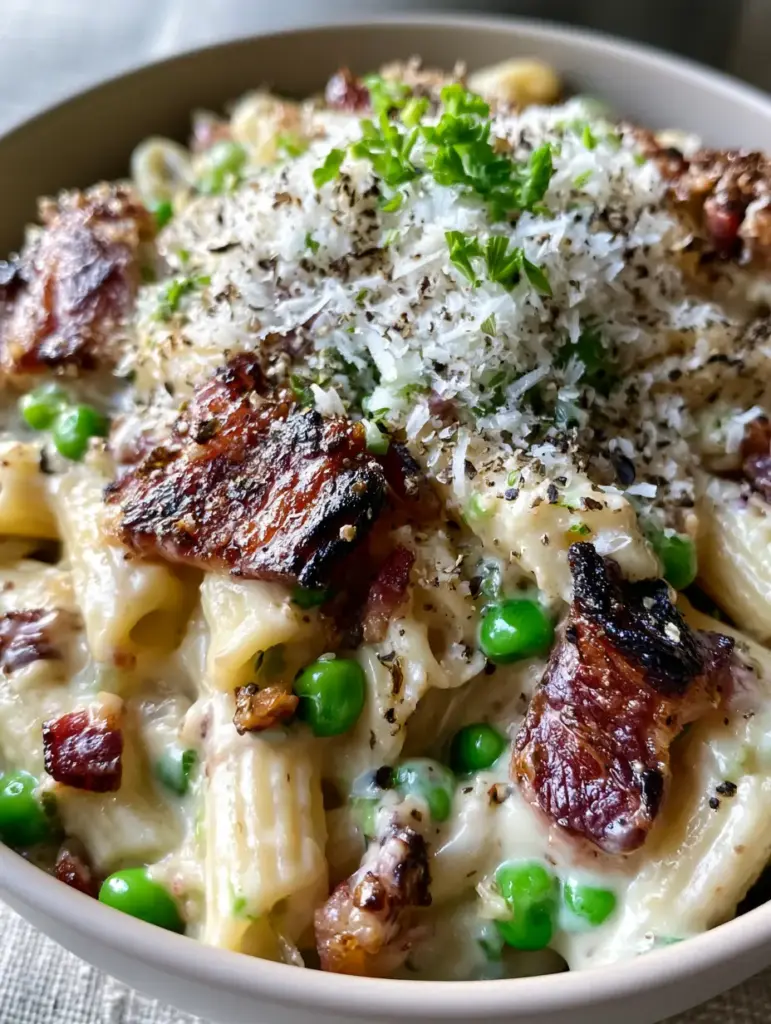
In the skillet with the reserved bacon fat, pour in the heavy cream. Bring to a gentle simmer over medium-low heat. Use a whisk to scrape up any “fond” (the brown bits) from the bottom of the pan—this is where the smoky flavor lives.
Simmer for 3-4 minutes until the cream begins to thicken slightly. It should look glossy and ivory-colored. If the sauce looks too thick, whisk in a splash of the reserved pasta water to reach a “velvet” consistency.
The Final Assembly and Emulsification
Add the al dente penne, the charred bacon lardons, and the steamed peas into the skillet with the cream sauce. Toss vigorously over low heat for 60 seconds. This allows the pasta to absorb the sauce and the starches to create a cohesive bond.
Remove from heat immediately. The residual heat will be enough to incorporate the cheese without making the sauce grainy or causing the cream to break.
Expert Tips for a Restaurant-Quality Finish
- The Temperature Rule: Never add the Pecorino Romano while the sauce is at a hard boil. This will cause the cheese to clump and the fat to separate. Always kill the heat first.
- Pepper Precision: Use a pepper mill on the coarsest setting. Pre-ground pepper is too fine and will turn your ivory sauce a muddy grey color.
- Acid Balance: If the sauce feels too heavy, a tiny squeeze of fresh lemon juice can brighten the entire dish without making it “lemony.”
- Pasta Choice: If you don’t have penne, try this with creamy lemon garlic pasta techniques using fusilli or orecchiette to catch the peas.
What to Serve with This Rich Bacon Pasta
Because this Bacon and Pea Pasta is incredibly rich and savory, you want side dishes that offer high acidity or a crisp, refreshing crunch. A simple green salad with a sharp vinaigrette is the classic choice.
For a more vegetable-forward meal, consider serving this alongside our cucumbers and onions in vinegar for a bright palate cleanser. If you want to keep the theme of charred vegetables, these oven roasted zucchini and squash provide a lovely textural match.
If you love the flavor profile of creamy sauces and smoky meats, you might also enjoy our cajun smoked sausage alfredo pasta or the heartier beef and garlic butter pasta.
Storage, Reheating, and Freezing
Storage: Store leftovers in an airtight container in the refrigerator for up to 3 days. The sauce will thicken significantly as it cools.
Reheating: Cream-based sauces can be tricky to reheat. Place the pasta in a skillet over low heat and add a splash of milk or water. Stir gently until the sauce becomes glossy and fluid again. Avoid the microwave if possible, as it tends to make the bacon chewy and the cream oily.
Freezing: We do not recommend freezing this dish. Heavy cream and cooked peas tend to change texture significantly when frozen and thawed, leading to a grainy sauce and mushy vegetables.
Frequently Asked Questions
You can, but Pecorino Romano is saltier and tangier, which helps cut through the heavy cream better. If using Parmesan, you may need an extra pinch of salt.
Yes! Frozen peas are often flash-frozen at peak ripeness. Just steam them for 60-90 seconds until vibrant emerald green before folding them into the sauce.
The secret is reserved pasta water. The starches in the water act as an emulsifier, binding the glossy cream sauce to the ridges of the pasta.
Thick-cut, center-cut bacon is best. It allows you to cut thick lardons that maintain a juicy interior while achieving those mahogany charred crispy edges.
This usually happens if the heat is too high when adding cheese or if the cream boils too vigorously. Keep the sauce at a gentle simmer and remove from heat before adding the Pecorino.
The Ultimate Bacon and Pea Pasta Recipe Card
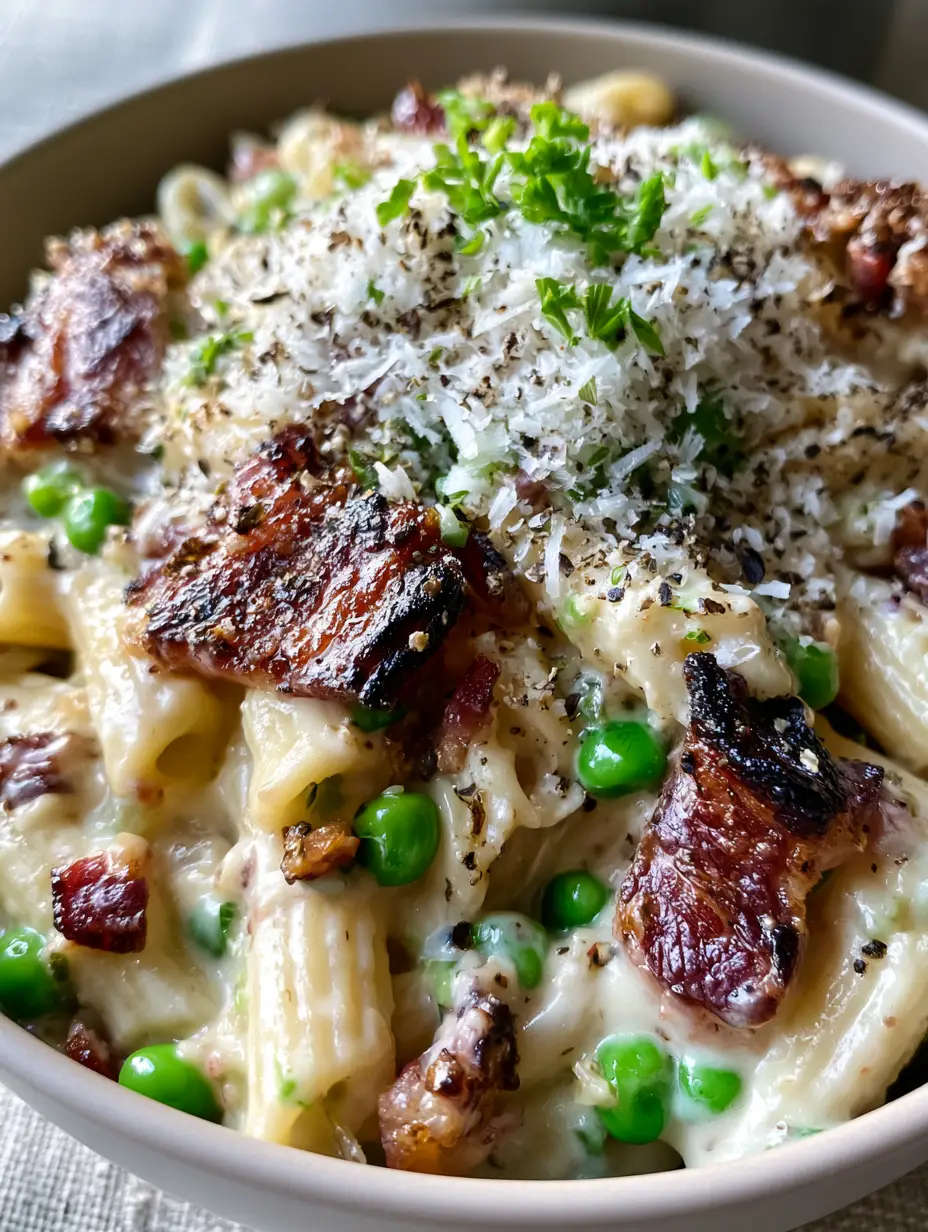
Bacon and Pea Pasta with Silky Cream Sauce and Charred Lardons
Ingredients
Equipment
Method
- Cook penne in salted boiling water until 2 minutes before al dente. Reserve 1 cup of pasta water and drain.
- Starting in a cold skillet, fry bacon lardons over medium heat until deep mahogany and crispy. Remove bacon but keep 2 tbsp fat.
- Whisk heavy cream into the skillet with bacon fat. Simmer until it forms a thick, glossy ivory-colored velvet cream sauce.
- Toss pasta, bacon, and steamed peas into the sauce. Add pasta water as needed for gloss. Kill heat and fold in cheese.
Notes
Don't overcook the peas; they should remain emerald green and plump.
Closing and Call to Action
This Bacon and Pea Pasta proves that you don’t need a long list of ingredients to create a meal that feels like a luxury. By focusing on the “forensic” details—the char of the bacon, the pop of the peas, and the gloss of the sauce—you can turn a simple pantry meal into a visual and culinary masterpiece.
Did you try this recipe? We would love to see your results! Leave a comment below and tell us how yours turned out. Don’t forget to follow us on Pinterest and share this recipe with your fellow home cooks!