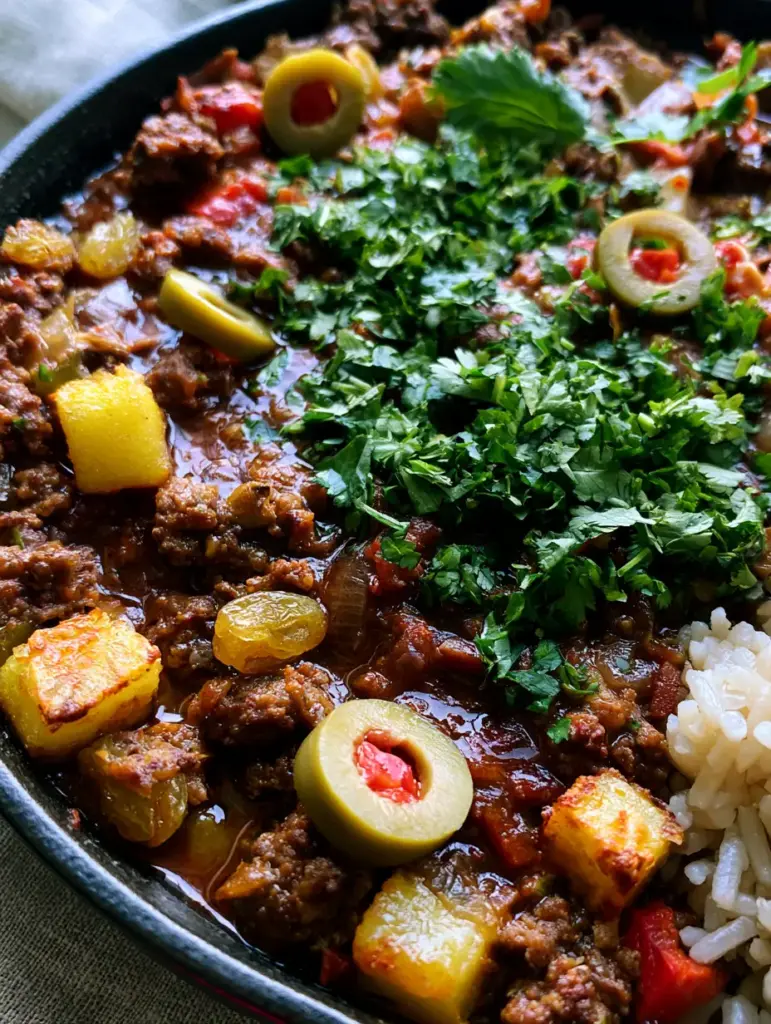
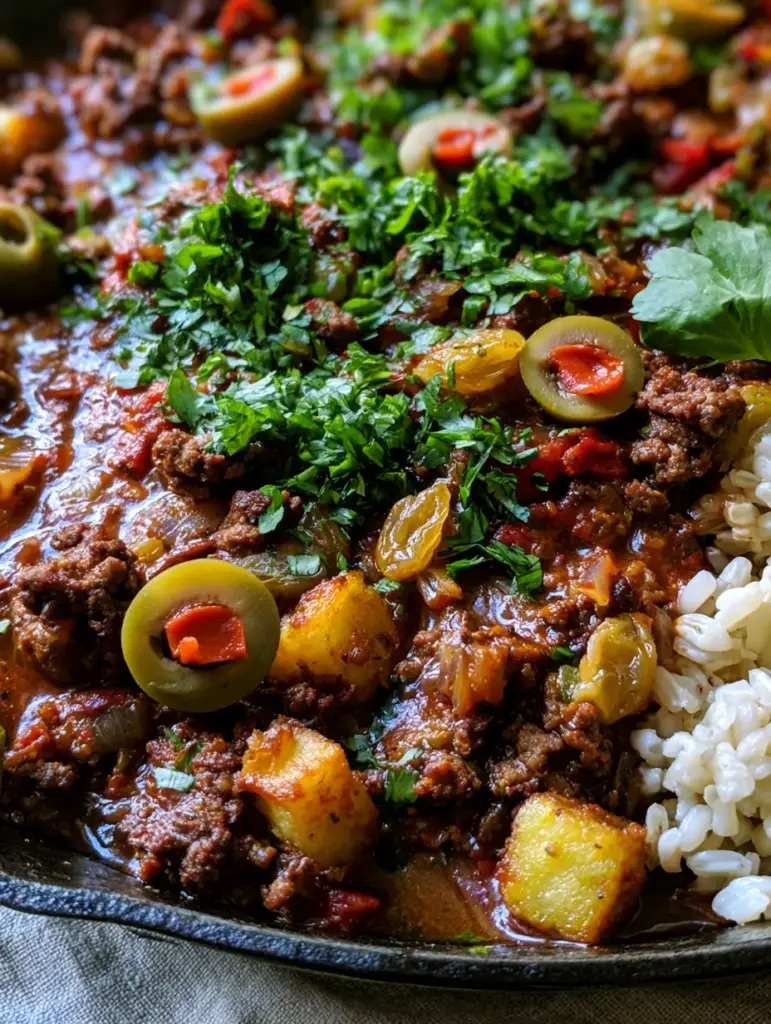
There is a specific kind of magic that happens when savory ground beef meets the briny punch of olives and the unexpected sweetness of golden raisins. This Cuban picadillo is not just a meal; it is a sensory journey captured in a rustic black cast iron skillet. When you look at the deeply browned beef crumbles glistening under a rich tomato and white wine reduction, you realize this is home cooking at its most sophisticated. The visual contrast of bright red pimento centers tucked inside sliced green manzanilla olives against the backdrop of golden-fried potato cubes makes this dish a centerpiece for any dinner table.
Authenticity in a Cuban picadillo relies on the balance of textures and flavors. We aren’t just making a meat sauce; we are building layers of “sofrito,” reducing wine to its syrupy essence, and ensuring every individual grain of steamed white rice is ready to soak up the glossy sauce. Whether you are a fan of Peruvian chicken or you frequently whip up sheet pan chicken fajitas, this classic Latin American comfort food will quickly become a staple in your weekly rotation.
Why This Authentic Skillet Picadillo Works
- The Texture Trifecta: You get the crunch of crispy-edged potato cubes, the chew of plump golden raisins, and the tender snap of manzanilla olives in every single bite.
- Visual Vibrancy: The dish pops with the colors of softened red bell peppers and fresh, bright green cilantro flakes, mirroring the handheld authentic food photography that inspired this recipe.
- Umami Depth: By deglazing the cast iron skillet with dry white wine, we unlock the fond (those browned bits) from the beef, creating a rich, savory sauce that is scientifically balanced by the acidity of the olives.
- One-Pan Presentation: While the potatoes are fried separately to maintain their structural integrity, the final assembly happens in a single skillet, making it as beautiful as it is delicious.
The Essential Elements for Authentic Cuban Picadillo
To achieve the specific visual and flavor profile described in our blueprint, every ingredient serves a dual purpose: structural and flavorful. We use a combination of pantry staples and fresh produce to create a dish that feels both rustic and refined.
Lean Ground Beef: 1.5 lbs (680g) of 85/15 or 90/10 ground beef is ideal. This provides enough fat to carry the flavors of the spices without making the final tomato-wine reduction overly greasy.
Golden-Fried Potatoes: 2 medium (approx. 300g) Yukon Gold potatoes, peeled and cut into 1/2-inch (1.25cm) cubes. Frying these separately until they have crispy golden edges ensures they don’t turn into mush when folded into the beef mixture.
Aromatic Sofrito Base: 1 large (150g) yellow onion and 1 large (150g) red bell pepper, finely diced. These provide the foundational sweetness and the “softened red bell pepper” visual fragments essential to the dish’s aesthetic.
Manzanilla Olives with Pimentos: 1/2 cup (75g) sliced green manzanilla olives. The bright red pimento centers provide a necessary pop of color and a briny vinegar note that cuts through the richness of the beef.
Golden Raisins: 1/3 cup (50g) golden raisins. Unlike dark raisins, golden raisins are plumped during the simmering process, offering a mellow sweetness that defines the “sweet and savory” Cuban profile.
Dry White Wine: 1/2 cup (120ml) of dry white wine, such as Pinot Grigio or Sauvignon Blanc. This is the secret to the “rich tomato-wine sauce,” providing acidity and depth that water or broth alone cannot achieve.
Tomato Sauce & Paste: 1 cup (240ml) tomato sauce and 1 tbsp (15g) tomato paste. The paste adds body and a “glossy” finish to the reduction, while the sauce provides the volume needed to coat the beef crumbles.
Spices and Seasonings: 1 tsp (2g) ground cumin, 1 tsp (1g) dried oregano, 2 bay leaves, and 4 cloves of minced garlic. These are the “invisible” ingredients that create the unmistakable aroma of a traditional Cuban kitchen.
Fresh Finish: 1/4 cup (10g) freshly chopped cilantro. The surface should be heavily garnished with bright green cilantro flakes and whole leaves to provide a fresh, herbal contrast to the cooked elements.
Precision Tools for Skillet Success
To replicate the “handheld smartphone photo” aesthetic, your choice of cookware matters just as much as your ingredients. A 12-inch (30cm) rustic black cast iron skillet is the gold standard for this recipe.
Cast iron provides superior heat retention, which is critical for achieving those “deeply browned, savory ground beef crumbles” and frying the potatoes to a perfect golden-brown. You will also need a sharp chef’s knife for dicing the red bell peppers into uniform fragments and a fine-mesh strainer to ensure your steamed white rice is fluffy and individual, rather than clumpy.
A Step-by-Step Masterclass to the Perfect Skillet Picadillo
Step 1: The Crispy Potato Foundation
Heat 3 tbsp (45ml) of neutral oil in your cast iron skillet over medium-high heat. Add your cubed Yukon Gold potatoes in a single layer. Fry them, tossing occasionally, for 8-10 minutes until they are golden-fried with crispy edges.
Remove the potatoes from the skillet and drain them on a paper towel-lined plate, sprinkling immediately with a pinch of salt. This step is vital for the visual blueprint; adding raw potatoes directly to the sauce results in a soggy texture that lacks the “golden-fried” appeal.
Step 2: Searing the Beef Crumbles
In the same skillet (remove excess oil if necessary, leaving about 1 tbsp), add the ground beef. Use a wooden spoon to break the meat into small crumbles. Sear the beef undisturbed for 3-4 minutes to allow a deep brown crust to form—this is the Maillard reaction in action.
Continue cooking until the beef is fully browned and no longer pink. Drain any excess fat, but keep the savory browned bits attached to the bottom of the pan for flavor. Your beef should look “deeply browned” and “savory,” just like the visual prompt suggests.
Step 3: Building the Sofrito
Add the diced onion and red bell pepper to the skillet with the beef. Sauté for 5-6 minutes until the onions are translucent and the peppers have softened significantly. Add the minced garlic, cumin, and oregano, stirring for 60 seconds until the aroma fills your kitchen.
This stage is where the “visible fragments of softened red bell peppers” are integrated into the beef, creating the colorful mosaic that makes Cuban picadillo so iconic.
Step 4: The Wine Reduction and Simmer
Pour in the dry white wine, using your spoon to scrape up all the browned bits from the bottom of the skillet. Allow the wine to reduce by half. Add the tomato sauce, tomato paste, sliced manzanilla olives (with those bright red pimentos), golden raisins, and bay leaves.
Lower the heat to medium-low and simmer for 15-20 minutes. You are looking for the sauce to become “glossy and thick.” The raisins will absorb the liquid and become plump, and the beef will be coated in a shimmering, savory glaze.
Step 5: The Final Assembly
Carefully fold the crispy-edged potatoes back into the skillet. Stir gently to coat them in the sauce without breaking them. Let them sit in the hot mixture for 2 minutes to warm through. Remove the bay leaves before serving.
Garnish the surface heavily with freshly chopped cilantro flakes and a few whole leaves for that professional, authentic look. Serve immediately alongside fluffy grains of steamed white rice.
Expert Tips for Culinary Success
- Don’t Rush the Browning: If you crowd the pan with beef, it will steam instead of sear. Cook in batches if your skillet isn’t large enough to achieve that “deeply browned” texture.
- The Wine Matters: Avoid “cooking wine” which is often loaded with salt. Use a wine you would actually drink; the sugars in a good Pinot Grigio caramelize beautifully in the sauce.
- Rinse Your Rice: To get the “individual grains” mentioned in the visual prompt, rinse your white rice under cold water until the water runs clear. This removes excess starch that causes clumping.
- Balance the Brine: If you find the dish too salty, add a teaspoon of sugar. If it’s too sweet from the raisins, add a splash of the liquid from the olive jar.
Optimal Storage and Reheating Guidelines
Cuban picadillo is one of those rare dishes that tastes even better the next day. Store leftovers in an airtight container in the refrigerator for up to 4 days. The flavors of the olives, raisins, and spices will continue to meld and deepen over time.
When reheating, use a skillet over medium heat with a splash of water or beef broth to loosen the sauce. Avoid the microwave if possible, as it can make the potatoes rubbery. For long-term storage, this dish freezes exceptionally well for up to 3 months—just leave the potatoes out and fry them fresh when you are ready to eat.
Perfect Pairings and Serving Suggestions
While steamed white rice is the traditional partner for picadillo, you can expand your menu with other vibrant flavors. This dish pairs beautifully with a side of cheesy zucchini tots for a modern twist, or follow it up with a dessert like banana bread cinnamon rolls for a truly decadent weekend brunch.
If you enjoy the balance of sweet and savory found here, you might also love exploring Moroccan harissa chicken, which uses similar flavor contrasts to create a high-impact meal. For a lighter lunch option, consider serving the picadillo leftovers in a canned tuna bowl inspired setup, using the meat as your primary protein source over fresh greens.
Frequently Asked Questions
While traditional Cuban versions almost always include golden raisins for a sweet-savory balance, you can omit them if you prefer. However, the raisins provide a necessary contrast to the salty olives.
Yes, you can substitute ground turkey or pork. If using turkey, add an extra tablespoon of oil to the skillet to compensate for the lower fat content and ensure the meat browns properly.
No. While both use ground beef and tomato, picadillo is far more complex, featuring a ‘sofrito’ base, white wine, olives, and raisins, resulting in a savory-briny profile rather than just sweet and tangy.
A dry white wine like Pinot Grigio, Sauvignon Blanc, or even a dry Sherry (Vino Seco) is best. Avoid sweet wines, which can make the sauce cloying when combined with the raisins.
This usually happens if the potatoes are boiled in the sauce. To ensure crispy-edged cubes, you must fry them separately and fold them in at the very end of the cooking process.
The Master Recipe: Authentic Cuban Picadillo
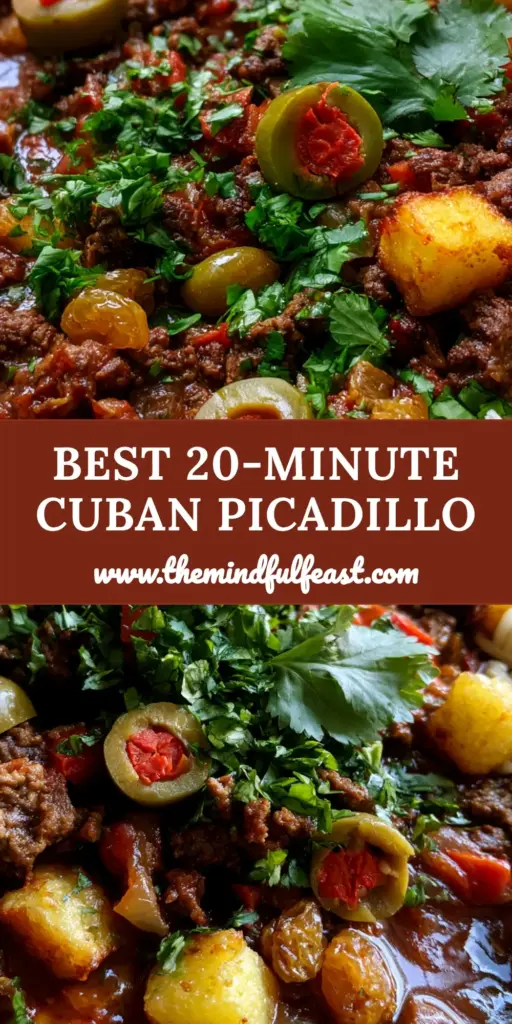
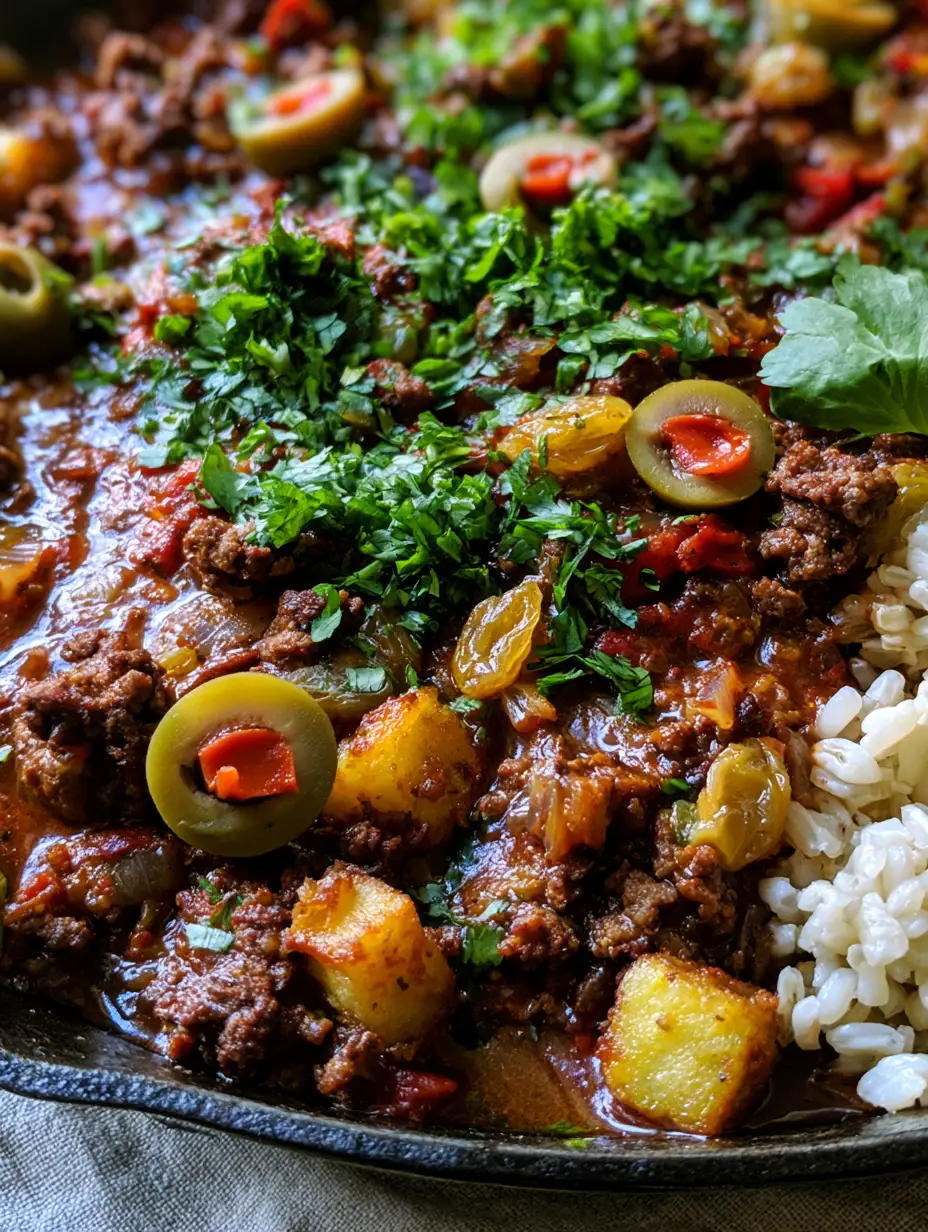
Cuban Picadillo: The Ultimate Savory Skillet with Crispy Potatoes
Ingredients
Equipment
Method
- Heat oil in a cast iron skillet and fry potato cubes until golden-fried with crispy edges (8-10 mins). Drain and set aside.
- Sear ground beef in the skillet until deeply browned crumbles form. Drain excess fat.
- Add onion and red bell pepper to the beef. Sauté until softened and translucent.
- Deglaze with white wine, then add tomato sauce, paste, olives, and raisins. Simmer for 15-20 minutes until glossy and thick.
- Gently fold in the fried potatoes and garnish heavily with chopped cilantro. Serve over steamed white rice.
Notes
Use a dry white wine like Pinot Grigio for the best flavor balance.
Bring the Flavors of Havana to Your Kitchen
This Cuban picadillo is a testament to how simple ingredients, when treated with professional technique, can create a world-class meal. From the crispy potatoes to the glossy tomato-wine sauce, every element is designed to provide a satisfying, multi-textural experience. It is the perfect recipe for home cooks who want to impress without spending hours in the kitchen.
If you loved this recipe, please leave a comment below and let us know how your skillet turned out! Don’t forget to share your creations and follow us on Pinterest for more authentic food inspiration and handheld photography tips.