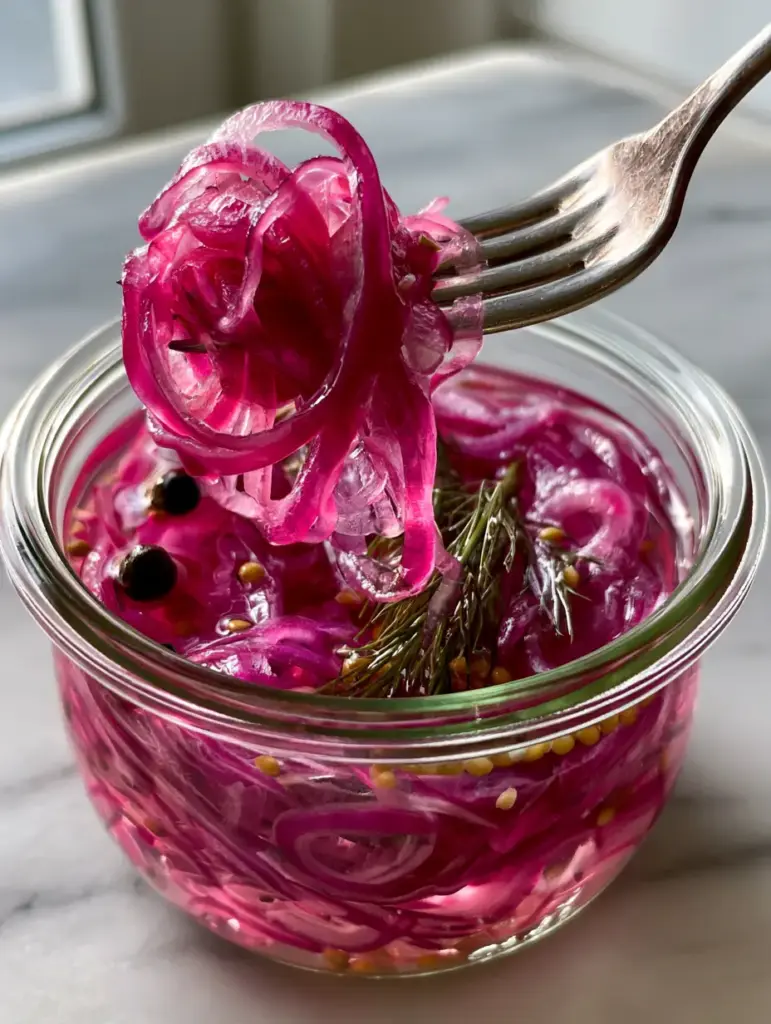
When you dive into the world of pickling recipes, few results are as visually stunning or culinarily versatile as the quick pickled red onion. Imagine opening your refrigerator to find a clear glass Weck jar filled with glistening, vibrant magenta rings that offer a sharp, acidic crunch to any meal. These aren’t just a condiment; they are a culinary highlighter, capable of transforming a dull dish into a gourmet experience with just a few translucent pink strands.
The beauty of modern pickling recipes lies in their simplicity and the immediate gratification they provide. Unlike traditional fermentation which can take weeks, this refrigerator method relies on a precise balance of vinegar, salt, and aromatics to deliver peak flavor in under an hour. Whether you are looking to cut through the richness of a fatty protein or add a pop of color to a neutral-toned salad, mastering this technique is a foundational skill for every home cook.
In this comprehensive guide, we are going to explore the forensic details of the perfect pickle. We will look at how a clear vinegar brine interacts with the natural anthocyanins in red onions to create that iconic pink hue, and how the addition of whole peppercorns and mustard seeds provides a sophisticated textural contrast that you can see right through the glass.
Why These Pickling Recipes Rule Your Kitchen
- Vibrant Magenta Aesthetics: The natural chemical reaction between the red onion’s pigments and the acidic brine creates a glowing pink color that looks incredible in a clear Weck jar.
- Perfect Textural Balance: By using professional slicing techniques, we achieve onion rings that are firm and crisp, never mushy or limp.
- Complex Aromatic Profile: The combination of woody black peppercorns, floral yellow mustard seeds, and fresh dill sprigs creates a multi-layered flavor that commercial jars can’t replicate.
- Fast Curing Time: While some pickling recipes require days of patience, this version is ready to be lifted out with a stainless steel fork in as little as 30 minutes.
The Essential Ingredients for Translucent Pink Perfection
To achieve the specific visual and flavor profile described in our blueprint, every ingredient must serve a structural and scientific purpose. Here is what you need for the most successful pickling recipes.
2 Large Red Onions (approx. 500g): Choose onions that feel heavy for their size with tight, papery skins. These provide the structural rings that will turn translucent and magenta once submerged in the brine.
1 cup (240ml) Distilled White Vinegar: A clear vinegar is essential to ensure the brine remains crystal-clear, allowing the vibrant color of the onions to be the star of the show. It provides the necessary acetic acid for the quick-pickle reaction.
1 cup (240ml) Water: We use a 1:1 ratio of water to vinegar to ensure the acidity is bright and puckery without being so harsh that it overwhelms the delicate flavor of the fresh dill.
1.5 tbsp (18g) Granulated Sugar: Sugar acts as a balancing agent, rounding out the sharp edges of the vinegar and helping to preserve the crisp cellular structure of the onion walls.
1 tbsp (15g) Sea Salt: Essential for seasoning, salt also draws out a small amount of moisture from the onions, allowing the flavored brine to penetrate deep into the rings.
1 tsp (3g) Whole Black Peppercorns: These provide a subtle, earthy heat and look beautiful settled at the bottom of your clear glass jar.
1 tsp (3g) Yellow Mustard Seeds: These tiny seeds add a pop of floral pungency and a delightful visual detail that screams “homemade” and “authentic.”
2-3 Fresh Dill Sprigs: A sprig of fresh dill tucked against the side of the jar adds a grassy, herbaceous note that perfectly complements the sharp onion flavor.
Precision Tools for the Home Pickler
To replicate the high-quality look of our visual blueprint, you need the right equipment. Proper tools ensure consistency in texture and presentation.
Mandoline Slicer: While a sharp knife works, a mandoline is the secret to those perfectly thin, uniform rings that catch the light and appear translucent when lifted with a fork.
Clear Glass Weck Jar: The wide mouth and thick glass of a Weck jar are ideal for displaying the peppercorns and dill sprigs. The clarity of the glass is paramount for that “glistening” look.
Small Stainless Steel Saucepan: You need a non-reactive pan to heat your brine. Stainless steel is perfect because it won’t leach metallic flavors into your acidic vinegar mixture.
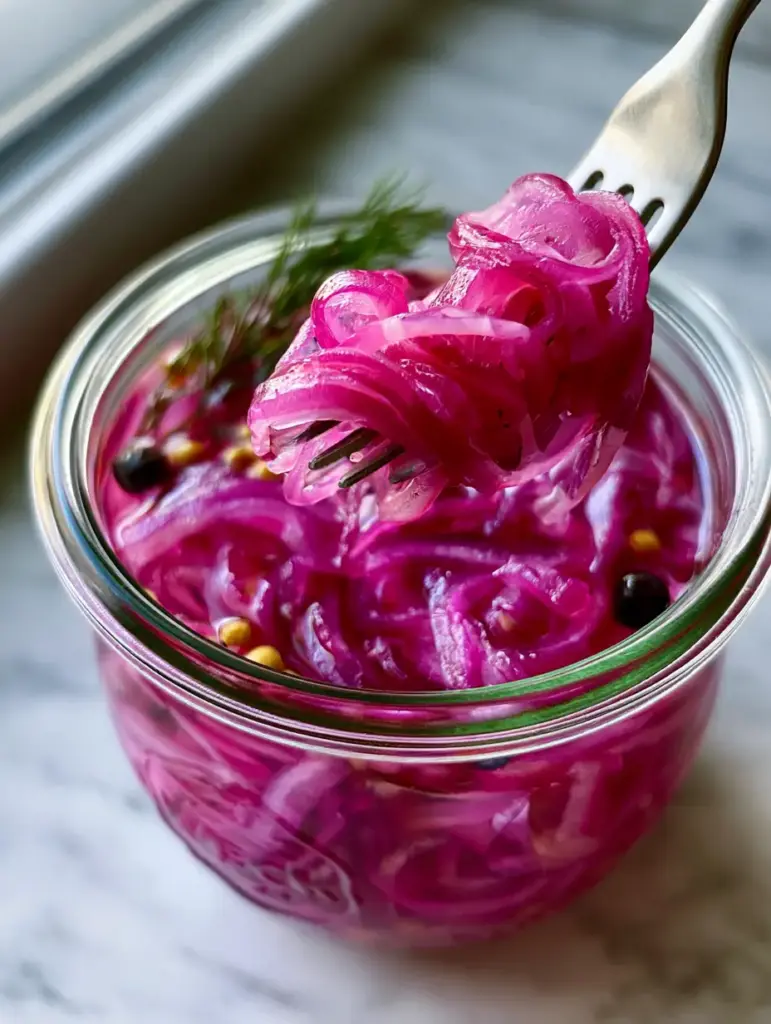
Stainless Steel Fork: Use this for “the lift.” A high-quality fork allows you to pull a tangle of onions out of the jar for serving while letting the clear brine drip back into the container.
The Science of the Perfect Quick Brine
Execution is everything. Follow these steps to ensure your pickling recipes result in a dish that looks exactly like a professional food photograph.
Step 1: The Precision Slice
Peel your red onions and slice them into thin rings, approximately 1/8 inch (3mm) thick. Using a mandoline ensures that every ring cures at the exact same rate. You want them thin enough to be translucent but thick enough to retain a satisfying “snap” when bitten.
Step 2: Preparing the Aromatic Jar
Place your peppercorns and yellow mustard seeds at the bottom of your clean Weck jar. Slide the fresh dill sprig down the side of the glass so it remains visible. Pack the sliced onion rings into the jar, pressing down gently. They should be snug but not crushed, leaving room for the liquid to circulate.
Step 3: Simmering the Crystal-Clear Brine
In your stainless steel saucepan, combine the vinegar, water, sugar, and salt. Heat over medium heat, stirring occasionally. You are looking for a specific sensory cue: the liquid should become perfectly clear as the solids dissolve. Once it reaches a bare simmer, remove it from the heat immediately to prevent too much evaporation.
Step 4: The Submersion and Transformation
Carefully pour the hot brine over the onions in the jar until they are completely submerged. You will notice an immediate change. The onions will start to soften slightly and their color will shift from a raw purple to a brilliant, glowing magenta. This is the anthocyanin reaction in real-time.
Step 5: The Curing Process
Let the jar sit uncovered at room temperature for about 30 minutes. During this time, the onions will fully absorb the aromatics. Once cooled, seal the jar and refrigerate. The texture will be best after 2 hours of chilling, appearing firm and glistening under soft light.
Pro Tips for Keeping Onions Crisp
- Don’t Overboil: Boiling the brine for too long can weaken the acetic acid and make the onions mushy. Only heat until the sugar and salt have fully dissolved.
- Ice Bath Prep: If you want the absolute crispest result possible, soak your sliced onions in ice water for 10 minutes, then pat them dry before putting them in the jar.
- Vinegar Selection: Avoid apple cider vinegar if you want the “crystal-clear” look from the prompt; it will tint the brine yellow. Stick to distilled white or white wine vinegar.
- Freshness Matters: Use dill that is vibrant green. Wilted dill will turn brown in the brine and ruin the “fresh and appetizing” look of your jar.
Shelf Life and Optimal Freshness
While these are “quick” pickling recipes, they do have a significant shelf life. Stored in a sealed Weck jar in the refrigerator, these pickled onions will stay vibrant and crisp for up to 3 weeks.
For the best visual results, try to consume them within the first week. After 10 days, the magenta color may begin to bleed more into the brine, making the liquid slightly cloudy, and the onions will lose some of their translucent “snap.” Never freeze pickled onions, as the ice crystals will destroy the cellular structure, leaving you with a limp, unappetizing mess.
How to Serve Your Pickled Creations
The versatility of these onions is unmatched. Their bright acidity is the perfect foil for rich, savory dishes. One of my favorite ways to use them is atop thinly sliced ribeye steak to cut through the marbling of the meat.
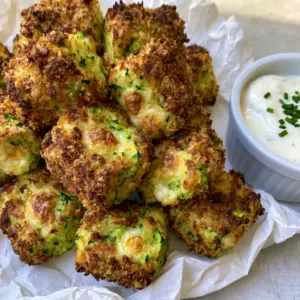
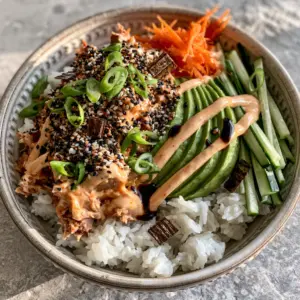
They also provide a necessary crunch for a hearty steak sandwich, where the magenta rings contrast beautifully against toasted bread. If you are looking for a lighter option, try tossing them into a vinegar cucumber salad for a double hit of pickling power. Finally, they are the essential finishing touch for a Korean beef bowl, adding both visual flair and a sharp flavor contrast to the sweet soy glaze.
Common Pickling Curiosities
You can, but it will change the visual result. Apple cider vinegar has a yellow tint which will make the brine appear cloudy or gold rather than the crystal-clear look achieved with white vinegar.
Yes, glass is highly recommended. The acetic acid in pickling recipes can react with plastic or certain metals, altering the flavor and potentially leaching chemicals into your food.
Avoid boiling the onions in the brine. By pouring the hot liquid over the raw onions and letting them cool naturally, you preserve the cellular walls and keep that signature ‘snap’ texture.
For peak flavor and texture, consume them within 2-3 weeks. They are safe to eat longer, but they will gradually lose their crispness and the color will begin to fade.
This is a natural chemical reaction. Red onions contain anthocyanins (natural pigments) that change from purple to vibrant magenta when they come into contact with the acetic acid in vinegar.
The Signature Quick Pickled Red Onion Recipe
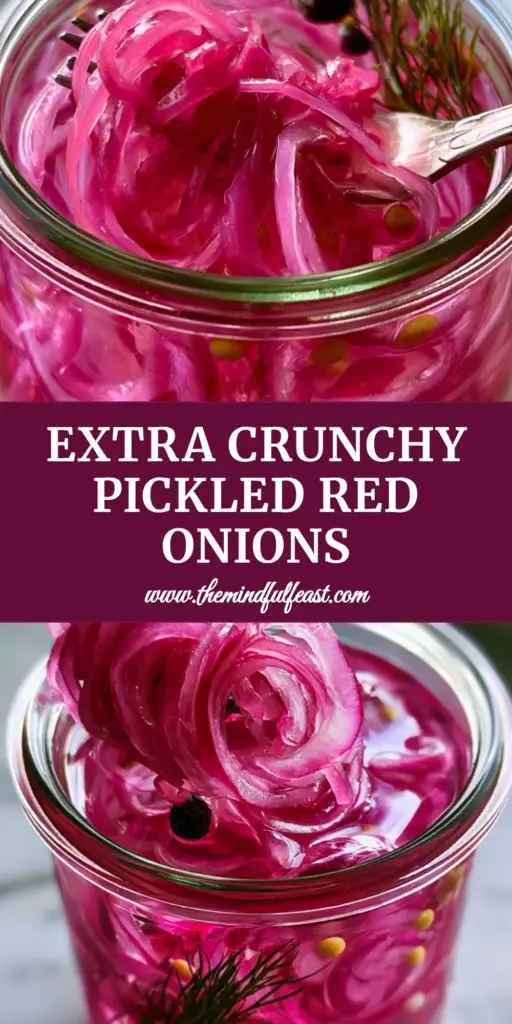
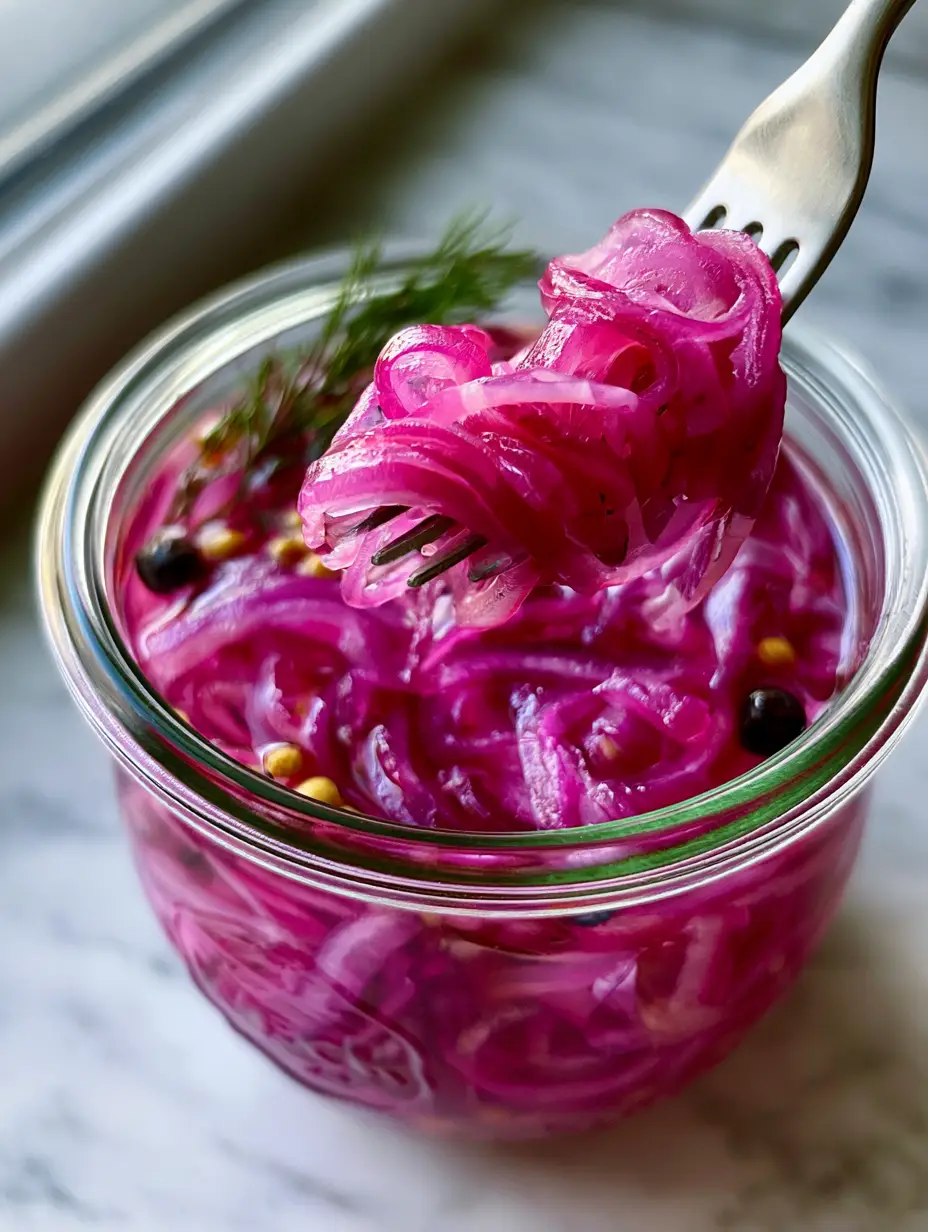
Pickling Recipes: The Ultimate Guide to Vibrant Magenta Quick Pickled Red Onions
Ingredients
Equipment
Method
- Using a mandoline or sharp knife, slice the red onions into thin, uniform rings about 1/8 inch (3mm) thick.
- Add peppercorns and mustard seeds to the bottom of a clean Weck jar. Stuff the onion rings and dill sprigs into the jar tightly.
- Combine vinegar, water, sugar, and salt in a saucepan. Heat until the liquid is crystal clear and salt/sugar are fully dissolved.
- Pour the hot brine over the onions until submerged. Let sit at room temperature for 30 minutes until they turn vibrant magenta.
Notes
Store in the refrigerator for up to 3 weeks for maximum crunch.
Mastering the Art of the Quick Pickle
Incorporating these pickling recipes into your weekly meal prep is one of the easiest ways to elevate your cooking. The combination of the firm, translucent texture and the vibrant magenta color makes these onions a staple for anyone who values both taste and presentation. Whether you are following the visual blueprint of the Weck jar and fresh dill or experimenting with your own aromatics, the science remains the same.
We would love to see how your pickled onions turned out! Did you get that perfect magenta glow? Share your results in the comments below or tag us in your photos. Don’t forget to save this recipe to your favorite boards on Pinterest so you always have this guide handy for your next kitchen adventure.