There is a specific kind of magic that happens when a spice-crusted, cast-iron seared Atlantic salmon fillet meets a bed of velvety, orange-hued cream sauce. This Blackened Cajun salmon pasta isn’t just a meal; it’s a sensory experience designed to mimic the high-end bistro quality of professional social media food photography right in your own kitchen.
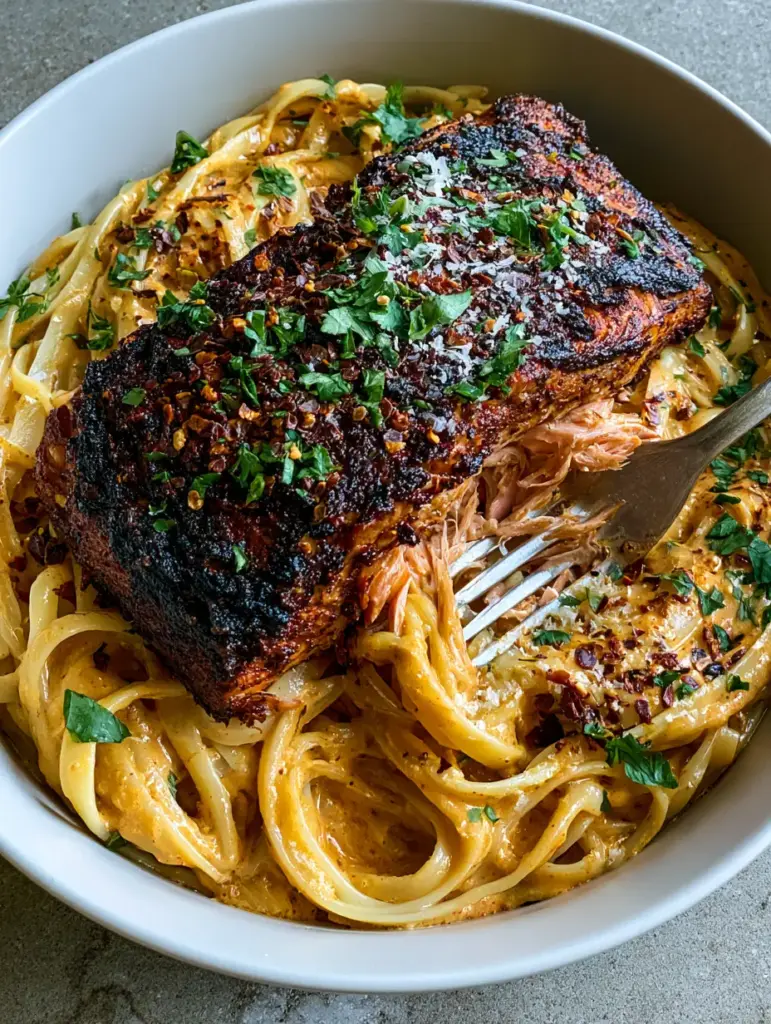
Imagine a top-down view of a shallow ceramic bowl, where glossy fettuccine ribbons are swirled in a thick, vibrant sauce that carries just the right amount of heat. Resting atop this pasta foundation is a succulent salmon fillet, boasting a dark, textured crust that gives way to steaming, moist pink layers when flaked with a silver fork. Every bite is punctuated by the freshness of flat-leaf parsley and the sharp kick of dried red chili flakes.
Whether you are looking for a show-stopping date night meal or a comforting weeknight upgrade, this recipe delivers on every promise of flavor and texture. We are going to dive deep into the science of the “blackening” technique and the emulsion secrets behind a restaurant-quality Cajun cream sauce.
Why This Creamy Cajun Salmon Recipe Works
- The Perfect Contrast: The crispy, dark spice crust of the salmon provides a textural counterpoint to the silky, al dente fettuccine.
- Authentic Color Palette: By blooming Cajun spices directly in the fat, we achieve that iconic, thick orange-tinted cream sauce seen in elite food styling.
- Visual Precision: We use a combination of micro-planed parmesan and cracked black pepper to add depth and professional-level garnishing.
- Balanced Heat: The warmth of the cayenne and red pepper flakes is perfectly tempered by the high-fat content of the heavy cream.
The Ultimate Cajun Pantry for a Professional Sear
To achieve the visual and flavorful results of this Blackened Cajun salmon pasta, you need ingredients that can stand up to high heat while providing a complex flavor profile. We aren’t just using salt and pepper here; we are building a foundation of aromatics.
Fresh Atlantic Salmon Fillets: Look for fillets that are at least 1.5 inches (3.8cm) thick. This thickness allows you to achieve a dark, crispy crust without overcooking the delicate pink interior.
Fettuccine Pasta: We chose fettuccine for its wide surface area, which is essential for grabbing onto the thick, glossy orange sauce. If you prefer a different shape, cajun linguine is an excellent alternative.
Heavy Whipping Cream: You need the high fat content (at least 36%) to ensure the sauce stays thick and doesn’t break when hit with the acidic notes of the spices. This is the secret to that “glossy” finish described in our visual blueprint.
Cajun Spice Blend: A mix of smoked paprika, garlic powder, onion powder, dried oregano, dried thyme, and cayenne pepper. The paprika is what provides the deep orange tint to the final cream sauce.
High-Smoke Point Oil: Use 2 tbsp (30ml) of avocado or grapeseed oil. Since we are blackening the fish at high temperatures, butter alone would burn and become bitter; the oil ensures a clean sear.
Garnishing Trio: You must have fresh flat-leaf parsley, dried red pepper flakes, and micro-planed Parmesan cheese. These aren’t just for flavor; they provide the “visual inventory” that makes the dish pop against a neutral background.
Essential Equipment for the Perfect Blackened Crust
Achieving the dark, textured blackened crust seen in our smartphone photo requires the right tools. A heavy-bottomed cast-iron skillet is the gold standard here because it retains heat and creates an even sear across the entire surface of the fish.
You will also need a micro-plane for the Parmesan cheese to achieve that “dusting” effect, and a wide pasta pot to ensure your fettuccine has plenty of room to move, preventing sticking. A silver fork is the final touch, used to gently flake the salmon for that perfect “authentic social media” presentation.
Mastering the Sear: Step-by-Step Instructions
1. Preparing the Salmon Foundation
Pat your salmon fillets completely dry using paper towels. Moisture is the enemy of a good sear; if the fish is damp, it will steam rather than blacken. Season the fillets generously on all sides with your Cajun spice rub, pressing the spices into the flesh to form a thick coating.
2. Boiling the Fettuccine to Al Dente
Bring a large pot of heavily salted water to a boil. Add 8 oz (225g) of fettuccine and cook for about 1-2 minutes less than the package directions. You want the pasta to have a firm bite (al dente) because it will finish cooking in the hot cream sauce later.
3. Achieving the Iconic Blackened Crust
Heat 2 tbsp (30ml) of oil in your cast-iron skillet over medium-high heat until the oil is shimmering and just starting to wisps of smoke. Carefully lay the salmon fillets skin-side up (flesh-side down) into the pan. Listen for a loud, aggressive sizzle—this is the sound of the spices caramelizing.
Sear the salmon for 3-4 minutes without moving it. You are looking for a deep golden-brown to dark mahogany crust. Flip the fillets and cook for another 2-3 minutes until the internal temperature reaches 125°F (52°C) for medium-rare or 135°F (57°C) for medium. Remove the salmon and let it rest on a warm plate.
4. Building the Thick Orange Cream Sauce
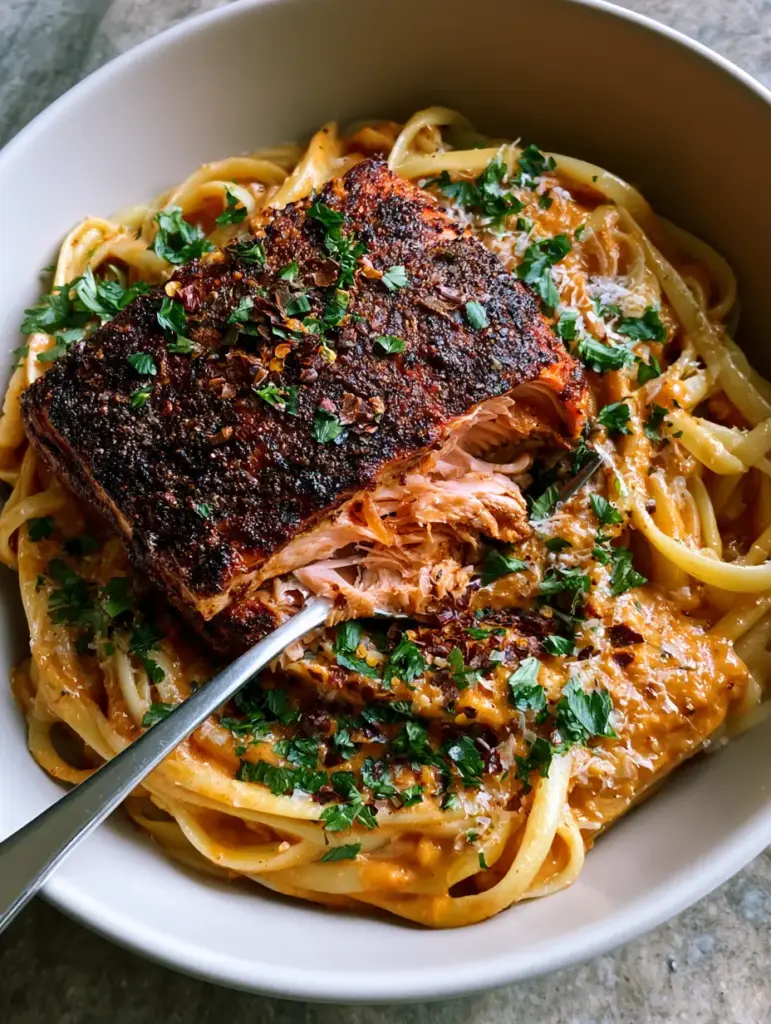
In the same skillet (don’t wash it!), lower the heat to medium and add a splash of chicken stock or pasta water to deglaze, scraping up those flavorful blackened bits. Pour in 1.5 cups (355ml) of heavy cream and an extra tablespoon of the Cajun seasoning. As the cream simmers, it will pick up the spices and turn a beautiful, thick orange hue.
Whisk in 1/2 cup (45g) of freshly grated Parmesan cheese until the sauce is glossy and coats the back of a spoon. Toss the cooked fettuccine into the sauce, ensuring every strand is swirled in the vibrant liquid.
Expert Tips for Visual and Culinary Success
- The “Gloss” Secret: If your sauce looks too matte or dry, add 1/4 cup (60ml) of starchy pasta water. The starch acts as a binder, creating that professional, light-reflecting gloss.
- Temperature Control: If the skillet is too hot, the spices will taste burnt rather than toasted. If you see black smoke (rather than white steam), turn the heat down immediately.
- The Flake Reveal: When plating, use a silver fork to gently pry apart the center of the salmon. This exposes the moist pink layers, which creates a beautiful color contrast against the dark crust.
- Garnish Height: Sprinkle the parsley and red pepper flakes from about 12 inches above the bowl. This ensures an even distribution rather than a clump in the center.
What to Serve With Blackened Cajun Salmon Pasta
This dish is incredibly rich, so it pairs best with side dishes that offer acidity or a crisp crunch. A simple arugula salad with a lemon vinaigrette is perfect for cutting through the heavy cream. If you are looking for more pasta inspiration, you might enjoy our creamy cajun pasta recipe which focuses on a similar flavor profile with different protein options.
For those who love seafood-centric pasta dishes, this recipe sits perfectly alongside our creamy crab pasta or even a lighter spinach salmon pasta for a different nutritional balance. If you have leftover salmon, consider using it in our creative salmon recipes for a quick lunch the next day.
Storage and Reheating Advice
Salmon pasta is best enjoyed immediately to maintain the texture of the blackened crust. However, leftovers can be stored in an airtight container in the refrigerator for up to 2 days. When reheating, do so gently on the stovetop over low heat. Add a tablespoon of milk or water to the pan to loosen the sauce, as the pasta will have absorbed much of the moisture overnight.
We do not recommend freezing this dish, as the cream sauce may separate upon thawing, and the salmon will lose its signature crispy texture.
Common Questions About Cajun Salmon Pasta
Yes, but ensure it is completely thawed and patted dry with paper towels. Frozen salmon often releases more moisture, so drying it is crucial to achieve a crispy blackened crust.
Use heavy whipping cream with a high fat content and avoid boiling the sauce vigorously once the cheese is added. Gentle simmering ensures a smooth, emulsified texture.
It has a noticeable kick from the cayenne and red pepper flakes, but the heavy cream and parmesan in the pasta help to mellow the heat, creating a balanced flavor.
Blackening is a technique where a thick layer of spices caramelizes at high heat to create a dark mahogany crust. Unlike burning, it shouldn’t taste bitter or acrid; it should be deeply savory and fragrant.
The orange tint comes from the paprika and cayenne in the Cajun spice blend blooming in the cream and oil. This is a visual hallmark of an authentic Cajun cream sauce.
The Signature Blackened Cajun Salmon Pasta Recipe
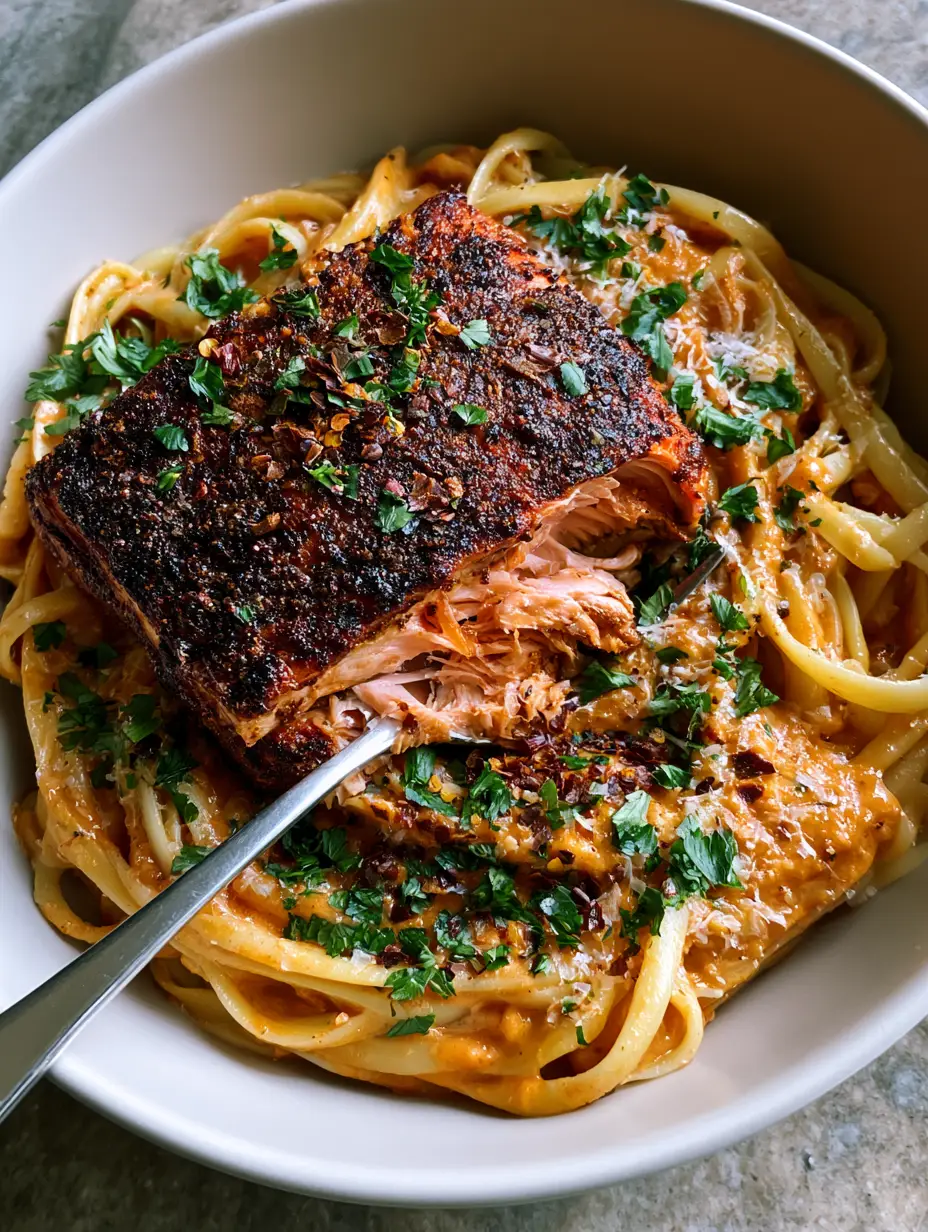
Blackened Cajun Salmon Pasta with a Creamy Garlic Sauce
Ingredients
Equipment
Method
- Pat salmon dry and coat heavily with Cajun seasoning.
- Cook fettuccine in salted water until al dente. Reserve some pasta water.
- Heat oil in cast iron. Sear salmon flesh-side down for 4 minutes until a dark crust forms. Flip and cook 2-3 more minutes.
- Deglaze pan with stock/water. Add cream and remaining spices. Simmer until orange, then whisk in Parmesan.
- Toss pasta in sauce. Top with salmon, parsley, pepper flakes, and extra cheese.
Notes
Pat the salmon extremely dry before seasoning.
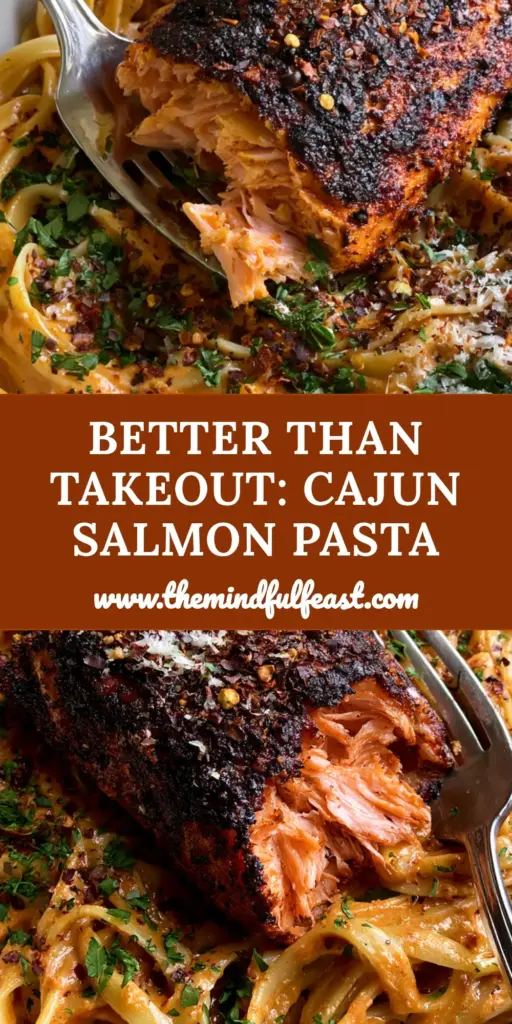
Closing & Call to Action
Mastering the Blackened Cajun salmon pasta at home is a rewarding way to bring restaurant-quality flavors to your dining table. The combination of the spicy, textured crust and the velvety orange sauce creates a dish that is as visually stunning as it is delicious. If you enjoyed this recipe, please leave a comment below and share your creations with us! Don’t forget to save this to your favorite boards on Pinterest so you can find it whenever the craving for Cajun comfort hits.