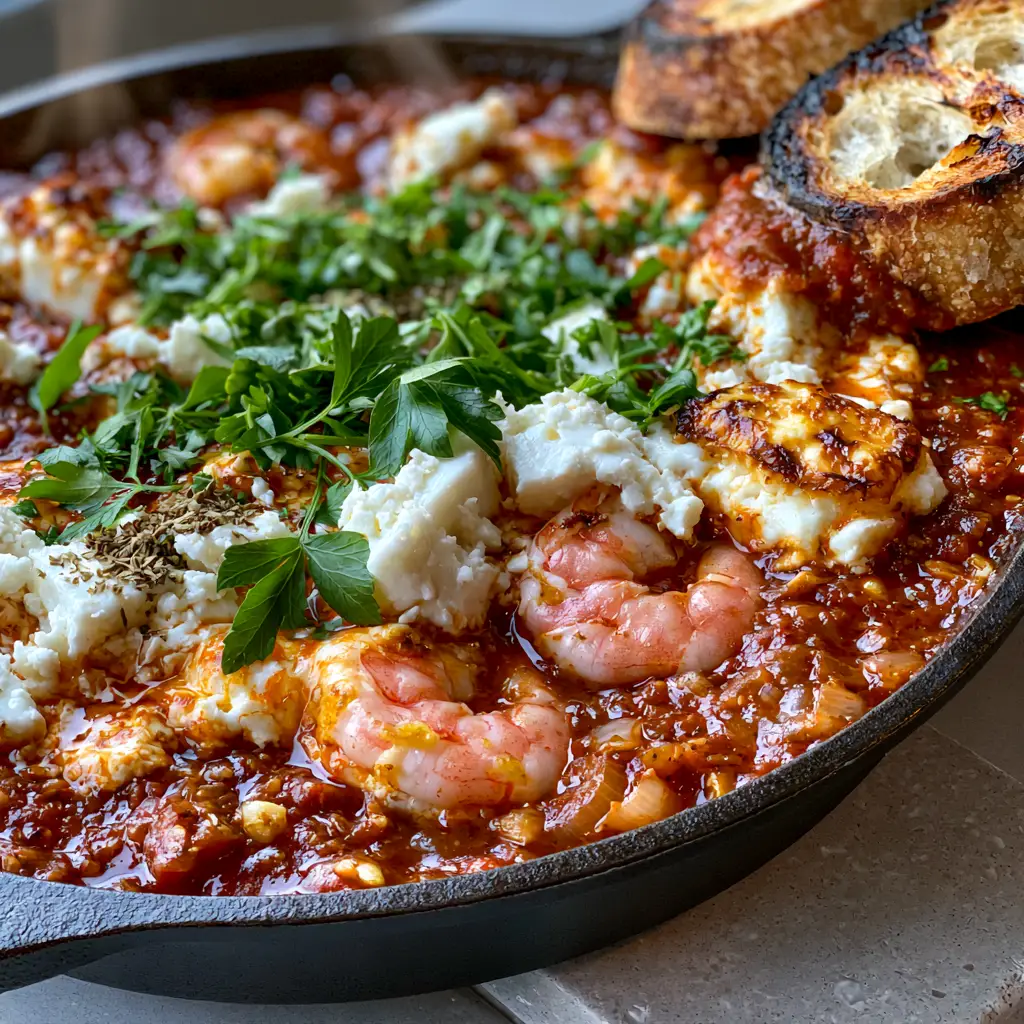
There is nothing quite like the sensory experience of a rustic black cast iron skillet arriving at the table, still sizzling and releasing wisps of aromatic steam. Our authentic Greek Shrimp Saganaki captures the vibrant essence of the Hellenic coast, combining succulent seafood with a rich, chunky tomato base and the unmistakable tang of melted feta cheese. Whether you are hosting a sophisticated dinner party or looking for a high-protein, flavorful weeknight meal, this dish delivers professional-grade results with minimal cleanup.
The magic of this recipe lies in the contrast of textures—the snap of seared jumbo shrimp against a bubbling sauce, finished with those sought-after toasted golden-brown feta edges. By following this guide, you will learn the culinary secrets to achieving that perfect char on the sourdough baguette and the exact science behind a balanced tomato reduction. Let’s dive into the Mediterranean flavors that make Greek Shrimp Saganaki a timeless classic.
Why You Will Crave This Rustic Skillet Masterpiece
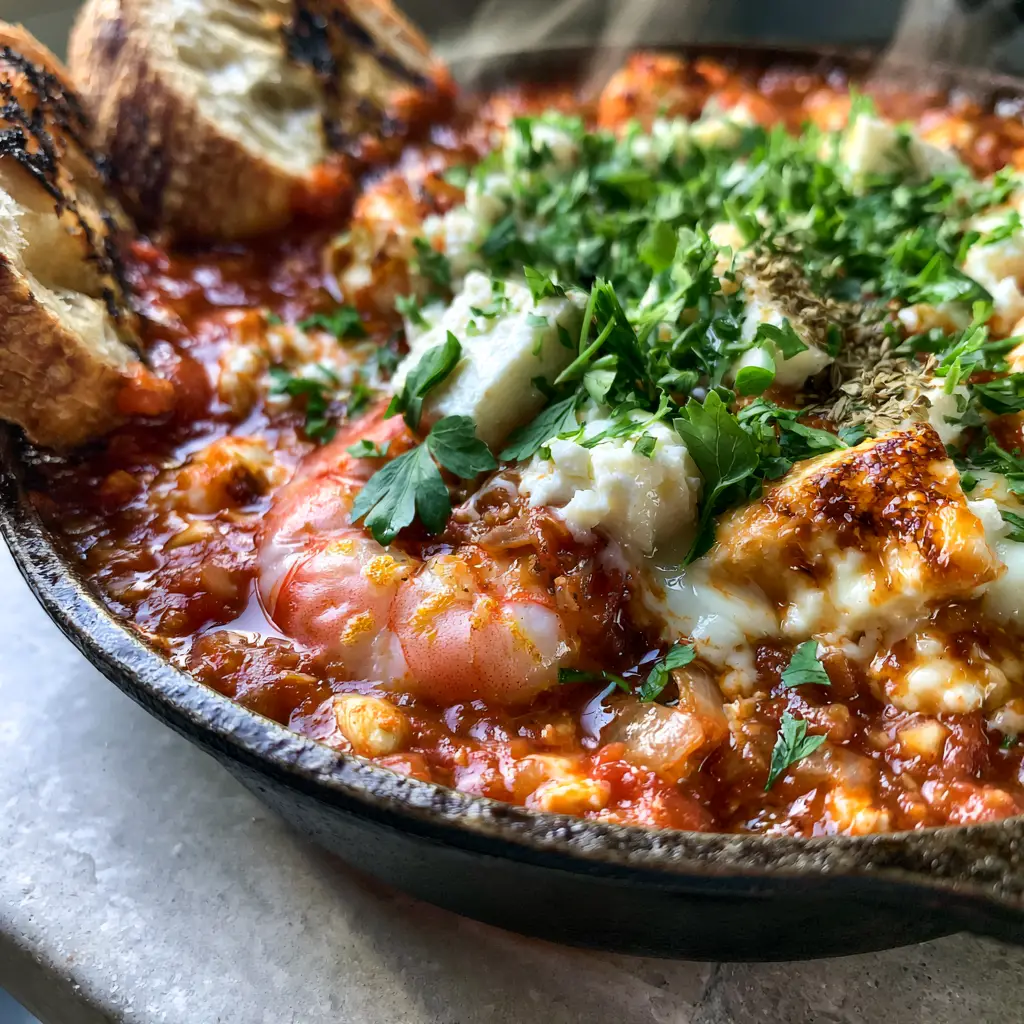
- Perfectly Seared Textures: We use a high-heat sear to ensure jumbo shrimp stay plump and pink with slight golden char marks, preventing the rubbery texture often found in lesser recipes.
- Complex Tomato Depth: The base is a thick, bubbling, chunky tomato sauce built with sautéed onions and garlic, providing a robust foundation for the seafood.
- Dual-Texture Feta: By using thick chunks of white feta, you get the best of both worlds: creamy, melted pockets and toasted, crispy edges from a quick finish under the broiler.
- The Ultimate Dipping Experience: Two thick, charred slices of crusty sourdough baguette are essential for soaking up the rich red sauce, ensuring not a single drop goes to waste.
The Anatomy of Authentic Greek Shrimp Saganaki Ingredients
Jumbo Shrimp (500g / 1.1 lbs): Look for high-quality, deveined jumbo shrimp. Their size is crucial for maintaining a juicy interior while achieving that characteristic golden char on the outside during the initial sear.
Extra Virgin Olive Oil (3 tbsp / 45ml): This foundational fat is used for both searing the shrimp and sautéing the aromatics. It provides the essential healthy fats and fruity notes characteristic of Mediterranean cooking.
Yellow Onion & Garlic: One medium onion (150g) and four cloves of garlic provide the aromatic backbone. Finely dicing them ensures they soften into the sauce, creating a thick, chunky consistency without being overpowering.
Chunky Crushed Tomatoes (400g / 14 oz): We recommend high-quality canned crushed tomatoes or finely diced fresh tomatoes. These provide the “bubbling chunky” texture seen in our visual blueprint, holding their shape better than a smooth purée.
Tomato Paste (1 tbsp / 15g): This concentrated ingredient adds a deep umami red color and thickens the sauce to the perfect consistency for dipping bread.
Dried Oregano & Fresh Parsley: A pinch of dried oregano adds an earthy, floral note during the simmer, while a generous scattering of vibrant green fresh flat-leaf parsley provides a burst of color and freshness at the end.
Greek Feta Cheese (150g / 5 oz): Use a block of sheep’s milk feta rather than pre-crumbled varieties. Cutting it into thick chunks allows the cheese to maintain its integrity while the edges toast under the heat.
Sourdough Baguette: Two thick slices (or more) of crusty sourdough are charred until smoky. This provides a structural, crunchy element that pairs perfectly with the refreshing flavors of a traditional Greek side.
Essential Equipment for Culinary Success
To achieve the visual and textural results described, a 10-inch (25cm) rustic black cast iron skillet is highly recommended. Cast iron retains heat exceptionally well, which is vital for searing the shrimp quickly and getting those toasted feta edges under the broiler. You will also need a sharp chef’s knife for the parsley and aromatics, and a sturdy spatula for deglazing the pan.
Step-by-Step Mastery: How to Make Greek Shrimp Saganaki
Phase 1: The High-Heat Shrimp Sear
Pat your jumbo shrimp completely dry with paper towels; moisture is the enemy of a good sear. Heat 1 tbsp (15ml) of olive oil in the cast iron skillet over medium-high heat until it shimmers. Add the shrimp in a single layer, ensuring they do not touch. Cook for 1-2 minutes per side until they turn pink and develop slight golden char marks. Remove them from the pan immediately to avoid overcooking; they will finish in the sauce later.
Phase 2: Building the Chunky Tomato Base
In the same skillet, add the remaining oil and the diced onions. Sauté until translucent, then add the minced garlic and tomato paste. Cook for another minute until the paste turns a deep brick red. Pour in the crushed tomatoes and a pinch of dried oregano. Simmer for 8-10 minutes over medium-low heat until the sauce is thick, bubbling, and reduced by about a third. This is a great time to prep other healthy Mediterranean meal components for your weekly rotation.
Phase 3: The Saganaki Assembly and Feta Finish
Nestle the seared shrimp back into the bubbling sauce. Top the dish heavily with thick chunks of white feta cheese. Place the skillet under a preheated broiler for 2-3 minutes. Watch closely for the sensory cues: the sauce should be vigorously bubbling, and the feta chunks should show toasted golden-brown edges while the centers begin to melt into the red sauce.
Phase 4: Charring the Sourdough and Final Garnish
While the skillet is under the broiler, lightly brush your sourdough slices with olive oil and char them in a separate pan or directly over a gas flame until the edges are blackened and crispy. Remove the skillet from the oven, garnish with a generous scattering of vibrant green fresh flat-leaf parsley, and tuck the charred bread into the side of the skillet.
Expert Tips for a Professional Finish
- Don’t Overcrowd the Pan: When searing the shrimp, work in batches if necessary. If the pan is too full, the shrimp will steam rather than sear, losing that beautiful pink char.
- Quality of Feta Matters: Always buy feta in brine. It has a higher moisture content, which allows it to melt slightly while still holding those chunky shapes that look so inviting in the skillet.
- Deglaze the Skillet: If the bottom of the pan has browned bits (fond) after searing the shrimp, add a splash of white wine or water when adding the onions to scrape up all that extra flavor.
- Sourdough Texture: Ensure your bread is “partially dipped” into the sauce just before serving. This allows the bottom to soften and absorb the tomato juices while the top stays crunchy.
What to Serve with Greek Shrimp Saganaki
This dish is a star on its own, but it pairs beautifully with other Mediterranean staples. For a lighter meal, serve it alongside a crisp vinegar-based cucumber salad to cut through the richness of the feta. If you are looking for a more heartier spread, consider pairing it with lemon-infused orzo or a side of crispy smashed baby potatoes. The acidity of the tomato sauce also works wonders when served alongside perfectly sautéed seasonal vegetables.
Storing and Reheating Your Leftovers
While Greek Shrimp Saganaki is best enjoyed fresh from the skillet, leftovers can be stored in an airtight container in the refrigerator for up to 2 days. To reheat, place the mixture in a small oven-safe dish and warm at 350°F (175°C) until the sauce bubbles. Avoid the microwave if possible, as it can make the shrimp rubbery. Freezing is not recommended, as the texture of the feta and shrimp will degrade significantly upon thawing.
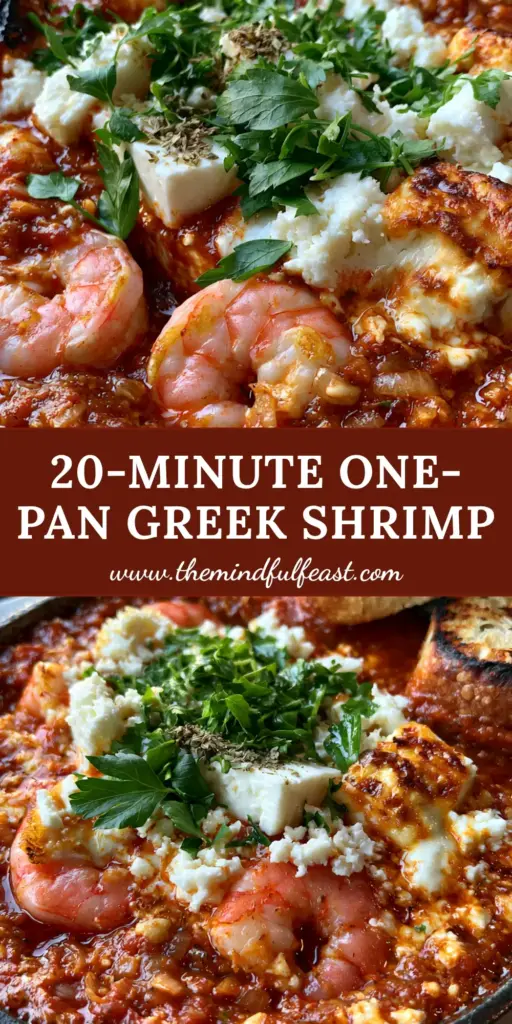
Greek Shrimp Saganaki: The Ultimate One-Skillet Mediterranean Appetizer
Ingredients
Equipment
Method
- Heat 1 tbsp (15ml) olive oil in a cast iron skillet over medium-high heat.
- Add shrimp and cook for 1-2 minutes per side until pink with golden char marks. Remove and set aside.
- Add remaining oil to the skillet. Sauté onion until translucent, then add garlic and tomato paste for 1 minute.
- Add crushed tomatoes and oregano. Simmer for 8-10 minutes until thick and chunky.
- Return shrimp to the skillet. Top with feta chunks.
- Broil for 2-3 minutes until feta edges are toasted golden-brown.
Notes
Ensure the skillet is rustic cast iron to get the authentic 'saganaki' sear.
Frequently Asked Questions
Yes, you can use any oven-safe heavy skillet, but cast iron is preferred for its ability to create a deep sear and toast the feta edges evenly.
While traditional in some regions for a licorice hint, it is optional. This recipe focuses on the robust flavors of tomato, garlic, and high-quality feta.
Sear the shrimp quickly at high heat and remove them from the pan. Only return them to the sauce for the final minute of broiling to prevent overcooking.
Jumbo shrimp (size 16-20) are ideal because they remain juicy after searing and broiling, providing a better textural contrast to the chunky sauce.
Feta is a non-melting cheese by nature, but high-quality sheep’s milk feta will soften and brown beautifully under a broiler. Avoid ‘fat-free’ versions.
Closing & Call to Action
This Greek Shrimp Saganaki is a testament to the power of simple, high-quality ingredients treated with proper technique. The combination of charred seafood, rich tomato sauce, and toasted feta creates a restaurant-quality experience right in your own kitchen. If you enjoyed this recipe, please leave a comment below and share your results! Don’t forget to follow us and save this recipe to your boards on Pinterest for your next Mediterranean dinner night.