Experience the soul of West African comfort food with this definitive Native Jollof Rice recipe. Often called “Village Rice” or “Concoction Rice,” this dish is a rustic, deeply flavorful departure from the classic tomato-based Jollof. It celebrates the pungent, earthy notes of palm oil, the smokiness of charred fish, and the briny depth of ground crayfish, all captured in a single clay pot.
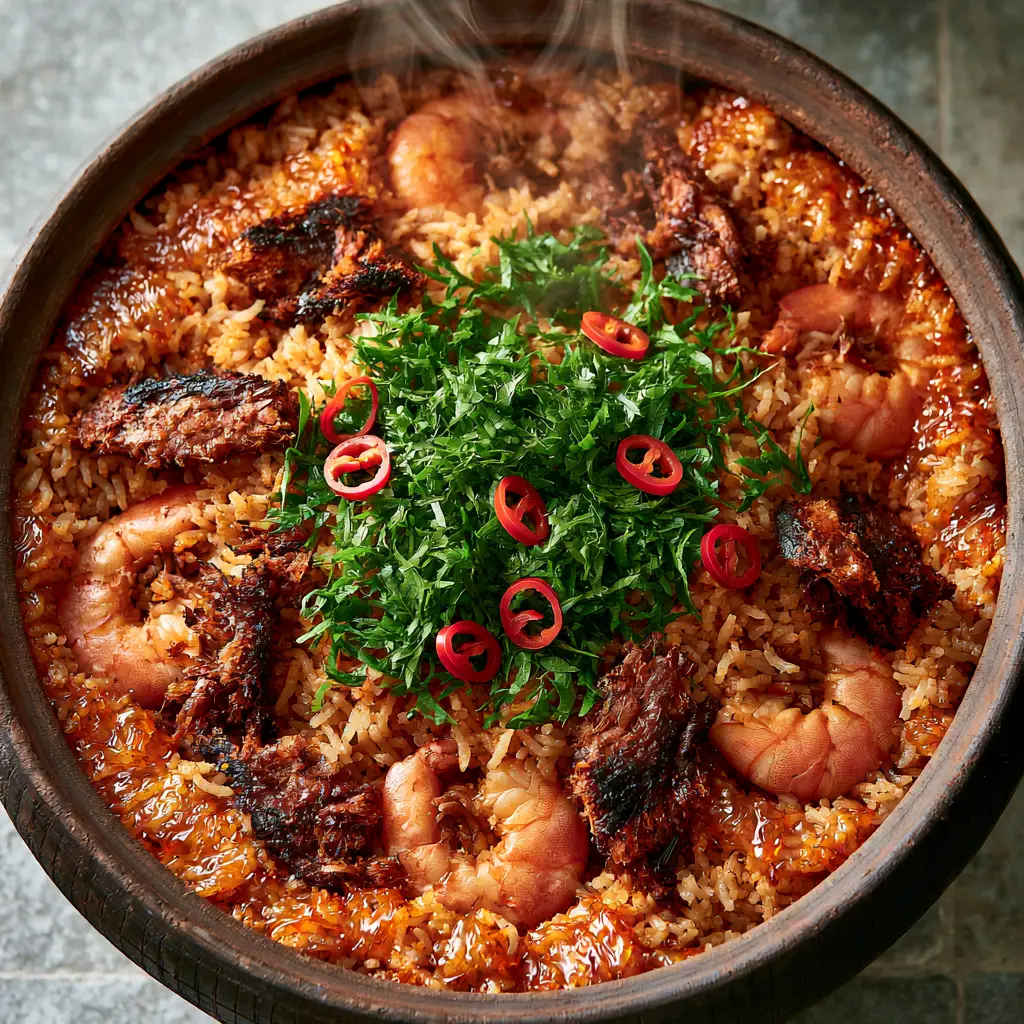
Imagine lifting a heavy lid to reveal individual, perfectly fluffy long-grain rice grains, each glistening with a rich, translucent orange-red palm oil coating. The aroma is unmistakable—a blend of caramelized onions, spicy scotch bonnets, and the herbal brightness of fresh scent leaves. Whether you are seeking a nostalgic taste of home or a bold new addition to your repertoire, this recipe delivers visual and culinary perfection.
Why This Village-Style Rice Recipe Is a Culinary Masterpiece
- Textural Contrast: You will achieve a stunning balance between the succulent, tender steamed prawns and the chunky, firm flakes of deeply charred smoked fish.
- Visual Definition: Unlike mushy rice dishes, our technique ensures each long-grain rice particle remains separate and coated in glossy palm oil.
- Complex Heat: The use of sliced red scotch bonnet peppers provides a clean, sharp heat that cuts through the richness of the oil.
- Herbaceous Finish: Finely shredded scent leaves add a layer of aromatic complexity that transforms the dish from simple to gourmet.
The Essential Pantry for Authentic Village Flavors
Long-Grain Parboiled Rice: 3 cups (approx. 555g). This is the structural foundation; long-grain rice is essential for that “one-one” grain definition seen in our visual blueprint.
Red Palm Oil: 1/2 cup (120ml). This provides the signature translucent orange-red glow and a unique earthy flavor that cannot be substituted with vegetable oil.
Smoked Fish: 2 medium pieces (approx. 200g), deboned and flaked. The fish must be charred to provide that deep, smoky campfire essence throughout the rice.
Large Prawns: 1 lb (450g), peeled and deveined. These add a succulent, pink visual pop and a delicate sweetness to the savory base.
Red Scotch Bonnet Peppers: 3-5 peppers, thinly sliced. These provide the vibrant red rings and the necessary heat; adjust according to your spice tolerance.
Fresh Scent Leaves (or Basil): 1/2 cup (20g), finely shredded. These green ribbons provide a fresh aromatic contrast to the rich, heavy oils.
Red Onions: 2 medium (approx. 300g), finely diced. Onions provide the base sweetness and aromatic foundation when sautéed in the palm oil.
Ground Crayfish: 4 tbsp (30g). This is the secret “umami bomb” of Nigerian cuisine, providing a deep, salty, seafood backbone.
Foundational Seasonings: 2 bouillon cubes (10g each), 1 tsp (6g) salt, and 4 cups (960ml) of hot water or stock to ensure the rice cooks evenly without becoming soggy.
The Pro-Chef Tool Kit for Native Rice
To achieve the result shown in our macro photography, a rustic dark clay pot or a heavy-bottomed Dutch oven is highly recommended. These vessels distribute heat evenly and trap steam effectively, which is the secret to fluffy grains. You will also need a fine-mesh strainer for rinsing the rice and a sharp chef’s knife for those precise scent leaf shreds and scotch bonnet rings.
Step-by-Step to Smoky Palm Oil Perfection
Preparing the Rice Foundation
Begin by rinsing the long-grain rice under cold water until the water runs clear. Parboil the rice in salted water for 8-10 minutes until it is par-cooked but still has a firm “bite” (al dente). Drain and set aside; this step is crucial for ensuring the grains don’t clump together in the palm oil.
Building the Aromatic Base
Heat the red palm oil in your pot over medium heat for about 3 minutes. Be careful not to “bleach” the oil completely; you want it to retain its rich orange hue. Add the diced red onions and sauté until translucent and slightly caramelized around the edges. Stir in the ground crayfish and the charred smoked fish flakes, allowing their oils to infuse into the palm oil for 2 minutes.
Simmering the Native Sauce
Add the sliced scotch bonnet peppers and the bouillon cubes. Pour in the 4 cups (960ml) of water or stock. Bring the mixture to a rolling boil. Taste the liquid; it should be slightly over-seasoned, as the rice will absorb the salt and spice as it swells.
The Steam and Infusion Phase
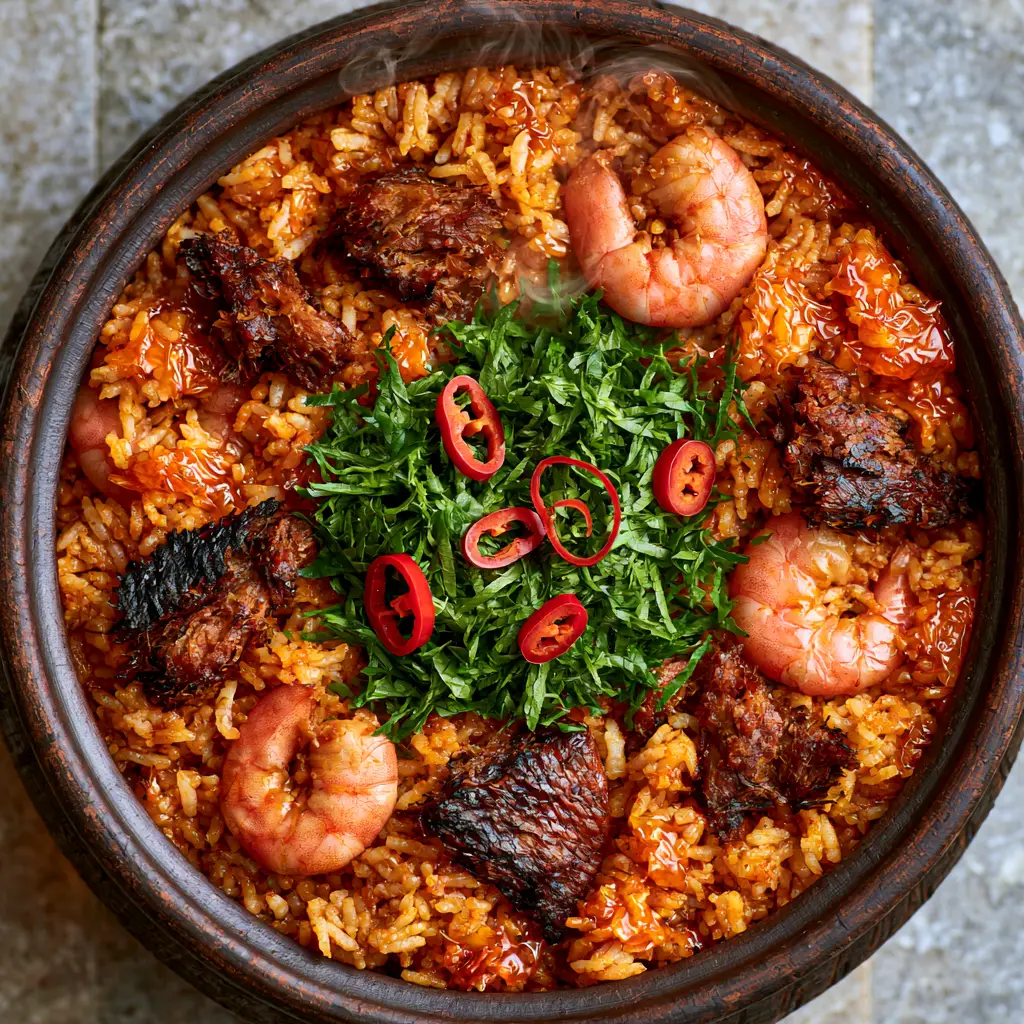
Add the parboiled rice to the pot, ensuring the liquid just barely covers the surface of the grains. Cover the pot tightly—use a sheet of foil under the lid to create a perfect seal. Reduce the heat to low and let the rice steam for 15-20 minutes. You are looking for the “whisps of soft steam” mentioned in our visual prompt.
The Final Flourish
Once the rice has absorbed the liquid and is fluffy, gently fold in the raw prawns and the shredded scent leaves. Cover and steam for an additional 5 minutes. The residual heat will cook the prawns until they are perfectly pink and succulent without becoming rubbery. Fluff the rice gently with a wooden spatula to distribute the glossy oil and garnishes.
Expert Tips for Native Jollof Success
- Control the Oil: If the rice looks dull, add a tablespoon of fresh palm oil at the very end for that signature glistening finish.
- The “Burn” Factor: A slight char at the bottom of the pot (known as “party rice” flavor) adds an extra layer of smokiness.
- Fish Prep: Ensure the smoked fish is thoroughly deboned before flaking to keep the dining experience seamless and elegant.
- Scent Leaf Substitute: If you cannot find African scent leaves, Thai basil or a mix of mint and basil provides a similar aromatic profile.
Perfect Pairings for Your Village Feast
This Native Jollof Rice is a complete meal on its own, but it pairs beautifully with traditional sides. If you enjoy diverse rice preparations, you might also love our Cameroonian Jollof Rice for a different regional twist. For a lighter accompaniment, consider a crisp vinegar cucumber salad to balance the richness of the palm oil.
If you are looking for more healthy dinner ideas, this dish provides excellent protein from the prawns and fish. For those who enjoy seafood-forward grains, our shrimp fried rice recipe offers a quicker weeknight alternative with similar succulent textures.
Frequently Asked Questions
While Basmati works, traditional long-grain parboiled rice is preferred for Native Jollof to maintain the authentic ‘village’ texture and ensure grains stay separate.
The secret is parboiling the rice first and using a tight seal (like foil) during the final steaming phase so the rice cooks in its own vapor rather than excess liquid.
Red palm oil is high in antioxidants like carotenoids and Vitamin E, but it is high in saturated fat, so it should be enjoyed in moderation as part of a balanced diet.
Thai basil or regular Italian basil mixed with a touch of fresh mint is the best substitute for the aromatic, slightly spicy profile of scent leaves.
Native Jollof Rice uses red palm oil and ground crayfish instead of vegetable oil and tomato paste, giving it a distinct earthy, pungent flavor and an orange-red hue.
Authentic Nigerian Native Jollof Rice Recipe Card
Native Jollof Rice: The Ultimate Guide to Authentic Nigerian Village Rice
Ingredients
Equipment
Method
- Rinse the long-grain rice until water is clear, then parboil in salted water for 8-10 minutes. Drain and set aside.
- Heat palm oil in a clay pot, add diced onions, crayfish, and smoked fish flakes. Sauté for 3-5 minutes until fragrant.
- Add sliced peppers and water/stock. Bring to a boil, then add the parboiled rice. Cover tightly.
- Simmer on low for 20 minutes. Fold in prawns and shredded scent leaves. Steam for 5 more minutes until prawns are pink.
Notes
Char the smoked fish over an open flame for 1 minute before flaking to enhance the 'village' aroma.
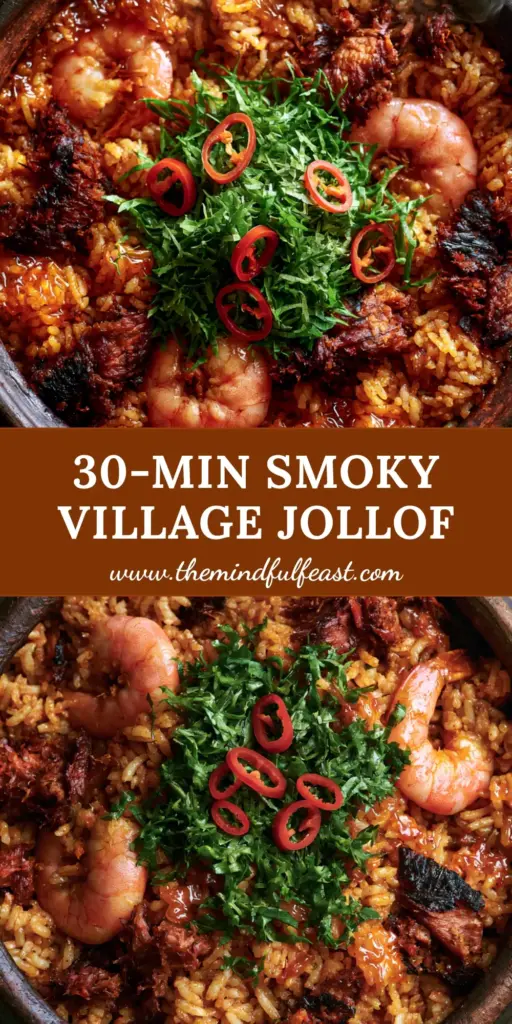
Bringing the Village Home
Mastering Native Jollof Rice is about respecting the ingredients—the pungency of the oil, the heat of the peppers, and the smokiness of the fish. By following these visual cues and culinary techniques, you’ve created a dish that is as beautiful as it is delicious. We would love to see your results! Leave a comment below, and don’t forget to share your pot of gold on Pinterest.