Mastering the perfect Greek moussaka recipe is a rite of passage for any serious home cook. This isn’t just a casserole; it is a structural masterpiece of Mediterranean flavors, featuring layers of tender roasted eggplant, succulent spiced lamb, and a crowning glory of thick, airy custard-like sauce. When you pull this dish from the oven, the sight of a two-inch-thick, golden-spotted topping is enough to stop any dinner guest in their tracks.
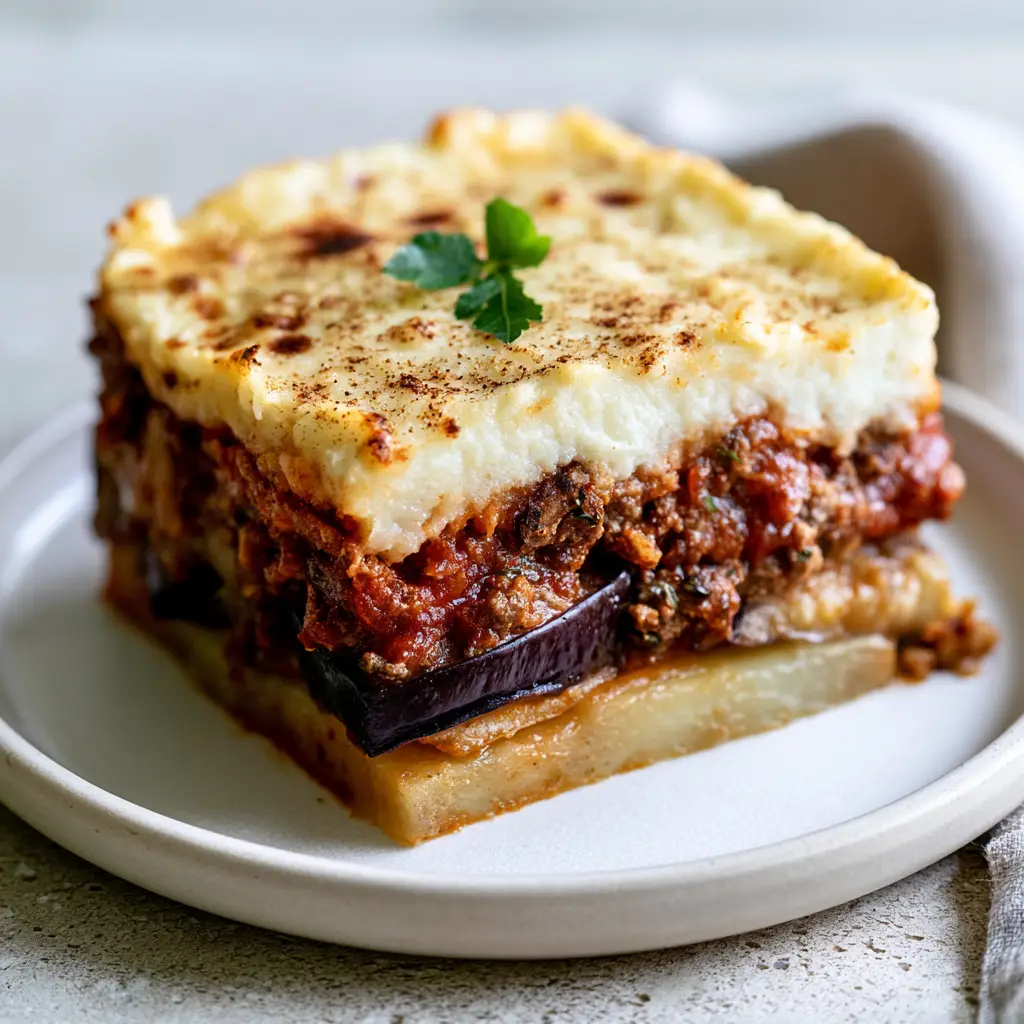
The secret to a world-class moussaka lies in the stability of its layers. Unlike the soggy, oily versions often found in subpar tavernas, a truly professional Greek moussaka recipe produces a clean, square slice that stands tall on the plate. By focusing on oven-roasting rather than frying, we achieve that elusive “no visible oil” look while intensifying the natural sweetness of the vegetables.
Why This Authentic Greek Moussaka Recipe Works
- Structural Integrity: A firm foundation of golden-brown potato rounds ensures the slice remains stable and easy to serve.
- Healthier Technique: Oven-roasting the eggplants preserves their deep purple skins and prevents the dish from becoming greasy.
- The 2-Inch Crown: A stabilized, airy Bechamel sauce creates a velvety, matte finish with professional-grade toasted spots.
- Aromatic Depth: The ground lamb is simmered with cinnamon and fresh parsley, providing a rich contrast to the creamy topping.
The Anatomy of a Perfect Moussaka Slice
Every component in this Greek moussaka recipe serves a functional and aesthetic purpose. The bottom layer of potatoes isn’t just for flavor; it acts as a moisture barrier, absorbing the delicious juices from the meat sauce without turning the bottom into a mushy mess. If you enjoy layered vegetable dishes, you might also love our savory Italian stuffed zucchini for a lighter weeknight alternative.
The eggplant layer follows, providing a buttery, melt-in-your-mouth texture that is characteristic of traditional Greek cuisine. We use large globe eggplants, sliced specifically to ensure every bite contains that beautiful deep purple skin contrast. The meat sauce, a thick reduction of lamb and tomato, provides the savory heart of the dish.
Essential Ingredients for Your Greek Masterpiece
The Vegetable Foundation
3 large (approx. 900g) Globe Eggplants: Look for firm, shiny skins with no soft spots to ensure they roast evenly. These are sliced into 1/2-inch (1.25cm) rounds and salted to draw out excess moisture.
3 medium (approx. 500g) Waxy Potatoes: Yukon Gold or similar varieties work best as they hold their “firm golden-brown” shape under the weight of the layers. You will want to peel and slice these into 1/4-inch (6mm) rounds.
4 tbsp (60ml) Extra Virgin Olive Oil: Used sparingly for brushing the vegetables before roasting to achieve that matte, oil-free finish.
The Savory Lamb Filling
1.5 lbs (680g) Ground Lamb: Traditional moussaka uses lamb for its distinct, rich flavor profile, though a mix of beef and lamb is a common modern variation. The fat content provides the necessary mouthfeel for a decadent sauce.
1 large (150g) Yellow Onion: Finely diced to melt into the sauce, providing a foundation of sweetness.
3 cloves (15g) Garlic: Minced finely to infuse the meat without overpowering the delicate spices.
1 can (400g) Crushed Tomatoes: This creates the “thick tomato-based” consistency required for a stable center layer. If you prefer a lighter tomato touch in other meals, try our chilled shrimp salad during the summer months.
1 tsp (2g) Ground Cinnamon: The hallmark aroma of a true Greek moussaka recipe, adding warmth without heat.
1/2 cup (15g) Fresh Flat-Leaf Parsley: Chopped finely and stirred in at the end to provide a bright, herbal finish.
The Two-Inch Airy Bechamel
1/2 cup (115g) Unsalted Butter: The base of our roux, providing the fat necessary to suspend the flour.
2/3 cup (85g) All-Purpose Flour: This slightly higher flour ratio ensures the sauce is thick enough to support the “two-inch thick” visual prompt.
4 cups (960ml) Whole Milk: Must be warmed before adding to the roux to prevent lumps and ensure a velvety texture.
3 large Egg Yolks: The secret to the “airy” and stable custard-like finish that browns beautifully in the oven.
1/2 cup (50g) Grated Parmesan Cheese: Half goes into the sauce, and half is sprinkled on top for that “toasted parmesan crust.”
1/2 tsp (1g) Finely Ground Nutmeg: The essential spice for Bechamel, providing a dark brown dusting on the final baked surface.
Professional Equipment for Stable Layers
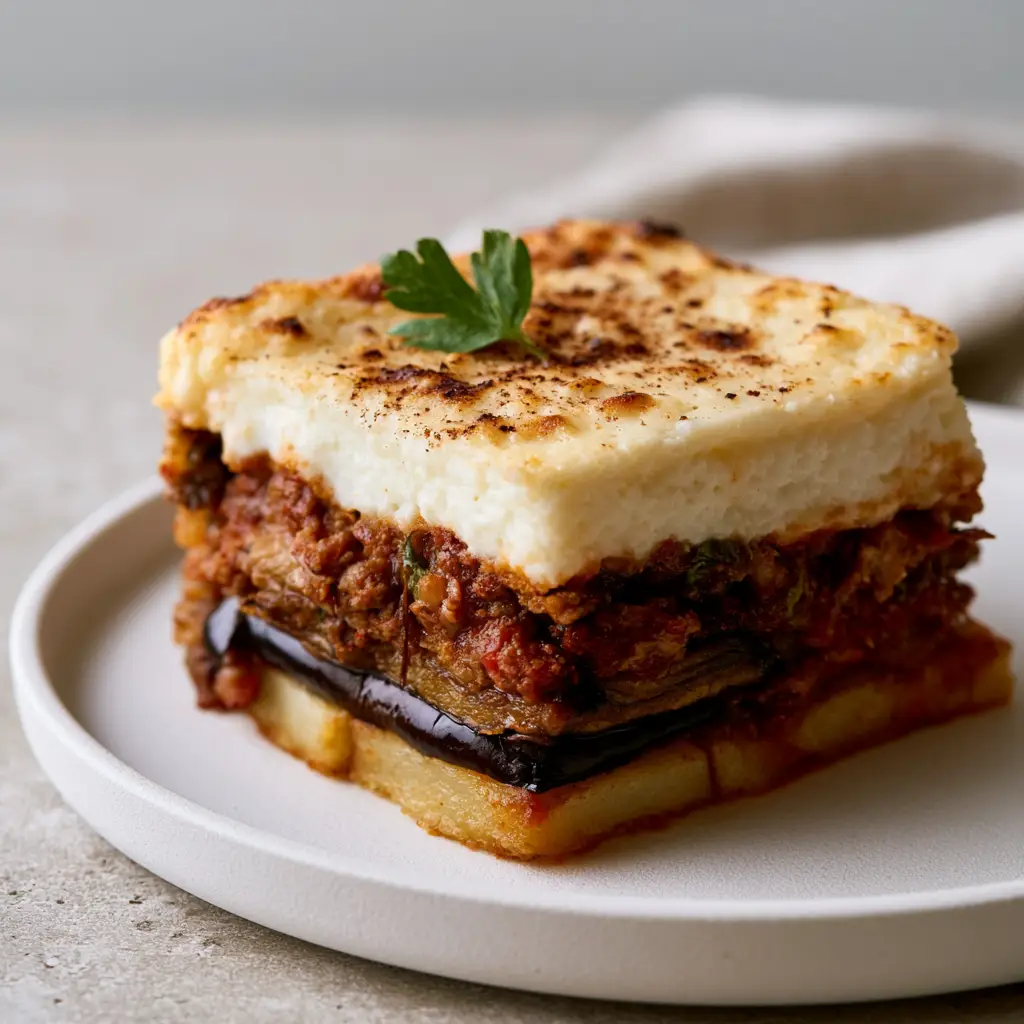
To achieve the clean side-profile shot described in the visual blueprint, you need a high-sided rectangular baking dish (9×13 inch / 23×33 cm). A deep dish is non-negotiable for accommodating that massive two-inch Bechamel layer. You will also need large rimmed baking sheets for roasting the vegetables and a heavy-bottomed saucepan for the sauce whisking.
Step-by-Step Instructions to Moussaka Perfection
Phase 1: Preparing the Vegetable Base
Begin by preheating your oven to 400°F (200°C). Arrange the eggplant rounds on a cooling rack over a tray and salt them generously. Let them sit for 20 minutes; you will see “sweat” appear on the surface. Wipe this away with a paper towel—this step is vital to ensure the eggplant has “no visible oil” and a firm texture.
Lightly brush the potato rounds and eggplant slices with olive oil. Roast the potatoes for 15-20 minutes until they reach a firm golden-brown state. Roast the eggplant for 25 minutes until tender but not collapsed. Set them aside to cool slightly, which helps them firm up for layering.
Phase 2: The Aromatic Lamb Reduction
In a large skillet, brown the ground lamb over medium-high heat. Drain away excess fat to keep the sauce “thick” and stable. Add the onions and garlic, sautéing until translucent. Stir in the crushed tomatoes, cinnamon, salt, and pepper. Simmer for 30 minutes until the liquid has evaporated, leaving a concentrated, herb-flecked meat sauce. Stir in the fresh chopped parsley at the very end to maintain its vibrant green color.
Phase 3: Crafting the Airy Bechamel Crown
In a medium saucepan, melt the butter over medium heat. Whisk in the flour and cook for 2 minutes—do not let it brown. Gradually pour in the warm milk, whisking constantly. Continue cooking until the sauce is thick enough to coat the back of a spoon heavily. Remove from heat and let cool for 5 minutes.
Temper the egg yolks by adding a small amount of the hot sauce to them, then whisk the yolks and half the parmesan into the main pot. This creates the “velvety white” appearance. The yolks provide the lift needed for that “airy” texture once baked. For those who love baking with similar techniques, our homemade zucchini bread also relies on proper moisture control for the perfect crumb.
Phase 4: Assembly and The Final Bake
Grease your baking dish. Lay the golden-brown potatoes in a single, tight layer at the bottom. Top with a layer of roasted eggplant, overlapping them slightly. Spread the thick lamb sauce evenly over the vegetables. Finally, pour the Bechamel over the top, smoothing it out to a depth of approximately two inches.
Sprinkle the remaining parmesan and a fine dusting of ground nutmeg across the surface. Bake at 350°F (180°C) for 45-50 minutes. Look for the visual cue: a matte golden-brown finish with small toasted spots and a gentle rise in the sauce. If you’re looking for a sweet treat after this hearty meal, consider a slice of honey lime chicken or perhaps a dessert to balance the spices.
Expert Tips for a Perfectly Square Slice
- The Patience Rule: You MUST let the moussaka rest for at least 45-60 minutes after taking it out of the oven. This allows the Bechamel to set and the layers to bond, ensuring a clean side-profile when sliced.
- Waxy vs. Starchy: Use waxy potatoes. Starchy potatoes like Russets may fall apart, whereas waxy potatoes stay “firm” as the foundation.
- Nutmeg Freshness: Grate your nutmeg fresh if possible. The “fine dusting of dark brown nutmeg” mentioned in the visual blueprint is most aromatic when freshly ground.
- Eggplant Skin: Do not peel the eggplant completely. Leaving strips of the deep purple skin provides structural support and a beautiful visual contrast.
Storage, Reheating, and Freezing
Moussaka is arguably better the next day as the flavors meld. Store leftovers in an airtight container in the refrigerator for up to 4 days. To reheat, use the oven at 325°F (165°C) to maintain the texture of the Bechamel. While you can freeze moussaka, the Bechamel may lose some of its “airy” quality, so it is best enjoyed fresh or refrigerated.
What to Serve with Greek Moussaka
This dish is incredibly rich and hearty. We recommend serving it with a light, crisp salad to cut through the creaminess. A simple Greek salad with cucumbers and feta is traditional, but a bright lemon-dressed shrimp salad can also provide a refreshing contrast. For a full Mediterranean spread, start your meal with some stuffed vegetables to excite the palate.
Frequently Asked Questions
Yes, ground beef is a common substitute. However, for the most authentic flavor profile, a mix of lamb and beef or pure lamb is recommended.
Use a high-sided 9×13 baking dish and ensure your bechamel is thickened with a proper roux and egg yolks to provide the structural lift needed for a thick, airy layer.
Sogginess usually comes from eggplant moisture or frying the vegetables in too much oil. To prevent this, always salt your eggplant slices to draw out water and roast them instead of frying.
Resting allows the starches in the potatoes and the proteins in the bechamel to set. If you cut it too early, the layers will slide apart and the sauce will run.
Authentic Greek Moussaka Recipe
Greek Moussaka Recipe: The Ultimate Layered Casserole with Velvety Bechamel
Ingredients
Equipment
Method
- Salt eggplant rounds for 20 minutes, wipe dry, and brush with oil. Roast at 400°F (200°C) until tender.
- Brush potato rounds with oil and roast until firm and golden-brown.
- Brown lamb with onions and garlic. Add tomatoes and cinnamon, simmering until thick. Stir in parsley.
- Make a roux with butter and flour, add warm milk. Whisk in yolks and half the parmesan for an airy finish.
- Layer potatoes, then eggplant, then meat. Top with 2 inches of bechamel, remaining cheese, and nutmeg. Bake at 350°F (180°C) for 45-50 mins.
Notes
Waxy potatoes are essential for the structural base.
Bringing the Taste of Greece Home
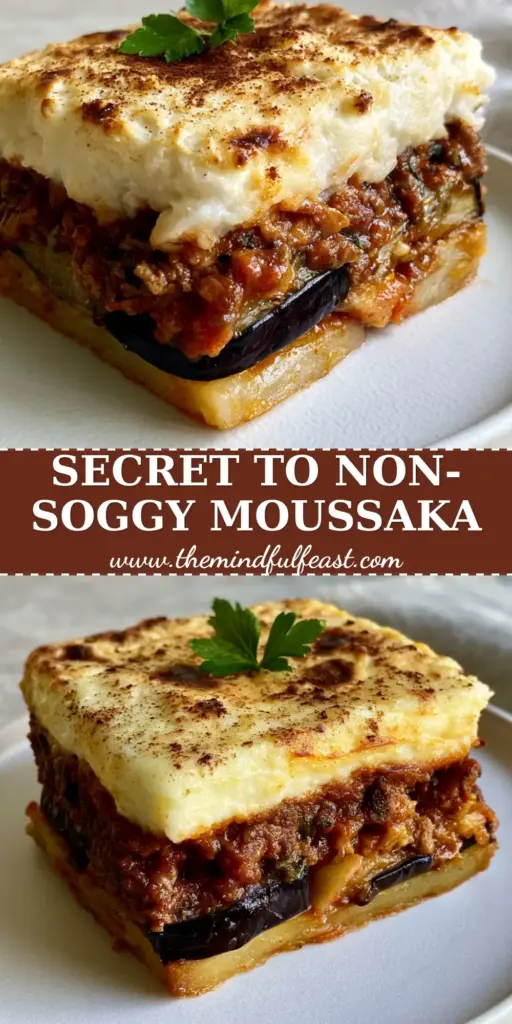
This Greek moussaka recipe is more than just a meal; it’s a centerpiece that brings the warmth of the Mediterranean to your dining table. By following these specific steps to ensure stable layers and a fluffy Bechamel, you’ll create a dish that looks exactly like a professional food photograph. If you enjoyed this recipe, please leave a comment below and share your results! Don’t forget to follow us on Pinterest for more culinary inspiration.
“`