Japanese recipes are celebrated for their delicate balance of flavor, texture, and visual artistry. This Seared Teriyaki Salmon Donburi is the embodiment of that philosophy, offering a restaurant-quality meal that you can master in your own kitchen.
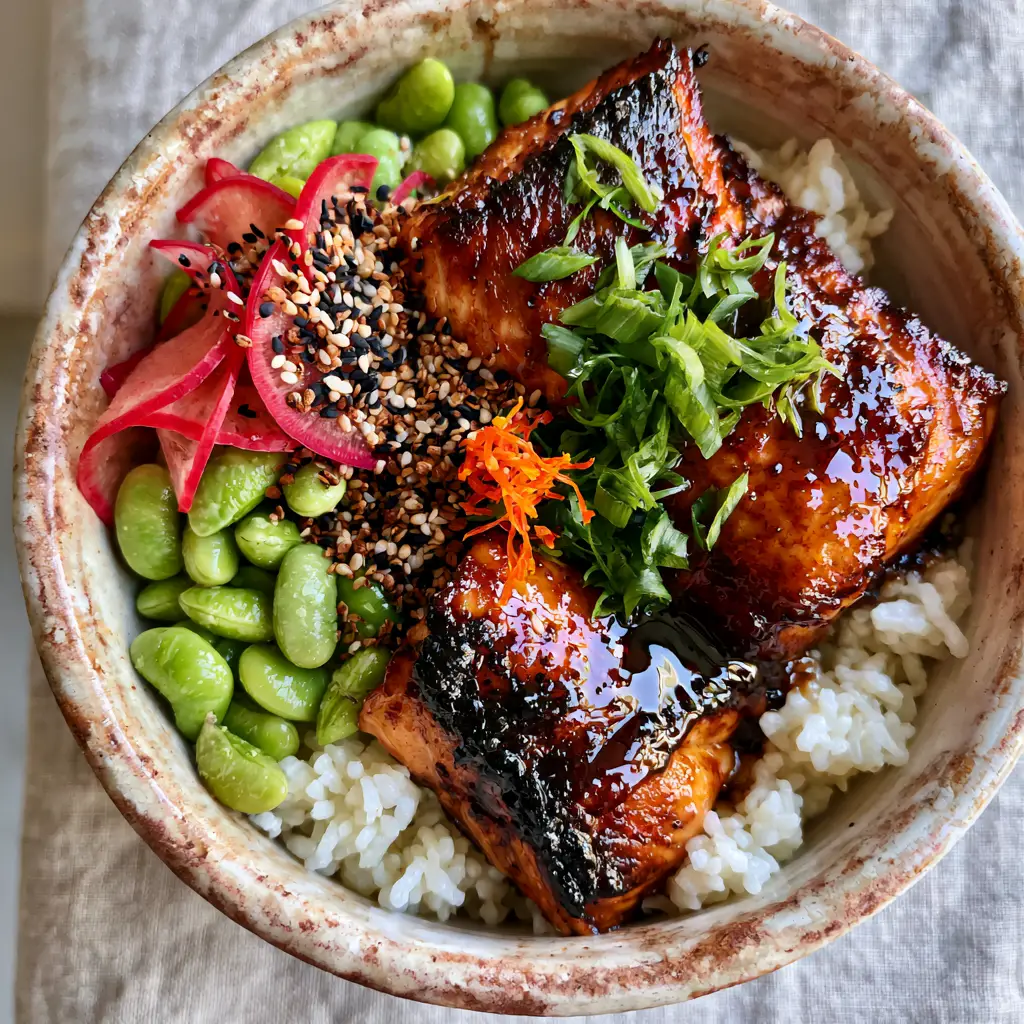
Imagine a thick salmon fillet with deeply seared, caramelized edges, coated in a dark, reflective soy-ginger glaze that catches the light like polished mahogany. Every bite is a journey through salty, sweet, and savory umami notes.
By focusing on foundational techniques—like the proper sear of the fish and the precise reduction of the glaze—you will create a bowl that is as stunning to look at as it is to eat. Let’s dive into the secrets of this glistening masterpiece.
The Aesthetic Allure of This Salmon Donburi
- Glistening Reflective Glaze: A homemade reduction of soy, ginger, and mirin creates a thick, mirror-like finish on the salmon.
- Textural Contrast: The crunch of toasted sesame seeds and crisp radish curls beautifully offsets the tender, flaky fish and fluffy rice.
- Vibrant Color Palette: Emerald scallions, bright green edamame, and fiery orange chili threads make this dish a visual feast.
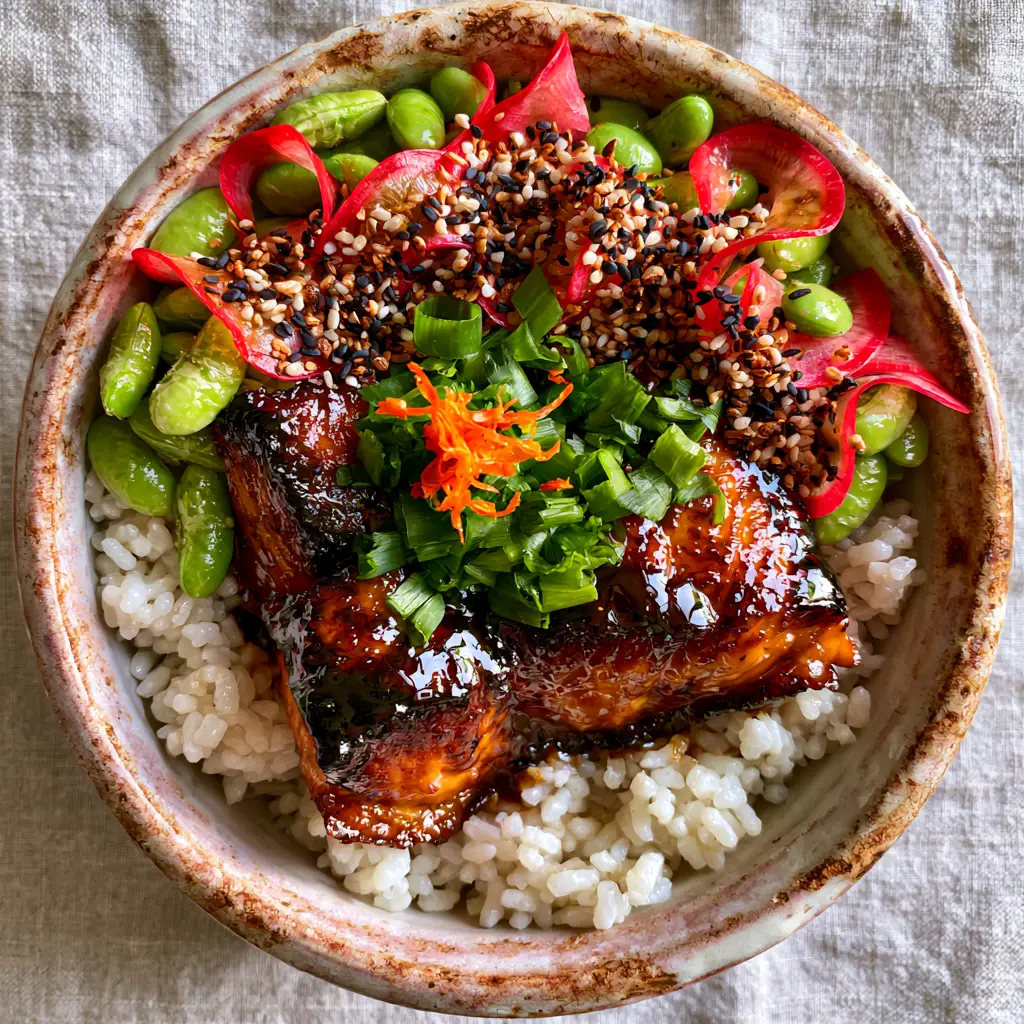
- Perfectly Steamed Foundation: Individual grains of white short-grain rice provide the ideal chewy base for soaking up the extra teriyaki sauce.
Premium Ingredients for Authentic Japanese Flavor
Fresh Atlantic Salmon Fillets: Choose center-cut fillets of approximately 6 oz (170g) each for even cooking. The high fat content allows for those signature caramelized edges without drying out the center.
White Short-Grain Rice: Use 1 cup (185g) of high-quality Japanese rice. Its higher starch content provides the characteristic “sticky but individual” grain structure essential for donburi.
Soy Sauce, Mirin, and Sake: This trio forms the backbone of your glaze. Use 1/4 cup (60ml) of soy sauce combined with equal parts mirin and sake to achieve that authentic, deep amber hue.
Fresh Ginger and Garlic: Grate 1 tbsp (6g) of fresh ginger and 1 clove of garlic. These aromatics provide the “zing” that cuts through the richness of the salmon fat.
Topping Elements: You will need 1/4 cup (40g) blanched edamame, 2 small red radishes, and a mix of 1 tsp (3g) each of black and white toasted sesame seeds. Don’t forget the dried red chili threads for that professional finishing touch.
High-Smoke Point Oil: Use 1 tbsp (15ml) of avocado or grapeseed oil. Unlike olive oil, these can withstand the high heat required to sear the salmon skin to a crisp.
Essential Tools for Culinary Precision
Heavy-Bottomed Non-Stick Pan: A cast-iron or high-quality non-stick skillet is vital for achieving a deep sear without the delicate salmon skin sticking to the surface.
Microplane Grater: This tool ensures your ginger and garlic are reduced to a fine paste, allowing them to melt into the glaze without leaving fibrous chunks.
Mandoline Slicer: To achieve those paper-thin, translucent radish curls, a mandoline is your best friend. Alternatively, a very sharp chef’s knife and a steady hand will work.
Small Saucepan: While you can make the sauce in the skillet, a separate small saucepan allows for better control over the reduction speed of your soy-ginger glaze.
Mastering the Perfect Japanese Rice Base
Rinsing and Soaking
Place your rice in a fine-mesh strainer and rinse under cold water until the water runs clear. This removes excess surface starch, preventing the rice from becoming a gummy mass.
Soak the rice in 1 1/4 cups (300ml) of water for at least 15 minutes before turning on the heat. This ensures each grain hydrates evenly to the core during the steaming process.
The Steaming Process
Bring the water to a boil, then immediately drop the heat to the lowest setting. Cover tightly and simmer for 12-15 minutes without lifting the lid.
Once the timer goes off, remove from heat and let it sit, still covered, for another 10 minutes. This “carryover steam” is what creates that signature fluffy texture found in the best Japanese recipes.
Searing the Salmon and Reducing the Glaze
Achieving the Golden-Brown Crust
Pat the salmon fillets extremely dry with paper towels. Season lightly with salt, but save the pepper for later so it doesn’t burn in the hot pan.
Heat your oil until it shimmers. Place the salmon in the pan, skin-side down (if applicable), and press gently with a spatula for 30 seconds. Sear for 4-5 minutes until the edges are deeply caramelized and opaque halfway up the side.
The Nappe Consistency Glaze
While the salmon sears, whisk your soy sauce, mirin, sake, sugar, and aromatics in a small pan. Simmer over medium heat for 5-7 minutes.
You are looking for “nappe” consistency—the sauce should be thick enough to coat the back of a spoon. It will transform from a thin liquid into a dark, reflective syrup that clings to the fish.
Expert Tips for Success
- The Ice Bath Trick: After slicing your radishes into paper-thin rounds, drop them into a bowl of ice water for 5 minutes. They will naturally curl into elegant shapes.
- Temperature Control: If your glaze is thickening too fast, add a teaspoon of water to loosen it. If it’s too thin, keep simmering; the sugar must caramelize to get that reflective glow.
- Don’t Overcook: Salmon is best served medium-rare to medium. The internal temperature should reach 125°F (52°C) for a moist, flaky interior.
- Rest the Fish: Let the salmon rest for 2 minutes after glazing. This allows the sauce to “set” and the juices inside the fish to redistribute.
Creative Pairings and Variations
This donburi is a complete meal, but it pairs beautifully with other staples of the Japanese kitchen. If you have a sweet tooth, try serving it after a batch of fluffy Japanese soufflé pancakes for a themed brunch.
For those who love the combination of seafood and sticky glazes, you might also enjoy exploring honey garlic shrimp bowls during your weeknight meal prep.
If you find yourself with extra edamame or radish, they make a fantastic addition to a refreshing cold bean salad the following day.
Storage and Reheating Guidelines
Storage: Store the salmon and rice in separate airtight containers in the refrigerator for up to 2 days. Keeping them separate prevents the rice from absorbing all the moisture from the fish.
Reheating: For the best results, reheat the rice with a splash of water in the microwave covered with a damp paper towel. Reheat the salmon gently in a pan over low heat to preserve the glaze’s texture.
Freezing: We do not recommend freezing the assembled bowl. However, the teriyaki glaze can be made in bulk and frozen in ice cube trays for up to 3 months.
Frequently Asked Questions
While possible, store-bought sauces are often thinned with water and thickeners like cornstarch. For the glistening, professional look in this recipe, a homemade reduction is essential.
Pat the skin bone-dry with paper towels and sear it skin-side down in a very hot pan with high-smoke point oil. Avoid pouring the glaze over the skin until the very last moment to maintain the crunch.
The secret is the sugar-to-liquid ratio and the reduction time. Ensure you simmer the soy, mirin, and sake until the bubbles become large and slow, indicating the sugars have caramelized into a thick syrup.
Those are ‘Shilgochu’ or dried red chili threads. They are mild in heat but provide a vibrant pop of color and a subtle earthy flavor common in high-end Japanese and Korean plating.
Short-grain white rice, often labeled as ‘sushi rice’ or ‘Japonica rice,’ is best. Its high starch content allows it to stick together slightly, making it easier to eat with chopsticks while soaking up the teriyaki glaze.
The Signature Teriyaki Salmon Recipe
Japanese recipes: The Ultimate Seared Teriyaki Salmon Donburi
Ingredients
Equipment
Method
- Rinse 1 cup (185g) short-grain rice until water is clear. Combine with 1 1/4 cups (300ml) water, soak for 15 mins, then simmer covered for 12-15 mins. Let rest off heat for 10 mins.
- Simmer soy sauce, mirin, sake, sugar, and ginger in a saucepan for 5-7 mins until thick and reflective.
- Pat salmon dry. Heat 1 tbsp (15ml) oil in a skillet. Sear salmon 4 mins per side until edges are caramelized and dark golden-brown. Pour glaze over fish in the final minute.
- Scoop rice into rustic bowls. Top with glazed salmon, edamame, radish curls, scallions, sesame seeds, and chili threads.
Notes
If the glaze becomes too thick, whisk in a teaspoon of warm water to restore its reflective shine.

Closing & Call to Action
Mastering Japanese recipes at home is a rewarding journey that starts with the highest quality ingredients and a bit of patience. This Teriyaki Salmon Donburi is sure to become a staple in your household, offering a balance of nutrition and gourmet flair.
If you enjoyed this recipe, please leave a comment below and let us know how your glaze turned out! Don’t forget to follow us on Pinterest and pin this image to your favorite recipe boards for later.