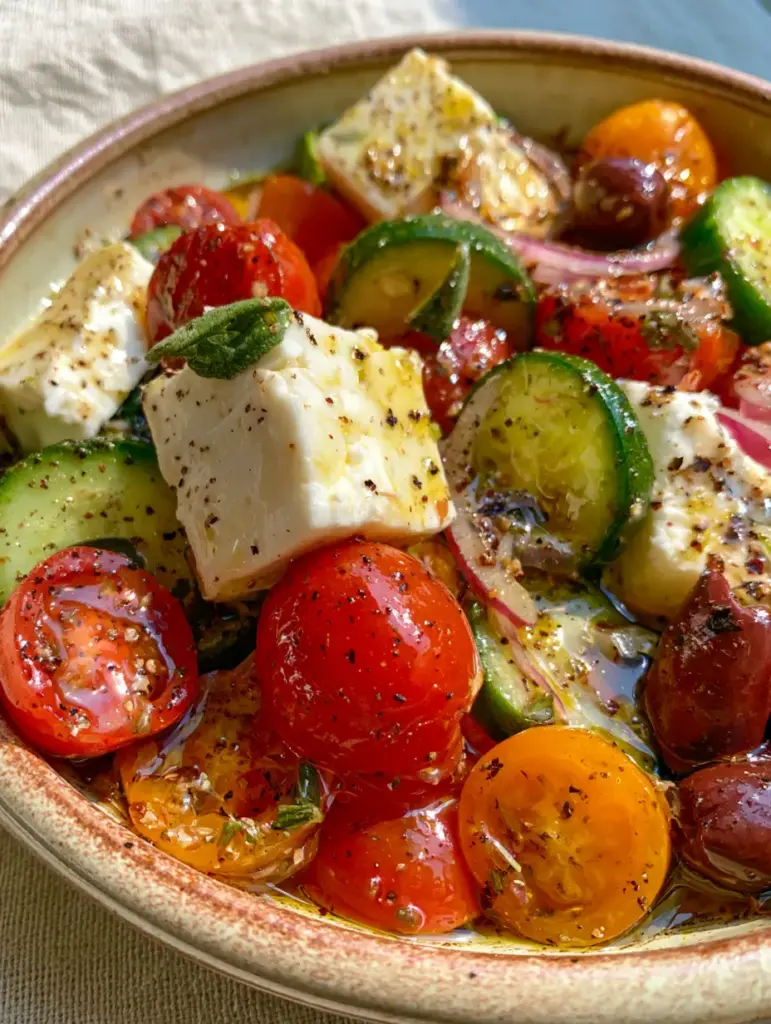
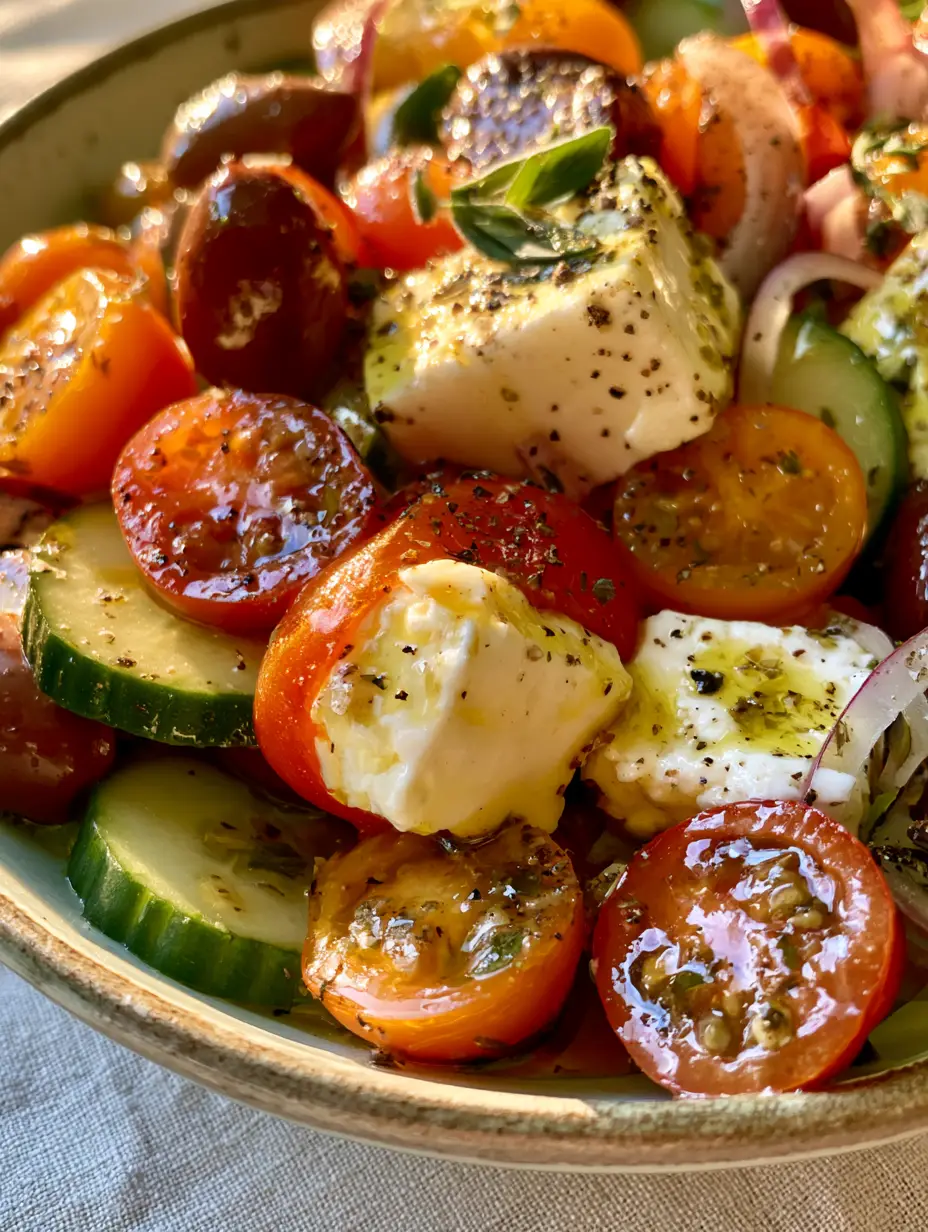
There is a specific kind of magic that happens when high-quality olive oil meets the ambient morning sunlight on a kitchen counter. This Mediterranean salad is not just a side dish; it is a masterclass in textural contrast and vibrant, sun-drenched flavors. By combining thick-cut Persian cucumber rounds with glistening, halved heirloom cherry tomatoes and oversized cubes of creamy feta cheese, we create a dish that is as visually stunning as it is delicious.
Every bite offers a symphony of sensations: the crisp snap of the cucumber, the explosive juice of the tomatoes, and the rich, salt-forward creaminess of the feta. Unlike standard garden salads that rely on leafy greens, this authentic preparation focuses on the structural integrity of the vegetables themselves. It is a high-gloss, herb-flecked celebration of the Mediterranean lifestyle that you can prepare in under twenty minutes.
Whether you are looking for a light lunch or a robust addition to your dinner table, this recipe delivers a professional-grade culinary experience. We have engineered every step to ensure a “handheld smartphone photo” quality result every single time you toss it together.
The Unrivaled Sensory Appeal of a Modern Mediterranean Salad
- Structural Integrity: Using thick-cut Persian cucumbers ensures every bite maintains its “crisp” factor without becoming soggy in the vinaigrette.
- Visual Depth: Halved heirloom cherry tomatoes in deep red and vibrant orange provide a high-end, professional aesthetic that pops on the plate.
- Creamy Feta Cubes: By using oversized, moisture-rich cubes rather than crumbles, you achieve a luxurious mouthfeel that balances the acidity of the dressing.
- High-Gloss Sheen: A meticulously emulsified vinaigrette creates a glistening coating that catches the light and highlights the freshness of the ingredients.
- Aromatic Garnish: Fresh oregano leaves and heavily cracked black pepper provide the final olfactory layer that makes this salad irresistible.
Sourcing the Essential Components for Culinary Excellence
Persian Cucumbers: These are essential for their thin skin and nearly seedless interior. Use about 4-5 medium Persian cucumbers to provide that satisfying, thick-cut round texture that anchors the salad.
Heirloom Cherry Tomatoes: Selecting a variety of deep reds and oranges adds visual complexity and varying levels of sweetness. You will need 2 cups (300g) of these halved beauties to ensure a juicy, glistening result.
Premium Block Feta: Avoid pre-crumbled varieties, which are often coated in anti-caking agents. Instead, source a 7oz (200g) block of creamy sheep’s milk feta in brine and cut it into oversized 1-inch (2.5cm) cubes.
Kalamata Olives: Look for almond-shaped, dark purple olives that have been pitted but kept whole. Their briny, fermented flavor is the perfect counterpoint to the sweetness of the tomatoes.
Red Onion: To achieve those “paper-thin rings,” a mandoline or a very sharp chef’s knife is required. These provide a sharp, clean bite without overpowering the other delicate flavors.
Extra Virgin Olive Oil (EVOO): This is the foundation of your “golden vinaigrette.” Use a cold-pressed, robust oil to ensure the salad has that signature high-gloss sheen and a peppery finish.
Fresh Oregano: While dried oregano is great for the dressing, the fresh leaves are non-negotiable for the garnish. They provide a bright, herbal top note that complements the sea salt flakes.
Foundational Seasonings: You will need sea salt flakes (like Maldon) for a delicate crunch and a high-quality peppercorn mill for that heavy crack of black pepper shown in the visual blueprint.
Professional Tools for a Picture-Perfect Result
To recreate the macro-photography look of this Mediterranean salad, you don’t need a professional kitchen, but a few specific tools will help. A sharp chef’s knife is vital for the thick-cut cucumber rounds and the delicate onion rings. A large ceramic bowl with a rustic finish will provide the neutral, textured background that makes the colors of the vegetables pop.
For the vinaigrette, a small glass jar or a whisk and a stainless steel bowl are necessary to achieve proper emulsification. Emulsification is the secret to that “herb-flecked” gloss that stays on the ingredients rather than pooling at the bottom of the bowl. Finally, a pepper mill set to a coarse grind will ensure those large, visible flecks of black pepper are distributed evenly over the top.
Mastering the Knife Skills for Textural Contrast
Preparing the Crisp Persian Cucumber Base
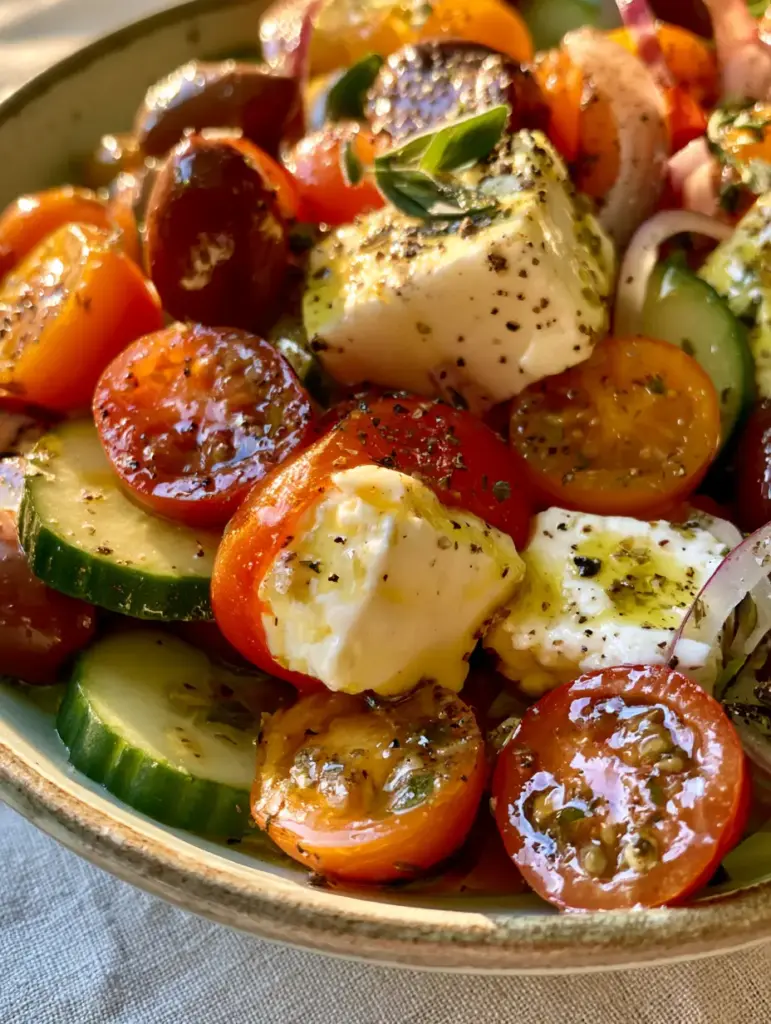
Start by washing and drying your Persian cucumbers. Because the skin is so thin and edible, there is no need for peeling. Slice them into rounds that are roughly 1/2 inch (1.25cm) thick; this thickness ensures they remain crisp even after being tossed in the dressing.
Halving the Heirloom Jewels
Slice your heirloom cherry tomatoes vertically through the stem end. This technique prevents the juices from escaping too quickly and keeps the “glistening” interior visible. Use a mix of colors to mimic the vibrant, high-end food photography aesthetic.
Creating the Delicate Red Onion Rings
Peel the red onion and slice it into paper-thin rings. If you find the flavor of raw onion too sharp, soak the slices in ice water for ten minutes and pat them dry. This removes the sulfurous compounds while maintaining the “snap” and visual appeal.
The Science of the High-Gloss Herb Vinaigrette
The hallmark of a great Mediterranean salad is the dressing. We are not just pouring oil and vinegar; we are creating a stable emulsion. Whisk together 1/4 cup (60ml) of extra virgin olive oil with 2 tablespoons (30ml) of red wine vinegar, a teaspoon of Dijon mustard (the emulsifier), and a pinch of dried oregano.
Whisk vigorously until the mixture is a uniform golden color and has a slightly thickened, syrupy consistency. This ensures that every cucumber round and feta cube is “generously coated” and catches the light, creating that high-gloss sheen described in our visual blueprint. The mustard helps the oil and vinegar stay together, preventing the salad from looking greasy.
Assembling the Dish for Maximum Visual Impact
In your rustic ceramic bowl, combine the cucumber rounds, halved tomatoes, and red onion rings. Add the pitted Kalamata olives and the oversized cubes of feta. Drizzle the golden vinaigrette over the top and use your hands or large spoons to gently fold the ingredients together.
Be careful not to break the feta cubes; you want them to remain “oversized” and “creamy” with visible moisture. Once tossed, sprinkle the fresh oregano leaves, a generous amount of sea salt flakes, and a heavy crack of black pepper over the surface. The sunlight should glint off the salt flakes and the glossy oil, signaling that the dish is ready for the table.
Expert Tips for Mediterranean Salad Success
- Temperature Matters: Serve the salad slightly below room temperature. Cold vegetables are crisper, but the olive oil’s flavor is most expressive when it isn’t straight from the fridge.
- The Feta Factor: Always buy feta in a block and cut it yourself. Pre-crumbled feta is too dry and won’t have the “visible moisture” seen in high-end food photography.
- The Salt Timing: Add the sea salt flakes immediately before serving. If you salt the salad too early, the tomatoes and cucumbers will release their water, diluting the vinaigrette.
- Vinegar Choice: While red wine vinegar is traditional, a splash of lemon juice can add a different kind of brightness that complements the fresh oregano.
Storage, Reheating, and Make-Ahead Advice
This Mediterranean salad is best enjoyed within 2 hours of assembly to maintain the crispness of the cucumbers and the structural integrity of the feta. However, if you have leftovers, they can be stored in an airtight container in the refrigerator for up to 24 hours.
Note that the cucumbers will soften slightly over time, and the feta may absorb some of the tomato juice. We do not recommend freezing this salad, as the high water content of the vegetables will cause them to become mushy upon thawing. For the best “make-ahead” results, prep all the vegetables and the dressing separately, then toss them together just before serving.
What to Pair with Your Fresh Mediterranean Salad
This salad is incredibly versatile and pairs beautifully with a variety of proteins. For a complete meal, try serving it alongside a refreshing shrimp salad for a double dose of coastal flavors. The acidity of the tomatoes and vinegar also cuts through the richness of grilled meats perfectly.
If you are looking for more anti-inflammatory dinner ideas, this salad is a fantastic starting point. You can also serve it as a side to skillet-charred summer squash to keep the meal entirely plant-forward. For a unique brunch twist, follow this savory course with some tiramisu-flavored overnight oats.
Frequently Asked Questions
While you can, crumbled feta is often drier and coated in starch. For the visual moisture and creamy texture seen here, using oversized cubes from a block in brine is highly recommended.
The secret is emulsifying your vinaigrette with a teaspoon of Dijon mustard. This creates a stable coating that clings to the vegetables rather than running to the bottom of the bowl.
It is best served immediately or within 2 hours. After that, the salt begins to draw moisture out of the cucumbers and tomatoes, which can make the salad watery.
It is very similar. Traditional Horiatiki does not contain lettuce and features the same core ingredients: tomatoes, cucumbers, feta, olives, and red onion.
Persian cucumbers have thinner skin and smaller seeds, providing a much crisper texture and a sweeter flavor that doesn’t require peeling, making them ideal for thick-cut rounds.
The Ultimate Mediterranean Salad Recipe
Mediterranean Salad Recipe with Oversized Feta and Heirloom Tomatoes
Ingredients
Equipment
Method
- In a small jar or bowl, combine the olive oil, red wine vinegar, Dijon mustard, and dried oregano. Shake or whisk vigorously until the dressing is a uniform golden color and slightly thickened.
- Slice the Persian cucumbers into 1/2 inch (1.25cm) thick rounds. Place them in a large ceramic bowl.
- Halve the heirloom cherry tomatoes vertically and add them to the bowl along with the pitted Kalamata olives and paper-thin red onion rings.
- Add the oversized feta cubes to the bowl. Pour the vinaigrette over the ingredients and gently fold with large spoons until every item has a high-gloss sheen. Be careful not to break the feta.
- Scatter fresh oregano leaves over the top. Finish with a generous sprinkle of sea salt flakes and a heavy crack of black pepper.
Notes
Wait until the last second to add the sea salt flakes to keep the vegetables from weeping.
Closing & Call to Action
Mastering the Mediterranean salad is a rite of passage for any home cook who values fresh, high-quality ingredients and simple yet effective techniques. The combination of oversized feta, crisp Persian cucumbers, and a glossy, herb-flecked dressing creates a dish that feels like a vacation on a plate. We hope you enjoy the vibrant colors and bold textures of this recipe!
If you enjoyed this recipe, please leave a comment below and let us know how it turned out! Don’t forget to sign up for our newsletter for more culinary inspiration and share your beautiful salad photos with us on Pinterest. Happy cooking!