Experience the high-octane energy and mouthwatering aromas of a Japanese steakhouse right in your own kitchen with this luxury Hibachi steak bowl. Forget the flaming onion volcanoes; we are focusing on the culinary precision that makes teppanyaki-style dining a global obsession. This recipe recreates the specific sensory experience of a high-end hibachi meal, featuring succulent, butter-basted ribeye and golden-brown rice that tastes like it came straight off a smoking-hot steel griddle.
The secret to an authentic Hibachi steak lies in the contrast of textures: the deep, dark-brown seared crust of the beef against its tender, medium-rare center. Every element in this bowl is designed to harmonize, from the snap of the charred zucchini to the velvety richness of a glossy soy-butter glaze. Whether you are a seasoned home cook or looking to elevate your weeknight rotation, this guide provides the professional techniques needed to master the art of the sear.
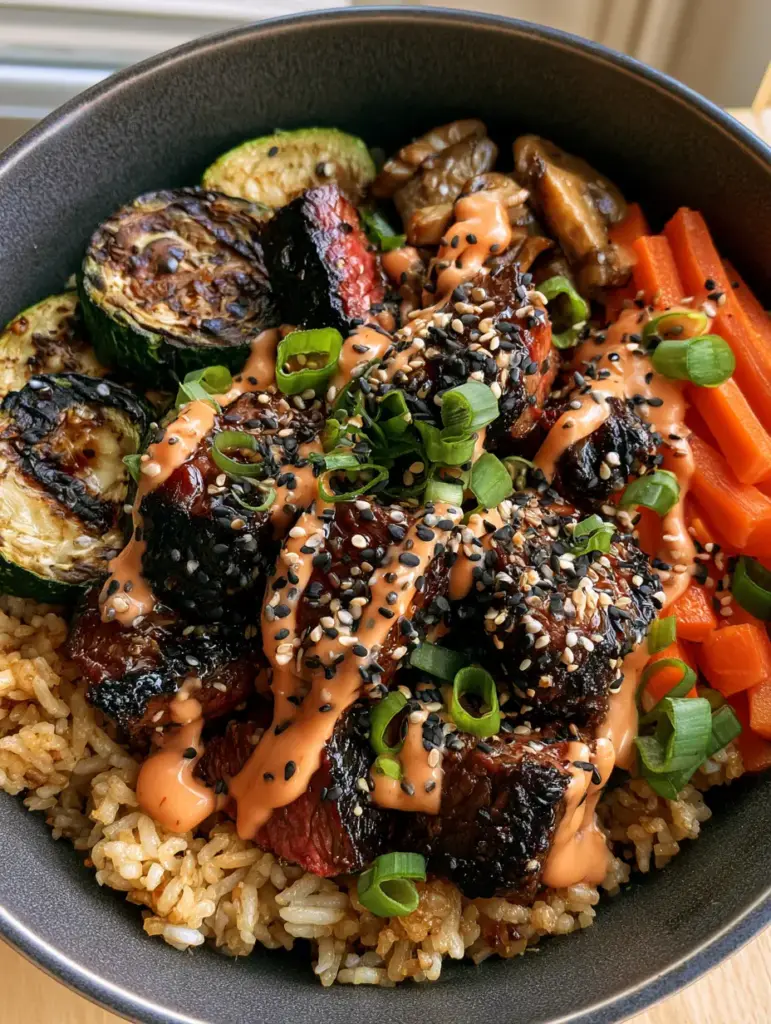
The Architecture of an Elite Teppanyaki-Style Bowl
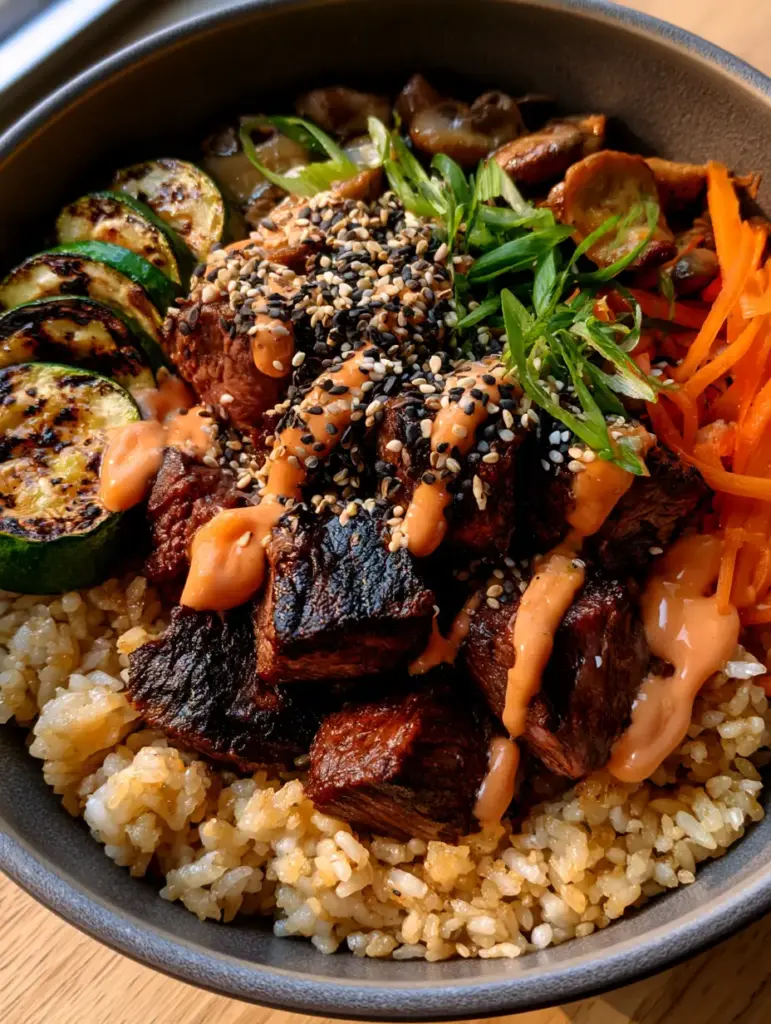
- Precision-Seared Ribeye: We utilize high-fat ribeye cut into thick cubes to ensure a heavy crust while maintaining a perfect medium-rare interior.
- Aromatics-Driven Garlic Rice: This isn’t just side rice; it is toasted in butter and aromatics until every grain is infused with savory depth and a signature golden-brown hue.
- Dual-Texture Vegetable Medley: Charred zucchini half-moons provide a smoky crunch, while buttery mushrooms and julienned carrots offer earthy sweetness.
- The Signature Drizzle: A pale-orange, creamy Yum Yum sauce provides the necessary acidity and fat to tie the grilled elements together.
- Glossy Finishing Glaze: A final toss in soy-butter ensures the Hibachi steak glistens under the light, mimicking the professional teppanyaki finish.
Essential Ingredients for Your Luxury Hibachi Steak Experience
Premium Ribeye Steak: Use 1.5 lbs (680g) of well-marbled ribeye. The intramuscular fat is vital because it renders during the high-heat sear, essentially “confitting” the steak cubes in their own flavor. If you enjoy this level of protein-packed satisfaction, you might also love our Tex-Mex steak rice bowls.
Day-Old Long-Grain Rice: You will need 3 cups (450g) of cooked, chilled rice. Cold rice has undergone starch retrogradation, making the grains firm enough to fry without turning into mush.
Unsalted Butter: Approximately 6 tbsp (85g) total. Butter is the “liquid gold” of hibachi cooking, used for sautéing the vegetables, toasting the rice, and glazing the beef.
Fresh Garlic: 4-5 large cloves, minced. This provides the foundational “burnt garlic” aroma that defines restaurant-style fried rice.
Vegetable Component: 2 medium zucchinis (sliced into half-moons), 8 oz (225g) white button mushrooms (sliced), and 2 large carrots (julienned). These provide the vibrant colors and essential fiber that balance the rich proteins. For more inspiration on using seasonal produce, check out our skillet summer squash guide.
Soy Sauce & Mirin: The base for our soy-butter glaze. Use 3 tbsp (45ml) of low-sodium soy sauce and 1 tbsp (15ml) of mirin for a hint of sweetness and shine.
Yum Yum Sauce Base: 1/2 cup (120ml) mayonnaise, 1 tbsp (15g) tomato paste, 1 tsp (5g) melted butter, and a pinch of paprika and garlic powder. This creates that iconic, pale-orange dipping sauce everyone craves.
Garnishes: 2 tbsp (18g) toasted black and white sesame seeds and 3 thinly sliced scallions. These add the final “pop” of texture and freshness seen in luxury food photography.
Professional Tools for the Perfect Sear
To achieve the visual results of a professional teppanyaki chef, a heavy-bottomed cast iron skillet or a flat-top griddle is non-negotiable. These materials hold significant thermal mass, preventing the pan temperature from dropping when you add the cold steak. You will also need a high-quality chef’s knife for the julienned carrots and a wide spatula for tossing the rice. If you are preparing a dessert like our brioche suisses, you know that the right tools make all the difference in the final texture.
Mastering the Golden Garlic Fried Rice
Prepping the Rice Foundation
Heat 2 tbsp (30g) of butter in your skillet over medium-high heat. Once the foam subsides and the butter begins to smell nutty, add the minced garlic. Sauté for only 30 seconds until fragrant but not browned.
The High-Heat Toss
Add the chilled rice to the pan, breaking up any clumps with your spatula. Increase the heat to high. Drizzle with 1 tbsp (15ml) of soy sauce and a pinch of white pepper. Stir-fry for 4-6 minutes, allowing the rice to “jump” in the pan. You are looking for a golden-brown color and a slightly crispy texture on the exterior of the grains.
Executing the Charred Vegetables
Searing the Zucchini and Mushrooms
Clear a space in your pan or use a separate skillet. Add 1 tbsp (15g) of butter and lay the zucchini half-moons flat. Do not move them for 2 minutes; this develops those deep, dark grill marks. Toss in the sliced mushrooms and cook until they release their moisture and turn a deep golden brown.
Softening the Julienned Carrots
Add the julienned carrots during the last 2 minutes of vegetable cooking. They should remain slightly “al dente” to provide a textural contrast to the soft mushrooms. Season the entire vegetable medley with a splash of soy sauce and a crack of black pepper.
The Main Event: Pan-Searing the Ribeye Cubes
Achieving the Maillard Reaction
Wipe your skillet clean and heat 1 tbsp (15ml) of high-smoke point oil (like avocado oil) until it is shimmering. Pat the ribeye cubes dry with a paper towel—moisture is the enemy of a good crust. Season generously with salt.
The Soy-Butter Glaze Finish
Add the steak in a single layer, ensuring they aren’t crowded. Sear for 2 minutes without touching them to develop a deep-brown crust. Flip and cook for another 1-2 minutes. In the final 30 seconds, drop in 1 tbsp (15g) of butter and 1 tbsp (15ml) of soy sauce. Toss the steak cubes rapidly; the butter and soy will emulsify into a glossy glaze that coats every inch of the meat. Aim for an internal temperature of 130°F (54°C) for a perfect medium-rare.
Assembling the Luxury Hibachi Bowl
To recreate the “top-down aesthetic” of professional food photography, start with a generous base of the golden garlic fried rice in a matte charcoal bowl. Arrange the charred zucchini, mushrooms, and carrots in distinct sections around the perimeter. Pile the glossy ribeye cubes in the center. Using a spoon or a squeeze bottle, create a bold zigzag drizzle of the creamy Yum Yum sauce across the steak. Finish with a heavy dusting of black and white sesame seeds and a handful of vibrant green scallions.
Expert Tips for Hibachi Steak Success
- The Dry Brine: If time allows, salt your steak cubes 30 minutes before cooking and leave them uncovered in the fridge. This dries out the surface, leading to a much faster and harder sear.
- Don’t Crowd the Pan: If you add too much meat at once, the temperature drops and the steak will steam in its own juices rather than searing. Cook in batches if necessary.
- The “Wok Hei” Mimicry: While we aren’t using a wok, keeping the heat high and the food moving simulates the “breath of the wok” flavor found in professional kitchens.
- Sauce Consistency: If your Yum Yum sauce is too thick to drizzle, whisk in a teaspoon of water or milk until it reaches a “ribbon” consistency.
Optimal Storage and Reheating Strategies
Hibachi steak is best enjoyed immediately to preserve the steak’s medium-rare temperature. However, leftovers can be stored in an airtight container for up to 3 days. To reheat, we recommend a quick flash-fry in a hot skillet with a teaspoon of butter rather than a microwave, which can turn the steak rubbery. The rice actually improves after a day, making this a great option for high-protein meal prep. If you enjoy protein-forward meals, you might also like our high-protein chicken orzo.
What to Serve with Your Hibachi Feast
While this bowl is a complete meal, you can round out the experience with a light Japanese ginger salad or a bowl of clear onion soup. For a fusion twist, consider serving a side of Mediterranean salad for a fresh, acidic contrast to the rich butter-basted beef. If you’re looking for other Asian-inspired proteins to add to your repertoire, our teriyaki chicken skewers make for an excellent appetizer.
Frequently Asked Questions About Hibachi Cooking
Freshly cooked rice contains too much moisture and will become mushy. If you must use fresh rice, spread it on a baking sheet and freeze it for 15 minutes to dry out the surface before frying.
Use a preheated cast iron skillet and leave the zucchini untouched for at least 2 minutes. The high heat and flat surface will create a deep, caramelized char that mimics a teppanyaki grill.
To make this recipe gluten-free, simply substitute the soy sauce for Tamari or liquid aminos and ensure your mirin is certified gluten-free.
The combination of mayonnaise for creaminess, tomato paste for tang, and melted butter for richness creates the classic Japanese steakhouse flavor profile. A touch of sugar and paprika adds the final balance.
Ribeye is the gold standard for Hibachi because of its high fat content, which ensures the cubes stay juicy during a high-heat sear. Sirloin or New York Strip are excellent leaner alternatives.
The Ultimate Hibachi Steak and Garlic Rice Recipe
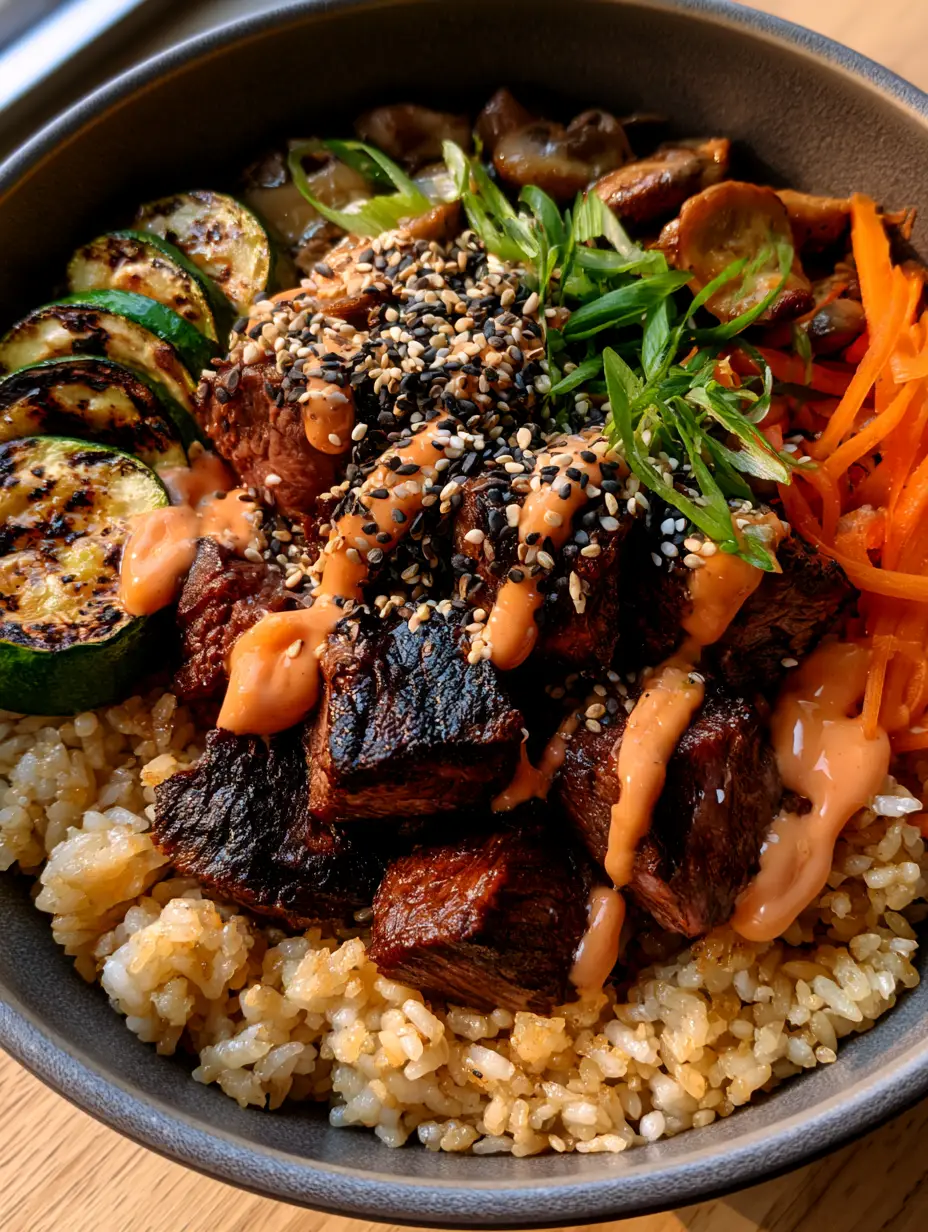
Hibachi Steak with Garlic Fried Rice and Creamy Yum Yum Sauce
Ingredients
Equipment
Method
- In a small bowl, whisk together mayo, tomato paste, 1 tsp melted butter, paprika, and garlic powder. Set aside.
- Sauté minced garlic in 2 tbsp butter. Add cold rice and 1 tbsp soy sauce. Stir-fry on high heat for 5 minutes until golden and toasted.
- Sauté zucchini half-moons in butter until grill marks appear. Add mushrooms and carrots, cooking until tender-crisp.
- In a smoking hot skillet with oil, sear ribeye cubes for 2 minutes per side. Finish with 1 tbsp butter and 1 tbsp soy sauce for a glossy glaze.
Notes
Ensure the skillet is smoking hot before adding the steak to get a dark-brown crust.
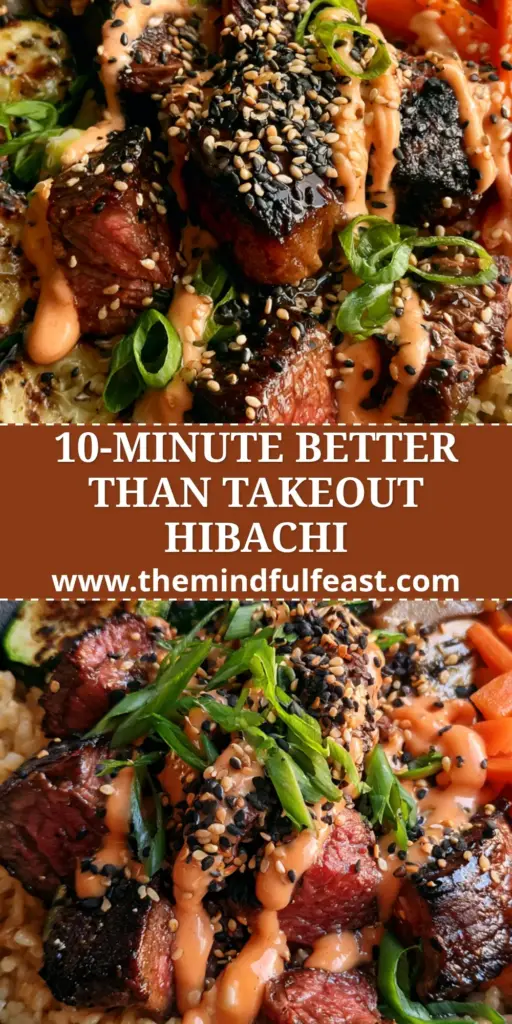
This Hibachi steak recipe is more than just a meal; it’s a masterclass in flavor layering and heat management. By focusing on the quality of the sear and the aromatic depth of the rice, you bring the luxury of a Japanese steakhouse into your home. We invite you to try this recipe tonight and experience the incredible textures for yourself!
Did you master the crust on your ribeye? Let us know in the comments below! Don’t forget to sign up for our newsletter for more elite culinary guides and share your creations with us by pinning this recipe to your favorite boards on Pinterest.
—