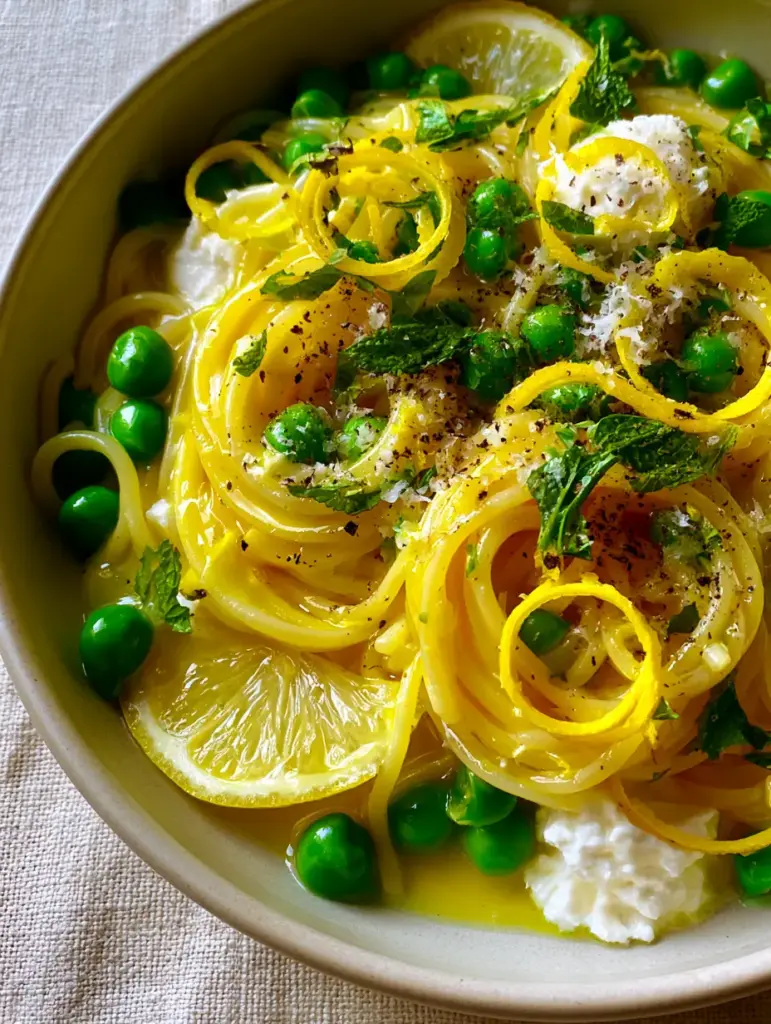
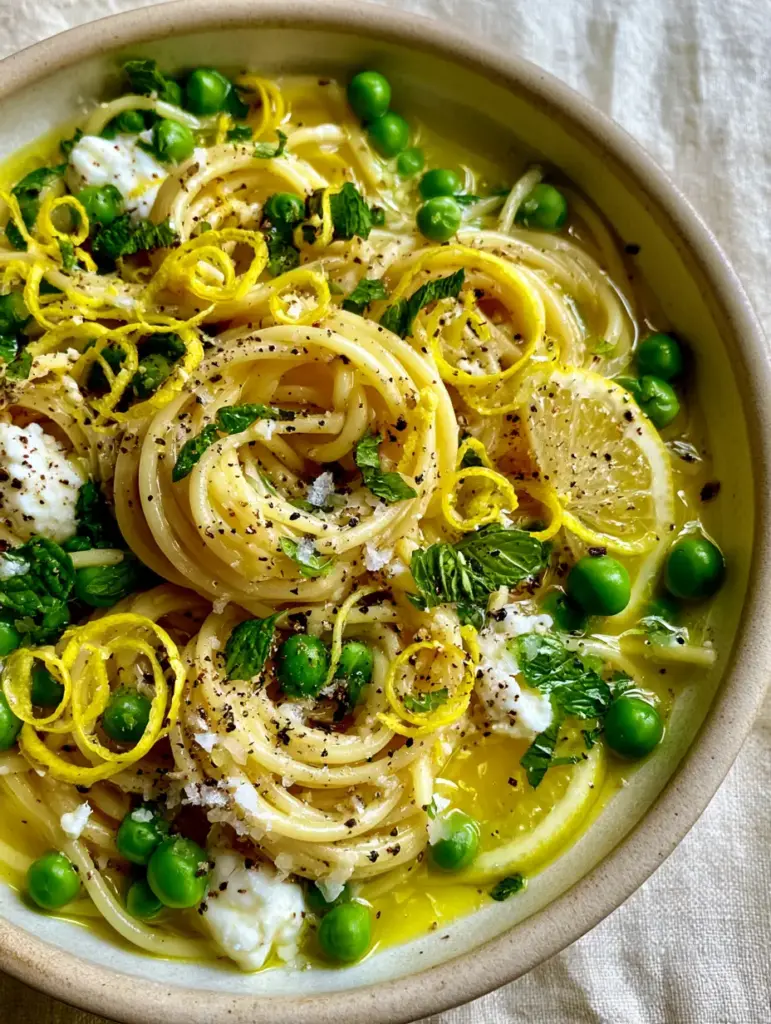
There is a specific moment in late April when the air shifts, and suddenly, our palates crave the brightness of the sun. This spring pea and lemon pasta is the culinary embodiment of that seasonal transition. Imagine a shallow matte ceramic bowl filled with elegantly twirled spaghetti, every strand coated in a translucent, electric yellow lemon-butter emulsion that glimmers under soft daylight.
The visual appeal of this dish lies in its high-contrast color palette: the deep emerald green of plump spring peas against the vibrant yellow of the sauce and delicate lemon curls. It is a dish that looks as professional as a high-end bistro offering but comes together in the comfort of your own kitchen in under 30 minutes.
By combining the silkiness of a butter-based sauce with the cooling creaminess of ricotta dollops and the aromatic lift of fresh mint chiffonade, we create a multi-dimensional experience. Whether you are hosting a breezy garden lunch or a quick Tuesday night dinner, this spring pea and lemon pasta delivers an authentic food blog aesthetic that tastes even better than it looks.
Why This Vibrant Spring Pasta Recipe Works
- The Emulsion Technique: We utilize starchy pasta water to transform simple butter and lemon juice into a glossy, electric yellow sauce that clings to every strand of spaghetti.
- Textural Contrast: You get the “snap” of plump green peas, the “bite” of al dente pasta, and the “velvet” of cold ricotta dollops in every single forkful.
- Symphonic Aromatics: The combination of long curls of lemon zest and finely sliced mint creates a fragrance that opens up the palate before the first bite.
- Visual Sophistication: With thin lemon half-moons and cracked black pepper, this dish is designed to be the centerpiece of any table setting.
The Vibrant Components for Spring Pea and Lemon Pasta
Dried Spaghetti: 1 lb (454g). We choose a high-quality bronze-die pasta to ensure the surface is rough enough to grab onto that silky lemon-butter emulsion.
Fresh or Frozen Spring Peas: 1.5 cups (225g). If using fresh, look for plump pods; if frozen, ensure they are “petite” peas for the brightest emerald green color and sweetest flavor.
Unsalted High-Fat Butter: 6 tbsp (85g). The fat is the carrier for the lemon flavor; using a high-fat European-style butter ensures a thicker, more stable sauce.
Fresh Lemons: 3 large. We need the juice for the sauce, the zest for the garnish, and paper-thin half-moon slices to sauté directly into the pasta for a concentrated citrus punch.
Whole Milk Ricotta: 1/2 cup (125g). Small, soft dollops of white ricotta provide a cooling counterpoint to the acidic lemon and the warmth of the black pepper.
Fresh Mint Leaves: 1/4 cup (10g). A fine chiffonade of mint adds a cooling, grassy note that elevates the “spring” profile of the spring pea and lemon pasta.
Extra Virgin Olive Oil: 2 tbsp (30ml). Essential for sautéing the lemon slices and peas without burning the butter solids early in the process.
Pasta Water: 1 cup (240ml). This “liquid gold” contains the starch necessary to bind the fat and acid into a cohesive, translucent sauce.
Seasoning: Flaky sea salt and freshly cracked black pepper. Use a coarse grind for the pepper to achieve the specific macro-shot aesthetic described in our visual blueprint.
Essential Tools for a Professional Finish
To achieve the “elegant twirl” seen in professional food photography, a pair of long stainless steel kitchen tongs is non-negotiable. You will also need a microplane for those long, delicate curls of yellow lemon zest and a heavy-bottomed skillet or braiser to ensure even heat distribution for the emulsion.
For the mint chiffonade, a very sharp chef’s knife is required; a dull blade will bruise the mint, causing it to turn black rather than staying the bright green required for our spring pea and lemon pasta. Finally, use a shallow matte ceramic bowl to make the electric yellow sauce pop against a neutral background.
A Step-by-Step Guide to the Perfect Lemon-Butter Emulsion
1. Achieving the Perfect Al Dente Foundation
Bring a large pot of heavily salted water to a rolling boil—it should taste like the sea. Add 1 lb (454g) of spaghetti and cook for exactly 2 minutes less than the package directions. We want the pasta to be slightly firm because it will finish cooking directly in the lemon sauce, absorbing those vibrant flavors.
2. Sautéing the Aromatics and Peas
While the pasta boils, heat 2 tbsp (30ml) of olive oil in a large skillet over medium heat. Add your thin lemon half-moons and sauté for 2 minutes until the edges are slightly softened and fragrant. Toss in the 1.5 cups (225g) of spring peas. Watch for a sensory cue: the peas will turn a “bright emerald green” within 60 seconds. Do not overcook them; they should remain plump and snappy.
3. Crafting the Electric Yellow Sauce
Lower the heat and add 6 tbsp (85g) of unsalted butter to the skillet. Once melted, whisk in the juice of two lemons. Slowly ladle in 1/2 cup (120ml) of the starchy pasta water. Whisk vigorously until the liquid transforms into a silky, translucent, and vibrant yellow emulsion. If you love balancing bright flavors with hearty proteins, this technique is similar to what I use in my High-Protein Chicken Orzo.
4. The Marriage of Pasta and Sauce
Using tongs, transfer the spaghetti directly from the water into the skillet. Increase the heat to medium-high and toss constantly. The pasta will soak up the sauce, and the starch will thicken it until it coats every strand like a glossy glaze. If the pan looks dry, add more pasta water 1/4 cup (60ml) at a time.
5. Finishing with Dollops and Herbs
Remove the pan from the heat. This is crucial to prevent the ricotta from melting completely. Add the 1/4 cup (10g) of mint chiffonade and the long curls of lemon zest. Use a small spoon to drop soft, white dollops of ricotta across the surface. This creates the beautiful white-on-green visual contrast that makes the spring pea and lemon pasta so striking.
Expert Tips for Visual and Flavor Success
- The “Cold Ricotta” Secret: Keep your ricotta in the fridge until the very second you are ready to plate. The temperature difference between the hot pasta and cold cheese creates a refreshing sensation.
- Preventing Mint Oxidation: Only slice your mint (chiffonade) at the very last second. Mint oxidizes quickly when exposed to air and heat; adding it off-heat preserves its emerald hue.
- The Pasta Water Safety Net: Always save more pasta water than you think you need. As the spring pea and lemon pasta sits, the noodles will continue to absorb liquid. A splash of warm pasta water can revive a “tight” sauce instantly.
- Zest Before You Juice: It is nearly impossible to zest a lemon once it has been squeezed. Always gather your long curls of zest first.
The Best Pairings for a Spring Feast
This light, citrusy pasta pairs beautifully with a crisp glass of Sauvignon Blanc or a dry Vermentino. If you’re looking to round out a full menu, consider serving this as a primo course before a main like my Gourmet Patty Melts for a high-low dinner party theme.
For those who prefer a more traditional Italian-American spread, this pasta serves as a refreshing side to a heavier Chicken and Broccoli Pasta bake. If you have leftover ricotta, it’s the perfect excuse to start a dough for Classic Brioche Suisses the following morning.
Frequently Asked Questions
Yes. Substitute the butter with a high-quality vegan butter stick and use a dollop of almond-based ricotta. Ensure you still use starchy pasta water to create the emulsion.
Absolutely. Frozen petite peas often retain a brighter emerald green color than fresh peas. Add them directly to the skillet from frozen; they only need 60-90 seconds to heat through.
Use a traditional channel knife or a very sharp microplane held at a shallow angle. Ensure you only take the yellow zest, as the white pith underneath is bitter.
Long, thin strands like spaghetti or linguine are ideal for glossy emulsions. The surface area allows the translucent sauce to coat the noodles evenly without pooling at the bottom.
Sauce separation usually happens if the heat is too high or there isn’t enough starchy pasta water. Whisk vigorously and add water a tablespoon at a time to bring the emulsion back together.
The Definitive Spring Pea and Lemon Pasta Recipe
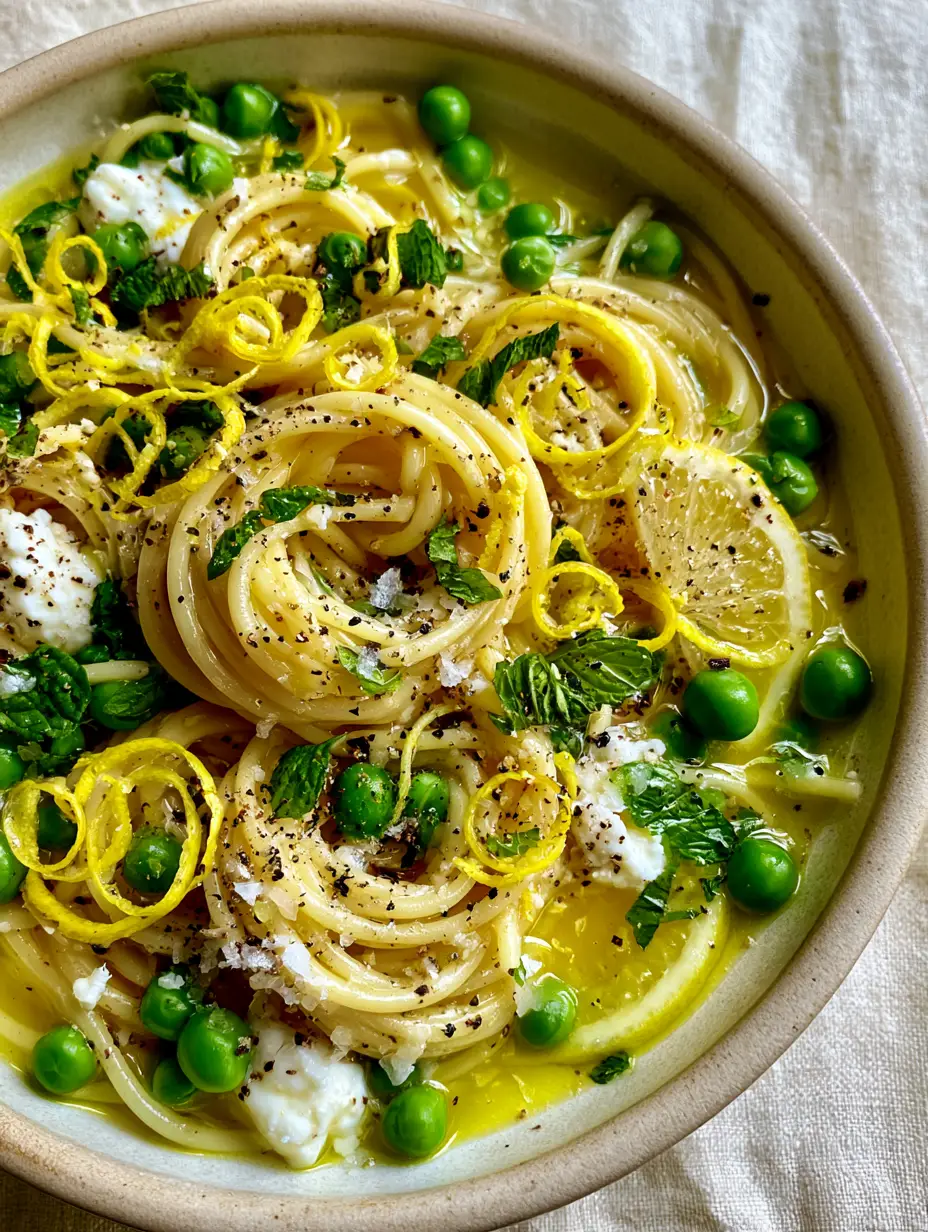
Spring Pea and Lemon Pasta with Creamy Ricotta and Fresh Mint
Ingredients
Equipment
Method
- Cook spaghetti in heavily salted water until 2 minutes before al dente. Reserve 1 cup (240ml) of pasta water before draining.
- In a large skillet, heat olive oil over medium. Sauté lemon half-moons and peas for 2 minutes until peas are bright emerald green.
- Add butter and lemon juice to the skillet. Whisk in 1/2 cup of pasta water until a glossy, electric yellow emulsion forms.
- Add pasta to the skillet, tossing over heat until coated. Remove from heat; top with ricotta dollops, mint, zest, salt, and pepper.
Notes
Add mint only at the very end to prevent browning.
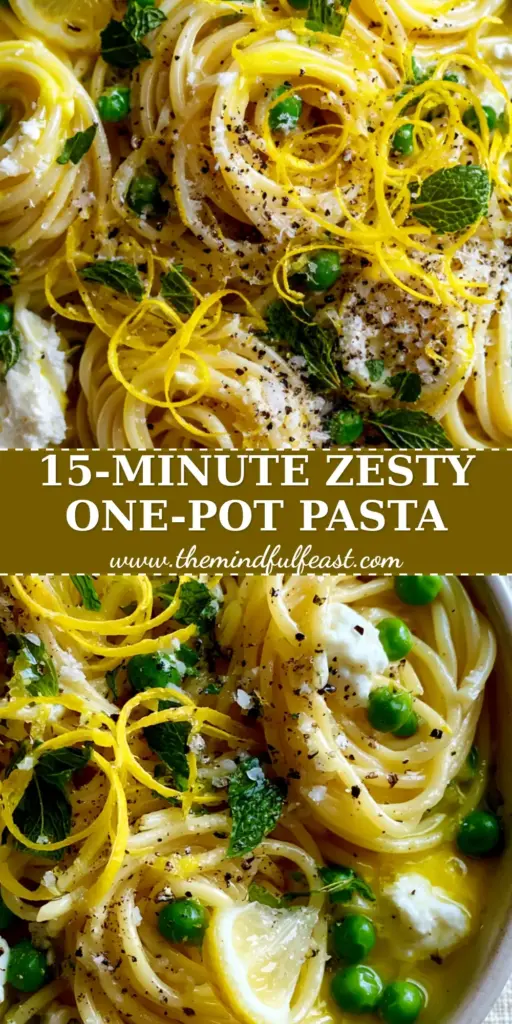
Creating this spring pea and lemon pasta is an exercise in celebrating simplicity. The way the flaky sea salt catches the light on the glossy yellow sauce is enough to make any home cook feel like a professional stylist. By focusing on the quality of your peas and the timing of your emulsion, you ensure a dish that is as structurally sound as it is beautiful.
I would love to see your recreations of this vibrant meal! Please leave a comment below with your results and don’t forget to follow themindfulfeast on Pinterest for more visual recipe inspiration. If you enjoyed this, please share it with a friend who loves seasonal cooking!