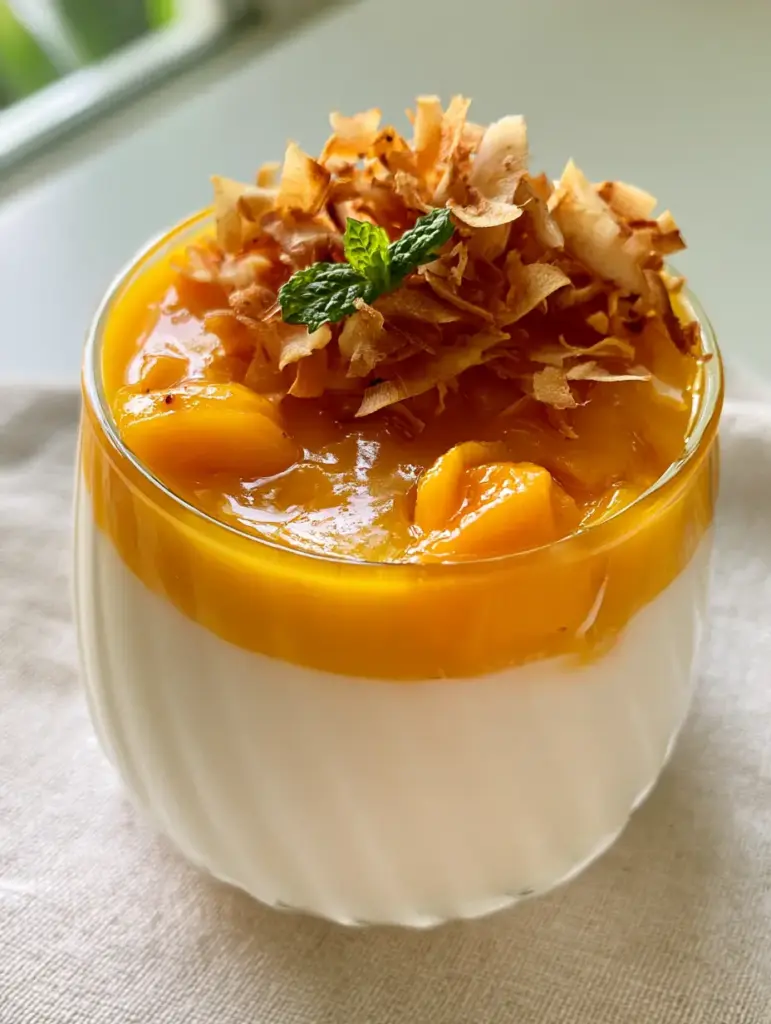
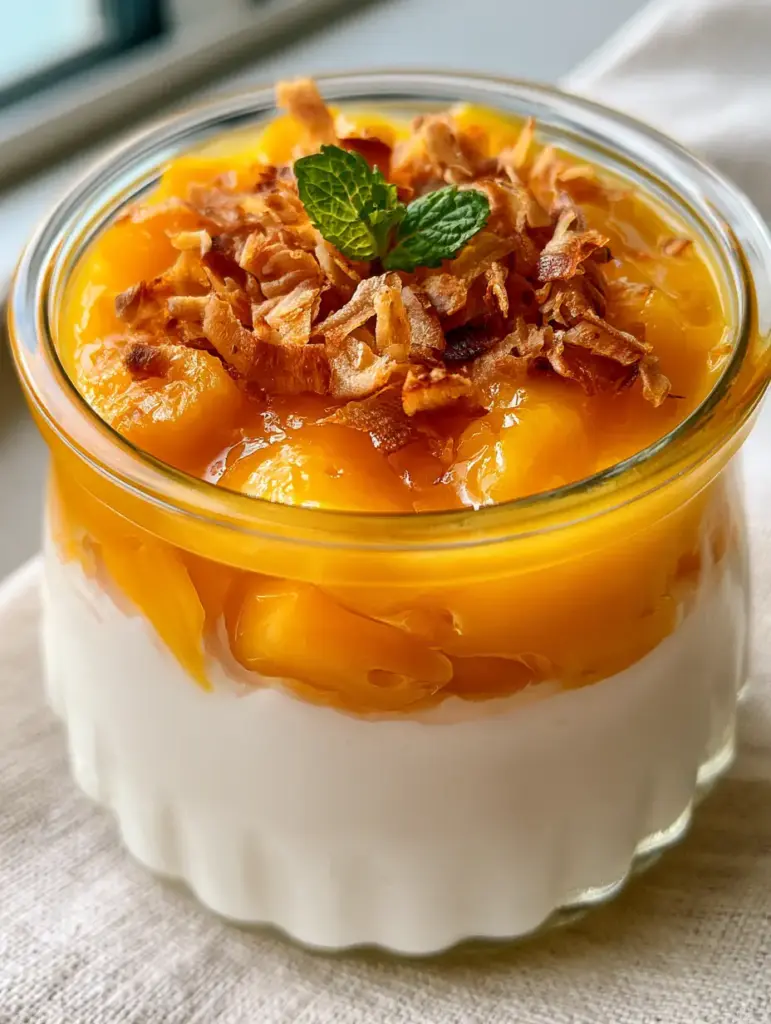
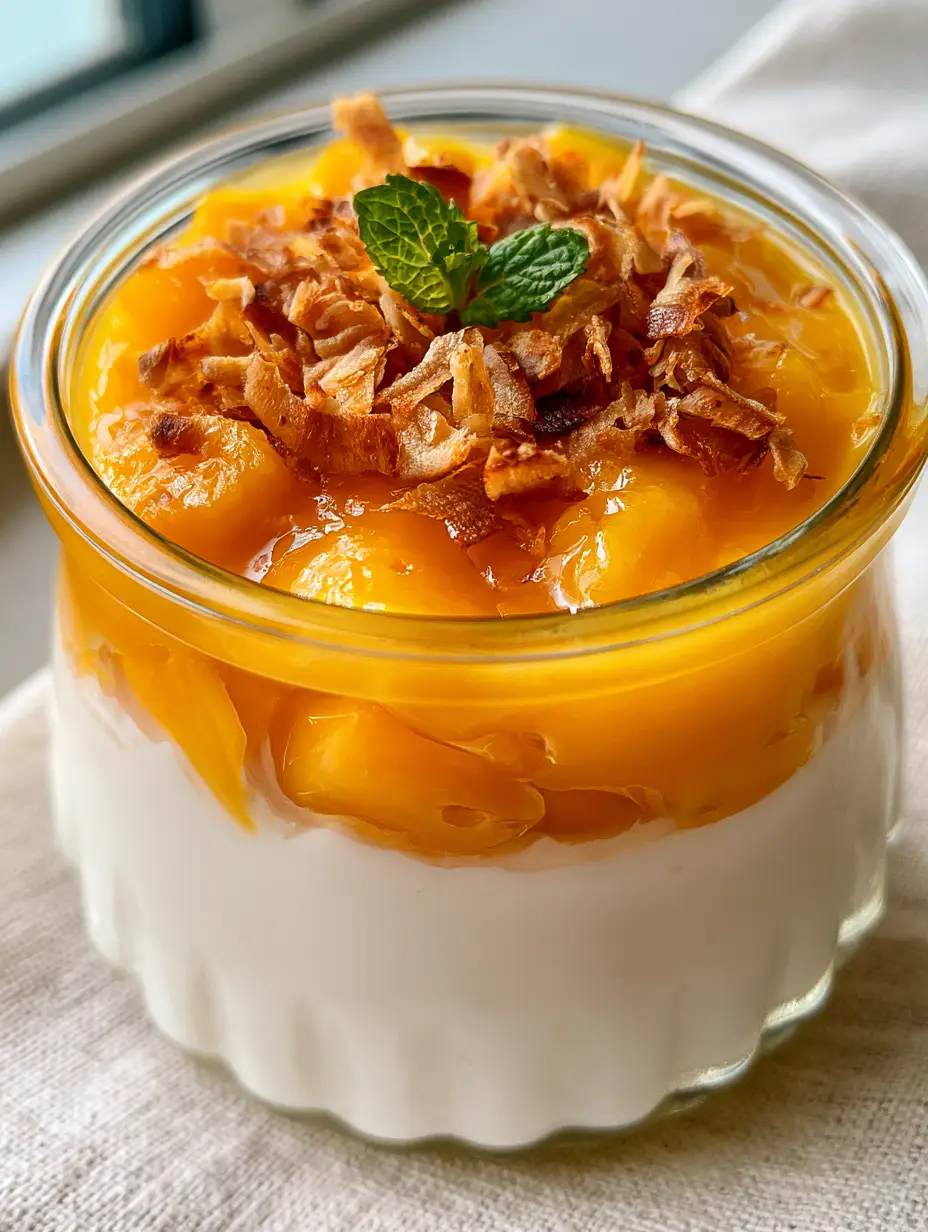
There is nothing quite like the visual allure of a perfectly layered Coconut Mango Pudding. Imagine a minimalist fluted glass jar, its base filled with a dense, silky-smooth, snow-white coconut cream pudding that looks as clean as freshly fallen snow. Resting atop this velvety foundation is a vibrant, glossy, sunset-orange fresh mango puree, with small, visible chunks of juicy ripe mango embedded within like hidden gems. Topped with a crown of crispy golden-brown toasted coconut ribbons and a tiny, vibrant green mint sprig, this dessert is a masterclass in tropical elegance.
Whether you are looking for a refreshing finish to a heavy meal or a sophisticated treat to serve at your next gathering, this Coconut Mango Pudding delivers on every sensory level. The soft natural tropical daylight catches the sheen of the mango surface, highlighting the contrast between the creamy white base and the bright citrus tones of the fruit. It is a recipe that tastes even better than it looks, providing a balance of rich coconut fats and bright, acidic mango notes.
Why You Will Fall in Love With This Layered Tropical Treat
- Texture Contrast: The interplay between the dense, silky coconut base and the crispy, toasted coconut ribbons provides a professional-level mouthfeel.
- Visually Stunning: The sharp definition where the white and orange layers meet makes this a “showstopper” dessert for dinner parties.
- Naturally Dairy-Free: By leveraging the natural fats in coconut milk, we achieve a decadent creaminess without the need for heavy dairy.
- Fresh and Vibrant: Unlike store-bought puddings, this uses real mango chunks for a burst of authentic fruit flavor in every spoonful.
The Essential Components for a Tropical Masterpiece
To achieve the specific visual and structural results seen in our Coconut Mango Pudding, we must select ingredients that balance fat, sugar, and stability. While the blueprint calls for three primary elements, there are foundational ingredients required to ensure the pudding sets perfectly while remaining silky.
The Snow-White Coconut Base
Full-Fat Coconut Milk: 2 cans (400ml each). The high fat content is non-negotiable for achieving that “dense, silky-smooth” texture described in the visual prompt. Avoid “light” versions, as they lack the viscosity needed to support the mango layer.
Granulated White Sugar: 1/2 cup (100g). We use white sugar specifically to maintain the “snow-white” aesthetic of the base; brown sugars or honey would tint the pudding ivory or tan.
Cornstarch: 3 tbsp (24g). This is our thickening agent. It provides a clean, neutral finish that allows the coconut flavor to shine without the jiggly texture of gelatin.
Fine Sea Salt: A pinch. A tiny amount of salt acts as a flavor enhancer, cutting through the richness of the coconut fat.
The Sunset-Orange Mango Layer
Fresh Ripe Mangoes: 3 large (approx. 900g). Use Honey (Ataulfo) mangoes if possible for their vibrant sunset-orange color and lack of fibrous strings. You will puree two and dice the third.
Fresh Lime Juice: 1 tsp (5ml). The acid prevents the mango from oxidizing (browning) and brightens the overall flavor profile.
The Golden-Brown Garnish
Unsweetened Coconut Ribbons: 1/4 cup (15g). These must be toasted until they reach a “crispy golden-brown” state to provide the necessary crunch.
Fresh Mint Sprigs: 4 small sprigs. These offer a “tiny, vibrant green” pop of color that completes the visual triad of white, orange, and green.
Tools Required for Professional Results
To recreate the meticulously detailed look of this Coconut Mango Pudding, a few specific tools will make the process seamless. You will need a heavy-bottomed saucepan to prevent the coconut milk from scorching. A high-speed blender or food processor is essential for creating that “glossy, sunset-orange” puree without lumps. Finally, use minimalist fluted glass jars to showcase the beautiful layers and the point where the white and orange meet.
Crafting the Perfect Coconut Mango Pudding: Step-by-Step
1. Preparing the Silky Coconut Foundation
In a small bowl, whisk the cornstarch with 1/4 cup (60ml) of the cold coconut milk to create a smooth slurry. In a heavy saucepan, combine the remaining coconut milk, sugar, and salt over medium heat. Bring the mixture to a gentle simmer, stirring constantly to ensure the sugar dissolves completely.
Slowly pour the cornstarch slurry into the simmering coconut milk while whisking vigorously. Continue to cook for 2-3 minutes until the mixture thickens significantly. You are looking for a “dense, silky-smooth” consistency that coats the back of a spoon. Remove from heat and let it cool slightly before pouring into your fluted glass jars. Refrigerate for at least 2 hours until the surface is firm to the touch.
2. Creating the Glossy Mango Puree
Peel and pit two of the mangoes, placing the flesh into a blender. Add the lime juice and blend on high until the mixture is a “vibrant, glossy, sunset-orange” puree. Dice the third mango into small, uniform 1/4-inch (6mm) chunks. Gently fold half of these chunks into the puree, reserving the rest for the very top.
3. Toasting the Coconut Ribbons
Heat a small dry skillet over medium-low heat. Add the coconut ribbons and toss frequently for 3-5 minutes. Watch them closely; they turn from white to “crispy golden-brown” very quickly. Once they reach a deep amber hue and smell fragrant, immediately remove them from the pan to stop the cooking process.
4. Assembly and Sensory Cues
Once the coconut base is fully set, spoon the mango puree over the top. The “shallow depth of field” in professional photography often focuses on the sharp line where the orange puree meets the white cream, so take care to wipe the inner rim of the glass for a clean look. Top with the remaining mango chunks, a crown of toasted coconut ribbons, and a tiny mint sprig.
Expert Tips for Visual and Flavor Success
- Sieve for Silkiness: If you notice any lumps in your coconut base, pour it through a fine-mesh sieve before chilling to guarantee that “silky-smooth” finish.
- The “Wobble” Test: The coconut base should be firm enough to support the weight of the mango puree without sinking, but it should still have a slight, delicate wobble.
- Mango Maturity: If your mangoes aren’t sweet enough, add a teaspoon of agave nectar to the puree. This will also enhance the “glossy” sheen mentioned in the prompt.
- Chill the Glassware: Place your fluted jars in the freezer for 10 minutes before filling to help the coconut base set even faster against the sides of the glass.
Storage and Make-Ahead Instructions
This Coconut Mango Pudding is an excellent candidate for meal prep. The coconut base can be made up to 3 days in advance. However, for the best visual appeal, add the fresh mango puree and the toasted coconut ribbons just before serving. The coconut ribbons will lose their “crispy” texture if left in the refrigerator for too long due to the moisture in the pudding.
What to Serve With This Tropical Dessert
To create a cohesive meal experience, pair this pudding with light, vibrant dishes. It serves as a perfect palate cleanser after a spicy savory chicken stir-fry or a hearty honey garlic pork rice bowl. If you are hosting a summer lunch, consider serving it alongside a refreshing Japanese cucumber salad to keep the flavors bright and crisp.
Frequently Asked Questions
Yes! This recipe is naturally vegan and dairy-free as it uses coconut milk as the base and cornstarch as a thickener instead of gelatin.
Frozen mangoes work well for the puree layer. However, for the embedded chunks and garnish, fresh mangoes are recommended for a better texture and visual appeal.
Always mix the cornstarch with a small amount of cold liquid first to create a slurry. Whisk this slurry into the hot coconut milk continuously until thickened.
Ataulfo (Honey) mangoes are best because they are non-fibrous and have a naturally deep orange color that looks beautiful in the fluted jars.
Usually, this is due to using ‘light’ coconut milk or not boiling the mixture long enough to activate the cornstarch. Ensure you use full-fat coconut milk and simmer for at least 2 minutes after adding the slurry.
The Complete Coconut Mango Pudding Recipe
Coconut Mango Pudding: The Ultimate Creamy Tropical Dessert Recipe
Ingredients
Equipment
Method
- Whisk cornstarch with 1/4 cup (60ml) of cold coconut milk until smooth.
- Simmer remaining coconut milk and sugar in a saucepan, then whisk in slurry until dense and silky.
- Pour into jars and refrigerate for 2 hours until firm.
- Blend two mangoes with lime juice until glossy and sunset-orange.
- Fold small diced mango chunks into the puree.
- Toast coconut ribbons in a dry pan until crispy and golden-brown.
- Layer mango puree over coconut base, top with ribbons and mint.
Notes
Toast the coconut ribbons immediately before serving for maximum crunch.
Closing & Call to Action
This Coconut Mango Pudding is more than just a dessert; it is a tropical escape in a jar. The combination of the dense coconut cream and the vibrant fruit puree creates a balance that is both indulgent and refreshing. If you enjoyed this recipe, please leave a comment below and let us know how your layers turned out! Don’t forget to share your creations with us on Pinterest to inspire other home cooks.