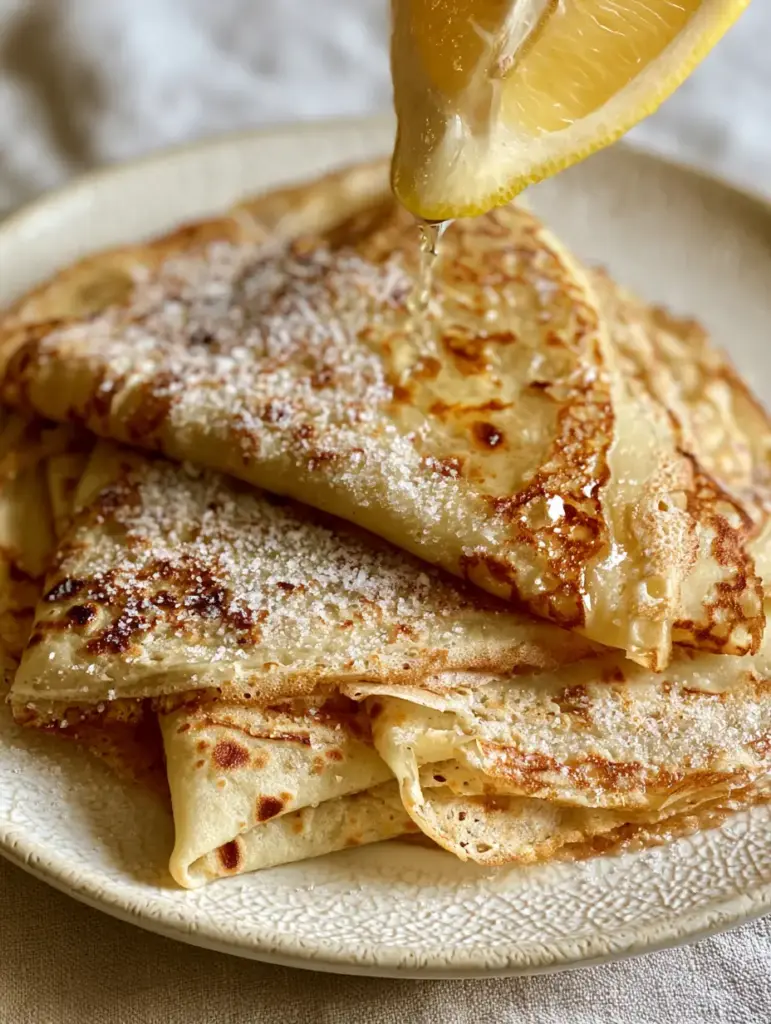
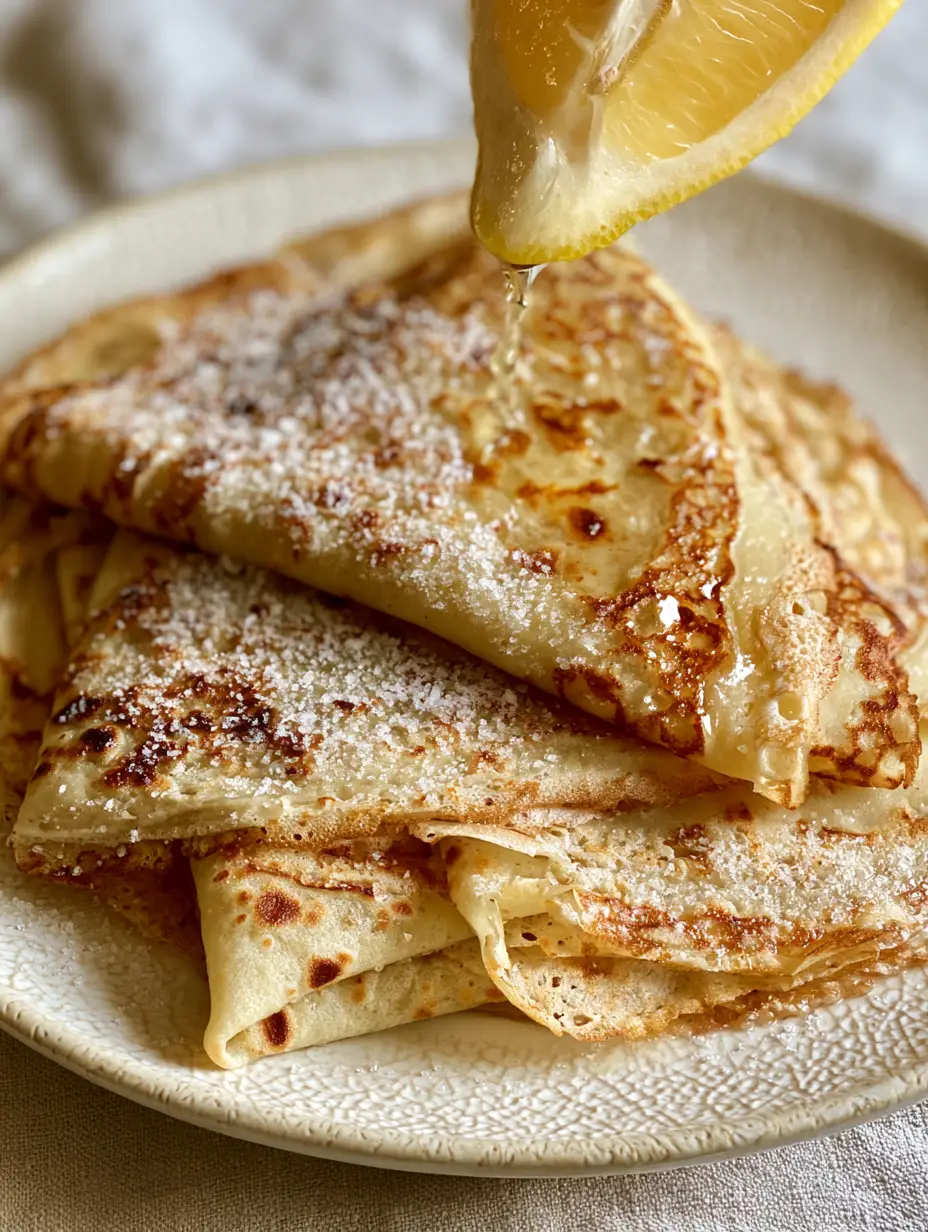
There is a specific, nostalgic magic found in a plate of authentic English pancakes. Unlike their thick, fluffy American cousins, these are delicate, translucent, and possess a sophisticated flexibility that allows them to be folded into elegant quarters. When done correctly, they feature a “leopard-spotted” surface—tiny islands of deep golden-brown char surrounded by a pale, tender crumb.
Achieving the perfect English pancake is an exercise in culinary precision and heat management. We are aiming for a texture that is light, non-greasy, and remarkably thin, finished with the sharp brightness of fresh lemon and the crunch of granulated sugar. This guide will walk you through the forensic details of batter science and pan technique to recreate the stunning visual of a high-resolution, professional-grade breakfast.
The Anatomy of a Perfect English Pancake: Texture and Visual Appeal
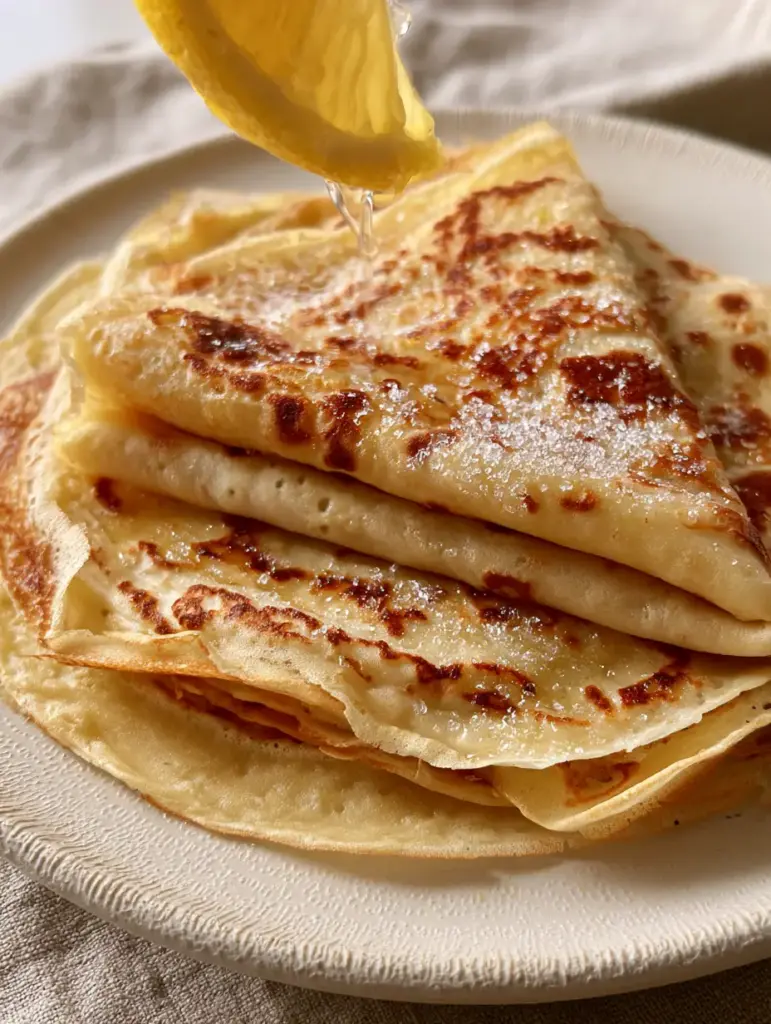
What sets a true English pancake apart from a French crêpe or a Scotch pancake? It is all in the structural integrity and the finish. By following this method, you will achieve the exact results described in our culinary blueprint:
- Intricate Lacy Edges: A result of high heat meeting a butter-rich batter, creating a crisp, almost frayed perimeter that shatters delicately on the tongue.
- Golden-Brown Leopard Spots: These occur through the Maillard reaction as air bubbles in the thin batter make contact with the hot surface of the pan.
- Superior Flexibility: These pancakes are designed to be folded into quarters without cracking, making them the perfect vessel for glistening lemon juice.
- The Non-Greasy Finish: By using a “wipe-on” oil technique, we ensure the pancakes are matte and elegant, not oily to the touch.
The Essential Pantry Staples for Translucent Pancake Batter
Every ingredient in this list serves a forensic purpose in achieving the paper-thin results seen in our visual guide. We avoid leavening agents entirely to maintain that signature flat, flexible profile.
All-Purpose Flour: 1 cup (125g)
Standard all-purpose flour provides the necessary protein (gluten) to give the pancake its “stretch” and strength. Sifting the flour is non-negotiable to prevent lumps in such a thin batter.
Large Eggs: 2 units
Eggs act as the primary binder and provide the structural fat that allows the pancake to be “paper-thin” yet strong enough to flip. They also contribute to the rich, golden hue of the leopard spots.
Whole Milk: 1 ¼ cups (300ml)
Full-fat milk provides the liquid base; the sugars in the milk (lactose) are what caramelize to create those beautiful brown speckles. For an even lighter result, some chefs use a 50/50 mix of milk and water.
Unsalted Butter (Melted): 2 tbsp (28g)
Incorporating melted butter directly into the batter is the secret to the lacy edges. As the batter hits the pan, the fat separates slightly, frying the edges of the pancake into a crisp fringe.
Fine Sea Salt: ½ tsp (3g)
Salt is a flavor enhancer that balances the sweetness of the granulated sugar topping. It also helps to strengthen the gluten network slightly for better flipping.
Granulated Sugar: 2 tbsp (25g) for serving
To achieve the “sparkling crystals” look from our prompt, use a fine granulated sugar rather than powdered sugar. It provides a tactile crunch that contrasts with the soft pancake.
Fresh Lemons: 2 whole lemons
You will need fresh wedges to produce those glistening droplets of juice. The acidity of the lemon cuts through the richness of the egg-heavy batter perfectly.
Precision Tools for the Enthusiastic Home Cook
To replicate the high-detail finish of a professional smartphone food photo, you need the right conductivity in your equipment. Achieving those charred spots requires even heat distribution.
A 10-inch (25cm) non-stick skillet or a seasoned carbon steel crepe pan is the ideal choice for this recipe. You will also need a fine-mesh sieve for sifting the flour, a balloon whisk to aerate the batter, and a silicone spatula or a palette knife for the delicate flip. Using a ladle with a 2-ounce (60ml) capacity ensures consistent thickness for every pancake in the stack.
The Science of the Batter: Mixing and Resting
The biggest mistake home cooks make with English pancakes is rushing the process. The batter is more than just a mixture; it is a suspension of starch in liquid that requires time to stabilize.
Sifting and Whisking for a Silk-Like Consistency
Begin by sifting your flour and salt into a large bowl from a height. This aerates the flour and ensures no clumps remain. Create a well in the center and add your eggs. Gradually whisk in half of the milk, drawing the flour in slowly from the edges to create a thick, smooth paste before thinning it out with the remaining milk and melted butter.
The Critical Resting Period
Allow the batter to rest at room temperature for at least 30 minutes, or in the fridge for up to 2 hours. This allows the starch granules to swell and the gluten to relax. A rested batter results in a pancake that is flexible and tender, whereas an unrested batter can produce a “rubbery” texture that snaps when folded into quarters.
A Masterclass in Pan-Flipping: Achieving the Perfect Leopard Spot
The visual hallmark of our blueprint is the leopard-spotted surface. This is achieved through a combination of pan temperature and “batter swirling” technique.
Calibrating the Heat
Heat your skillet over medium-high heat. To test the temperature, flick a drop of water onto the pan; it should dance and evaporate instantly. Lightly grease the pan with a paper towel dipped in neutral oil. There should be no standing oil; the pan should simply look seasoned and matte.
The Pour and Swirl
Ladle approximately ¼ cup (60ml) of batter into the center of the pan. Immediately tilt and swirl the pan in a circular motion so the batter coats the entire surface in a paper-thin layer. You want the batter to reach the very edges of the pan to create that lacy, delicate fringe. If the batter is too thick, whisk in a tablespoon of water to reach a “heavy cream” consistency.
Visual Cues for the Flip
Cook the first side for approximately 45-60 seconds. Look for the edges beginning to curl away from the pan and turning a pale golden brown. Small bubbles will form on the surface. Slide your spatula under the edge; the underside should show those characteristic deep golden leopard spots. Flip the pancake with a quick flick of the wrist or a gentle turn with the spatula.
The Second Side and Folding
The second side only needs 30 seconds. It will never be as perfectly spotted as the first side, which is why we always fold the “first side” facing outward. Remove the pancake to a rustic off-white ceramic plate and immediately fold it in half, then half again to form a quarter-triangle. This traps the steam and keeps the pancake flexible.
Professional Secrets for That Signature Lacy Edge
- The Butter Temperature: Ensure your melted butter is cooled slightly before whisking it into the eggs and milk. If it is too hot, it may “cook” the eggs prematurely.
- The First Pancake Rule: The first pancake is often a “sacrificial” one used to calibrate the heat. Do not be discouraged if the spots aren’t perfect until the second or third attempt.
- Wipe, Don’t Pour: If you see grease or oil pooling, your pancakes will be heavy. Use a paper towel to keep the oil layer microscopic.
- Stacking for Steam: Keep a stack of finished pancakes on a warm plate covered with a neutral linen napkin. This ensures they remain soft and easy to fold.
Optimal Storage and Reheating Methods
While these are best served immediately to appreciate the crisp edges, you can store them for later use. Place a piece of parchment paper between each pancake to prevent sticking. They will keep in the refrigerator for up to 2 days or can be frozen for up to a month.
To reheat, avoid the microwave, as it will make them rubbery. Instead, place them in a dry frying pan over medium heat for 30 seconds per side. This restores the lacy texture and the slight char of the leopard spots.
Creating a Complete Morning Feast
English pancakes are traditionally a standalone treat, but they can be part of a larger brunch spread. Pair them with a protein-rich dish like this savory breakfast pork chop for a hearty start to the day. If you prefer a lighter side, a refreshing cucumber and dill salad provides a crisp textural contrast to the soft pancakes.
For those looking for more snack ideas, these pancakes can be rolled with savory fillings like ham and cheese. However, nothing beats the classic presentation of lemon and sugar as featured in our visual blueprint.
Frequently Asked Questions
Yes, but use a high-quality 1-to-1 gluten-free blend that contains xanthan gum. Note that the edges may be less ‘lacy’ due to the lack of traditional wheat protein.
Leopard spots require a hot, evenly heated pan and a very light coating of oil. If the pan is too cold, the pancake will be a uniform, pale color without the characteristic char.
They are very similar, but English pancakes are traditionally slightly thicker than crepes and are almost always served simply with lemon and sugar rather than complex fillings.
Rubbery pancakes usually happen when the batter hasn’t rested long enough or was over-mixed. Resting for 30 minutes allows the gluten to relax, ensuring a soft, flexible texture.
The ‘first pancake syndrome’ is usually due to the pan temperature not being stabilized. By the second pancake, the pan has reached a consistent heat and the oil is perfectly distributed.
The Ultimate Traditional English Pancakes Recipe
English Pancakes: How to Master Paper-Thin Lacy Edges and Golden Leopard Spots
Ingredients
Equipment
Method
- Sift the flour and salt into a large mixing bowl. Create a well in the center and add the eggs. Whisk gently, slowly incorporating the flour.
- Gradually pour in the milk and melted butter while whisking constantly until the batter is the consistency of heavy cream and completely smooth.
- Allow the batter to rest at room temperature for at least 30 minutes. This ensures a flexible, non-rubbery pancake.
- Heat a non-stick skillet over medium-high heat. Lightly wipe with an oiled paper towel. The pan should be hot but not smoking.
- Ladle 1/4 cup of batter into the center and swirl immediately to cover the base. Cook for 45-60 seconds until edges are lacy and underside has leopard spots.
- Flip the pancake and cook for another 30 seconds. Slide onto a plate and fold into quarters immediately.
Notes
Use a high heat and a very light layer of oil to get the best leopard spots.

Bring the Tradition to Your Kitchen
Mastering the English pancake is a rite of passage for any home cook. The combination of the paper-thin crumb, the tart lemon juice, and the sparkling sugar crystals creates a sensory experience that is both simple and deeply satisfying. Whether you are celebrating Shrove Tuesday or just a quiet Sunday morning, this recipe delivers a visually stunning and delicious result every time.
Did you manage to get those perfect leopard spots? We would love to hear about your pancake-flipping triumphs in the comments below! Be sure to sign up for our newsletter for more culinary masterclasses and share your beautiful plates on Pinterest.