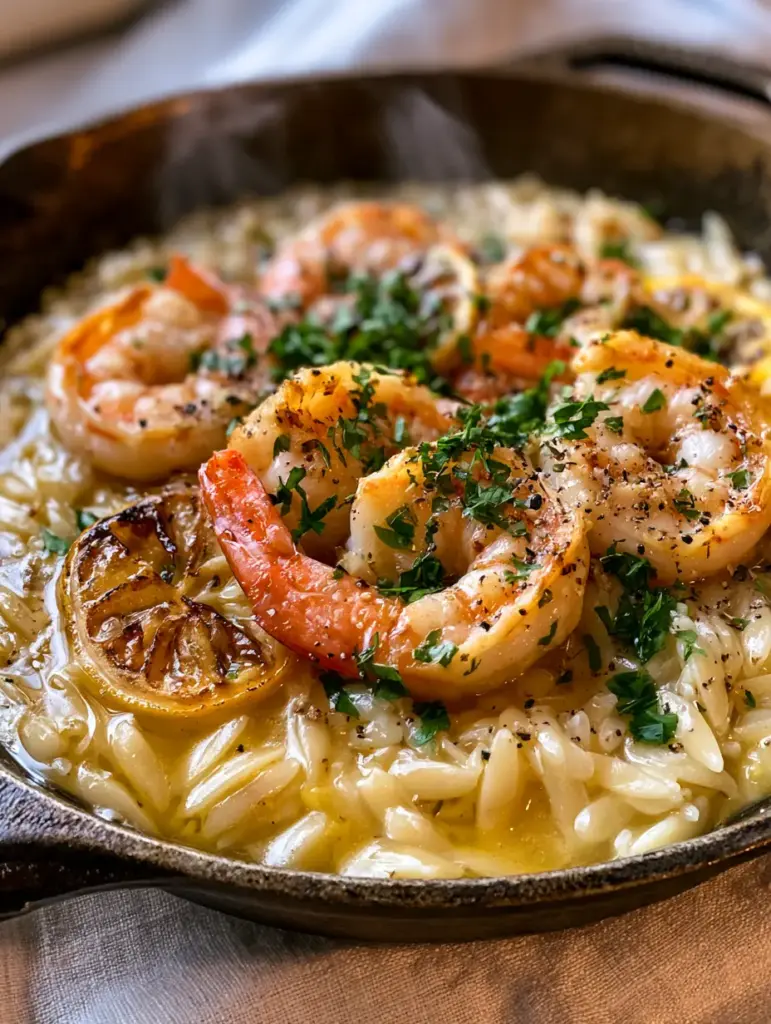
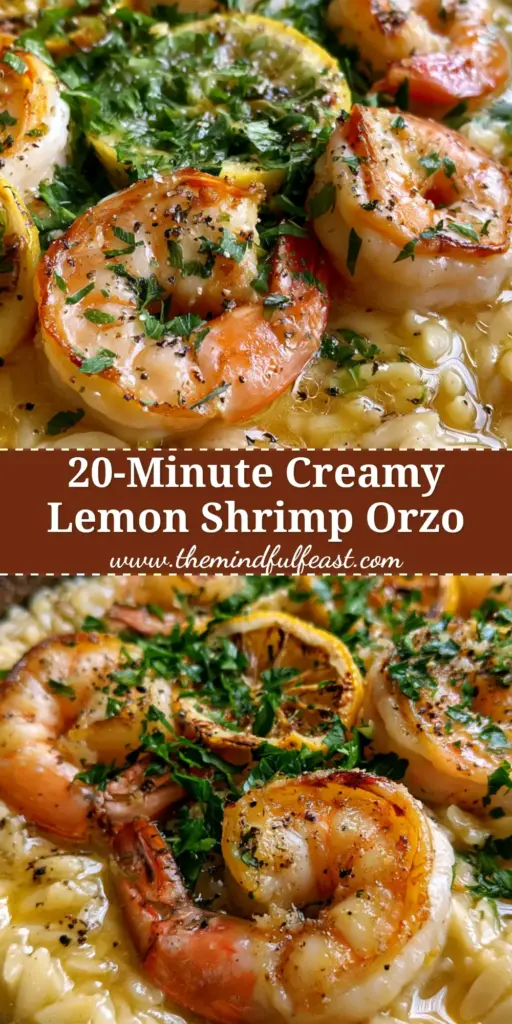
This Shrimp Orzo recipe is the ultimate intersection of rustic home cooking and restaurant-quality elegance. Imagine a single seasoned cast iron skillet, brimming with velvety, toasted grains of orzo that have been simmered to perfection in a golden, translucent lemon-butter emulsion. Each bite offers a harmonious balance of citrus brightness and rich garlic undertones, creating a foundational flavor profile that elevates the entire dish.
Nestled atop this glistening bed of pasta are jumbo shrimp, seared until their edges are a deep golden-brown and their tails carry a signature smoky char. This isn’t just a meal; it’s a sensory experience, captured through the steam rising from the skillet and the vibrant colors of fresh greenery against the dark iron. Whether you are hosting a small gathering or looking for an elevated weeknight meal, this one-pan masterpiece delivers on every promise of flavor and texture.
The Gourmet Allure of One-Pan Mediterranean Flavors
- Textural Contrast: Experience the transition from the firm, toasted exterior of the orzo to its tender, velvety center, paired with the snap of perfectly seared jumbo shrimp.
- Charred Citrus Depth: By searing the lemon wheels directly in the skillet, we unlock a caramelized sweetness that balances the sharp acidity of the fresh juice.
- Golden Emulsion: The sauce is a silky, glossy masterpiece, created by emulsifying cold butter into a concentrated lemon-garlic broth for maximum mouthfeel.
- Visual Vibrancy: A heavy garnish of finely minced flat-leaf parsley and coarse cracked black pepper provides the “pop” needed to make this dish look as good as it tastes.
Essentials for a Velvety Golden Lemon Butter Emulsion
Jumbo Shrimp (16-20 count): We use large shrimp with the tails left on to achieve those beautiful charred edges and bright pink visual cues described in our blueprint. 1 lb (450g) of jumbo shrimp provides the perfect protein-to-pasta ratio.
Dried Orzo Pasta: This rice-shaped pasta is the star of the show; we toast it in butter to ensure the grains remain distinct and develop a nutty, complex flavor. 1.5 cups (300g) of dry orzo is sufficient for a family-sized skillet.
Unsalted Butter: High-quality butter is essential for creating the glossy, translucent sauce that coats every grain of orzo. 4 tbsp (60g) of butter, divided, allows for both searing and finishing the emulsion.
Fresh Lemons: You will need two lemons; one to be sliced into thin wheels for charring and one to be juiced for the sauce’s bright acidity. This dual-purpose citrus approach ensures layers of flavor.
Chicken or Vegetable Broth: The liquid base provides the salt and depth needed for the orzo to absorb as it cooks. 3 cups (710ml) of low-sodium broth is the standard ratio for a velvety finish.
Fresh Garlic: Mincing four large cloves provides the aromatic backbone of the “Lemon Garlic Butter” sauce. Ensure it is finely minced so it distributes evenly through the velvety pasta.
Fresh Flat-Leaf Parsley: A shower of finely chopped parsley adds a bright green contrast to the golden skillet. 1/4 cup (10g) of parsley is the visual benchmark for this dish.
Red Chili Flakes and Black Pepper: Coarse cracked black pepper and a pinch of red pepper flakes provide the “kick” and visual “dusting” noted in the visual blueprint. Use 1 tsp (2g) of black pepper and 1/2 tsp (1g) of flakes.
Olive Oil: A high-smoke point oil is necessary for the initial sear of the shrimp to prevent the butter from burning. 1 tbsp (15ml) of extra virgin olive oil is ideal.
Kitchen Tools for the Perfect Cast Iron Sear
To achieve the visual result seen in our professional blueprint, a 12-inch seasoned cast iron skillet is non-negotiable. The heavy bottom and superior heat retention are what allow the shrimp tails to char while the lemon wheels caramelize. You will also need a sharp chef’s knife for the “finely minced” parsley and a microplane if you choose to add extra zest for an even deeper citrus aroma.
Step-by-Step to Master the Charred Shrimp and Toasted Grain
Achieving the Perfect Shrimp Sear
Pat your jumbo shrimp completely dry with paper towels; moisture is the enemy of a golden-brown crust. Season them liberally with salt and a portion of the cracked black pepper. Heat 1 tbsp (15ml) of oil in your cast iron skillet over medium-high heat until it just begins to shimmer.
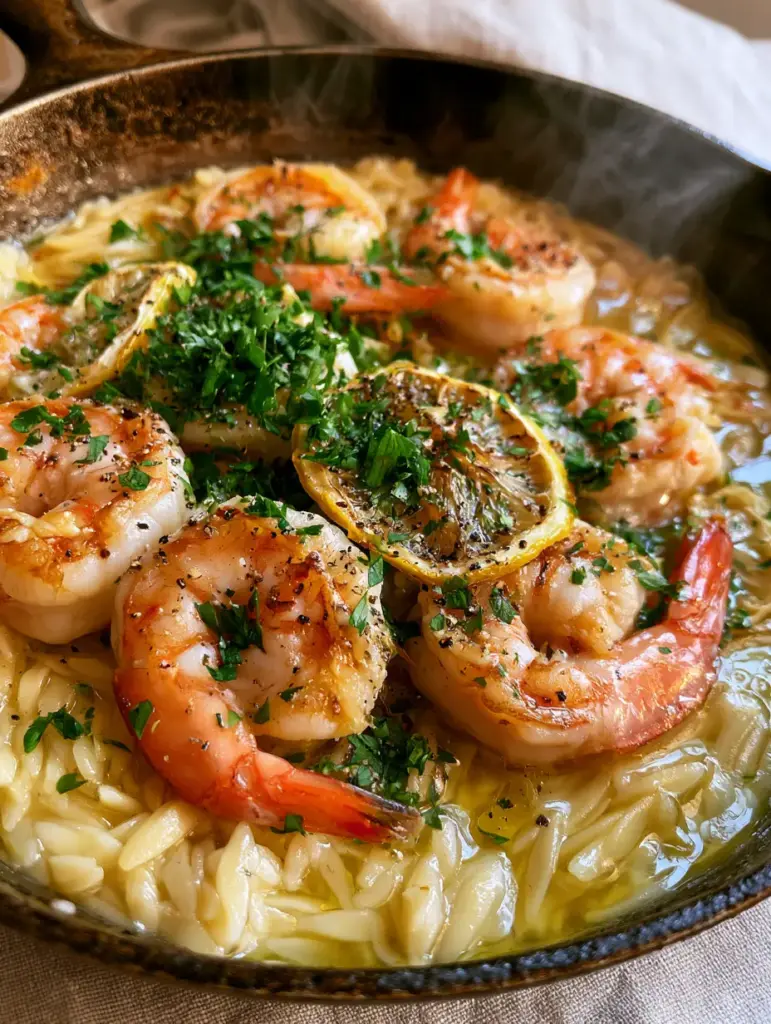
Add the shrimp in a single layer, ensuring they aren’t crowded, which allows the tails to contact the hot iron and develop a slight char. Sear for 2 minutes per side until the edges are golden-brown and the centers are just opaque. Remove the shrimp from the pan and set them aside on a plate to keep them succulent.
Caramelizing the Citrus and Aromatics
In the same skillet, add the lemon wheels. Sear them for 1-2 minutes until they develop dark, caramelized marks, then remove them and set aside with the shrimp. Lower the heat to medium and add 1 tbsp (15g) of butter.
Stir in the finely minced garlic and red chili flakes. Sauté for only 30-60 seconds, or until the fragrance fills the kitchen, but be careful not to brown the garlic, as this can turn bitter in a delicate butter sauce.
Toasting the Orzo and Simmering
Add the dry orzo directly to the garlic butter in the skillet. Stir constantly for 2-3 minutes, toasting the grains until they turn a light golden color and smell slightly nutty. This step is critical for the Shrimp Orzo recipe to ensure the pasta doesn’t become a mushy mass.
Pour in the broth and the juice of your second lemon. Bring the mixture to a gentle boil, then reduce the heat to low, cover, and simmer. Stir occasionally to prevent sticking, continuing until the orzo is tender and most of the liquid has been absorbed, creating that signature “velvety” texture.
Emulsifying the Glossy Sauce
Once the orzo is cooked, stir in the remaining 3 tbsp (45g) of cold butter. Stir vigorously until the butter melts and combines with the residual pasta starch and lemon juice to form a golden, translucent emulsion. The sauce should look glistening and rich.
Return the seared shrimp and charred lemon wheels to the skillet, nesting them on top of the bed of grains. Let them sit for 1 minute just to warm through. The steam rising from the skillet at this stage is a sign that the dish is ready for its final garnishes.
Secrets for Non-Mushy Orzo Every Single Time
- The Toasting Rule: Never skip the toasting phase. Coating the starch in fat before adding liquid is the secret to individual, plump grains.
- Cold Butter Finish: Adding cold butter at the end, rather than melted butter, is a classic French technique that creates a stable, glossy emulsion rather than a greasy mess.
- Liquid Ratios: If your orzo looks too dry before it is tender, add 1/4 cup (60ml) of extra broth at a time. It should look like a thick risotto.
- Resting Period: Let the dish sit for 2 minutes off the heat before serving. This allows the sauce to thicken slightly and coat the orzo like a velvet blanket.
How to Keep Your Seafood Fresh for Tomorrow
If you have leftovers of this Shrimp Orzo recipe, store them in an airtight container in the refrigerator for up to two days. Because shrimp can become rubbery when overcooked, it is best to reheat the orzo separately in a small pan with a splash of water or broth to loosen the sauce. Add the shrimp at the very end just to take the chill off.
Freezing is not recommended for this specific dish, as the lemon-butter emulsion tends to break upon thawing, and the orzo may lose its distinct, toasted texture.
Perfect Pairings for a Complete Mediterranean Feast
This dish is a star on its own, but it pairs beautifully with other vibrant textures. For a lighter side, consider a crisp cucumber salsa to contrast the rich butter sauce. If you are looking for more seafood inspiration, our cold shrimp salad makes a great appetizer for a multi-course dinner.
If you enjoy the technique of one-pan cooking, you might also love our garlic butter shrimp and rice or for a different protein, the creamy boursin orzo with chicken. For a hearty Sunday feast, this orzo acts as a sophisticated alternative to a traditional chicken dinner recipe.
Common Questions About One-Pot Pasta Dishes
You can use Acini di Pepe or small Ditalini, but the cooking times will vary. Orzo is preferred for its unique ability to become ‘velvety’ while holding a toasted exterior.
Yes, but ensure they are completely thawed and patted very dry with paper towels. Excess moisture will prevent the shrimp from developing the golden-brown charred edges shown in the blueprint.
No, you should not rinse orzo for this recipe. The surface starch is necessary to help thicken the lemon-butter sauce and create that velvety emulsion we are looking for.
Add the garlic only after lowering the heat and right before the orzo. Sauté it for no more than 60 seconds; once it smells fragrant, immediately add the liquid to stop the cooking process.
This usually happens if the heat is too high when adding the final butter or if you use melted butter. Always use cold butter chunks and stir them in off the heat to create a stable emulsion.
The Definitive Guide to Making This Skillet Masterpiece
Shrimp Orzo Recipe with Lemon Garlic Butter and Charred Shrimp
Ingredients
Equipment
Method
- Heat oil in a 12-inch cast iron skillet over medium-high heat. Pat shrimp dry, season with salt and pepper, and sear for 2 minutes per side until tails are charred and edges are golden. Remove from pan.
- Place lemon wheels in the hot skillet for 1 minute per side until caramelized marks appear. Remove and set aside with the shrimp.
- Add 1 tbsp butter to the skillet with minced garlic. Sauté for 30 seconds, then add orzo and stir for 2-3 minutes until the grains are toasted and fragrant.
- Add broth and lemon juice. Bring to a boil, then cover and simmer on low for 8-10 minutes until the orzo is tender and velvety.
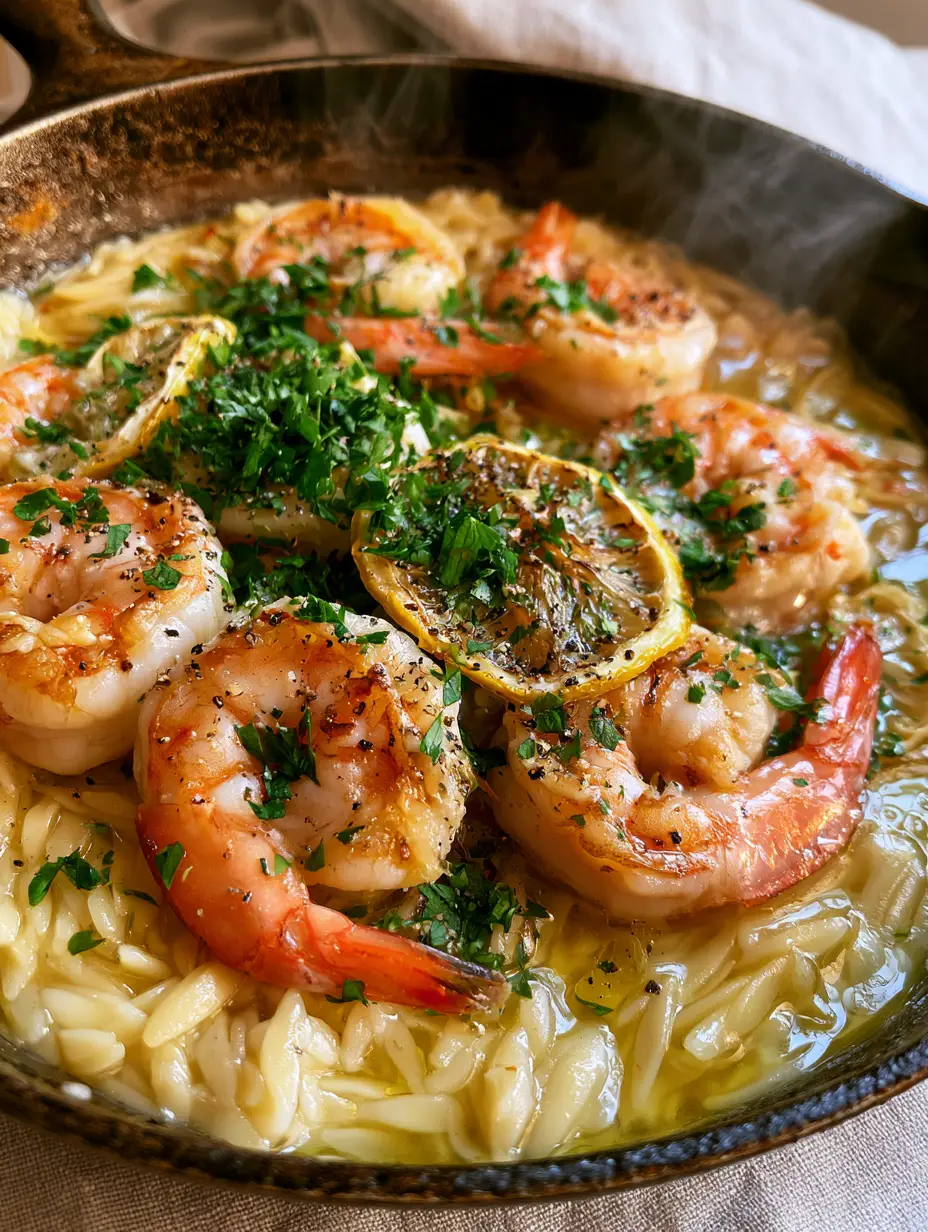
- Stir in remaining cold butter to create a glossy emulsion. Nest the shrimp and lemon wheels back on top. Garnish with parsley, cracked pepper, and chili flakes.
Notes
Use cold butter at the end to ensure the sauce stays emulsified and glossy.
Closing & Call to Action
Mastering this Shrimp Orzo recipe brings the sophistication of a coastal bistro right into your kitchen. The combination of charred seafood, citrus brightness, and the velvety texture of toasted orzo creates a meal that is as satisfying to cook as it is to eat. The one-pan cleanup is simply the cherry on top of this culinary masterpiece.
Did you achieve the perfect sear on your shrimp? We want to hear about it! Leave a comment below, sign up for our newsletter for more skillet inspirations, and be sure to share your beautiful creations with us on Pinterest. Happy cooking!