Experience the quintessential taste of a Hong Kong teahouse right in your own kitchen. This Chinese Mango Pudding is a masterclass in texture—boasting a smooth, wobbly surface and a vibrant, glossy finish that captures the essence of summer. Using the legendary sweetness of Alphonso mangoes and the floral notes of organic honey, this recipe bridges the gap between professional pastry art and home-cooked comfort.
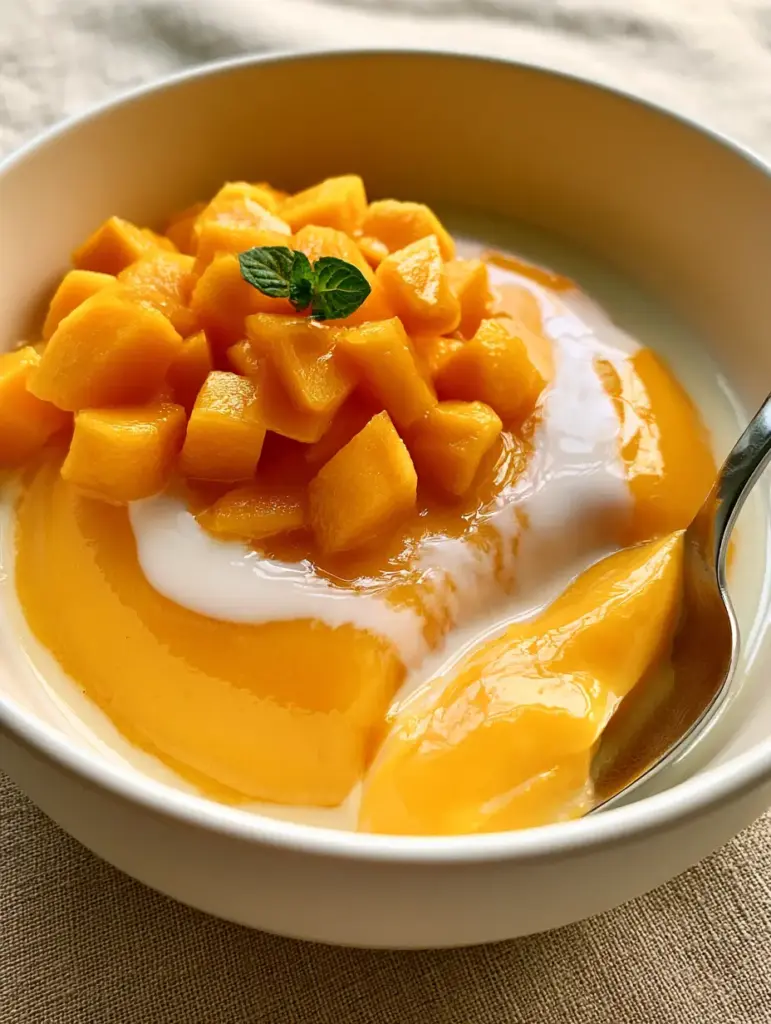
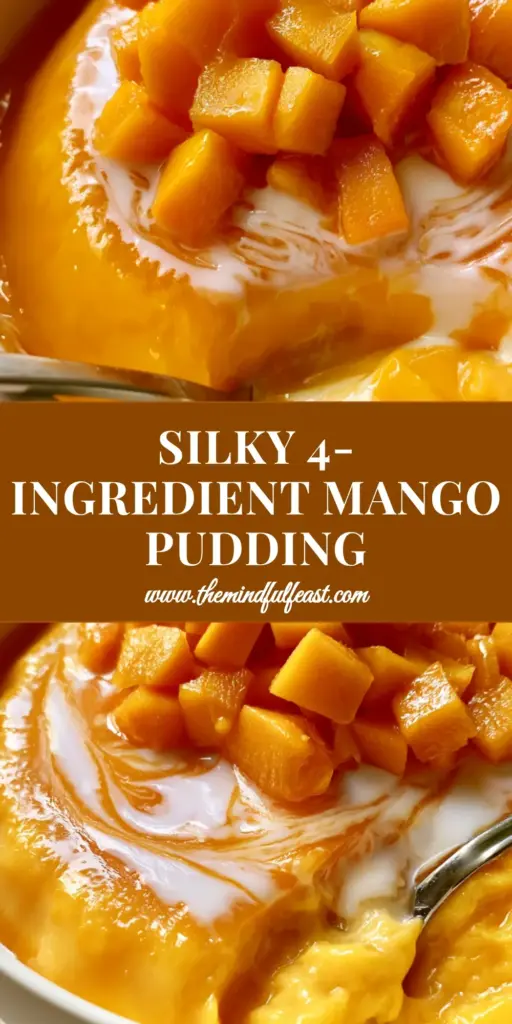
Imagine sliding a silver spoon into a perfectly set, translucent orange dome. The internal creamy texture is revealed as you pull away a silky scoop, followed by the richness of a chilled evaporated milk swirl. Whether you are looking for a refreshing end to a heavy meal or a stand-alone star for your next gathering, this pudding delivers a sensory experience that is as visually stunning as it is delicious.
Why This Vibrant Mango Treat Is The Ultimate Crowd-Pleaser
- Visual Forensics: We achieve that signature “marble effect” using a specific drizzling technique with chilled evaporated milk against the vibrant orange puree.
- Textural Perfection: The bloomed gelatin base ensures a delicate “wobble” that holds its shape but melts instantly on the tongue.
- Alphonso Gold: By utilizing pureed fresh Alphonso mango, we ensure a deep, natural orange hue without the need for artificial food coloring.
- Natural Sweetness: Organic honey replaces refined sugars to provide a complex, floral undertone that complements the tropical fruit notes.
- Garnish Contrast: Diced fresh mango cubes provide a juicy, structural contrast to the silky smooth pudding base.
The Essential Components For A Silky Mango Masterpiece
Creating the perfect Chinese Mango Pudding requires a balance of high-quality fruit and precise setting agents. Here is what you need to gather for your mise en place.
Fresh Alphonso Mangoes: You will need 2 cups (480ml) of smooth puree and an additional 1 cup (150g) of perfectly diced cubes. Alphonso mangoes are prized for their non-fibrous flesh and intense, saffron-like aroma.
Bloomed Gelatin Base: 1 tablespoon (approx. 10g or 1.5 packets) of unflavored gelatin powder is essential for the structure. We bloom this in cold water to ensure a lump-free, translucent finish.
Organic Honey: 3 tablespoons (60g) of high-quality honey acts as our primary sweetener. It dissolves beautifully into the warm mango mixture, adding a layer of sophisticated sweetness.
Chilled Evaporated Milk: 1/2 cup (120ml) of evaporated milk provides the creamy “swirl” that defines the classic dim sum look. Its concentrated fats offer a richer mouthfeel than standard whole milk.
Boiling Water: 1/2 cup (120ml) of hot water is required to fully dissolve the bloomed gelatin and honey. Precision in temperature here ensures the gelatin doesn’t lose its setting power.
Fresh Mint Sprig: A single, tiny sprig of fresh mint serves as the final visual anchor. The pop of green against the vibrant orange creates a professional, high-contrast presentation.
Must-Have Tools For Professional Plating
To achieve the look of a high-end handheld smartphone photo, you need the right vessels. I recommend using minimalist matte white ceramic bowls to let the orange pudding truly pop.
A high-speed blender is non-negotiable for the mango puree; you want to remove every trace of fiber for that “clean, silky scoop.” You will also need a fine-mesh sieve to strain the mixture before chilling, ensuring a glossy, translucent sheen without air bubbles.
Finally, a small offset spatula or a silver spoon is helpful for placing the diced mango cubes in a “generous pile” as described in our visual blueprint.
Mastering the Science of the Perfect Mango Set
Step 1: The Critical Gelatin Bloom
In a small heat-proof bowl, sprinkle 1 tbsp (10g) of gelatin over 3 tbsp (45ml) of cold water. Let it sit for 5-10 minutes until it looks like a thick, translucent sponge; this process, known as blooming, prevents clumps.
Pour 1/2 cup (120ml) of boiling water over the bloomed gelatin and whisk vigorously. The mixture should become completely clear and liquid, indicating the protein chains are ready to bond.
Step 2: Incorporating the Honey and Alphonso Essence
While the water is still hot, whisk in the 3 tbsp (60g) of organic honey until fully incorporated. The heat helps the honey thin out, ensuring it distributes evenly throughout the Chinese Mango Pudding.
Slowly pour in the 2 cups (480ml) of fresh Alphonso mango puree. Use a rubber spatula to fold the puree into the gelatin water until the color is a uniform, vibrant orange.
Step 3: Straining for a Glossy Finish
Pass the entire mixture through a fine-mesh sieve into a clean pitcher. This step is vital to remove any stray mango fibers or undissolved gelatin bits, resulting in that “perfect, smooth surface” seen in the photos.
Pour the mixture into your matte white ceramic bowls, leaving about half an inch of space at the top for the garnishes. Tap the bowls gently on the counter to pop any surface bubbles.
Step 4: The Chilling Phase
Place the bowls in the refrigerator for at least 4 hours, or ideally overnight. You are looking for a sensory cue: when you gently shake the bowl, the center should have a slight, controlled “jiggle” but not appear liquid.
Step 5: The Artistic Evaporated Milk Swirl
Just before serving, take your chilled evaporated milk. Using a small spoon, drizzle 1-2 tablespoons over the surface of each pudding.
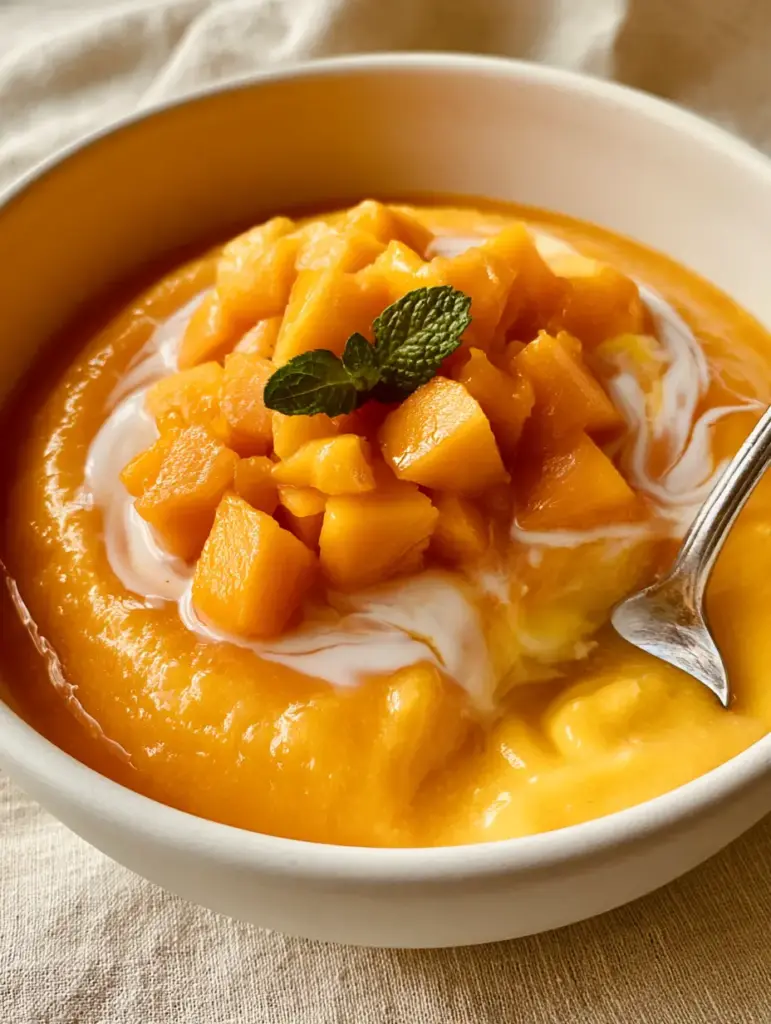
Gently tilt the bowl or use the tip of a toothpick to create a marble effect. The white milk should sit partially on top and partially sink, creating beautiful orange-and-white streaks.
Step 6: Final Presentation and Garnish
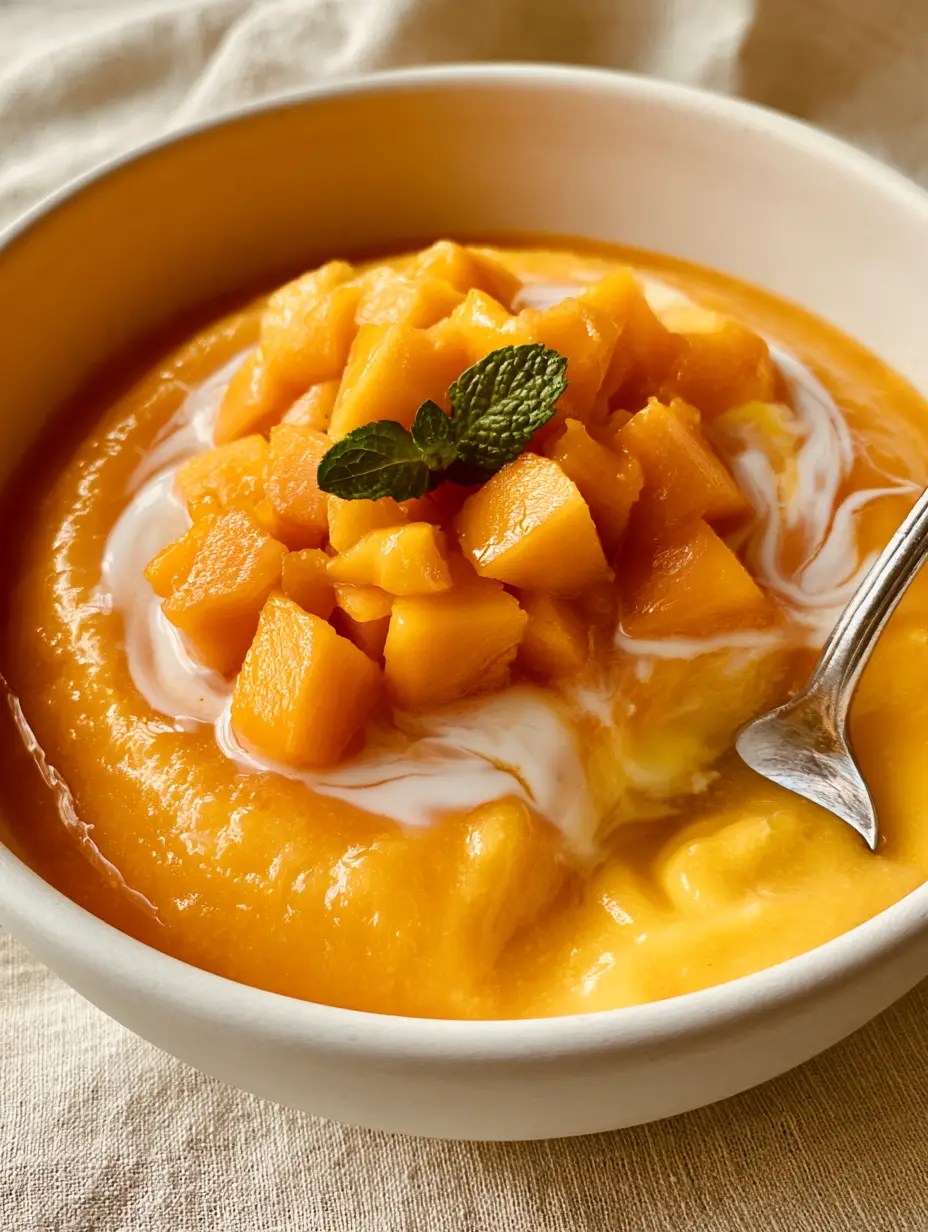
Pile a generous amount of diced mango cubes right in the center of the pudding. The moisture from the cubes should catch the light, creating a juicy highlight.
Top with a single small mint leaf. The contrast of the green against the matte white bowl and orange pudding completes the professional aesthetic.
Expert Tips for a Flawless Result
- Mango Maturity: If your mangoes aren’t sweet enough, increase the honey slightly, but do so while the water is hot to ensure it dissolves.
- Bubble Control: If you see tiny bubbles on the surface after pouring, lightly run a kitchen torch over the top or prick them with a toothpick for a glass-like finish.
- The Milk Swirl: Ensure the evaporated milk is ice-cold. If it is room temperature, it will mix too quickly with the pudding and lose the distinct marble effect.
- Sieve Success: Never skip straining. Even the best blenders leave behind microscopic fibers that can ruin the “silky scoop” texture.
Smart Storage and Make-Ahead Advice
This Chinese Mango Pudding is an excellent make-ahead dessert. You can store the set puddings (without the milk swirl or diced mango) in the refrigerator for up to 3 days. Keep them tightly covered with plastic wrap to prevent them from absorbing fridge odors.
I do not recommend freezing this recipe. Gelatin-based desserts often lose their structural integrity and become watery upon thawing. For the best experience, serve it fresh and chilled.
What To Serve With This Refreshing Treat
If you are planning a full meal, this pudding is the perfect palate cleanser. It pairs beautifully after a savory meal like a creamy rigatoni or a hearty garlic butter beef dish.
For those looking for lighter options, consider serving this alongside a crisp vegetable salad. If you’re hosting a brunch, it fits right in with other no-cook breakfast ideas for a tropical start to the day.
Need more entertaining inspiration? Check out our snackle box ideas for a fun way to serve the leftover diced mango and mint!
Common Questions About Mango Pudding
Absolutely! Coconut milk is a popular alternative that adds a lovely tropical aroma, though it will change the flavor profile slightly from the traditional version.
Yes, you can use frozen mangoes, but ensure they are fully thawed and blended until extremely smooth. Alphonso mango pulp (canned) is also a great substitute for fresh fruit.
To make this vegetarian, replace the gelatin with 1 teaspoon of agar-agar powder. Note that agar-agar produces a firmer, less ‘wobbly’ set than gelatin.
It typically takes 4 hours to set fully in the refrigerator, but for the best ‘clean scoop’ texture, letting it chill overnight is recommended.
Graininess usually comes from mango fibers or undissolved gelatin. Always blend your mango thoroughly and pass the final mixture through a fine-mesh sieve.
The Complete Chinese Mango Pudding Recipe
Chinese Mango Pudding: The Ultimate Silky Alphonso Dim Sum Dessert
Ingredients
Equipment
Method
- Sprinkle the gelatin over cold water in a small bowl. Let it bloom for 5-10 minutes until absorbed.
- Add boiling water to the bloomed gelatin and whisk until completely clear and dissolved.
- Stir honey into the hot gelatin liquid, then fold in the mango puree until the color is vibrant and uniform.
- Pass the mixture through a fine-mesh sieve into ceramic bowls. Refrigerate for at least 4 hours until wobbly but set.
- Drizzle chilled evaporated milk over the set pudding to create a marble effect.
- Top with diced mango cubes and a single mint leaf before serving cold.
Notes
Ensure the evaporated milk is ice-cold to maintain the distinct white swirl effect.
Closing Thoughts on This Tropical Classic
Mastering the Chinese Mango Pudding is all about respecting the ingredients. When you use the right mangoes and take the time to bloom your gelatin properly, the result is a world-class dessert that rivals any high-end restaurant. The combination of the cool, wobbly pudding and the rich evaporated milk swirl is a timeless favorite for a reason.
Did you try the marble effect? We would love to see your creations! Leave a comment below and let us know how your pudding turned out. Don’t forget to follow us on Pinterest and share your photos with our community!