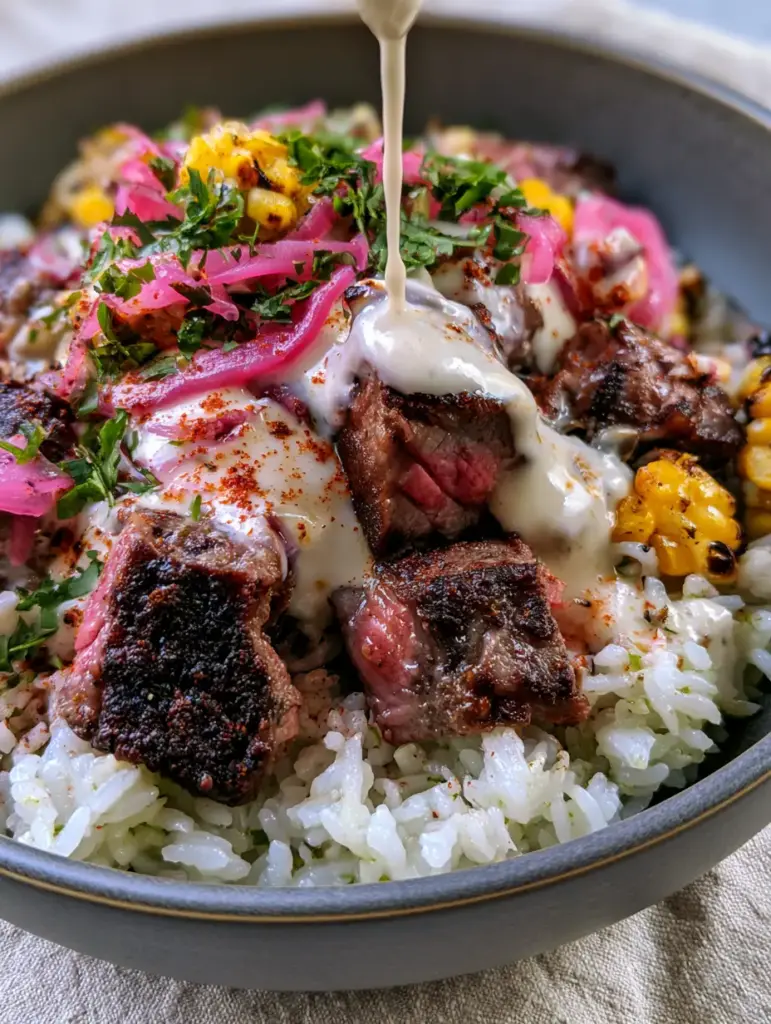
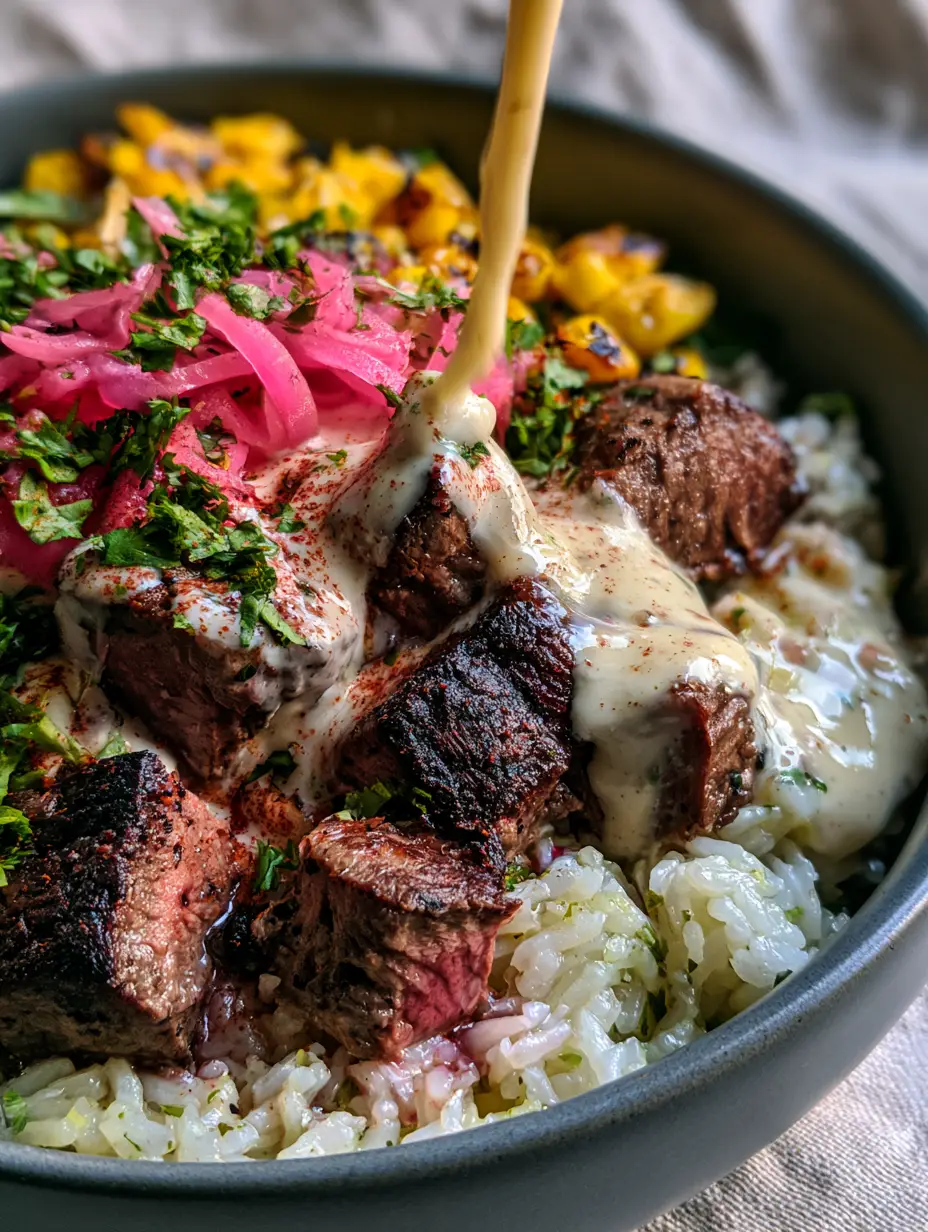
The Steak queso rice bowl is the ultimate intersection of high-end steakhouse flavors and soulful, Tex-Mex comfort. Imagine thick, juicy cubes of ribeye, seared to a deep mahogany crust while maintaining a tender pink center, all resting atop a bed of citrus-kissed rice. As a velvety stream of white queso blanco cascades over the beef, it creates a visual and culinary masterpiece that satisfies every craving for salt, fat, and acid.
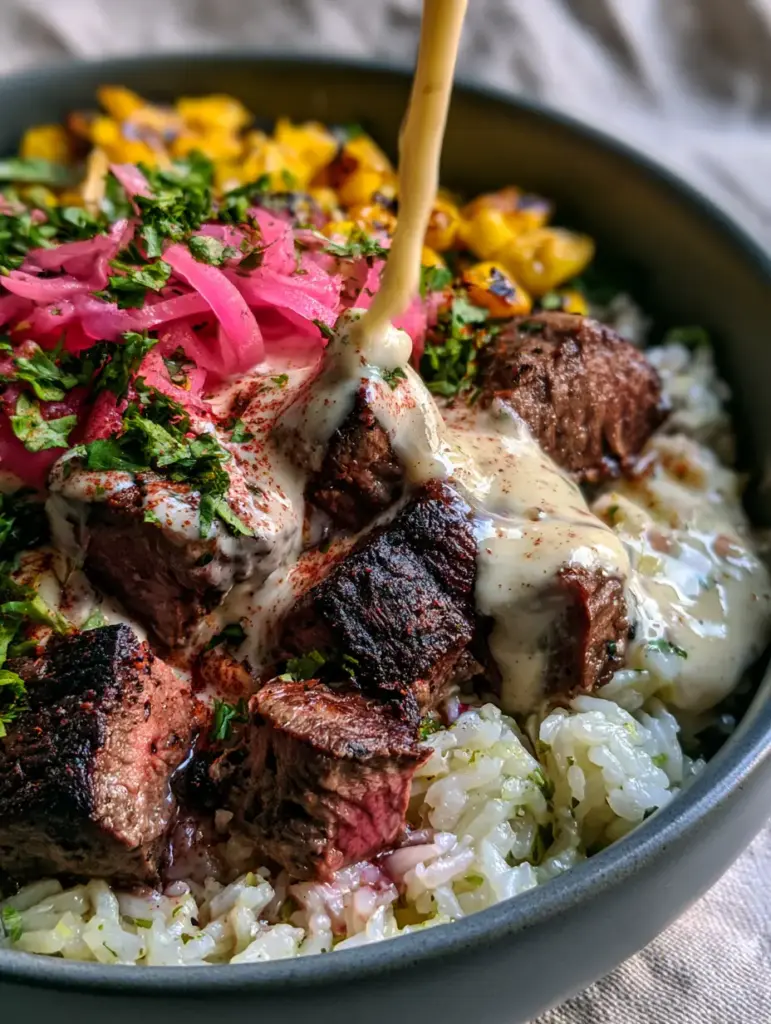
This dish isn’t just about the protein; it is a symphony of textures. From the snap of charred sweet corn to the bright crunch of pickled red onions, every bite offers a new sensory experience. The soft, natural daylight hitting the glossy sauce in our hero shot highlights the exact texture we are aiming for—a professional, restaurant-quality bowl made right in your own kitchen.
Why This Gourmet Beef and Queso Combination Works
- The Ribeye Advantage: Using ribeye ensures that each cube is marbled with fat, which renders down during the skillet sear to create an incredible flavor profile that leaner cuts simply cannot match.
- Textural Contrast: We pair the crusty, seared exterior of the steak with a smooth, clump-free white queso blanco, providing a mouthfeel that is both rugged and refined.
- Acid Balance: The sharpness of the pickled red onions and the zing of a fresh lime wedge cut through the richness of the cheese and beef, keeping your palate refreshed.
- Visual Vibrancy: The dusting of smoked paprika and fresh cilantro isn’t just for flavor; it provides the color contrast needed to make this Steak queso rice bowl a centerpiece meal.
Essential Components for Your Signature Rice Bowl
The Protein: Skillet-Seared Ribeye Cubes
For this recipe, you will need 1.5 lbs (680g) of ribeye steak. Look for heavy marbling, as this fat will provide the “glistening” appearance seen in our visuals. We will trim the excess gristle but keep the intramuscular fat to ensure the steak stays juicy even after being cubed and seared at high heat.
The Base: Fluffy Cilantro Lime White Rice
We use 1.5 cups (300g) of long-grain jasmine or basmati rice. Rinsing the rice until the water runs clear is a non-negotiable step to remove excess starch, ensuring the grains remain individual and “fluffy” rather than clumpy. A touch of butter and fresh lime juice adds that signature brightness.
The Liquid Gold: Velvety White Queso Blanco
To achieve the “glossy stream” effect, we use a blend of 8 oz (225g) white American cheese and 4 oz (115g) Monterey Jack. This combination, thinned with a splash of heavy cream, ensures a professional melt that stays liquid even as it cools slightly on the plate.
The Vibrant Garnishes
The bowl is finished with 1/2 cup (80g) charred sweet corn, 1/4 cup (40g) pickled red onion slices, and a handful of freshly chopped cilantro. These aren’t just toppings; they are the structural elements that provide the 45-degree angle “hero shot” aesthetic, offering pops of yellow, pink, and green against the dark grey ceramic bowl.
Must-Have Kitchen Tools for Culinary Precision
To achieve the dark brown sear described in our blueprint, a heavy-bottomed cast iron skillet is essential. The thermal mass of cast iron prevents the pan temperature from dropping when the cold meat hits the surface, which is the secret to that “crusty” exterior. If you enjoy precision cooking, you might also find success using these techniques in other dishes like our garlic butter beef and rice.
A high-quality rice cooker or a heavy-lidded pot is required for the base. For the garnishes, a sharp chef’s knife is needed to achieve the “thin slices” of pickled onions and “finely chopped” cilantro that characterize a gourmet presentation. If you’re looking for more ways to use your skillet, consider trying our easy steak dinners for weeknight inspiration.
Developing the Perfect Sear and Fluffy Base
Step 1: Preparing the Quick-Pickled Red Onions
Begin by thinly slicing half a red onion. In a small jar, combine 1/2 cup (120ml) apple cider vinegar, 1 tbsp (12g) sugar, and a pinch of salt. Submerge the onions and let them sit for at least 20 minutes; they will transform into the “bright pink” garnish required for the visual blueprint.
Step 2: Mastering the Cilantro Lime Rice
Rinse 1.5 cups (300g) of rice thoroughly. Combine with 2.25 cups (540ml) of water and a pinch of salt in a pot. Bring to a boil, then reduce to a simmer and cover for 15 minutes. Once cooked, fluff with a fork and fold in 2 tbsp (30g) of melted butter, the juice of one lime, and 1/4 cup (10g) of finely chopped cilantro.
Step 3: Charring the Sweet Corn
In a dry skillet over medium-high heat, add 1/2 cup (80g) of corn kernels. Let them sit undisturbed for 2-3 minutes until they develop “charred yellow” spots. Remove from the heat and set aside. This adds a smoky depth that complements the smoked paprika dusting used later.
Step 4: Executing the Skillet-Seared Ribeye
Pat your ribeye cubes dry with paper towels—moisture is the enemy of a good sear. Season generously with kosher salt and cracked black pepper. Heat 2 tbsp (30ml) of high-smoke point oil in your cast iron skillet until it just begins to smoke. Add the steak in a single layer, ensuring they aren’t crowded.
Sear for 2 minutes per side without moving them. You are looking for a “crusty dark brown sear.” Use a meat thermometer to ensure the internal temperature reaches 130°F (54°C) for a perfect “tender pink center.” Remove the meat from the pan and let it rest for 5 minutes to retain the “meat juices” mentioned in our photography guide.
Step 5: Whisking the Smooth Queso Blanco
In a small saucepan over low heat, combine your shredded white American cheese, Monterey Jack, and 1/4 cup (60ml) of heavy cream. Whisk constantly until “velvety smooth.” If the sauce is too thick to pour in a “glossy stream,” add a tablespoon of milk at a time until the desired consistency is reached.
Pro-Tips for an Elite Steak Queso Rice Bowl
- Temperature Control: Ensure your steak is at room temperature before searing. This ensures the center warms up without overcooking the exterior.
- The Rinsing Rule: If your rice is mushy, you didn’t rinse enough. The “glistening” look in the photo comes from individual grains coated lightly in butter and lime juice.
- Queso Consistency: Never use pre-shredded cheese from a bag for the queso. Those contain potato starch to prevent clumping in the bag, which will result in a grainy sauce. Freshly grate your Jack cheese for the smoothest pour.
- The Pour Technique: For the most aesthetic “mid-pour” look, pour the queso slowly from a small pitcher or measuring cup, targeting only the center of the steak cubes.
Storing and Reheating Your Gourmet Bowl
If you have leftovers, store the components separately. The Steak queso rice bowl is best assembled fresh, as the queso will firm up in the refrigerator. The steak and rice can be stored in airtight containers for up to 3 days. To reheat, microwave the rice with a damp paper towel on top to restore moisture.
For the steak, a quick flash in a hot pan for 60 seconds is better than the microwave, as it preserves the sear. The queso should be reheated on the stove over very low heat with a splash of milk to bring back that “velvety smooth” texture. For other great meal prep ideas, check out our chicken pesto parm bowl or the lemon garlic shrimp orzo.
Complementary Pairings and Sides
This bowl is a complete meal on its own, but it pairs beautifully with light, acidic sides. A cucumber feta salad provides a cool contrast to the warm, spicy steak. Alternatively, if you want to lean further into the Tex-Mex theme, a side of chunky cucumber salsa adds an extra layer of crunch.
For those looking for a lighter dinner option earlier in the week, our vegan lemon garlic zucchini pasta is a great way to balance the richness of this ribeye dish. And don’t forget a sweet finish—nutella stuffed cookies are the perfect dessert after a savory steak dinner.
Frequently Asked Questions
Yes, but store the queso separately. Reheat the rice with a little water and flash-sear the steak in a pan to maintain its texture before adding fresh queso.
Ensure the steak is dry before hitting the pan and use a cast iron skillet heated until smoking. High heat for a short duration (2 mins per side) creates the crust while keeping the center pink.
Use a combination of white American cheese (which contains emulsifiers) and freshly grated Jack cheese. Avoid pre-shredded bagged cheese, as the added starches cause graininess.
Jasmine rice is slightly stickier and more aromatic, while basmati is fluffier and more individual. For this bowl, jasmine provides a better base for the heavy queso sauce.
Ribeye is the gold standard for this bowl because its high fat content creates a superior crust and stays juicy when cut into cubes. Striploin is a good secondary option.
The Signature Steak Queso Rice Bowl Recipe
Steak Queso Rice Bowl: The Ultimate Skillet-Seared Comfort Meal
Ingredients
Equipment
Method
- Combine rinsed rice, water, and salt in a pot. Bring to a boil, cover, and simmer for 15 minutes. Fluff and stir in butter, lime, and cilantro.
- In a dry skillet over high heat, toast corn kernels for 2-3 minutes until charred spots appear. Remove and set aside.
- Heat oil in cast iron skillet until smoking. Add seasoned steak cubes. Sear for 2 minutes per side until a dark brown crust forms and the center is tender pink. Let rest.
- In a saucepan over low heat, whisk cheeses and heavy cream until velvety smooth and glossy.
- Layer rice in a bowl, top with steak cubes, pour queso over the meat, and garnish with corn, pickled onions, cilantro, and smoked paprika.
Notes
Always grate your own Monterey Jack cheese for a smoother queso finish.
Share Your Culinary Masterpiece!
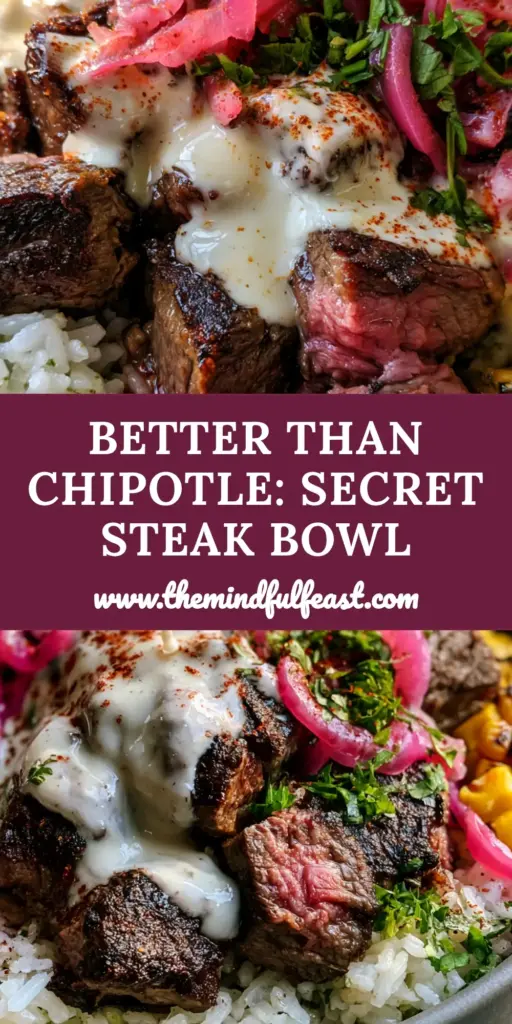
Did you achieve that perfect mid-pour queso shot? We want to see your version of the Steak queso rice bowl! Tag us on social media or leave a comment below with your results. This recipe is designed to be shared, so don’t forget to pin this to your favorite dinner boards on Pinterest for easy access next time you’re craving a gourmet steakhouse experience at home.