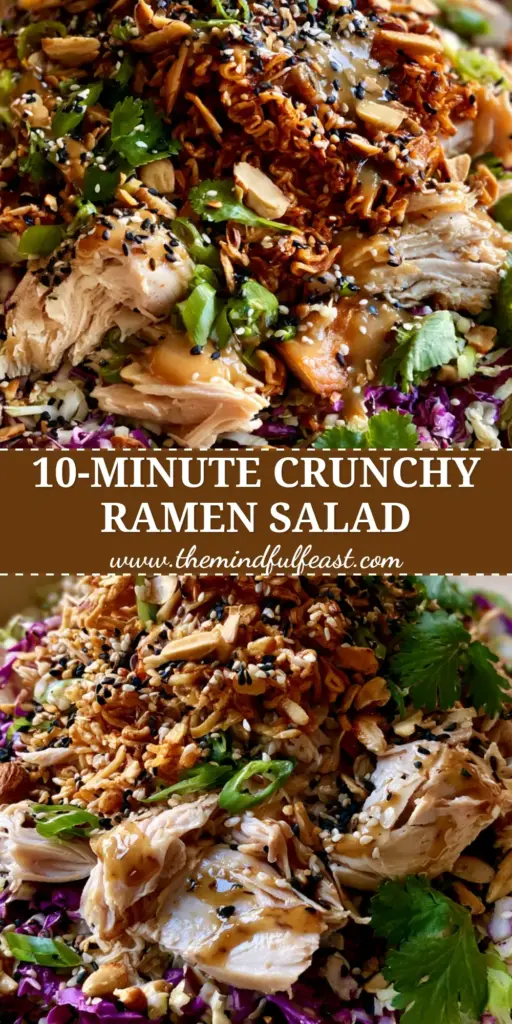
There is a specific kind of culinary magic that happens when you combine the nostalgic crunch of childhood snacks with the sophisticated brightness of a fresh, nutrient-dense meal. This ramen Chinese chicken salad is the ultimate embodiment of that harmony, offering a symphony of textures that keeps your palate engaged from the first bite to the last. Unlike the soggy, uninspired salads of the past, this version focuses on high-contrast elements: moist, hand-torn protein against a foundation of incredibly crisp brassicas.
Every element of this dish has been architected to catch the light and provide a sensory explosion. We are moving beyond the basic “tossed salad” and into the realm of structured flavor building. By utilizing a rotisserie chicken for ease and deeply toasting dry ramen noodles for a nutty, caramelized finish, we create a dish that feels both indulgent and vibrant. It’s a restaurant-quality experience served in a shallow ceramic bowl, perfect for a high-energy lunch or a refreshing dinner.
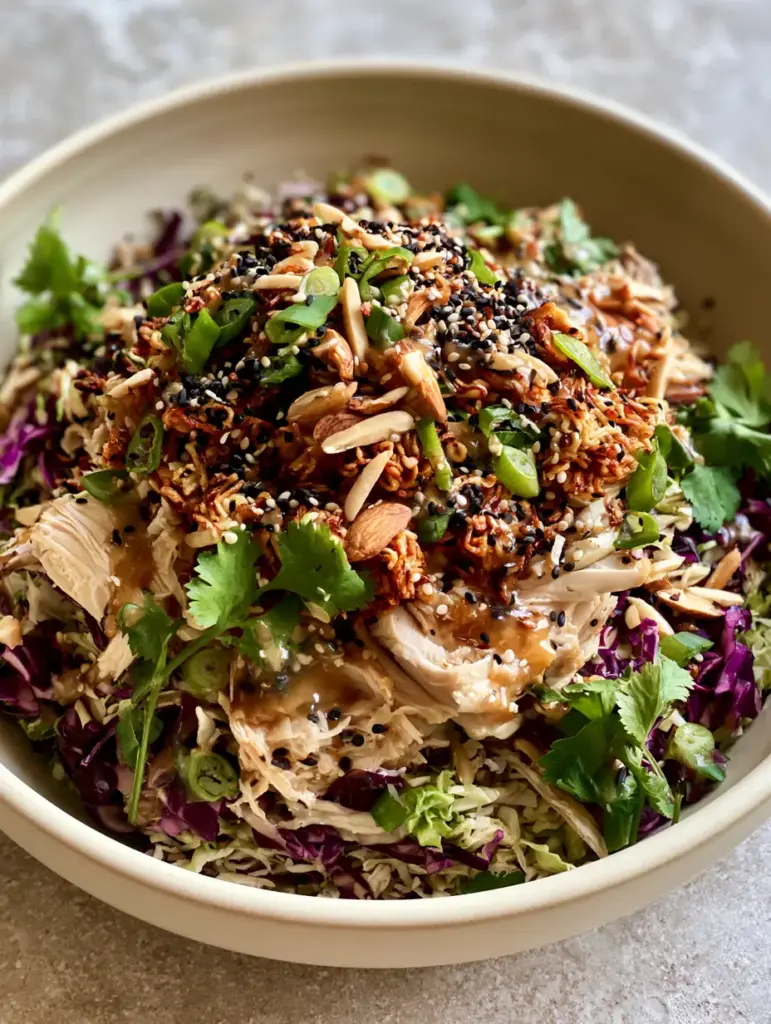
The Architecture of the Perfect Crunch: Why This Salad Works
- Textural Contrast: The marriage of soft, shredded rotisserie chicken and the “deeply toasted golden-brown” crunch of ramen noodles creates a satisfying mouthfeel that never feels one-dimensional.
- Vibrant Color Palette: The dense mix of bright purple cabbage and pale napa cabbage isn’t just for health—it provides a visual pop that signals freshness and variety.
- Glossy Umami Dressing: A thick, shimmering sesame ginger vinaigrette acts as the bridge, coating every fiber of the cabbage without wilting the structure.
- Aromatic Garnishes: A heavy flurry of black and white sesame seeds combined with fresh cilantro sprigs adds layers of herbal and earthy notes that elevate the simple base.
If you enjoy the balance of textures in a vibrant cabbage-based salad, this ramen-infused version will become your new weekly staple. It takes the familiar profile of a classic homemade chicken salad and reconstructs it with an Asian-inspired flavor profile that is both addictive and nourishing.
Essential Ingredients for the Ultimate Sesame Ginger Experience
To achieve the specific visual and flavor profile described in our blueprint, we must select ingredients that offer both structural integrity and deep flavor. Here is what you will need for the base and the signature crunch.
The Vibrant Vegetable Foundation
Napa Cabbage: 4 cups (300g) shredded. This provides a delicate, slightly sweet crunch and serves as the primary “dense mix” foundation mentioned in our visual prompt.
Purple Cabbage: 2 cups (150g) shredded. The “bright purple” hues are essential for visual contrast; it also offers a heartier, more peppery bite than its napa counterpart.
Julienned Carrots: 1 cup (125g). These add a natural sweetness and a rigid texture that stands up well to the heavy dressing.
Scallions: 1/2 cup (50g) thinly sliced. Use both the white and bright green parts for a sharp, oniony bite and that “thinly sliced bright green” visual garnish.
Fresh Cilantro: 1/2 cup (15g) whole leaves and sprigs. These add a burst of herbal freshness that cuts through the richness of the sesame oil.
The Protein and The Famous Crunch
Rotisserie Chicken: 3 cups (450g) hand-torn. Using “large, moist chunks” of rotisserie chicken ensures the protein is seasoned all the way through and retains its moisture better than pre-cooked, cubed breast meat.
Dry Ramen Noodles: 2 packs (170g), flavor packets discarded. When broken into “bits” and toasted, these provide a unique, honeycomb-like crunch that is far superior to standard croutons.
Slivered Almonds: 1/2 cup (50g). These add a secondary layer of “toasted golden-brown” crunch and a subtle nuttiness that complements the sesame.
Sesame Seeds: 2 tbsp (18g) total, a mix of black and white. This “flurry” of seeds provides the fine-grain texture and professional finish seen in macro food photography.
The Shimmering Sesame Ginger Dressing
Toasted Sesame Oil: 3 tbsp (45ml). This provides the “glossy” sheen and the deep, roasted aroma that defines the dish.
Rice Vinegar: 1/4 cup (60ml). A mild acid that brightens the heavy umami flavors without being overpowering.
Soy Sauce (or Tamari): 2 tbsp (30ml). This adds the necessary salinity and deep amber color to the dressing.
Honey or Agave: 2 tbsp (40g). Essential for creating that “thick, glossy” viscosity that allows the dressing to shimmer under side-lighting.
Fresh Ginger: 1 tbsp (15g) finely grated. The zing of fresh ginger is non-negotiable for an authentic flavor profile.
Precision Tools for Culinary Success
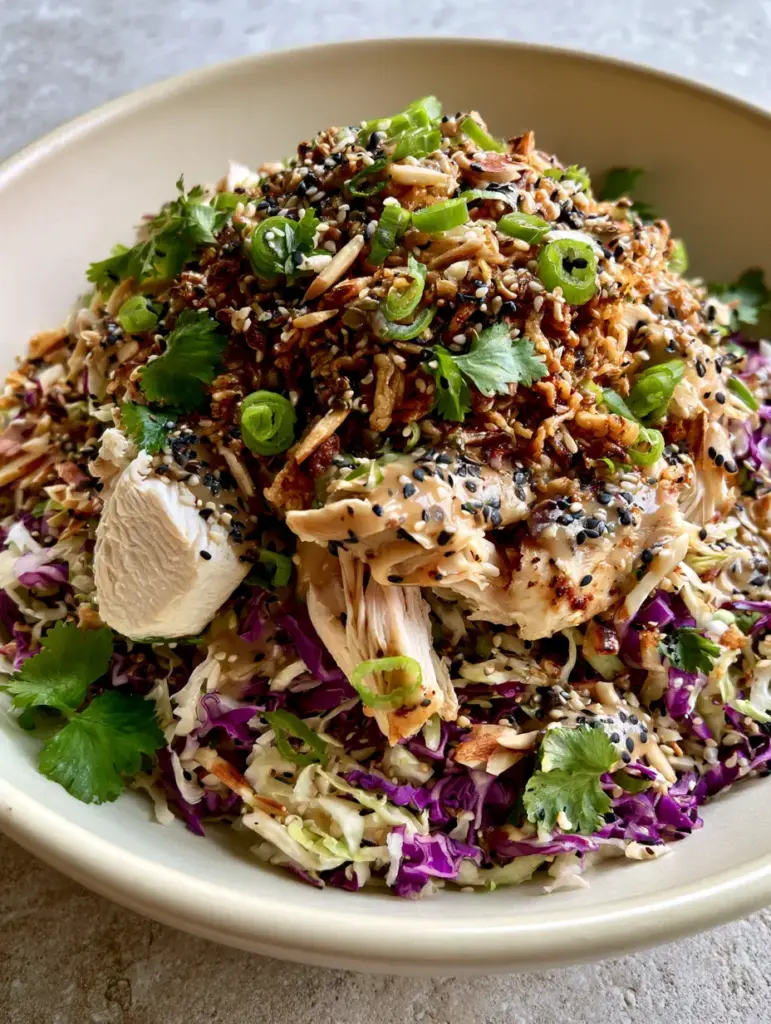
To recreate the “macro handheld smartphone photo” look, your preparation must be precise. High-quality tools ensure that your julienne is uniform and your chicken chunks stay moist.
- A Sharp Chef’s Knife: Essential for achieving the “finely shredded” look for the cabbage and the “thinly sliced” scallions.
- Wide, Shallow Ceramic Bowl: To match the visual prompt, a wide bowl allows you to layer the ingredients horizontally, showcasing the “heavy mound” of ramen on top rather than burying it.
- Heavy-Bottomed Skillet: A cast-iron or stainless steel pan is best for achieving that “deeply toasted golden-brown” color on the ramen noodles without burning them.
- Microplane Zester: For grating the ginger into a fine paste, ensuring it emulsifies perfectly into the dressing for a “glossy” finish.
Step-by-Step Evolution of the Ramen Chinese Chicken Salad
1. Achieving the Perfect Golden-Brown Toasted Crunch
The secret to this salad lies in the “heavy mound of deeply toasted golden-brown crunchy ramen noodle bits.” Begin by crushing two packages of dry ramen noodles while they are still in the bag. Heat 1 tbsp (15ml) of neutral oil in your skillet over medium heat.
Add the ramen bits and the slivered almonds to the pan. Stir constantly for 4-6 minutes. You are looking for a visual cue: the noodles should transform from a pale cream to a rich, sunset gold. The smell will be distinctly nutty. Once toasted, immediately remove them from the heat and spread them on a paper towel to maintain maximum crunch.
2. Preparing the Moist Rotisserie Protein
Avoid using a knife for the chicken. Instead, use your hands to tear the rotisserie chicken into “large, moist chunks.” Hand-tearing allows the dressing to cling to the uneven surfaces of the meat, ensuring every bite is flavorful. If you are looking for other ways to use this protein, consider our versatile chicken breast techniques for future meals.
3. Emulsifying the Glossy Sesame Ginger Dressing
In a small glass jar, combine the sesame oil, rice vinegar, soy sauce, honey, and grated ginger. Shake vigorously until the honey has fully dissolved and the oil has emulsified with the vinegar. The dressing should appear “thick and glossy.” If it seems too thin, add another teaspoon of honey or a touch of Dijon mustard to help it bind. This shimmering liquid is what will give the salad its “shimmering under soft, natural side-lighting” appearance.
4. Assembling the Vibrant Cabbage Foundation
In your wide, matte cream ceramic bowl, toss together the shredded napa cabbage, bright purple cabbage, and julienned carrots. This “dense mix” forms the structural base of the salad. Do not dress the salad until you are ready to serve; the cabbage must remain rigid to support the weight of the toppings.
5. The Final Garnish and Artistic Drizzle
Layer the hand-torn chicken chunks over the cabbage base. Follow this with the “heavy mound” of toasted ramen and almonds. Finally, sprinkle the “flurry of black and white sesame seeds,” sliced scallions, and cilantro sprigs. To finish, drizzle the dressing “artistically across the textures.” The contrast of the matte bowl against the glossy dressing creates a professional, high-end look.
Chef’s Secrets for E-E-A-T Quality Results
- The Cooling Rule: Never add warm toasted ramen to cold cabbage. Let the noodles cool completely to room temperature, or the residual heat will wilt the napa cabbage, ruining the “textured” visual.
- Moisture Management: If your cabbage is slightly damp after washing, use a salad spinner. Water is the enemy of a “glossy” dressing; it will dilute the oils and make the salad look flat.
- The Texture Hack: For an even more complex crunch, try adding a handful of fried wonton strips alongside the ramen, similar to the textures found in a classic yakisoba dish.
- Visual Garnish: Always save a few cilantro sprigs and a pinch of sesame seeds for the very last step. Placing them on top of the dressing prevents them from looking “drowned” and keeps them looking “fresh” for the photo.
Storage and Meal Prep Strategy
This ramen Chinese chicken salad is an excellent candidate for meal prep, provided you keep the “crunch” separate. Store the cabbage and carrot mix in an airtight container for up to 4 days. Keep the toasted ramen and almonds in a dry zip-top bag at room temperature.
The dressing can be stored in a jar in the refrigerator for up to a week. When ready to eat, simply combine the components. If you have leftover chicken, it also works beautifully in easy chicken salad sandwiches the next day.
What to Serve with Your Ramen Chicken Salad
While this salad is a complete meal on its own, it pairs beautifully with other Asian-inspired textures. If you’re hosting a larger gathering, consider serving it alongside a grilled teriyaki chicken for extra protein or a light roasted beet salad to add more earthy tones to the table. For a truly decadent spread, a side of Filipino chicken barbecue provides a smoky contrast to the fresh ginger dressing.
Common Questions About This Salad
Yes, you can use poached or grilled chicken breast, but rotisserie chicken is recommended for its moisture and ease. If using raw chicken, season it well with ginger and garlic to match the salad’s profile.
The key is to toast the noodles in oil until golden brown and only add them to the salad immediately before serving. Storing the toasted noodles separately from the cabbage and dressing ensures they stay crisp.
Standard ramen noodles and soy sauce contain gluten. To make this gluten-free, use certified gluten-free ramen-style brown rice noodles and substitute soy sauce with tamari or coconut aminos.
For the ‘finely shredded’ look, cut the cabbage into quarters, remove the core, and use a very sharp chef’s knife or a mandoline to slice it into paper-thin ribbons.
The Ultimate Ramen Chinese Chicken Salad Recipe
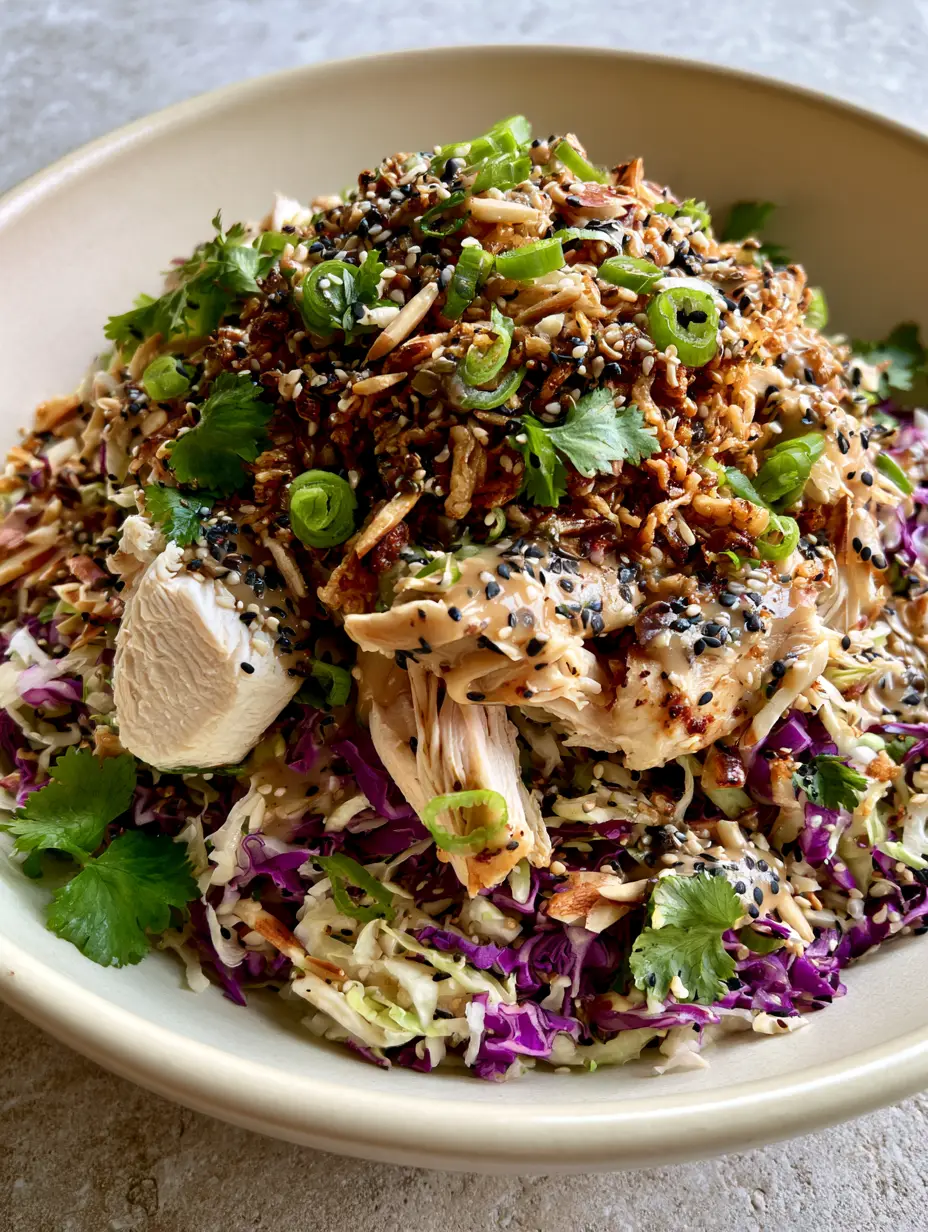
Ramen Chinese Chicken Salad with Toasted Crunch and Sesame Ginger Dressing
Ingredients
Equipment
Method
- Heat oil in a skillet over medium heat. Add crushed ramen and almonds, stirring until deeply toasted golden-brown.
- Combine sesame oil, vinegar, soy sauce, honey, and ginger in a jar. Shake until thick and glossy.
- Toss cabbage and carrots in a wide bowl. Top with chicken chunks, toasted ramen, scallions, cilantro, and sesame seeds. Drizzle with dressing just before serving.
Notes
Use a rotisserie chicken for the best moisture and flavor profile.
Share Your Culinary Creation!
This ramen Chinese chicken salad is more than just a meal; it’s a celebration of texture and vibrant color. Whether you’re making it for a quick lunch or a dinner party, the combination of toasted ramen and glossy ginger dressing is sure to impress. If you make this recipe, we’d love to see it! Tag us on social media and share your photos. Don’t forget to follow us on Pinterest for more visually stunning recipe inspiration!