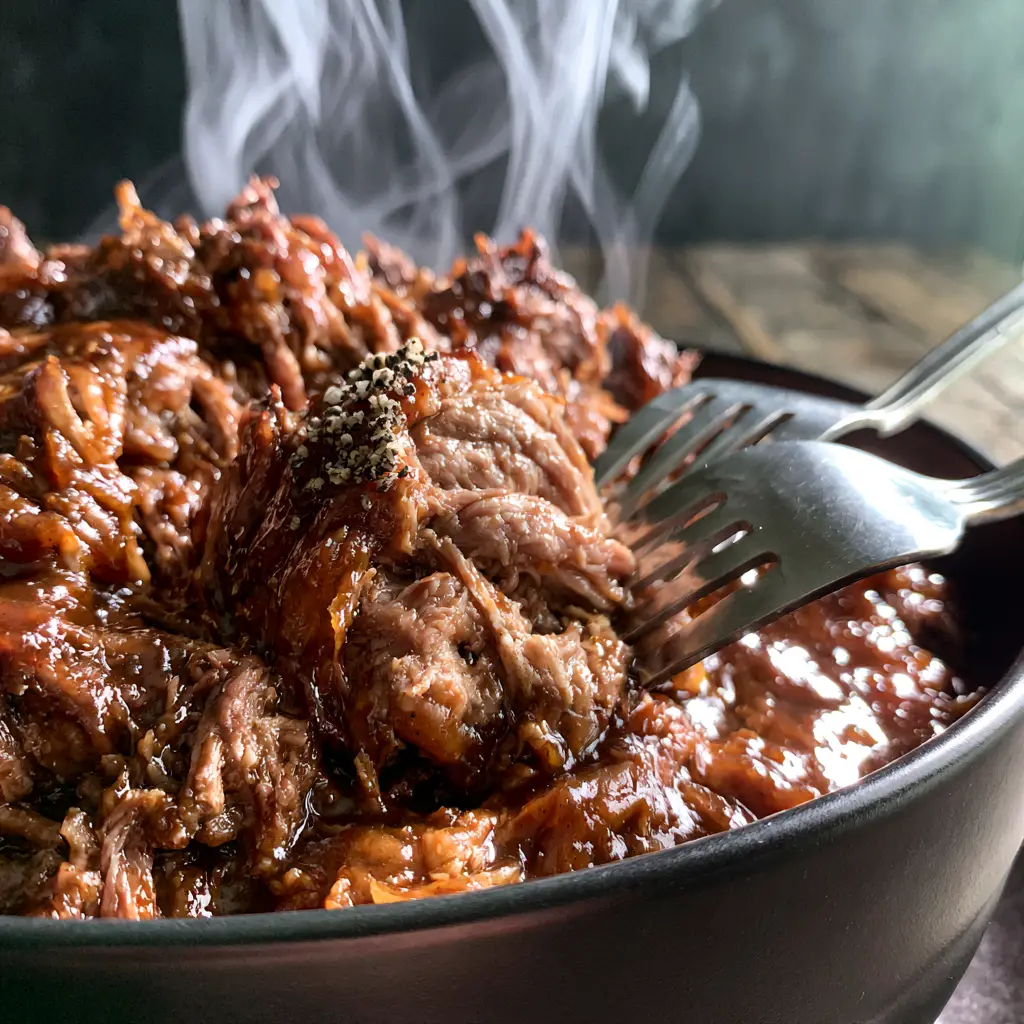
Root beer pork is the culinary intersection of nostalgic sweetness and deep, savory satisfaction. Imagine a pork shoulder so tender that two silver forks can glide through the muscle fibers with almost no resistance. This recipe transforms a humble cut of meat into a centerpiece of glistening, mahogany-hued perfection, bathed in a thick syrupy sauce reduction that clings to every strand.
The magic happens during the low-and-slow braising process, where the unique spice profile of root beer—hints of sassafras, vanilla, and wintergreen—permeates the pork. As the liquid reduces, it creates a sticky, caramelized coating that catches the light beautifully against a matte black stoneware bowl. This is more than just a meal; it is a sensory experience defined by wisps of white steam and a final dusting of pungent cracked black pepper.
Whether you are preparing this for a cozy Sunday dinner or a high-energy game day, the result is consistently ultra-succulent. We are moving away from watery crockpot meals and stepping into the realm of professional-grade reductions. Let’s dive into how you can achieve this exact visual and flavor profile in your own kitchen.
Why This Shredded Root Beer Pork Works Every Single Time
- Unmatched Texture: By utilizing the collagen-rich pork shoulder, we achieve a juicy, moist internal fiber structure that stays tender even after shredding.
- Complex Sweet-Savory Balance: The natural sugars in the root beer caramelize into a deep mahogany glaze, balanced by the heat of coarse black pepper.
- Visually Stunning Presentation: The contrast of the dark, rich meat against matte black ceramic creates a professional “handheld smartphone photo” aesthetic that looks as good as it tastes.
- Structural Integrity: Unlike recipes that result in mush, our method ensures the meat maintains its bite while remaining incredibly soft.
The Secret Ingredients for a Glossy Mahogany Finish
4 to 5 lbs (1.8 to 2.3 kg) Pork Shoulder (Boston Butt): This cut is essential for its fat content and connective tissue, which melt down to provide that ultra-succulent mouthfeel. Ensure you choose a well-marbled piece for the best results.
24 oz (710 ml) High-Quality Root Beer: Use a brand made with real cane sugar if possible. The sugars are vital for creating the thick syrupy sauce reduction that gives the meat its glistening appearance.
2 tbsp (30 ml) Neutral Oil: A high-smoke point oil like canola or vegetable oil is required for the initial sear. This foundational step develops the Maillard reaction, contributing to the deep brown color.
1 tbsp (15 g) Kosher Salt: Essential for drawing out the meat’s natural flavors and balancing the sweetness of the soda. Do not skip the liberal seasoning of the roast before it hits the pan.
2 tsp (10 g) Coarse Cracked Black Pepper: This provides a visual and flavor contrast. The large cracks of pepper scattered on top provide little bursts of heat that cut through the sticky glaze.
1 tbsp (15 ml) Apple Cider Vinegar: This “invisible” ingredient provides the necessary acidity to brighten the heavy sauce. It ensures the root beer pork isn’t cloyingly sweet.
3 cloves Garlic, Smashed: These infuse the braising liquid with an aromatic depth that complements the vanilla notes in the root beer. They will essentially dissolve into the sauce by the end of the cook.
Essential Tools for the Perfect Shred
Achieving the visual perfection seen in our blueprint requires a few specific kitchen tools. A heavy-bottomed Dutch oven or a reliable slow cooker is the primary vessel for the long braise. For the final presentation, you will need a pair of silver forks to actively pull the meat apart, revealing those juicy internal muscle fibers.
To get the sauce to its final syrupy state, a wide saucepan is helpful for the reduction phase. Finally, serving the dish in matte black stoneware helps the mahogany tones of the meat pop, especially under natural side-lighting from a window.
Step-by-Step Instructions for Succulent Root Beer Pork
Developing the Foundation: The Initial Sear
Pat the pork shoulder dry with paper towels. Rub the entire surface with 1 tbsp (15 g) of kosher salt. In a large Dutch oven, heat the oil over medium-high heat until it begins to shimmer. Sear the pork on all sides for 4-5 minutes per side until a deep, dark crust forms. This crust is the secret to the mahogany color later on.
The Braising Process
Carefully pour the 24 oz (710 ml) of root beer around the pork, not directly over it, to preserve the crust you just created. Add the smashed garlic and apple cider vinegar. Cover tightly and cook in a 300°F (150°C) oven for 4 to 5 hours, or transfer to a slow cooker on low for 8 to 10 hours. You know it is ready when the meat offers no resistance to a fork.
Mastering the Thick Syrupy Sauce Reduction
Once the pork is tender, remove it from the liquid and let it rest on a cutting board. Strain the braising liquid into a saucepan and bring it to a vigorous boil. Reduce the liquid by two-thirds until it transforms into a thick, caramelized root beer glaze. It should be viscous enough to coat the back of a spoon heavily.
The Art of the Shred
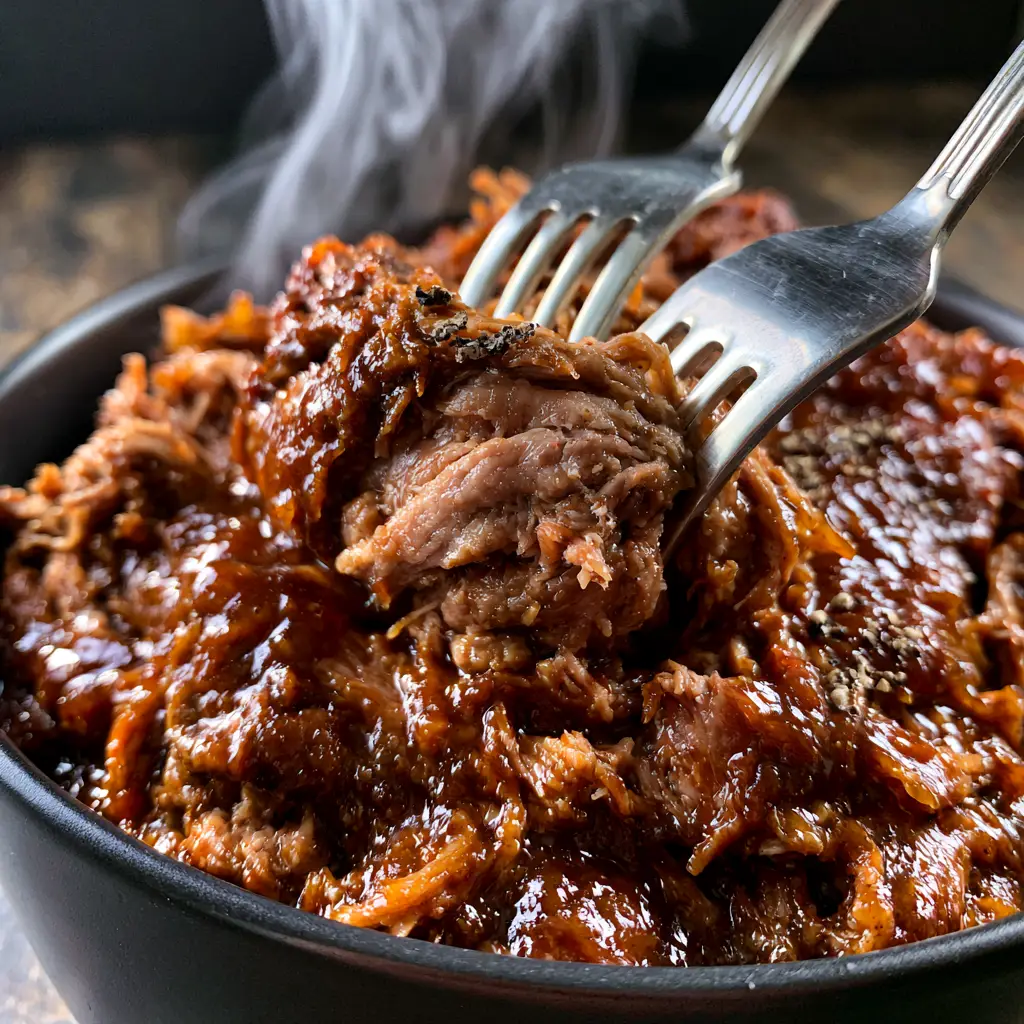
Place the warm pork in a matte black ceramic bowl. Using two silver forks, pull the large chunks apart, revealing the moist muscle fibers. Pour the hot, reduced glaze over the meat, tossing gently to ensure every strand is glistening. Look for the white wisps of steam rising naturally as you work.
Final Flourish
Finish the dish with a generous scattering of coarse cracked black pepper. The dark specks against the mahogany glaze create the final visual bridge described in our blueprint. Serve immediately while the meat is at its peak succulence.
Expert Tips for Culinary Success
- Don’t Trim All the Fat: Leave a thin layer of the fat cap on the pork shoulder. As it braises, the fat renders down, basting the meat and contributing to the juicy texture.
- Cane Sugar is Key: Avoid “diet” or zero-sugar root beers. The reduction process relies entirely on the caramelization of real sugars to achieve that sticky consistency.
- Rest the Meat: Allow the pork to rest for at least 15 minutes before shredding. This allows the juices to redistribute, ensuring the fibers remain moist rather than drying out instantly.
- Temperature Control: If your sauce isn’t thickening, keep boiling. The transition from watery liquid to syrupy glaze happens quickly at the very end, so watch for large, glossy bubbles.
How to Store and Reheat Your Leftovers
Root beer pork stores beautifully, as the meat continues to soak up the glaze. Place leftovers in an airtight container and refrigerate for up to 4 days. The sauce will likely thicken into a gel-like consistency when cold due to the natural gelatin in the pork.
To reheat, place the pork in a skillet over medium-low heat with a splash of water or extra root beer. Cover and heat gently until the steam begins to rise again. You can also freeze this recipe for up to 3 months; just thaw overnight in the refrigerator before reheating.
What to Serve With This Mahogany Pork
To balance the sweetness of the root beer pork, pair it with bright, acidic, or neutral sides. A tangy slaw or a crisp salad works wonders. If you are looking for more pork inspiration, you might enjoy our savory pork chile verde for a spicy contrast.
For a different take on glazed meats, try this apple butter glazed pork tenderloin. If you prefer something with a bit of a kick, our ginger lime pork offers a refreshing citrus profile that cleanses the palate between bites of sweet shredded pork.
Frequently Asked Questions
Yes, you can pressure cook the pork for 60-90 minutes, but you must still reduce the sauce on the sauté setting afterward to achieve the signature mahogany glaze.
It is not recommended. The sugar in regular root beer is essential for creating the thick, syrupy mahogany glaze. Diet sodas will not reduce to the same sticky consistency.
Not exactly like the soda. The root beer provides a complex sweetness with hints of vanilla and spice that complement the savory pork without being overwhelming.
After cooking the pork, remove it and boil the braising liquid separately in a saucepan. Reduce it by at least two-thirds until it reaches a honey-like thickness.
Pork shoulder (also known as Boston Butt) is the best choice. Its high fat and collagen content ensure the meat stays juicy and shreds easily after a long braise.
The Ultimate Root Beer Pork Recipe Card
Root Beer Pork: The Ultimate Slow-Cooked Shredded Pork Shoulder with Mahogany Glaze
Ingredients
Equipment
Method
- Pat the pork dry and season with salt. Heat oil in a Dutch oven and sear all sides until a deep mahogany crust forms.
- Add root beer, garlic, and vinegar. Cover and cook at 300°F (150°C) for 4-5 hours or in a slow cooker on low for 8 hours.
- Remove pork. Boil the liquid in a saucepan until reduced by two-thirds into a thick, syrupy glaze.
- Shred meat with silver forks in a matte black bowl. Pour glaze over meat and top with cracked black pepper.
Notes
Don't skip the searing step as it provides the base for the deep color.
Experience the Depth of Flavor
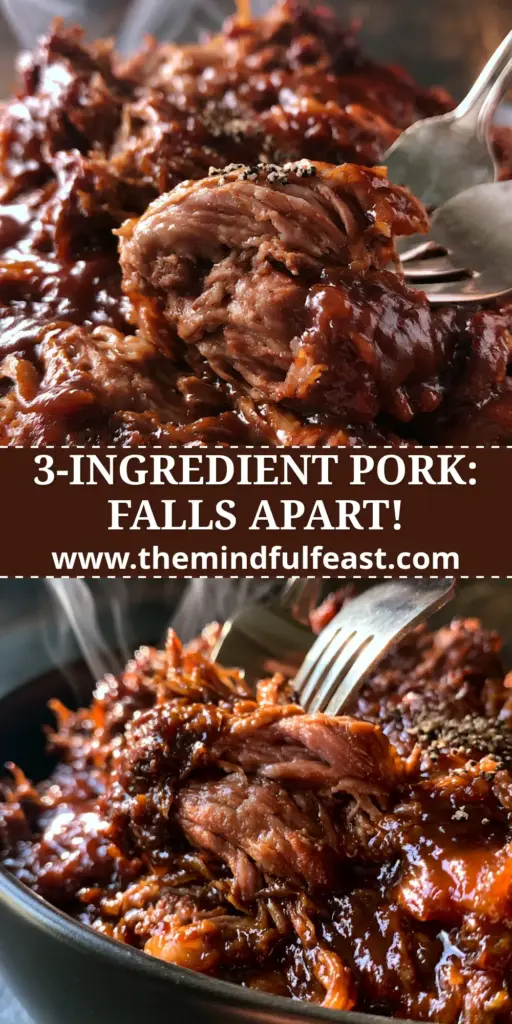
This root beer pork is a testament to the power of simple ingredients treated with professional technique. The combination of succulent shredded meat and a deep mahogany glaze creates a dish that is as visually stunning as it is delicious. We hope you enjoy the sticky, sweet, and savory harmony of this recipe.
If you made this, please leave a comment below and let us know how your reduction turned out! Don’t forget to share your photos and tag us on Pinterest so we can see your beautiful matte black stoneware presentations.